Beatrix Montes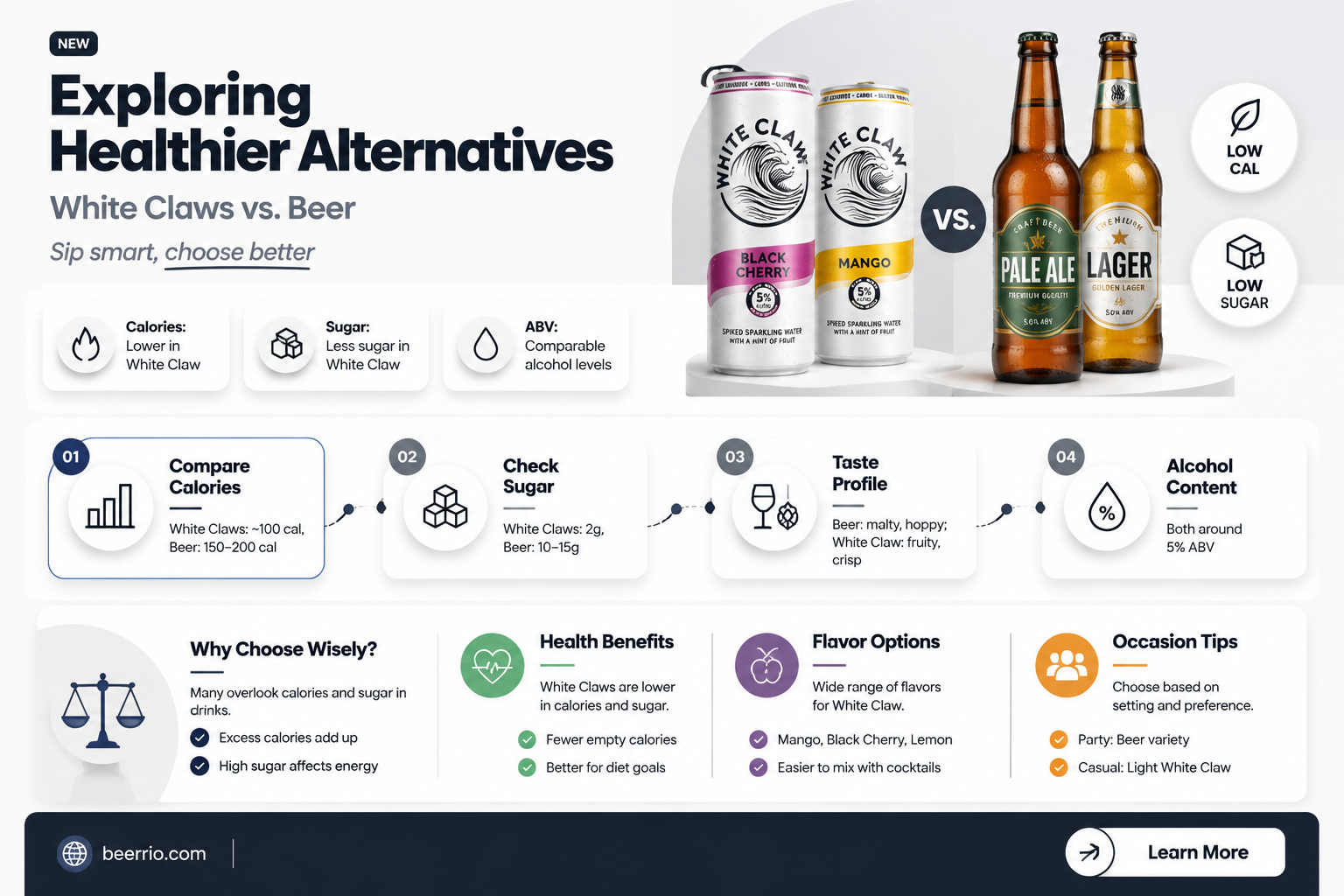
White Claws and beer are two popular alcoholic beverages, but they differ significantly in their ingredients and nutritional content. White Claws are flavored malt beverages that typically contain fewer calories and less sugar than beer. They are often marketed as a healthier alternative to traditional beers, especially for those who are conscious about their calorie intake. On the other hand, beer is made from fermented grains and can vary widely in its nutritional profile depending on the type and brewing process. While some beers can be high in calories and sugar, others may offer more moderate options. When comparing the two, it's essential to consider factors such as calorie content, sugar levels, and overall nutritional composition to determine which might be the healthier choice for an individual.
Explore related products


What You'll Learn
- Calorie Comparison: White Claws vs. Beer - Which Has Fewer Calories
- Alcohol Content: How Does the Alcohol Percentage in White Claws Compare to Beer
- Nutrient Analysis: Vitamins and Minerals - What's the Difference Between White Claws and Beer
- Health Risks: Potential Health Benefits and Risks of Choosing White Claws Over Beer
- Moderation Key: The Importance of Moderation in Consumption of Both White Claws and Beer

Calorie Comparison: White Claws vs. Beer - Which Has Fewer Calories?
Analyzing the calorie content of alcoholic beverages can be a crucial factor for those monitoring their dietary intake. White Claws, a popular brand of hard seltzer, and beer, a traditional alcoholic drink, are often compared in terms of their health impacts. A 12-ounce can of White Claw typically contains around 100 calories, with variations depending on the flavor. In contrast, a standard 12-ounce beer can range from 100 to 200 calories, with light beers generally being on the lower end of the spectrum and craft beers often exceeding 200 calories.
When comparing the calorie content, it's essential to consider the alcohol by volume (ABV) percentage as well. White Claws usually have an ABV of 5%, while beers can vary widely, from around 4% for light beers to over 10% for some craft varieties. Higher ABV generally correlates with higher calorie content due to the increased alcohol density.
Another factor to consider is the carbohydrate content. White Claws are known for their low carbohydrate count, typically around 2-3 grams per can, making them a popular choice for those following low-carb diets. Beers, on the other hand, can contain significantly more carbohydrates, ranging from 5 to 30 grams or more per 12-ounce serving, depending on the type and brewing process.
In terms of overall health impact, while White Claws may be lower in calories and carbohydrates compared to many beers, it's important to note that the healthiness of an alcoholic beverage cannot be determined solely by its calorie count. Factors such as sugar content, additives, and the presence of other nutrients also play a role. Additionally, moderation is key when consuming any alcoholic beverage, as excessive intake can lead to various health issues regardless of the drink's calorie content.
In conclusion, for those strictly monitoring their calorie intake, White Claws may be a preferable option to certain beers, especially those with higher calorie counts. However, it's crucial to consider the broader nutritional profile and consume all alcoholic beverages in moderation as part of a balanced diet.
Exploring the Health Benefits: Hard Cider vs. Beer Comparison
You may want to see also
Explore related products



Alcohol Content: How Does the Alcohol Percentage in White Claws Compare to Beer?
The alcohol content in White Claws is a key factor to consider when comparing its health implications to those of beer. White Claws, a popular brand of hard seltzer, typically contains around 5% alcohol by volume (ABV). In contrast, the alcohol content in beer can vary widely depending on the type and brand, but it generally ranges from about 4% to 6% ABV for most standard beers. Some craft beers and specialty brews can have much higher alcohol content, sometimes reaching 10% ABV or more.
From a health perspective, the alcohol percentage is crucial because it directly affects the amount of alcohol consumed per serving. The Centers for Disease Control and Prevention (CDC) define moderate drinking as up to one drink per day for women and up to two drinks per day for men, where one drink is equivalent to 14 grams of pure alcohol. Given that a 12-ounce can of White Claw contains about 14 grams of alcohol, consuming one can would be considered one drink. Similarly, a standard 12-ounce beer with 5% ABV also contains roughly 14 grams of alcohol, making it equivalent to one drink as well.
However, it's important to note that the way alcohol is consumed can also impact its health effects. Hard seltzers like White Claws are often marketed as a healthier alternative to beer due to their lower calorie and carbohydrate content. A typical 12-ounce can of White Claw contains around 100 calories and 2 grams of carbohydrates, whereas a similar serving of beer can contain anywhere from 100 to 200 calories and 10 to 20 grams of carbohydrates, depending on the type. This difference can be significant for individuals who are watching their calorie or carbohydrate intake.
Moreover, some studies suggest that the carbonation in seltzers may help to reduce the absorption of alcohol into the bloodstream, potentially leading to a lower peak blood alcohol concentration compared to consuming the same amount of alcohol in a non-carbonated beverage. However, more research is needed to confirm this effect and to understand its implications for overall health and safety.
In conclusion, while the alcohol content in White Claws is comparable to that of many beers, the lower calorie and carbohydrate content, as well as the potential effects of carbonation, may make it a slightly healthier choice for some individuals. As with any alcoholic beverage, it's essential to consume White Claws in moderation and to be aware of the potential health risks associated with alcohol consumption, including impaired judgment, increased risk of accidents, and long-term health effects such as liver damage and addiction.
Exploring the Health Benefits of Athletic Beer: A Comprehensive Guide
You may want to see also
Explore related products


Nutrient Analysis: Vitamins and Minerals - What's the Difference Between White Claws and Beer?
Analyzing the nutrient content of White Claws and beer reveals some interesting differences. White Claws, being a flavored malt beverage, typically contain fewer calories and carbohydrates compared to traditional beers. A standard 12-ounce can of White Claws usually has around 110 calories and 2 grams of carbohydrates, whereas a similar serving of beer can range from 150 to 200 calories with 10 to 20 grams of carbohydrates. This makes White Claws a potentially more calorie-conscious choice for those looking to enjoy an alcoholic beverage without the added caloric intake.
In terms of vitamins and minerals, both White Claws and beer contain small amounts of certain nutrients. Beer, for instance, is known to have some B vitamins, particularly niacin (B3) and riboflavin (B2), as well as minerals like magnesium and potassium. These nutrients are byproducts of the brewing process and can vary depending on the type of beer and ingredients used. White Claws, on the other hand, may contain added vitamins and minerals as part of their flavoring and fortification process. Some varieties of White Claws are marketed as having added B vitamins and electrolytes, which can appeal to consumers looking for a beverage that offers some nutritional benefits alongside its alcoholic content.
However, it's important to note that while these nutrients may provide some health benefits, they are not a substitute for a balanced diet. The alcohol content in both White Claws and beer can have negative health effects if consumed in excess, including liver damage, increased risk of certain cancers, and impaired cognitive function. Therefore, moderation is key when considering the health implications of these beverages.
When comparing the two, White Claws may be seen as a slightly healthier alternative to beer due to its lower calorie and carbohydrate content, as well as the potential addition of vitamins and minerals. However, it's crucial to consider individual dietary needs and health goals when making a choice between these beverages. For those who are watching their calorie intake or looking for a beverage with some added nutrients, White Claws might be a better fit. On the other hand, beer enthusiasts may prefer the taste and variety of traditional beers, despite their higher calorie content.
In conclusion, while White Claws and beer both contain alcohol and should be consumed responsibly, White Claws may offer a slightly healthier option in terms of calories and potential nutrient content. However, it's essential to remember that moderation and individual health considerations are paramount when choosing between these beverages.
Seltzer vs. Beer: Unraveling the Healthier Choice Debate
You may want to see also
Explore related products


Health Risks: Potential Health Benefits and Risks of Choosing White Claws Over Beer
White Claws, a popular brand of hard seltzer, has gained traction as a lower-calorie, lower-carb alternative to traditional beer. However, when evaluating the health risks and benefits of choosing White Claws over beer, it's essential to consider the nuances of each beverage's nutritional profile and potential impacts on health.
One of the primary benefits of White Claws is its lower calorie and carbohydrate content compared to beer. A 12-ounce can of White Claws typically contains around 100 calories and 2 grams of carbohydrates, whereas a similar serving of beer can range from 150 to 300 calories and 10 to 30 grams of carbohydrates, depending on the type and brand. This makes White Claws an attractive option for those looking to reduce their caloric and carb intake while still enjoying an alcoholic beverage.
However, it's important to note that White Claws contains added sugars and artificial flavorings, which may not be ideal for everyone. Some studies suggest that artificial sweeteners can have negative effects on gut health and may contribute to weight gain over time. Additionally, the flavorings used in White Claws can contain chemicals that may not be suitable for individuals with certain health conditions or sensitivities.
Another consideration is the alcohol content of each beverage. White Claws typically has an alcohol by volume (ABV) of around 5%, which is similar to many types of beer. However, some beers can have higher ABVs, which can lead to increased calorie intake and potential health risks associated with excessive alcohol consumption. On the other hand, moderate alcohol consumption has been linked to certain health benefits, such as reduced risk of heart disease and improved cognitive function in older adults.
When it comes to making a choice between White Claws and beer, it's crucial to consider individual health goals, dietary restrictions, and personal preferences. For those looking to reduce their calorie and carb intake while still enjoying an alcoholic beverage, White Claws may be a suitable option. However, individuals with certain health conditions or sensitivities may want to opt for beer or explore other alternatives. As with any alcoholic beverage, moderation is key to minimizing potential health risks and maximizing potential benefits.
Ranch Water vs. Beer: Unveiling the Healthier Choice
You may want to see also
Explore related products




Moderation Key: The Importance of Moderation in Consumption of Both White Claws and Beer
The key to enjoying both White Claws and beer responsibly lies in moderation. While both beverages contain alcohol, their consumption patterns and cultural connotations differ significantly. Beer, often consumed in social settings, can lead to binge drinking if not monitored carefully. On the other hand, White Claws, marketed as a convenient and flavorful alternative, may be more prone to overconsumption due to their ease of use and perceived lower alcohol content.
Moderation is crucial for several reasons. Firstly, excessive alcohol consumption can lead to a myriad of health issues, including liver damage, increased risk of certain cancers, and mental health problems. Secondly, overconsumption can impair judgment, leading to risky behaviors and accidents. Thirdly, moderate drinking can actually have some health benefits, such as reduced risk of heart disease and improved cognitive function in older adults.
To practice moderation, it's essential to set clear limits and stick to them. For beer, this might mean limiting oneself to one or two drinks per occasion, while for White Claws, it could involve restricting consumption to one can per hour. It's also important to be aware of one's personal tolerance levels and to avoid drinking on an empty stomach, as this can lead to faster intoxication.
Another strategy for moderation is to alternate between alcoholic and non-alcoholic beverages. This not only helps to reduce overall alcohol intake but also ensures proper hydration. Additionally, designating sober days or periods can help to reset one's system and prevent the development of a tolerance to alcohol.
In conclusion, moderation is the key to safely enjoying both White Claws and beer. By setting limits, being aware of personal tolerance, and incorporating non-alcoholic beverages into one's routine, individuals can reap the social and potential health benefits of these drinks without succumbing to the risks associated with overconsumption.
Exploring the Health Benefits: Whisky vs. Beer
You may want to see also
Frequently asked questions
White Claws and beer both contain alcohol and calories, but White Claws generally have fewer calories and carbohydrates than beer. However, the healthiness of an alcoholic beverage depends on various factors, including consumption in moderation and individual dietary needs.
White Claws typically have around 100-120 calories per 12 oz can, with 2-3 grams of carbohydrates and no sugar. In contrast, a standard beer can have anywhere from 100-200 calories and 10-15 grams of carbohydrates, depending on the type and brand.
White Claws usually have an alcohol by volume (ABV) of around 5%, which is similar to many light beers. However, some craft beers can have much higher ABVs, ranging from 6% to 10% or more. It's essential to check the specific product labels for accurate alcohol content.
While White Claws may be a lower-calorie and lower-carbohydrate option compared to beer, there are no significant health benefits to choosing one over the other. Both are alcoholic beverages and should be consumed in moderation as part of a balanced diet and lifestyle.