Beatrix Montes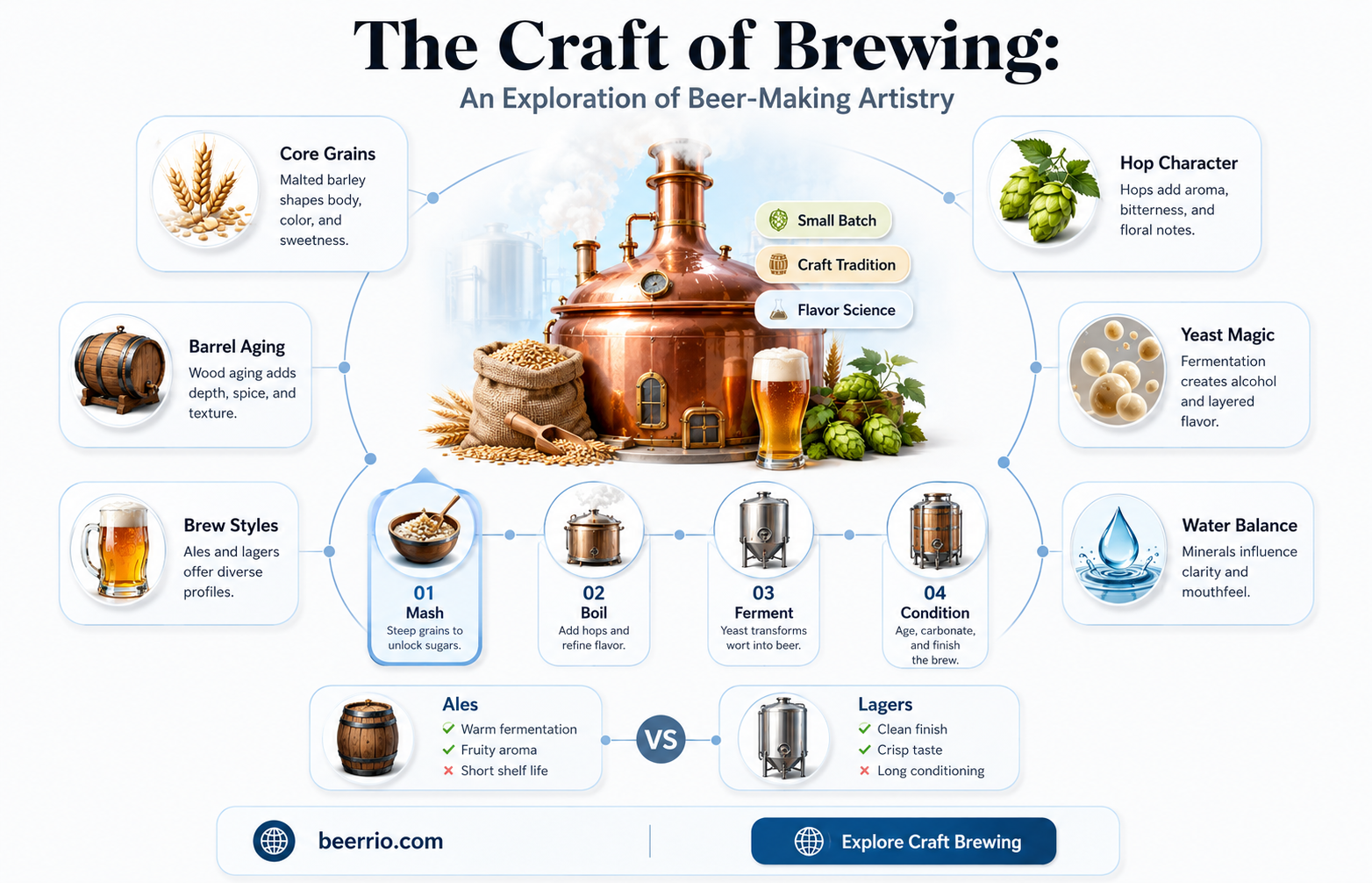
The art of brewing beer is called beer brewing or simply brewing. It is a process that involves the fermentation of cereals, primarily barley, using yeast. Brewing has a rich history that dates back thousands of years and has evolved into both a science and a craft. Brewers carefully select ingredients, including various types of malted barley, hops, water, and yeast, to create different styles and flavors of beer. The brewing process typically involves several key steps: malting, mashing, boiling, fermenting, conditioning, and packaging. Each step requires precision and skill to ensure the final product meets the desired quality and taste standards.
Explore related products




What You'll Learn
- Malting: The process of germinating barley to convert starches into fermentable sugars for beer brewing
- Mashing: Mixing milled grain with hot water to create a sugar-rich liquid called wort, essential for fermentation
- Boiling: Heating wort to sterilize it and add bitterness through hops, preparing it for fermentation
- Fermentation: The metabolic process where yeast converts sugars in wort into alcohol and carbon dioxide, creating beer
- Conditioning: The final stage of beer production, where the beer is aged and carbonated, enhancing its flavor and texture

Malting: The process of germinating barley to convert starches into fermentable sugars for beer brewing
Malting is a critical step in the beer brewing process, where barley is germinated to convert its starches into fermentable sugars. This process is essential for creating the wort, which is the sugary liquid that yeast will ferment to produce alcohol. The malting process begins with the steeping of barley in water, which activates the enzymes that break down the starches. The barley is then allowed to germinate, during which time the starches are converted into sugars.
The germination process is carefully controlled to ensure that the barley does not sprout too much, which could lead to the production of unwanted compounds. Once the desired level of germination is reached, the barley is dried in a kiln to halt the process and preserve the sugars. The drying process also contributes to the flavor and color of the final beer, as different temperatures and drying times can produce different results.
There are several types of malt that can be produced through this process, each with its own unique characteristics. For example, pale malt is produced by drying the barley at a lower temperature, resulting in a lighter color and a more delicate flavor. In contrast, roasted malt is dried at a higher temperature, resulting in a darker color and a more robust flavor. The type of malt used in a beer recipe can have a significant impact on the final product's taste, aroma, and appearance.
In addition to barley, other grains can also be malted and used in beer brewing, such as wheat, rye, and oats. Each grain has its own unique properties and can contribute different flavors and textures to the beer. The malting process for these grains is similar to that of barley, but there may be some variations in the steeping and drying times to achieve the desired results.
Overall, malting is a complex and fascinating process that plays a crucial role in the art of beer brewing. By carefully controlling the germination and drying of grains, brewers can create a wide variety of malts that can be used to produce beers with different flavors, aromas, and appearances.
Exploring the Rich World of Nitro Brew Beer: A Comprehensive Guide
You may want to see also
Explore related products




Mashing: Mixing milled grain with hot water to create a sugar-rich liquid called wort, essential for fermentation
Mashing is a critical step in the beer brewing process, where milled grain is mixed with hot water to create a sugar-rich liquid known as wort. This wort is essential for fermentation, as it provides the necessary sugars that yeast will convert into alcohol and carbon dioxide. The mashing process is both an art and a science, requiring careful control of temperature, time, and grain-to-water ratio to achieve the desired outcome.
The mashing process typically begins with the milled grain being added to a mash tun, a large vessel designed to hold the grain and water mixture. The grain is then mixed with hot water, usually at a temperature between 65-70°C (149-158°F), to create a thick, porridge-like mixture. This mixture is then left to rest for a period of time, allowing the enzymes in the grain to break down the starches into fermentable sugars. The temperature of the mash is crucial during this resting period, as different enzymes are active at different temperatures. For example, alpha-amylase enzymes are most active at higher temperatures, while beta-amylase enzymes are more active at lower temperatures.
After the resting period, the mash is typically heated to a higher temperature, around 75-80°C (167-176°F), to denature the enzymes and halt the sugar conversion process. This step is known as the "mash out" and is important to ensure that the wort is not overly sweet, which could lead to fermentation issues. Once the mash has been heated, it is transferred to a lauter tun, where the liquid wort is separated from the solid grain material. The wort is then cooled to a temperature suitable for yeast addition and fermentation.
One of the key challenges in the mashing process is achieving the right balance of fermentable and unfermentable sugars in the wort. This balance is critical for producing a beer with the desired flavor, body, and alcohol content. Brewers must carefully monitor the temperature and time of the mash to ensure that the enzymes are active for the right amount of time, and that the starches are converted into the desired types of sugars. Additionally, the grain-to-water ratio must be carefully controlled to ensure that the wort is not too thin or too thick, which could affect the fermentation process and the final quality of the beer.
In conclusion, mashing is a complex and critical step in the beer brewing process, requiring careful control of temperature, time, and grain-to-water ratio to produce a high-quality wort suitable for fermentation. By understanding the science behind the mashing process and employing careful techniques, brewers can create beers with a wide range of flavors, bodies, and alcohol contents.
Crafting Brews: Essential Ingredients and Equipment for Beer Making
You may want to see also
Explore related products




Boiling: Heating wort to sterilize it and add bitterness through hops, preparing it for fermentation
The boiling stage in beer brewing is a critical process that serves multiple purposes. Primarily, it sterilizes the wort, which is the liquid extracted from the mashing process, by killing off any bacteria or wild yeast that could potentially spoil the beer. This sterilization is essential to ensure that the beer ferments cleanly and safely. Additionally, boiling allows for the introduction of hops, which contribute bitterness to the beer. This bitterness is a key flavor component that balances the sweetness of the malt and adds complexity to the beer's taste profile.
During the boiling process, the wort is heated to a high temperature, typically between 212°F and 220°F (100°C and 104°C), depending on the specific recipe and the brewer's preferences. The duration of the boil can vary, but it usually lasts between 60 and 90 minutes. Hops are added at different times during the boil to achieve varying levels of bitterness and flavor. For instance, hops added early in the boil will contribute more bitterness, while those added later will impart more aroma and flavor.
One of the key considerations during the boiling stage is the management of the boil's vigor. A vigorous boil can lead to the wort boiling over, which can cause a mess and potentially damage the equipment. To prevent this, brewers often use a boil kettle with a spout or a siphon to control the flow of the wort and manage the boil's intensity. Additionally, the wort should be stirred occasionally to ensure even heating and to prevent the formation of hot spots that could lead to scorching or caramelization of the sugars in the wort.
After the boiling process is complete, the wort is cooled down to a temperature suitable for yeast to be added for fermentation. This cooling process is crucial, as yeast is sensitive to high temperatures and can be killed if the wort is too hot. Cooling can be achieved through various methods, such as using a wort chiller, which circulates cold water through a coil immersed in the wort, or by placing the boil kettle in an ice bath.
In summary, the boiling stage in beer brewing is a multifaceted process that involves sterilization, the addition of hops for bitterness, and careful temperature control. It is a crucial step that prepares the wort for fermentation and ultimately contributes to the flavor and quality of the finished beer.
Exploring the Rich Flavors of Slow-Brewed Beer: A Journey Through Time and Taste
You may want to see also
Explore related products



Fermentation: The metabolic process where yeast converts sugars in wort into alcohol and carbon dioxide, creating beer
Fermentation is the pivotal process in brewing where yeast transforms the sugars present in wort into alcohol and carbon dioxide, ultimately creating beer. This metabolic reaction is a complex interplay of biochemistry and microbiology, requiring precise control of temperature, pH, and oxygen levels to ensure optimal yeast activity and flavor development.
The fermentation process begins with the addition of yeast to the cooled wort. Yeast cells, being microorganisms, require a specific environment to thrive and perform their metabolic functions efficiently. Brewers must carefully monitor and adjust the fermentation temperature, typically ranging from 60°F to 75°F (15°C to 24°C), to prevent the production of undesirable flavors and ensure a clean, crisp beer profile.
During fermentation, yeast cells consume the fermentable sugars in the wort, primarily glucose, fructose, and sucrose, and convert them into ethanol and carbon dioxide through a series of biochemical reactions. This process not only produces the alcohol content characteristic of beer but also generates the carbonation that gives beer its refreshing effervescence.
One of the critical aspects of fermentation is the management of oxygen levels. While oxygen is essential for yeast growth and metabolism, excessive oxygen exposure can lead to the production of off-flavors and spoilage. Brewers often employ techniques such as oxygen purging and the use of oxygen-absorbing materials to minimize oxygen contact during fermentation.
The duration of fermentation varies depending on the beer style and desired flavor profile, typically ranging from a few days to several weeks. Throughout this period, brewers closely monitor the progress of fermentation, often using instruments to measure the specific gravity of the wort and the alcohol content. Once fermentation is complete, the beer is transferred to a secondary vessel for conditioning and maturation, where it develops its final flavor and character before packaging and distribution.
Exploring Singapore's Inaugural Brew: A Taste of Local Craftsmanship
You may want to see also
Explore related products


Conditioning: The final stage of beer production, where the beer is aged and carbonated, enhancing its flavor and texture
Conditioning is a crucial phase in the beer brewing process that often goes unnoticed by casual beer drinkers. This final stage involves aging and carbonating the beer, which significantly enhances its flavor profile and mouthfeel. The conditioning process can vary greatly depending on the type of beer being produced, with some beers requiring only a few weeks of conditioning while others may need several months or even years.
During conditioning, the beer undergoes a series of chemical reactions that contribute to its final taste and character. One of the most important reactions is the conversion of sugars into alcohol and carbon dioxide by yeast. This not only increases the beer's alcohol content but also produces the carbonation that gives beer its refreshing fizz. Additionally, conditioning allows the beer's flavors to meld and mature, resulting in a more complex and balanced taste.
There are several methods of conditioning, including bottle conditioning, keg conditioning, and cask conditioning. Bottle conditioning involves adding a small amount of yeast and sugar to the beer before bottling, which then ferments in the bottle to produce carbonation. Keg conditioning is similar, but the yeast and sugar are added to the keg instead of the bottle. Cask conditioning, on the other hand, involves aging the beer in wooden casks, which can impart additional flavors and aromas to the beer.
The length of the conditioning process can have a significant impact on the final product. Shorter conditioning times may result in a beer that is more crisp and clean, while longer conditioning times can lead to a beer that is more complex and nuanced. Brewers must carefully monitor the conditioning process to ensure that the beer reaches its optimal flavor and carbonation levels.
In conclusion, conditioning is a vital stage in the beer brewing process that plays a crucial role in determining the final taste and character of the beer. By understanding the different methods and timeframes involved in conditioning, brewers can create beers that are perfectly balanced and full of flavor.
Exploring the Rich World of Nitro Cold Brew Beer
You may want to see also
Frequently asked questions
The art of brewing beer is called "Zythology."
The key ingredients typically used in brewing beer are water, malted barley, hops, and yeast.
The process of brewing beer involves several steps: malting, mashing, boiling, fermenting, conditioning, and packaging.