 Beatrix Montes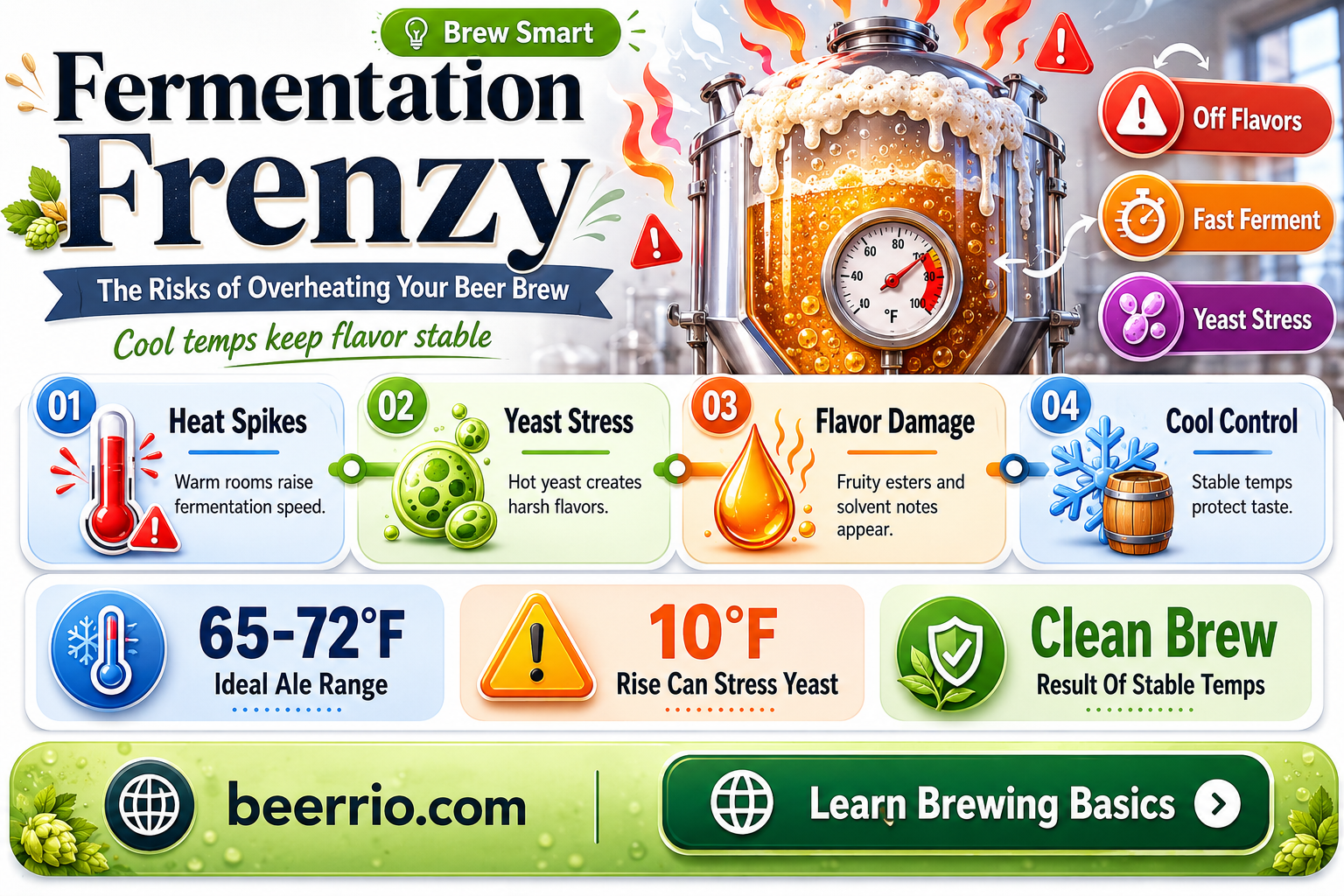
When fermenting beer, maintaining the optimal temperature is crucial for achieving the desired flavor and quality. If the fermentation process gets too warm, it can lead to a range of issues. The yeast responsible for fermentation can become overly active, producing unwanted byproducts such as fusel alcohols, which contribute to off-flavors and a harsher taste. Additionally, high temperatures can cause the yeast to die prematurely, halting fermentation and potentially leaving the beer with residual sugars and an incomplete flavor profile. To prevent these problems, brewers must carefully monitor and control the fermentation temperature, typically keeping it within a specific range for the type of beer being produced.
Explore related products

$28




What You'll Learn
- Overactive Yeast: High temperatures can cause yeast to become overly active, leading to rapid fermentation and potential over-carbonation
- Off-Flavors: Warmth can promote the growth of unwanted bacteria, resulting in off-flavors such as sourness or a buttery taste
- Alcohol Content: Fermentation at higher temperatures can lead to a higher alcohol content in the beer, affecting its balance and flavor
- Foaming Issues: Excessive warmth may cause the beer to foam excessively, making it difficult to control and potentially leading to overflow
- Spoilage Risk: If beer ferments too warmly, it can spoil, resulting in a product that is unsafe to consume and lacks desired qualities

Overactive Yeast: High temperatures can cause yeast to become overly active, leading to rapid fermentation and potential over-carbonation
High temperatures can significantly impact the fermentation process of beer, particularly by causing yeast to become overactive. Yeast is a microorganism that plays a crucial role in converting sugars into alcohol and carbon dioxide during fermentation. When the temperature rises above the optimal range for yeast activity, which is typically between 60°F and 75°F (15°C and 24°C) for most beer yeasts, the yeast can become overly active, leading to rapid fermentation.
Rapid fermentation due to overactive yeast can result in several issues. Firstly, it can lead to over-carbonation, where the beer becomes excessively fizzy. This can make the beer difficult to drink and may even cause it to overflow when poured. Secondly, overactive yeast can produce off-flavors, such as a banana-like or clove-like taste, which can detract from the desired flavor profile of the beer. Thirdly, high temperatures can cause the yeast to produce more alcohol than intended, potentially leading to a higher alcohol content in the final product.
To prevent these issues, it is essential to monitor and control the temperature during the fermentation process. This can be done by using a thermometer to regularly check the temperature of the fermenting beer and by taking steps to cool the beer if the temperature becomes too high. One method of cooling is to place the fermenting beer in a cool, dark place, such as a refrigerator or a cool room. Another method is to use a cooling system, such as a glycol chiller, to maintain a consistent temperature.
In addition to monitoring and controlling the temperature, it is also important to choose a yeast strain that is well-suited for the temperature range in which the beer will be fermented. Some yeast strains are more tolerant of high temperatures than others, and choosing a strain that is appropriate for the brewing conditions can help to prevent issues related to overactive yeast.
In conclusion, high temperatures can cause yeast to become overactive during the fermentation process, leading to rapid fermentation and potential over-carbonation. To prevent these issues, it is crucial to monitor and control the temperature, choose an appropriate yeast strain, and take steps to cool the beer if necessary. By doing so, brewers can ensure that their beer ferments properly and achieves the desired flavor and carbonation levels.
The Surprising Effects of Heating Beer: A Scientific Exploration
You may want to see also
Explore related products


Off-Flavors: Warmth can promote the growth of unwanted bacteria, resulting in off-flavors such as sourness or a buttery taste
Warmth can significantly impact the fermentation process of beer, leading to the development of off-flavors. When the temperature rises above the optimal range for fermentation, typically between 60-75°F (15-24°C) for most beer styles, it can promote the growth of unwanted bacteria. These bacteria can produce compounds that result in undesirable flavors such as sourness or a buttery taste.
One of the primary bacteria responsible for these off-flavors is Lactobacillus. This bacterium thrives in warmer temperatures and can convert sugars into lactic acid, giving the beer a sour taste. Another culprit is Clostridium, which can produce butyric acid, leading to a buttery or rancid flavor profile. These bacteria are naturally present in the environment and can be introduced into the beer during the brewing process or through contamination.
To prevent these off-flavors, it's crucial to maintain the fermentation temperature within the optimal range. This can be achieved through various methods, such as using a temperature-controlled fermentation chamber or placing the fermenter in a cool, dark place. Additionally, brewers should ensure proper sanitation and hygiene practices to minimize the risk of contamination.
If the beer has already developed off-flavors due to excessive warmth, there are a few steps that can be taken to mitigate the issue. One approach is to lower the temperature and allow the beer to age, which can help to reduce the intensity of the off-flavors. Another option is to use a process called "crash cooling," where the beer is rapidly cooled to a low temperature to halt the activity of the bacteria. In some cases, the addition of certain ingredients, such as oak chips or specific yeast strains, can help to balance out the flavor profile.
In conclusion, maintaining the proper fermentation temperature is critical in preventing the development of off-flavors in beer. By understanding the role of bacteria and taking steps to control the environment, brewers can ensure that their beer retains its desired taste and quality.
Paws and Reflect: The Surprising Effects of Beer on Dogs
You may want to see also
Explore related products


Alcohol Content: Fermentation at higher temperatures can lead to a higher alcohol content in the beer, affecting its balance and flavor
Fermentation is a critical process in beer brewing, and temperature plays a pivotal role in determining the final product's characteristics. When beer ferments at higher temperatures, the yeast's metabolic activity increases, leading to a faster conversion of sugars into alcohol and carbon dioxide. This accelerated process can result in a higher alcohol content in the beer, which may significantly impact its balance and flavor profile.
One of the primary concerns with higher alcohol content due to elevated fermentation temperatures is the potential for the beer to become unbalanced. A higher alcohol by volume (ABV) can make the beer taste stronger and more intense, which might overshadow other flavor components such as maltiness, hop bitterness, and fruity esters. This imbalance can lead to a less enjoyable drinking experience, as the beer may come across as harsh or overly alcoholic.
Moreover, higher temperatures during fermentation can also affect the production of various flavor compounds. For instance, increased temperatures can lead to a higher formation of fusel alcohols, which are known for their off-flavors and can contribute to a rough or solvent-like taste in the beer. Additionally, the yeast may produce more esters at higher temperatures, which can result in an overly fruity or phenolic flavor profile, further complicating the beer's balance.
To mitigate these issues, brewers often employ temperature control strategies during fermentation. Maintaining a consistent and optimal temperature range can help ensure that the yeast ferments the sugars at a controlled rate, leading to a more balanced and flavorful beer. For example, lagers are typically fermented at lower temperatures (around 45-55°F or 7-13°C) to produce a clean and crisp taste, while ales are fermented at slightly higher temperatures (around 60-70°F or 15-21°C) to develop more complex flavors.
In conclusion, while higher fermentation temperatures can lead to increased alcohol content in beer, this may come at the cost of balance and flavor. Brewers must carefully manage fermentation conditions to achieve the desired characteristics in their beer, ensuring that the final product is both enjoyable and well-crafted.
The Surprising Effects of Beer in Your Eye: A Comprehensive Guide
You may want to see also
Explore related products


Foaming Issues: Excessive warmth may cause the beer to foam excessively, making it difficult to control and potentially leading to overflow
Excessive foaming is a critical issue that can arise when fermenting beer gets too warm. This phenomenon occurs because higher temperatures increase the solubility of carbon dioxide in the beer, leading to a greater release of gas when the beer is agitated or poured. The resulting foam can be difficult to manage, often leading to overflows that can cause spills, waste product, and even damage to equipment.
One of the primary challenges with excessive foaming is that it can make it difficult to monitor the fermentation process accurately. The foam can obscure the true level of the beer in the fermenter, making it hard to determine when to add additional ingredients or when the fermentation is complete. Furthermore, the foam can also interfere with the proper sealing of the fermenter, potentially allowing contaminants to enter and spoil the batch.
To mitigate foaming issues, brewers can take several steps. First, it's essential to maintain a consistent and appropriate temperature throughout the fermentation process. This typically means keeping the beer between 60-70°F (15-21°C), depending on the specific yeast strain being used. Brewers should also avoid agitating the beer unnecessarily, as this can release more carbon dioxide and exacerbate the foaming problem.
Another effective strategy is to use a foam stabilizer, such as carrageenan or agar, which can help to reduce the amount of foam produced. These stabilizers work by binding to the proteins in the beer that are responsible for creating foam, thus preventing them from forming. However, it's important to note that the use of foam stabilizers should be done in moderation, as they can also affect the taste and mouthfeel of the final product.
In cases where foaming is particularly problematic, brewers may need to employ more drastic measures, such as using a mechanical foam breaker or even transferring the beer to a different container to allow the foam to settle. These methods can be time-consuming and may require additional equipment, but they can be necessary to prevent overflows and ensure a successful fermentation.
Ultimately, the key to preventing foaming issues during fermentation is careful temperature control and monitoring. By maintaining a consistent temperature and avoiding unnecessary agitation, brewers can minimize the risk of excessive foaming and ensure that their beer ferments properly.
The Great Debate: Beer vs. Liquor - Which One Really Packs on the Pounds?
You may want to see also
Explore related products


Spoilage Risk: If beer ferments too warmly, it can spoil, resulting in a product that is unsafe to consume and lacks desired qualities
Fermentation is a delicate process, and temperature plays a crucial role in determining the quality and safety of the final beer product. When beer ferments too warmly, it can lead to spoilage, which not only affects the taste and aroma but also poses health risks to consumers. This spoilage is primarily caused by the overgrowth of undesirable microorganisms such as bacteria and wild yeast, which thrive in higher temperatures.
One of the key indicators of spoilage is the presence of off-flavors and aromas, such as a sour or funky taste, which can be quite unpleasant. Additionally, the beer may exhibit signs of cloudiness or sedimentation, which are not typically desirable in most beer styles. In some cases, the spoilage can be so severe that the beer becomes completely undrinkable.
From a safety perspective, consuming spoiled beer can lead to foodborne illnesses, including symptoms like nausea, vomiting, and diarrhea. This is because the harmful bacteria that cause spoilage can also cause gastrointestinal issues in humans. Therefore, it is essential to monitor the fermentation temperature closely to prevent spoilage and ensure the production of a safe and high-quality beer.
To mitigate the risk of spoilage, brewers should aim to maintain a consistent fermentation temperature within the optimal range for the specific yeast strain being used. This typically involves using a temperature-controlled fermentation chamber or employing cooling methods such as ice baths or glycol chillers. Regular monitoring of the temperature and making adjustments as needed can help prevent the beer from becoming too warm and spoiling.
In conclusion, spoilage risk is a significant concern when fermenting beer at too warm a temperature. By understanding the causes and consequences of spoilage, brewers can take proactive steps to ensure that their beer remains safe to consume and retains the desired qualities that make it enjoyable. Proper temperature control is key to achieving a successful fermentation and producing a high-quality beer product.
Uncorking the Truth: Beer vs. Wine - Which Packs a Stronger Punch?
You may want to see also
Frequently asked questions
If fermenting beer gets too warm, it can lead to several issues. The yeast may become overly active, producing off-flavors and potentially causing the beer to become over-carbonated. High temperatures can also stress the yeast, leading to a decrease in fermentation efficiency and potentially resulting in a stuck fermentation.
Yes, high temperatures during fermentation can significantly affect the taste of the beer. The increased yeast activity can produce unwanted compounds such as fusel alcohols, which contribute to off-flavors. Additionally, the beer may become over-carbonated, leading to a harsh, fizzy taste.
To prevent beer from getting too warm during fermentation, it's essential to monitor and control the temperature. This can be done by using a thermometer to regularly check the temperature of the fermenting beer and by placing the fermentation vessel in a cool, dark place. If necessary, you can also use a cooling system or ice bath to maintain the desired temperature.
The ideal temperature range for fermenting beer varies depending on the type of beer and the yeast used. Generally, most ales ferment best between 60°F and 70°F (15°C and 21°C), while lagers typically require cooler temperatures, between 45°F and 55°F (7°C and 13°C). It's crucial to consult the yeast manufacturer's guidelines for the specific temperature recommendations for your brew.


