Jason Wagner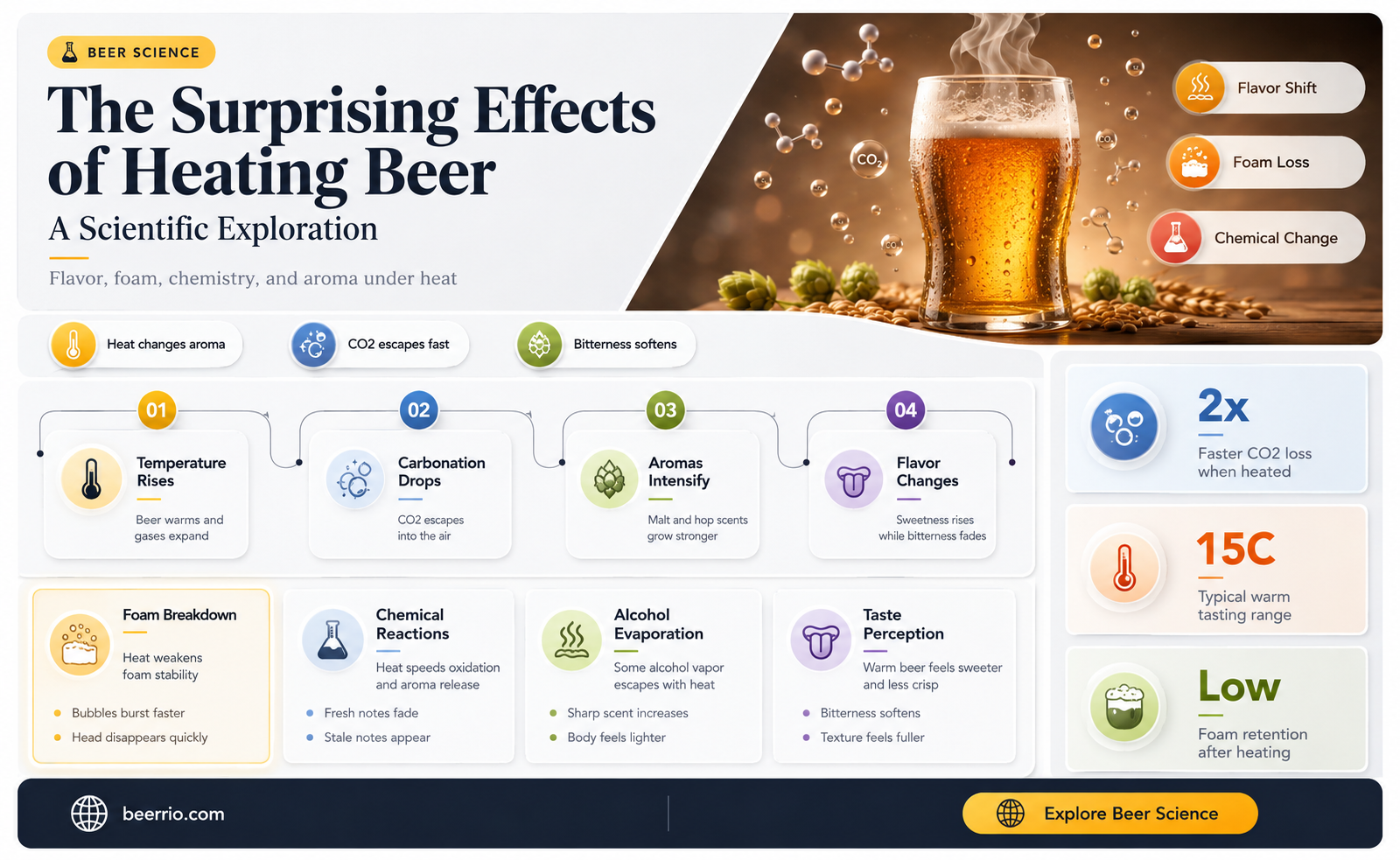
When beer gets hot, several changes occur that can affect its taste, aroma, and overall quality. As the temperature rises, the beer's flavor profile shifts, with the malt and hop characteristics becoming less pronounced and the bitterness increasing. Additionally, higher temperatures can cause the beer to lose its carbonation more quickly, resulting in a flatter taste. The aroma also changes, with the volatile compounds responsible for the beer's scent becoming more pronounced. While some styles of beer, like stouts and porters, can benefit from being served slightly warmer, most beers are best enjoyed cold to maintain their optimal flavor and aroma.
Explore related products



What You'll Learn
- Chemical Changes: Heating beer can alter its chemical composition, affecting flavor and aroma
- Foam and Carbonation: Increased temperature can cause excessive foaming and loss of carbonation
- Microbial Growth: Warm temperatures may promote the growth of unwanted microorganisms, impacting taste and safety
- Oxidation: Exposure to heat and air can lead to oxidation, resulting in off-flavors and spoilage
- Storage and Serving: Recommendations for optimal storage and serving temperatures to maintain beer quality

Chemical Changes: Heating beer can alter its chemical composition, affecting flavor and aroma
When beer is heated, a series of chemical reactions occur that can significantly alter its flavor and aroma. One of the primary changes involves the Maillard reaction, a complex chemical reaction between amino acids and reducing sugars that gives browned food its distinctive flavor. In beer, this reaction can produce new flavor compounds that may be perceived as unpleasant or off-putting, such as a burnt or caramelized taste.
Another significant change that occurs when beer is heated is the release of volatile compounds. These compounds, which include esters, aldehydes, and ketones, are responsible for many of the beer's aromatic qualities. When heated, these compounds can evaporate more quickly, leading to a loss of the beer's delicate aromas and potentially causing the beer to taste flat or one-dimensional.
In addition to these changes, heating beer can also affect its bitterness. The hops used in brewing beer contain compounds called alpha acids, which are responsible for the beer's bitterness. When heated, these compounds can isomerize, leading to a decrease in the beer's bitterness and potentially causing it to taste sweeter or more malty.
To minimize these changes, it's important to store and serve beer at the appropriate temperature. For most beers, this means keeping them cool and away from direct sunlight or heat sources. If beer must be heated, it's best to do so slowly and gradually, allowing the beer to adjust to the change in temperature and minimizing the risk of unwanted chemical reactions.
In conclusion, heating beer can have a significant impact on its chemical composition, leading to changes in flavor, aroma, and bitterness. By understanding these changes and taking steps to minimize them, beer enthusiasts can help ensure that their favorite brews taste their best.
Freshen Up: Effective Ways to Eliminate Beer Breath Quickly
You may want to see also
Explore related products




Foam and Carbonation: Increased temperature can cause excessive foaming and loss of carbonation
When beer is exposed to higher temperatures, the dissolved carbon dioxide gas within it becomes more active. This increased activity leads to the formation of more foam, as the gas bubbles rise to the surface and burst, creating a frothy head. While some foam is desirable in beer, excessive foaming can be problematic, as it may indicate that the beer is losing its carbonation too quickly.
The loss of carbonation is a critical issue for beer quality. Carbonation not only contributes to the beer's refreshing taste and mouthfeel but also acts as a natural preservative. When beer loses its carbonation, it becomes more susceptible to oxidation and spoilage, which can result in off-flavors and aromas. Additionally, the loss of carbonation can make the beer appear flat and unappetizing, negatively impacting the overall drinking experience.
To mitigate the effects of increased temperature on foam and carbonation, it's essential to store and serve beer at the appropriate temperature. For most beers, this means keeping them chilled between 45°F and 55°F (7°C and 13°C). Serving beer in a glass that is also chilled can help maintain the optimal temperature and reduce the risk of excessive foaming and carbonation loss.
In some cases, it may be necessary to adjust the carbonation level of the beer before serving. This can be done by gently swirling the bottle or keg to redistribute the carbon dioxide evenly throughout the liquid. It's important to note that this technique should be used sparingly, as over-carbonation can also lead to problems such as gushing or bottle bombs.
Ultimately, understanding the relationship between temperature, foam, and carbonation is crucial for maintaining the quality and taste of beer. By taking steps to control the temperature and carbonation levels, beer enthusiasts can ensure that their favorite brews are always served at their best.
Freshen Up: Effective Ways to Eliminate Beer Breath Quickly
You may want to see also
Explore related products






Microbial Growth: Warm temperatures may promote the growth of unwanted microorganisms, impacting taste and safety
Warm temperatures can significantly impact the quality and safety of beer by promoting the growth of unwanted microorganisms. These microorganisms, including bacteria and wild yeast, can thrive in the nutrient-rich environment of beer when it is exposed to heat. As they grow, they can produce off-flavors and aromas, such as sourness or a fruity, estery character, which can detract from the beer's intended taste profile. Moreover, some of these microorganisms can produce harmful toxins or cause spoilage, posing a risk to consumer health.
One of the primary concerns with microbial growth in beer is the production of acetic acid by bacteria such as Acetobacter. This acid can give the beer a vinegary taste and may also contribute to the formation of ethyl acetate, which can impart an unpleasant fruity flavor. Additionally, wild yeast strains can produce esters and fusel alcohols, leading to off-flavors and potential hangover-inducing compounds.
To mitigate the effects of microbial growth, brewers often employ various preservation techniques. These can include the use of hops, which have natural antimicrobial properties, as well as the addition of preservatives such as potassium sorbate or sodium benzoate. Proper storage and handling practices, such as keeping beer refrigerated and minimizing exposure to air, can also help to prevent microbial contamination.
In the event that beer does become contaminated, there are some steps that can be taken to address the issue. For instance, the beer can be pasteurized to kill off the unwanted microorganisms, although this may also affect the flavor and character of the beer. Alternatively, the beer can be filtered to remove the contaminants, but this may not be effective against all types of microorganisms.
Ultimately, preventing microbial growth in beer is a critical aspect of maintaining its quality and safety. By understanding the factors that contribute to microbial contamination and employing appropriate preservation techniques, brewers can help to ensure that their beer remains enjoyable and safe to consume, even when exposed to warm temperatures.
Exploring Sobriety: Beer vs. Shots - Which Packs a Stronger Punch?
You may want to see also
Explore related products


Oxidation: Exposure to heat and air can lead to oxidation, resulting in off-flavors and spoilage
Oxidation is a chemical reaction that occurs when beer is exposed to heat and air, leading to the formation of off-flavors and spoilage. This process is a result of the beer's ingredients, particularly the hops and malt, reacting with oxygen in the air. The reaction produces compounds that can give the beer an unpleasant taste, aroma, and appearance.
One of the primary off-flavors produced by oxidation is a cardboard-like taste, which can be particularly noticeable in darker beers. This is due to the formation of compounds called aldehydes, which are produced when the beer's ingredients react with oxygen. In addition to the cardboard-like taste, oxidation can also produce other off-flavors, such as a metallic or rusty taste, and can cause the beer to become cloudy or discolored.
The rate of oxidation increases with temperature, which is why it's particularly important to store beer at a cool temperature to prevent spoilage. When beer is exposed to high temperatures, the oxidation process can occur more quickly, leading to the formation of more off-flavors and spoilage. In addition to temperature, the amount of oxygen that the beer is exposed to can also affect the rate of oxidation. For example, if a beer is stored in a container that is not airtight, it will be more susceptible to oxidation than if it is stored in an airtight container.
To prevent oxidation and spoilage, it's important to store beer in a cool, dark place, away from sources of heat and light. It's also important to use airtight containers to store beer, as this will help to reduce the amount of oxygen that the beer is exposed to. If you notice that a beer has developed off-flavors or spoilage, it's best to discard it, as consuming oxidized beer can be unpleasant and potentially harmful.
In summary, oxidation is a chemical reaction that can occur when beer is exposed to heat and air, leading to the formation of off-flavors and spoilage. To prevent this process, it's important to store beer in a cool, dark place, away from sources of heat and light, and to use airtight containers. If you notice that a beer has developed off-flavors or spoilage, it's best to discard it.
Exploring the Intoxicating Ingredients: What Gets You Drunk in Beer?
You may want to see also
Explore related products


Storage and Serving: Recommendations for optimal storage and serving temperatures to maintain beer quality
Proper storage and serving temperatures are crucial for maintaining the quality and flavor profile of beer. When beer is exposed to high temperatures, it can lead to a degradation of its taste, aroma, and overall character. To prevent this, it is recommended to store beer in a cool, dark place, such as a refrigerator or a cellar, at a temperature between 45°F and 55°F (7°C and 13°C). This temperature range helps to slow down the chemical reactions that can negatively impact the beer's quality.
When it comes to serving beer, the optimal temperature depends on the type of beer being served. For example, lagers and pilsners are best served cold, between 40°F and 45°F (4°C and 7°C), to enhance their crisp and refreshing qualities. On the other hand, ales and stouts are better served slightly warmer, between 50°F and 55°F (10°C and 13°C), to allow their complex flavors and aromas to fully develop.
It is also important to avoid exposing beer to direct sunlight or heat sources, as this can cause the beer to become "skunky" or develop off-flavors. When transporting beer, it is recommended to use insulated bags or coolers to maintain the desired temperature. Additionally, it is crucial to handle beer gently to prevent agitation, which can lead to the release of unwanted compounds and affect the beer's taste.
In summary, maintaining the proper storage and serving temperatures is essential for preserving the quality and flavor of beer. By following these recommendations, beer enthusiasts can ensure that they are enjoying their favorite brews at their best.
Hoppy Holidays: The Ultimate Gift Guide for Beer Enthusiasts
You may want to see also
Frequently asked questions
If beer gets too hot, it can lose its crispness and the flavors can become muted or unbalanced. The heat can cause the beer to taste flat and the bitterness from the hops may become more pronounced.
Heating beer does not significantly affect its alcohol content. Alcohol has a lower boiling point than water, so it evaporates more quickly, but the overall effect on the alcohol by volume (ABV) is minimal unless the beer is heated to a very high temperature for an extended period.
It is generally not recommended to drink beer that has been left in a hot car, especially if it has been exposed to direct sunlight. The heat can cause the beer to spoil or develop off-flavors, and in extreme cases, the bottle or can may even explode due to the buildup of pressure.
Temperature has a significant impact on the carbonation of beer. As the temperature increases, the solubility of carbon dioxide in the beer decreases, causing the beer to lose its carbonation more quickly. This can result in a flat or lifeless beer.
The ideal temperature to store beer depends on the type of beer, but most beers are best stored between 45°F and 55°F (7°C and 13°C). Storing beer at a consistent, cool temperature helps to preserve its flavor and carbonation.