Oisin Foster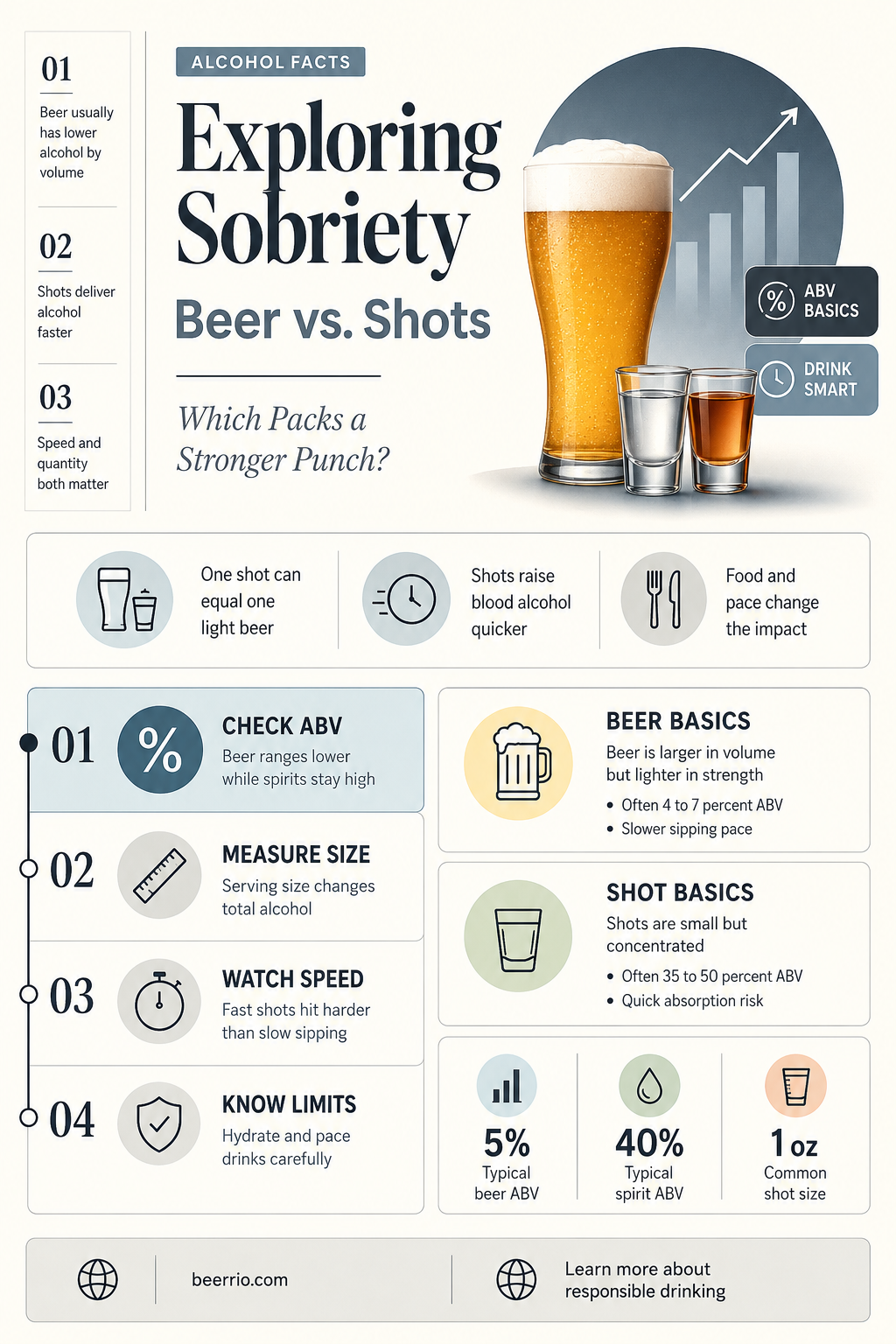
When comparing the effects of a beer versus a shot in terms of intoxication, several factors come into play. The primary determinant is the amount of alcohol consumed. A standard beer typically contains about 12-15 grams of alcohol, while a shot of distilled spirit, such as vodka or whiskey, usually contains around 14 grams. However, the rate at which these beverages are consumed can significantly influence their impact. Beers are generally consumed more slowly due to their volume and carbonation, which can lead to a more gradual increase in blood alcohol concentration (BAC). Shots, on the other hand, are often downed quickly, causing a rapid spike in BAC. Additionally, the presence of food in the stomach can slow the absorption of alcohol, making it important to consider whether one has eaten recently when assessing the potential effects of either drink.
| Characteristics | Values |
|---|---|
| Type of Alcohol | Beer typically contains 4-6% ABV, while shots (spirits) usually range from 40-50% ABV. |
| Volume Consumed | A standard beer is 12 oz (355 ml), whereas a shot is typically 1.5 oz (44 ml). |
| Rate of Consumption | Beers are generally consumed more slowly than shots, which are often downed quickly. |
| Food Pairing | Beers are commonly paired with various foods, potentially slowing alcohol absorption. Shots are rarely paired with food. |
| Alcohol Metabolism | The body metabolizes alcohol from beer at a relatively steady rate due to its lower alcohol content. Shots, with their higher alcohol content, can lead to a faster initial spike in blood alcohol concentration. |
| Social Context | Beers are often consumed in social settings over longer periods. Shots might be consumed in rapid succession during social events or gatherings. |
| Individual Tolerance | Tolerance to beer may differ from tolerance to spirits due to varying alcohol concentrations. |
| Mixing with Other Drinks | Beers are sometimes mixed with other beverages (e.g., Jägerbomb), while shots are often consumed neat or mixed with non-alcoholic beverages. |
| Effects on Judgment | The slower consumption of beer might allow for better judgment over time compared to the rapid effects of multiple shots. |
| Hangover Potential | The higher alcohol content in shots can lead to more severe hangovers compared to beer, assuming equal total alcohol consumption. |
| Caloric Content | A 12 oz beer typically contains around 150 calories, while a 1.5 oz shot of vodka contains approximately 65 calories. |
| Alcohol Absorption Rate | The alcohol in shots is absorbed more quickly into the bloodstream due to the higher concentration, leading to faster intoxication. |
| Blood Alcohol Content (BAC) | Consuming a standard beer might raise BAC to around 0.02-0.03%, while a shot could increase BAC to 0.05-0.06% or more, depending on individual factors. |
| Duration of Effects | The effects of beer tend to last longer due to the slower metabolism of alcohol, whereas shots produce a shorter, more intense period of intoxication. |
| Risk of Overconsumption | The rapid consumption of shots increases the risk of overconsumption and potential alcohol poisoning compared to the slower pace of beer drinking. |
Explore related products


What You'll Learn
- Blood Alcohol Content (BAC): Understanding how different types of alcohol affect your BAC levels
- Alcohol Metabolism: Exploring how your body processes beer versus shots, and the resulting intoxication
- Drinking Pace: Comparing the typical pace of consuming beers versus shots and its impact on drunkenness
- Alcohol Strength: Analyzing the alcohol by volume (ABV) differences between beers and spirits
- Individual Tolerance: Discussing how personal alcohol tolerance can influence the effects of beer versus shots

Blood Alcohol Content (BAC): Understanding how different types of alcohol affect your BAC levels
Understanding how different types of alcohol affect your Blood Alcohol Content (BAC) levels is crucial for responsible drinking. While many people may assume that all alcoholic beverages have the same impact on BAC, the reality is that different types of alcohol can affect your body in unique ways. For instance, spirits like vodka and whiskey typically have a higher alcohol content than beer or wine, which means that consuming the same volume of these beverages can result in a higher BAC level. However, the rate at which your BAC increases also depends on factors such as your body weight, metabolism, and the speed at which you consume the alcohol.
One common misconception is that drinking beer will result in a lower BAC level compared to drinking shots of liquor. While it is true that beer generally has a lower alcohol content by volume, the total amount of alcohol consumed is what ultimately affects your BAC. For example, if you drink five beers in an hour, your BAC may be similar to that of someone who drinks five shots of vodka in the same timeframe, assuming both individuals have similar body weights and metabolisms. It is also important to note that different types of beer can have varying alcohol contents, with some craft beers having significantly higher alcohol levels than mass-produced options.
Another factor to consider is how different types of alcohol are metabolized by the body. Spirits are typically metabolized more quickly than beer or wine, which can lead to a faster increase in BAC levels. However, this also means that the effects of spirits may wear off more quickly, whereas the lower alcohol content in beer and wine can result in a more prolonged period of intoxication. Additionally, the presence of food in your stomach can slow down the absorption of alcohol, leading to a lower peak BAC level and a more gradual increase in intoxication.
In conclusion, while the type of alcohol you consume can affect your BAC levels, the most important factor is the total amount of alcohol you drink. Responsible drinking practices, such as pacing yourself, eating before and while drinking, and knowing your limits, are essential for maintaining a safe BAC level and avoiding the negative consequences of excessive alcohol consumption.
Freshen Up: Effective Ways to Eliminate Beer Breath Quickly
You may want to see also
Explore related products



Alcohol Metabolism: Exploring how your body processes beer versus shots, and the resulting intoxication
The body metabolizes alcohol through a series of enzymatic reactions, primarily in the liver. When comparing beer and shots, the rate of metabolism can vary due to differences in alcohol concentration and the presence of other compounds in beer. Beer typically contains carbohydrates and proteins that can slow down the absorption of alcohol into the bloodstream, leading to a more gradual increase in blood alcohol concentration (BAC). On the other hand, shots, which are usually consumed quickly, can result in a rapid spike in BAC due to the high alcohol content and the absence of other substances that could slow absorption.
The resulting intoxication from beer versus shots can differ in terms of onset and duration. With beer, the effects of alcohol may take longer to manifest, but they can last longer due to the slower absorption rate. Shots, however, can lead to a quicker onset of intoxication, but the effects may wear off more rapidly as the body metabolizes the alcohol. It's important to note that individual factors such as body weight, metabolism, and tolerance can significantly influence how alcohol affects a person.
In terms of practical tips, it's advisable to consume alcohol in moderation and to be aware of how different types of alcoholic beverages can impact your body. If you're planning to drink, it's a good idea to eat beforehand and to pace yourself, as this can help slow down the absorption of alcohol and reduce the risk of overconsumption. Additionally, staying hydrated and alternating alcoholic drinks with non-alcoholic ones can help mitigate the effects of alcohol and prevent dehydration.
Ultimately, whether you choose to drink beer or shots, it's crucial to be responsible and to understand how alcohol metabolism works in your body. By being mindful of your consumption and taking steps to drink safely, you can enjoy alcoholic beverages while minimizing the risks associated with intoxication.
Fresh Breath Solutions: How to Eliminate Beer Odor Quickly
You may want to see also
Explore related products


Drinking Pace: Comparing the typical pace of consuming beers versus shots and its impact on drunkenness
The pace at which individuals consume alcoholic beverages significantly influences the level of intoxication they experience. When comparing beers and shots, the typical drinking pace varies considerably. Beers are generally consumed more slowly due to their larger volume and lower alcohol content, whereas shots are often downed quickly, leading to a rapid increase in blood alcohol concentration (BAC).
Research indicates that the body metabolizes alcohol at a relatively constant rate, regardless of the type of drink. However, the speed at which alcohol is consumed can overwhelm the body's ability to process it efficiently. Drinking shots rapidly can lead to a higher peak BAC compared to sipping beers over the same period. This rapid increase in BAC can result in more pronounced effects of drunkenness, including impaired judgment, coordination, and reaction times.
On the other hand, the slower pace of beer consumption allows the body more time to metabolize the alcohol, potentially leading to a lower peak BAC and less severe intoxication. It's important to note that individual factors such as body weight, metabolism, and tolerance also play significant roles in how alcohol affects a person.
In terms of practical implications, understanding the impact of drinking pace can help individuals make more informed decisions about their alcohol consumption. For example, someone looking to enjoy a social evening without becoming overly intoxicated might opt for beers over shots, or at least pace themselves when consuming shots.
Ultimately, the key takeaway is that while both beers and shots can lead to drunkenness, the pace of consumption is a critical factor in determining the level of intoxication. By being mindful of drinking speed and individual tolerance, people can better manage their alcohol intake and reduce the risks associated with excessive drinking.
Banish the Beer Belly: Effective Strategies for a Slimmer Midsection
You may want to see also
Explore related products


Alcohol Strength: Analyzing the alcohol by volume (ABV) differences between beers and spirits
The alcohol by volume (ABV) is a critical factor in determining the potency of an alcoholic beverage. Beers typically have an ABV ranging from 4% to 6%, while spirits such as vodka, whiskey, and rum often have an ABV of 40% or higher. This significant difference in alcohol concentration means that consuming an equal volume of beer and spirits will result in vastly different levels of intoxication.
To illustrate this point, consider the following scenario: an individual consumes a 12-ounce beer with an ABV of 5% and a 1.5-ounce shot of vodka with an ABV of 40%. The beer contains approximately 0.6 ounces of pure alcohol, while the vodka shot contains about 0.6 ounces of pure alcohol as well. Despite the equal amount of alcohol consumed, the individual is likely to feel more intoxicated from the vodka shot due to its higher concentration of alcohol.
However, it's essential to note that the rate of alcohol absorption into the bloodstream can also be influenced by other factors, such as the presence of food in the stomach, the individual's body weight, and their metabolism. Spirits are often consumed more quickly than beers, which can lead to a rapid increase in blood alcohol concentration (BAC). On the other hand, beers are typically consumed more slowly, allowing for a more gradual increase in BAC.
In conclusion, while the ABV is a crucial factor in determining the potency of an alcoholic beverage, it's not the only factor that contributes to intoxication. The rate of consumption, the presence of food, and individual physiological factors all play a role in how alcohol affects the body. Understanding these factors can help individuals make more informed decisions about their alcohol consumption and promote safer drinking habits.
Sipping Songs: The Surprising Science Behind Beer and Lyrics
You may want to see also
Explore related products



Individual Tolerance: Discussing how personal alcohol tolerance can influence the effects of beer versus shots
Individual tolerance to alcohol plays a significant role in determining the effects of consuming beer versus shots. This tolerance is influenced by various factors, including genetics, body weight, metabolism, and frequency of alcohol consumption. People with a higher tolerance may find that they can consume more alcohol before feeling the same effects as someone with a lower tolerance.
When comparing beer and shots, it's important to consider the alcohol content and the rate at which it is consumed. Beer typically has a lower alcohol content than shots, but it is often consumed in larger quantities and over a longer period. Shots, on the other hand, are usually consumed quickly and in smaller quantities, but they have a higher alcohol content.
For individuals with a high tolerance, the difference in alcohol content between beer and shots may not have a significant impact on their level of intoxication. They may be able to consume multiple shots without feeling the same effects as someone with a lower tolerance who has consumed the same amount of alcohol in beer.
However, for individuals with a low tolerance, the higher alcohol content in shots can lead to faster intoxication. Even a small amount of alcohol can have a significant impact on their blood alcohol concentration (BAC) and overall impairment.
It's also important to consider the social and environmental factors that can influence alcohol consumption. For example, people may be more likely to consume shots in a social setting where they are encouraged to drink quickly, while beer may be consumed more slowly in a more relaxed environment.
In conclusion, individual tolerance to alcohol is a complex factor that can significantly influence the effects of consuming beer versus shots. Understanding one's own tolerance and the factors that influence it can help individuals make more informed decisions about their alcohol consumption and reduce the risk of overconsumption and related harm.
Uncorking the Truth: Beer vs. Wine - Which Packs a Stronger Punch?
You may want to see also
Frequently asked questions
Generally, a shot of distilled alcohol like vodka, whiskey, or tequila contains more alcohol by volume than a beer. Therefore, consuming a shot would typically result in a higher level of intoxication compared to drinking a beer, assuming both are consumed in a similar timeframe.
Beers usually have an alcohol by volume (ABV) content ranging from 4% to 6%, while distilled spirits like vodka, whiskey, and tequila typically have an ABV of around 40%. This significant difference in alcohol concentration means that a shot contains much more pure alcohol than a beer of the same volume.
Yes, the type of beer or shot can influence the level of intoxication. For beers, darker and stronger varieties like stouts and IPAs tend to have higher alcohol content. For shots, the type of distilled spirit can vary in alcohol strength, with some liqueurs having lower ABV than clear spirits like vodka or tequila.
Your body processes alcohol from both beers and shots through the liver, but the rate of absorption can differ. Shots are typically consumed more quickly and can lead to a faster spike in blood alcohol concentration. Beers, often consumed more slowly, may result in a more gradual increase in intoxication.
Yes, several factors can affect your level of intoxication, including your body weight, metabolism, tolerance to alcohol, whether you've eaten recently, and the speed at which you consume the alcohol. Additionally, mixing different types of alcohol or consuming them in succession can also impact how drunk you get.