Jason Wagner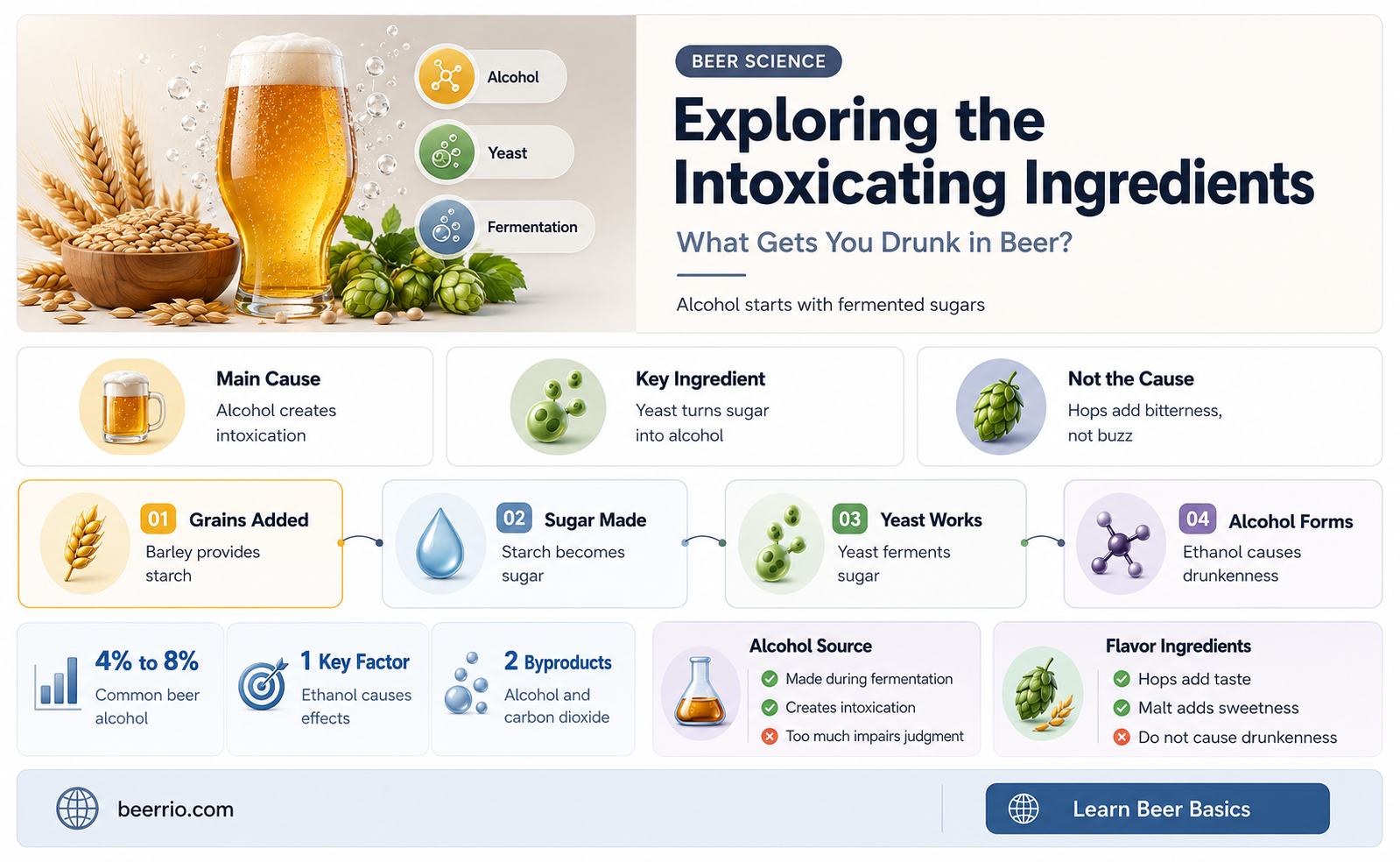
The primary component in beer that can lead to intoxication is alcohol, specifically ethanol. Ethanol is a volatile, flammable, colorless liquid that is produced through the fermentation process of sugars found in grains like barley, wheat, and rice. The alcohol content in beer varies depending on the type and brewing process, but it typically ranges from 4% to 6% by volume. When consumed, ethanol is absorbed into the bloodstream and affects the central nervous system, leading to the sensation of being drunk. Factors such as the speed of consumption, the amount consumed, individual tolerance levels, and whether food is eaten before or while drinking can all influence the effects of alcohol. Understanding these factors can help individuals make informed decisions about their alcohol consumption and promote responsible drinking habits.
Explore related products


What You'll Learn
- Alcohol by Volume (ABV): The percentage of alcohol in beer that contributes to intoxication
- Types of Alcohol: Understanding the different types of alcohol found in beer and their effects
- Individual Tolerance: Factors influencing personal alcohol tolerance and how it affects getting drunk
- Drinking Speed: The impact of how quickly you consume beer on your level of intoxication
- Food Consumption: How eating before or while drinking beer can affect your blood alcohol concentration

Alcohol by Volume (ABV): The percentage of alcohol in beer that contributes to intoxication
Alcohol by Volume (ABV) is a critical factor in determining the potency of beer and its potential to intoxicate. ABV is the percentage of alcohol that is present in the beer, and it is this alcohol content that is primarily responsible for the effects of intoxication. Understanding ABV is essential for anyone looking to enjoy beer responsibly and safely.
The ABV of beer can vary significantly depending on the type and brewing process. For example, light beers typically have an ABV of around 4-5%, while craft beers and ales can range from 6-12% or even higher. Specialty beers, such as barleywines or imperial stouts, can have ABVs exceeding 15%. It is important to note that the higher the ABV, the more alcohol is present in the beer, and the greater the potential for intoxication.
When consuming beer, it is crucial to be aware of the ABV and to drink responsibly. The effects of alcohol can vary depending on factors such as body weight, metabolism, and tolerance. However, as a general guideline, it is recommended that men consume no more than 2 standard drinks per hour, and women consume no more than 1 standard drink per hour. A standard drink is typically defined as 12 ounces of beer with an ABV of 5%.
It is also important to consider the serving size of beer when assessing its potential for intoxication. A pint of beer (16 ounces) with an ABV of 6% contains more alcohol than a 12-ounce beer with the same ABV. Additionally, drinking beer on an empty stomach can lead to faster absorption of alcohol into the bloodstream, increasing the risk of intoxication.
In conclusion, understanding the ABV of beer is crucial for responsible drinking. By being aware of the alcohol content in different types of beer and consuming them in moderation, individuals can enjoy beer safely and avoid the negative consequences of excessive alcohol consumption.
Exploring Brews: A Beginner's Guide to Choosing Your First Beer
You may want to see also
Explore related products


Types of Alcohol: Understanding the different types of alcohol found in beer and their effects
Beer contains several types of alcohol, each with its own unique effects and characteristics. The primary type of alcohol found in beer is ethanol, which is responsible for the intoxicating effects commonly associated with alcohol consumption. Ethanol is produced during the fermentation process, where yeast converts sugars in the grain into alcohol and carbon dioxide.
In addition to ethanol, beer may also contain other types of alcohol, such as fusel alcohol and congeners. Fusel alcohol is a type of higher alcohol that is produced during fermentation and can contribute to the flavor and aroma of the beer. Congeners are non-alcoholic compounds that are also produced during fermentation and can affect the taste and mouthfeel of the beer.
The effects of these different types of alcohol can vary depending on factors such as the type of beer, the brewing process, and the individual's metabolism. Ethanol is generally considered to be the most intoxicating type of alcohol, but the presence of other types of alcohol and congeners can also contribute to the overall effects of beer consumption.
It is important to note that the alcohol content of beer can vary significantly depending on the type and brand. For example, light beers typically have a lower alcohol content than regular beers, while craft beers and specialty beers may have a higher alcohol content. Additionally, the alcohol content of beer can be affected by factors such as the brewing process, the type of grain used, and the addition of other ingredients.
Understanding the different types of alcohol found in beer and their effects can help individuals make informed decisions about their alcohol consumption. It is important to consume alcohol responsibly and to be aware of the potential risks and effects associated with alcohol consumption.
Unveiling the Truth: Beer vs. Liquor - Which Gets You Drunk Faster?
You may want to see also
Explore related products



Individual Tolerance: Factors influencing personal alcohol tolerance and how it affects getting drunk
Individual tolerance to alcohol is a complex interplay of genetics, physiology, and environmental factors. Genetic predisposition plays a significant role; for instance, individuals of East Asian descent often have a lower tolerance due to genetic variations affecting alcohol metabolism. Physiological factors such as body weight, liver size, and overall health also influence how efficiently the body processes alcohol. A person with a larger body mass index (BMI) may have a higher tolerance, as alcohol is distributed throughout a greater volume of body water, reducing its immediate impact.
Environmental factors, including diet, exercise, and stress levels, can also affect alcohol tolerance. Regular consumption of alcohol can lead to tolerance, as the body adapts to its presence by increasing the production of enzymes that break it down. Conversely, periods of abstinence can reset tolerance levels. Stress and fatigue can lower tolerance, making the effects of alcohol more pronounced. Additionally, certain medications and medical conditions can interact with alcohol, altering its effects and the individual's tolerance.
Understanding personal alcohol tolerance is crucial for responsible drinking. It affects how quickly one becomes intoxicated and the severity of the effects. For example, someone with a low tolerance may become impaired after consuming a small amount of alcohol, while another with a higher tolerance might need to drink more to feel the same effects. This variability underscores the importance of knowing one's limits and drinking in moderation to avoid the risks associated with excessive alcohol consumption.
In summary, individual tolerance to alcohol is influenced by a combination of genetic, physiological, and environmental factors. It is essential to be aware of these factors and how they affect personal tolerance to ensure safe and responsible drinking habits.
Freshen Up: Effective Ways to Eliminate Beer Breath Quickly
You may want to see also
Explore related products




Drinking Speed: The impact of how quickly you consume beer on your level of intoxication
The speed at which you consume beer can significantly influence your level of intoxication. When you drink quickly, your body does not have enough time to metabolize the alcohol, leading to a higher concentration of alcohol in your bloodstream. This rapid increase can result in a more intense and sudden onset of intoxication. Conversely, drinking slowly allows your body to process the alcohol more efficiently, potentially reducing the peak level of intoxication.
Several factors can affect how quickly you become intoxicated from beer, including your body weight, metabolism, and tolerance to alcohol. For instance, a person with a lower body weight may become intoxicated more quickly than someone with a higher body weight, as there is less body mass to distribute the alcohol. Similarly, individuals with a faster metabolism may process alcohol more quickly, reducing the duration of intoxication.
To minimize the risk of over-intoxication, it is advisable to pace yourself when drinking beer. This can involve taking sips slowly, alternating between alcoholic and non-alcoholic beverages, or eating food to slow down the absorption of alcohol. Additionally, being aware of your personal limits and drinking responsibly can help prevent excessive alcohol consumption and its associated risks.
In summary, the speed at which you consume beer plays a crucial role in determining your level of intoxication. By understanding the factors that influence intoxication and adopting responsible drinking habits, you can enjoy beer in a safer and more controlled manner.
Fresh Breath Solutions: How to Eliminate Beer Odor Quickly
You may want to see also
Explore related products


$11.99 $13.99



Food Consumption: How eating before or while drinking beer can affect your blood alcohol concentration
Eating before or while drinking beer can significantly impact your blood alcohol concentration (BAC). When you consume food, it slows down the absorption of alcohol into your bloodstream. This is because food, particularly fatty foods, can delay the emptying of your stomach, giving your body more time to metabolize the alcohol. As a result, your peak BAC may be lower and occur later than if you had drunk on an empty stomach.
The type of food you eat also plays a role. Foods high in protein and fat, such as meat, cheese, and nuts, can slow down alcohol absorption more effectively than carbohydrates. This is because proteins and fats take longer to digest, keeping the alcohol in your stomach for a longer period. On the other hand, drinking beer with a meal that is high in carbohydrates, like bread or pasta, may lead to a quicker increase in BAC as carbs are digested more rapidly.
Timing is crucial as well. Eating a meal before drinking can help reduce the initial spike in BAC. However, if you continue to eat while drinking, the alcohol may be absorbed more slowly, leading to a prolonged period of intoxication. It's also important to note that while food can slow down the absorption of alcohol, it does not reduce the total amount of alcohol absorbed or its overall effects on the body.
In practical terms, if you plan to drink beer, eating a meal beforehand can help you drink more responsibly. It can give you a buffer against the immediate effects of alcohol, allowing you to pace yourself better. However, it's essential to remember that food is not a foolproof method for managing alcohol consumption. It's still crucial to drink in moderation and be aware of your limits.
In summary, food consumption can affect your BAC by slowing down the absorption of alcohol. Eating before drinking can help lower your peak BAC and delay its occurrence. The type of food and the timing of consumption also play significant roles. While food can be a useful tool in managing alcohol intake, it should be combined with responsible drinking practices for the best results.
Comparing Alcohol Metabolism: Liquor vs. Beer Breakdown
You may want to see also
Frequently asked questions
The primary ingredient in beer that can make you drunk is alcohol, specifically ethanol. Beer is made through the fermentation of grains, primarily barley, and during this process, yeast converts the sugars in the grains into alcohol and carbon dioxide.
The alcohol content in beer can vary significantly depending on the type and brewing process. Typically, beers can range from about 4% to 6% alcohol by volume (ABV). However, some specialty beers, like IPAs (India Pale Ales) or stouts, can have higher ABV levels, sometimes reaching 10% or more. Light beers usually have lower ABV, around 3% to 4%.
Several factors can influence how quickly beer can make you drunk, including:
- The alcohol content of the beer: Higher ABV beers will generally make you drunk faster.
- Your body weight and metabolism: People with lower body weight or faster metabolisms may feel the effects of alcohol more quickly.
- Whether you've eaten recently: Drinking on an empty stomach can lead to faster absorption of alcohol into your bloodstream.
- Your tolerance level: Regular drinkers may have built up a tolerance to alcohol, meaning they need to consume more to feel the same effects.
Some common misconceptions about what gets you drunk in beer include:
- The color of the beer: The color of beer does not affect its alcohol content or how quickly it can make you drunk.
- The type of hops used: While hops contribute to the flavor and aroma of beer, they do not significantly impact the alcohol content.
- The brewing process: Different brewing processes can affect the flavor and texture of beer, but they do not inherently change the alcohol content unless specific techniques are used to increase or decrease it.