Jason Wagner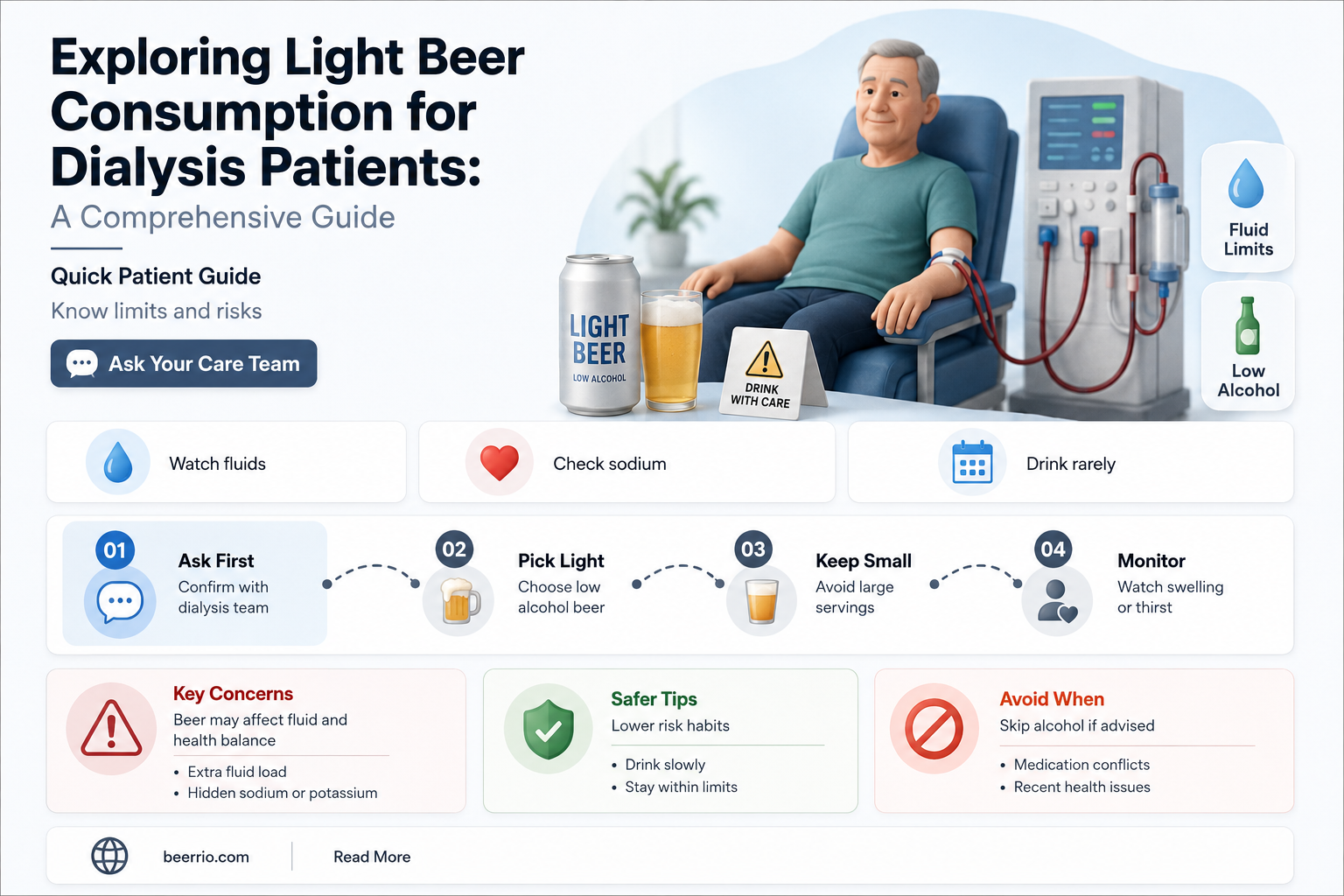
When considering the dietary restrictions for dialysis patients, the question of whether light beer is a suitable beverage choice often arises. Dialysis patients must carefully manage their fluid intake and monitor their consumption of certain substances that can affect their health. Light beer, being a lower-calorie and lower-alcohol option compared to regular beer, might seem like a preferable choice. However, it is essential to examine the specific nutritional content and potential health implications of light beer for individuals undergoing dialysis treatment.
Explore related products



What You'll Learn
- Nutritional Content: Light beer's nutritional profile, including calories, carbs, and protein, and its impact on dialysis patients' dietary needs
- Fluid Intake: The effect of light beer's fluid content on dialysis patients' fluid restrictions and overall hydration balance
- Alcohol Metabolism: How dialysis affects the body's ability to metabolize alcohol, and the potential risks associated with consuming light beer
- Electrolyte Balance: The influence of light beer on electrolyte levels, such as sodium, potassium, and phosphorus, which are crucial for dialysis patients
- Medication Interactions: Possible interactions between light beer and medications commonly prescribed to dialysis patients, and the implications for their health

Nutritional Content: Light beer's nutritional profile, including calories, carbs, and protein, and its impact on dialysis patients' dietary needs
Light beer, often chosen for its lower alcohol content, also has a distinct nutritional profile that can impact dialysis patients' dietary needs. Typically, a 12-ounce serving of light beer contains around 100-150 calories, 6-10 grams of carbohydrates, and negligible amounts of protein. For dialysis patients, who often need to manage their fluid intake and monitor their electrolyte levels, the calorie and carbohydrate content of light beer can be a concern.
Dialysis patients are usually advised to limit their fluid intake to manage blood pressure and reduce the workload on the dialysis machine. Light beer, being a fluid, contributes to this intake. Additionally, the carbohydrates in light beer can affect blood sugar levels, which is particularly important for diabetic patients on dialysis. Monitoring and managing blood sugar levels is crucial to prevent complications during dialysis treatment.
Moreover, the lack of protein in light beer means it does not contribute to the protein needs of dialysis patients, who often require a higher protein intake to maintain muscle mass and overall health. However, some light beers may contain added nutrients or be fortified, which could slightly alter their nutritional profile. It's essential for dialysis patients to check the specific nutritional information of the light beer they choose to consume.
In summary, while light beer may be a preferable option for dialysis patients due to its lower alcohol content, its nutritional profile should be carefully considered within the context of their overall dietary needs and restrictions. Dialysis patients should consult with their healthcare provider or a registered dietitian to determine if light beer can be safely incorporated into their diet and to understand how it may impact their specific nutritional requirements.
Unveiling the Truth: Light Beer's Cholesterol Content Explained
You may want to see also
Explore related products


$26.89


Fluid Intake: The effect of light beer's fluid content on dialysis patients' fluid restrictions and overall hydration balance
Dialysis patients must carefully manage their fluid intake to maintain proper hydration balance and avoid complications. Light beer, with its lower alcohol content, may seem like a safer option compared to regular beer. However, its fluid content still needs to be considered within the context of a dialysis patient's fluid restrictions.
The fluid content in light beer can vary, but it typically contains around 90-95% water. This means that a 12-ounce serving of light beer contains approximately 11-12 ounces of fluid. For dialysis patients, who often have strict fluid intake limits, this can be a significant amount. It's essential to factor in the fluid content of light beer when planning daily fluid intake to avoid exceeding restrictions.
Moreover, the effects of light beer on hydration balance are complex. While the water content in light beer can contribute to overall fluid intake, the alcohol can have a diuretic effect, potentially leading to increased urine production and fluid loss. This can be particularly problematic for dialysis patients, who may already struggle with maintaining adequate hydration levels.
In conclusion, while light beer may be a safer option than regular beer for dialysis patients, its fluid content must be carefully considered within the context of individual fluid restrictions. Dialysis patients should consult with their healthcare provider to determine if light beer is a suitable choice for them and to develop a personalized fluid management plan.
Exploring the Purine Content in Light Beer: A Healthier Choice?
You may want to see also
Explore related products


Alcohol Metabolism: How dialysis affects the body's ability to metabolize alcohol, and the potential risks associated with consuming light beer
Dialysis is a life-saving treatment that helps remove waste products and excess fluids from the blood when the kidneys are no longer able to perform this function effectively. However, dialysis can also affect the body's ability to metabolize alcohol, which is an important consideration for patients who are undergoing this treatment.
Normally, the liver is responsible for breaking down alcohol into harmless byproducts. However, dialysis can impair liver function, which can lead to a buildup of alcohol in the bloodstream. This can result in a range of potential risks, including increased toxicity, impaired judgment, and a higher risk of accidents or injuries.
One of the main concerns for dialysis patients who consume alcohol is the potential for alcohol to interfere with the dialysis process itself. Alcohol can cause blood vessels to dilate, which can lead to increased blood flow to the dialyzer and potentially reduce the effectiveness of the treatment. Additionally, alcohol can cause dehydration, which can further complicate the dialysis process.
When it comes to light beer, it is important for dialysis patients to be aware of the potential risks and to consume it in moderation. Light beer typically contains less alcohol than regular beer, but it can still have a significant impact on the body's ability to metabolize alcohol. Patients should consult with their healthcare provider to determine a safe level of alcohol consumption based on their individual needs and medical history.
In conclusion, dialysis patients should be cautious when consuming alcohol, including light beer. It is important to be aware of the potential risks and to consume alcohol in moderation to avoid interfering with the dialysis process and to minimize the risk of complications. Patients should always consult with their healthcare provider for personalized advice and guidance.
Sipping Light: Unveiling the Low-Carb Truth About Light Beer
You may want to see also
Explore related products





Electrolyte Balance: The influence of light beer on electrolyte levels, such as sodium, potassium, and phosphorus, which are crucial for dialysis patients
Dialysis patients must carefully manage their electrolyte levels, as imbalances can lead to serious health complications. Sodium, potassium, and phosphorus are particularly critical electrolytes for these patients. Light beer, while often considered a safer alcoholic option, can still impact electrolyte balance.
Sodium is a key electrolyte that helps regulate fluid balance and nerve function. Light beers typically contain lower sodium levels compared to regular beers, which can be beneficial for dialysis patients who need to limit their sodium intake. However, it's essential to note that even low-sodium beers can contribute to sodium accumulation if consumed in excess.
Potassium is another vital electrolyte that plays a crucial role in muscle function and heart health. Some light beers may contain small amounts of potassium, but the effect on potassium levels is generally minimal. However, dialysis patients should be cautious about potassium intake from all sources, including beer, as high levels can lead to hyperkalemia, a potentially life-threatening condition.
Phosphorus is an electrolyte that is essential for bone health and energy production. Light beers typically contain low levels of phosphorus, but dialysis patients should still monitor their intake. High phosphorus levels can lead to hypocalcemia, a condition characterized by low calcium levels, which can cause muscle cramps, bone pain, and other symptoms.
In conclusion, while light beer may be a safer option for dialysis patients in terms of electrolyte balance, it's crucial to consume it in moderation and as part of a well-balanced diet. Dialysis patients should work closely with their healthcare providers to develop a personalized nutrition plan that takes into account their individual electrolyte needs and restrictions.
Exploring the Potassium Content in Light Beer: A Nutritional Insight
You may want to see also
Explore related products
![[Pack of 6] Stella Artois Liberté 0.0% Premium NA/Alcohol FREE Larger Beer](https://m.media-amazon.com/images/I/81WHSmB+CcL._AC_UL320_.jpg)





Medication Interactions: Possible interactions between light beer and medications commonly prescribed to dialysis patients, and the implications for their health
Dialysis patients often have to manage a complex regimen of medications to maintain their health. When considering the consumption of light beer, it's crucial to understand how it might interact with these medications. Alcohol, even in low quantities, can affect the efficacy and safety of various drugs.
One common medication for dialysis patients is warfarin, an anticoagulant. Alcohol can increase the risk of bleeding when taken with warfarin, as it can enhance the drug's anticoagulant effects. Patients must be cautious and consult their healthcare provider before consuming any alcohol, including light beer.
Another medication frequently prescribed to dialysis patients is metformin, used to control blood sugar levels. Alcohol can cause a dangerous condition called lactic acidosis when combined with metformin, especially in patients with kidney impairment. Therefore, it's generally advised that dialysis patients avoid alcohol altogether while taking metformin.
Additionally, dialysis patients may be prescribed medications to manage blood pressure, such as ACE inhibitors or beta blockers. Alcohol can lower blood pressure, which might seem beneficial, but it can also interact negatively with these medications, potentially leading to dizziness, fainting, or other adverse effects.
In conclusion, while light beer might be considered a safer option due to its lower alcohol content, it's essential for dialysis patients to be aware of the potential interactions with their medications. Consulting with a healthcare provider is always the best course of action to ensure that any alcohol consumption does not interfere with their treatment plan or overall health.
Quenching Your Thirst: The Hydration Debate Over Light Beer
You may want to see also
Frequently asked questions
Dialysis patients should generally avoid alcohol, including light beer, as it can interfere with their treatment and overall health.
Drinking light beer can lead to dehydration, increased blood pressure, and interference with medication effectiveness, all of which can be harmful for dialysis patients.
Yes, dialysis patients can opt for non-alcoholic beverages such as water, herbal teas, or alcohol-free beers and wines.
Absolutely, dialysis patients should always consult their healthcare provider for personalized advice regarding their diet and beverage choices.








![[Pack of 6] [Japan No. 1 Best NA Beer] ASAHI 0.00% Non-Alcohol, Premium Japanese Beer Beverage, , Zero Calories And Gluten Free (DRY ZERO)](https://m.media-amazon.com/images/I/91m326F7sRL._AC_UL320_.jpg)