Harmony Chandler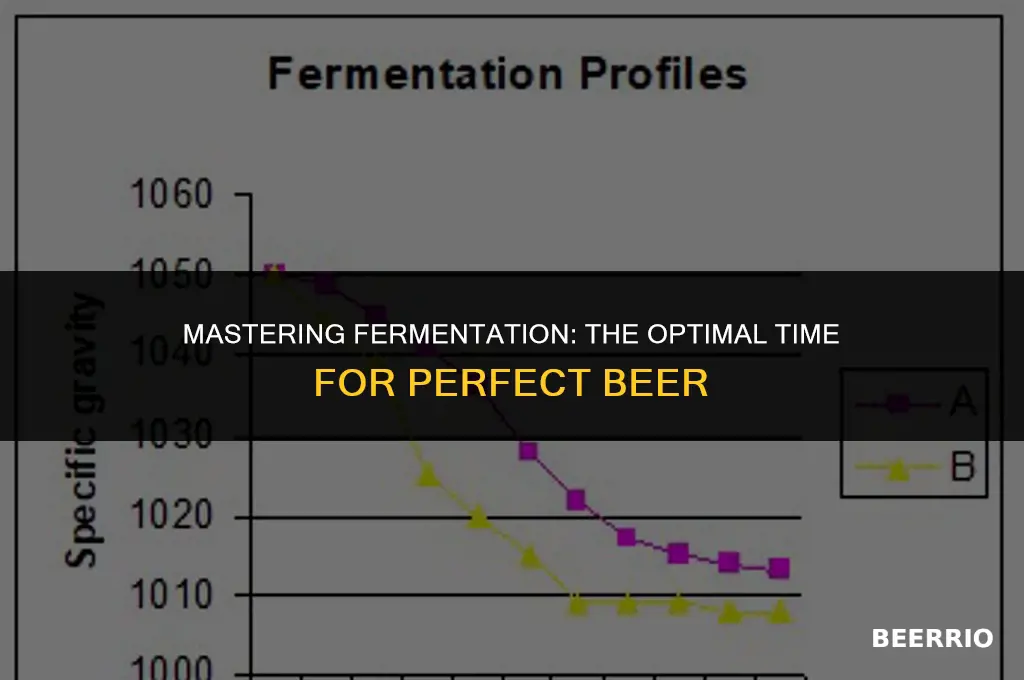
The fermentation process for beer is a crucial step that significantly impacts the final taste, aroma, and quality of the brew. Typically, beer fermentation can take anywhere from one to three weeks, depending on various factors such as the type of yeast used, the original gravity of the wort, the temperature of the fermentation environment, and the desired flavor profile. For instance, lagers usually require a longer fermentation period at lower temperatures to achieve their characteristic clean and crisp taste, while ales ferment more quickly at higher temperatures, resulting in a fruitier and more robust flavor. It's essential for brewers to monitor the fermentation process closely and make adjustments as needed to ensure the best possible outcome for their beer.
| Characteristics | Values |
|---|---|
| Fermentation Time | 1-2 weeks (primary fermentation) |
| Temperature | 60-75°F (15-24°C) |
| Yeast Type | Ale yeast (e.g., Saccharomyces cerevisiae) |
| Original Gravity | 1.040-1.060 |
| Final Gravity | 1.010-1.020 |
| Alcohol Content | 4-6% ABV |
| Fermentation Vessel | Glass carboy, plastic bucket, or stainless steel tank |
| Aeration | Minimal to moderate |
| Stirring | Gentle stirring every few days |
| Foam/Head | Moderate to high |
| Clarity | Clear to slightly hazy |
| Color | Light to dark amber |
| Carbonation | Moderate to high |
| Conditioning Time | 1-2 weeks |
| Storage Temperature | 50-55°F (10-13°C) |
| Bottling/Kegging | Bottled or kegged after conditioning |
| Shelf Life | 3-6 months |
Explore related products


What You'll Learn

Factors Affecting Fermentation Time
Several factors can significantly influence the fermentation time of beer, impacting both the process and the final product. Understanding these variables is crucial for brewers aiming to achieve optimal results.
Temperature plays a pivotal role in fermentation. Yeast activity is highly dependent on temperature, with different strains having specific optimal ranges. Generally, ale yeasts ferment best between 60-75°F (15-24°C), while lager yeasts prefer cooler temperatures of 45-55°F (7-13°C). Deviations from these ranges can lead to slower fermentation, off-flavors, or even yeast death.
The original gravity of the wort, which is the sugar content before fermentation, also affects fermentation time. Higher gravity worts require more time for yeast to consume the sugars and produce alcohol and carbon dioxide. This is because there is more work for the yeast to do, and it takes longer for them to complete the process.
Yeast health and viability are additional critical factors. Using fresh, healthy yeast ensures a robust and efficient fermentation process. Old or compromised yeast may struggle to ferment the wort properly, leading to extended fermentation times or poor-quality beer.
The presence of nutrients in the wort can also impact fermentation time. Yeast requires certain nutrients, such as nitrogen, phosphorus, and vitamins, to thrive and work efficiently. A well-balanced wort with adequate nutrients can support a faster and more complete fermentation.
Finally, the brewing process itself, including factors like oxygenation, pH levels, and the use of adjuncts or additives, can influence fermentation time. Properly managing these aspects of the brewing process can help ensure a smooth and timely fermentation.
Optimizing Fermentation: The Ideal Time for Beer on Yeast Cake
You may want to see also
Explore related products


Typical Fermentation Durations for Different Beer Styles
Fermentation is a critical phase in beer brewing that significantly impacts the final product's flavor, aroma, and alcohol content. The duration of fermentation varies depending on the beer style, yeast type, and brewing conditions. For instance, lagers typically require a longer fermentation period compared to ales due to the lower temperatures at which they are fermented.
For ales, the fermentation process usually takes about 7 to 14 days, but some strong ales and stouts may require up to 3 weeks or more. The higher alcohol content and complex flavors of these beers necessitate a longer fermentation time to ensure proper development. On the other hand, lagers ferment at cooler temperatures and often take 2 to 4 weeks to complete, with some styles like pilsners requiring even longer periods.
Sourdough beers, which use wild yeast and bacteria, have a much longer fermentation process that can span several weeks to months. This extended period allows for the development of the characteristic tart and funky flavors associated with sourdough beers. Brettanomyces, a type of wild yeast, can also be used to add complexity and may require additional time for fermentation.
It's essential to monitor the fermentation process closely, as over-fermentation can lead to off-flavors and an unbalanced beer. Brewers often use hydrometers to measure the specific gravity of the wort before and after fermentation to determine when the process is complete. Additionally, tasting the beer at different stages can help identify when the desired flavor profile has been achieved.
In summary, the typical fermentation durations for different beer styles vary widely, from a week for some ales to several months for sourdough beers. Understanding these variations and monitoring the fermentation process carefully are crucial for producing high-quality beer.
Perfecting the Brew: Optimal Secondary Fermentation Time for Beer
You may want to see also
Explore related products


Signs of Completed Fermentation
Fermentation is a critical phase in beer brewing, and recognizing when it's complete is essential for achieving the desired flavor and quality. One of the primary indicators of completed fermentation is the cessation of visible bubbles in the airlock or blowoff tube. This typically occurs when the yeast has consumed the majority of the fermentable sugars and produced carbon dioxide, which has escaped through the airlock.
Another sign to look for is a stable, consistent reading on a hydrometer. A hydrometer measures the specific gravity of the beer, and as fermentation progresses, the gravity decreases. When the gravity reading remains constant over several days, it's a strong indication that fermentation is complete. The final gravity should be within the expected range for the specific beer style being brewed.
The aroma of the beer can also provide clues about its fermentation status. A fully fermented beer will have a more complex and developed aroma, with the yeast's byproducts contributing to the beer's bouquet. If the beer still smells strongly of raw malt or sugar, it may require more time to ferment.
Taste is another important factor in determining when fermentation is complete. A finished beer should have a balanced flavor profile, with no lingering sweetness or harsh yeast flavors. If the beer tastes unripe or overly sweet, it may need additional time to ferment. However, it's crucial to remember that the flavor will continue to develop and mature during the conditioning phase, which occurs after fermentation is complete.
In summary, the signs of completed fermentation include the absence of bubbles in the airlock, a stable hydrometer reading, a developed aroma, and a balanced flavor profile. By monitoring these indicators, brewers can ensure that their beer has reached the optimal point of fermentation and is ready to move on to the next stage of the brewing process.
Perfecting the Brew: Optimal Time for Crushed Grain Beer Infusion
You may want to see also
Explore related products


Importance of Temperature Control
Temperature control is a critical factor in the beer fermentation process. The ideal temperature range for fermenting beer is between 60°F and 78°F (15°C and 25°C), depending on the type of yeast used. Maintaining a consistent temperature within this range ensures that the yeast can work efficiently, producing the desired flavors and aromas in the beer. If the temperature is too low, the yeast may become dormant, leading to a stuck fermentation. On the other hand, if the temperature is too high, the yeast may produce off-flavors and the beer may become over-carbonated.
One of the most important aspects of temperature control is maintaining a consistent temperature throughout the fermentation process. This can be achieved by using a fermentation chamber or a temperature-controlled water bath. It is also important to monitor the temperature regularly, as fluctuations can have a significant impact on the final product. If the temperature does rise above the desired range, it is possible to cool the beer down by placing it in a cold water bath or using a cooling coil.
Another consideration when it comes to temperature control is the type of yeast being used. Different yeasts have different temperature tolerances, and it is important to choose a yeast that is suitable for the temperature range in which the beer will be fermented. For example, ale yeasts typically have a higher temperature tolerance than lager yeasts, and are therefore better suited for warmer fermentation temperatures.
In addition to ensuring a consistent temperature, it is also important to consider the rate at which the temperature is changed. Rapid temperature changes can shock the yeast and lead to off-flavors in the beer. When warming or cooling the beer, it is best to do so gradually, allowing the yeast to adjust to the new temperature.
Finally, it is important to remember that temperature control is just one aspect of the beer fermentation process. Other factors, such as the amount of yeast used, the type of malt, and the brewing water chemistry, can also have a significant impact on the final product. By carefully controlling all of these factors, it is possible to produce a high-quality beer that meets the brewer's desired specifications.
Chill Time: Optimal Freezing Duration for Premium Beer
You may want to see also
Explore related products


Secondary Fermentation and Aging Processes
Secondary fermentation and aging are critical steps in the beer-making process that significantly influence the final flavor, aroma, and stability of the beer. After the initial fermentation, where yeast converts sugars into alcohol and carbon dioxide, the beer undergoes secondary fermentation. This stage involves transferring the beer to a new vessel to separate it from the yeast sediment and other particles. Secondary fermentation allows for further yeast activity, which can enhance the beer's complexity and depth of flavor.
During secondary fermentation, the beer is typically left to ferment for an additional 2-4 weeks, depending on the style and desired characteristics. This period allows the yeast to fully attenuate the sugars and develop the beer's final flavor profile. Some brewers may choose to add additional ingredients, such as hops or fruit, during this stage to impart unique flavors and aromas.
Following secondary fermentation, the beer enters the aging process. Aging allows the beer to mature and develop its flavors over time. The duration of aging can vary widely, from a few weeks to several months or even years, depending on the beer style and the brewer's intentions. During aging, the beer undergoes chemical changes that can improve its stability, clarity, and overall taste.
One important consideration during secondary fermentation and aging is temperature control. Maintaining a consistent temperature within the optimal range for the specific yeast strain and beer style is crucial for achieving the desired results. Fluctuations in temperature can lead to off-flavors and other undesirable characteristics in the final product.
Another key factor is the choice of vessel for secondary fermentation and aging. Glass carboys, stainless steel tanks, and wooden barrels are common options, each with its own advantages and disadvantages. The choice of vessel can impact the beer's flavor, aroma, and overall quality, so brewers should carefully consider their options and select the vessel that best suits their needs and preferences.
In conclusion, secondary fermentation and aging are essential processes in beer-making that require careful attention to detail and patience. By understanding the factors that influence these stages, brewers can create beers with complex flavors, aromas, and characteristics that are truly unique and enjoyable.
Perfecting the Infusion: Oak Cubes in Beer Duration Guide
You may want to see also
Frequently asked questions
For a typical ale, the fermentation process usually takes about 1 to 2 weeks. However, it's important to monitor the specific gravity and taste to ensure it has reached the desired level of sweetness and alcohol content.
Several factors can influence fermentation time, including the type of yeast used, the original gravity of the wort, the temperature of fermentation, and the presence of any adjuncts or additives. Yeast strains have different fermentation rates, and higher gravity worts generally take longer to ferment.
You can determine if your beer has finished fermenting by checking the specific gravity with a hydrometer. When the specific gravity remains stable over a few days, it's a good indication that fermentation is complete. Additionally, tasting the beer can help you assess if it has reached the desired flavor profile.