Jason Wagner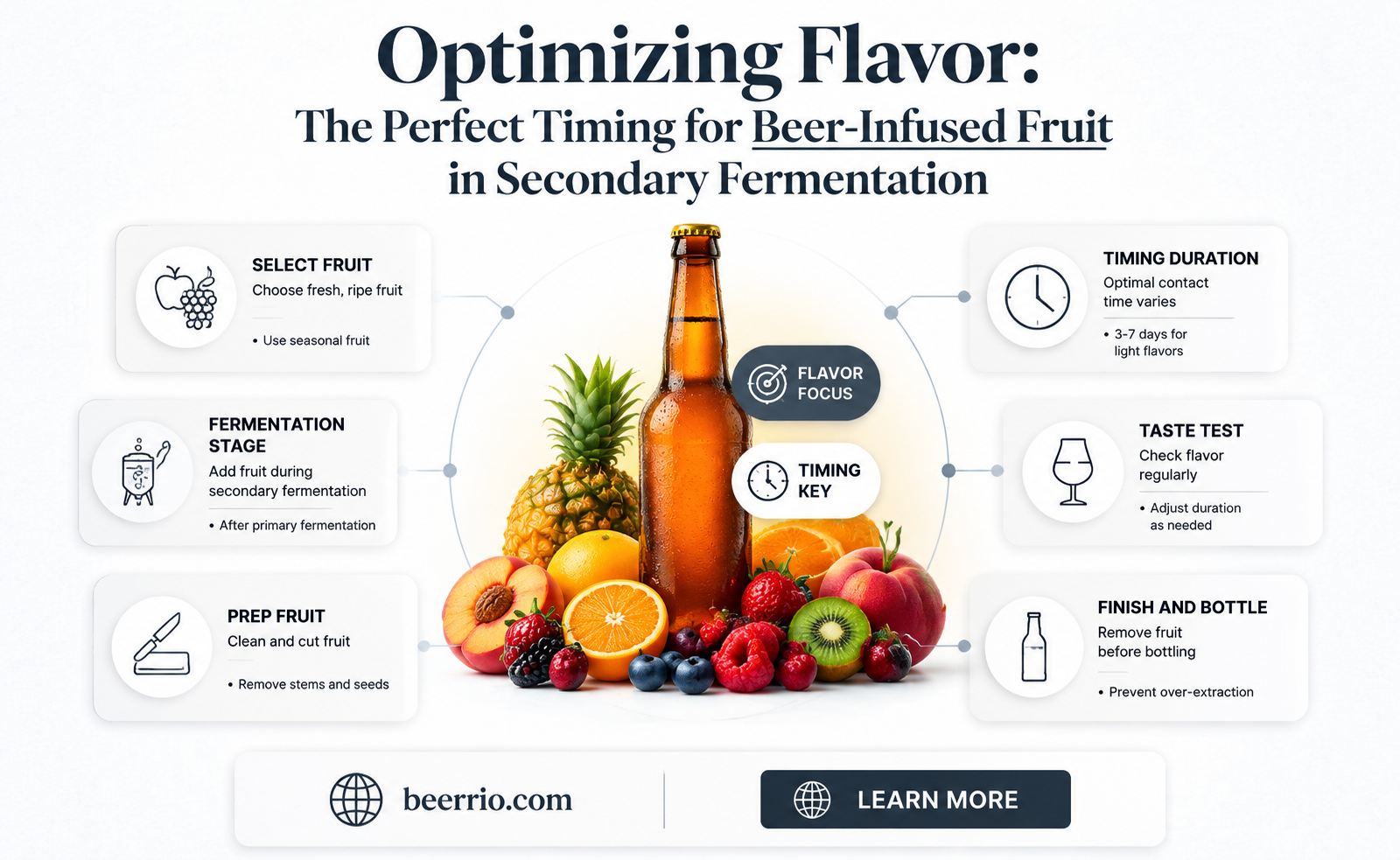
When brewing beer, the secondary fermentation stage is crucial for developing complex flavors and aromas. One popular technique involves adding fruit to the secondary fermenter to infuse the beer with fruity notes. The duration for which the beer should remain on the fruit during secondary fermentation varies depending on several factors, including the type of fruit used, the desired flavor intensity, and the specific beer style. Generally, fruit additions can range from a few days to several weeks. It's essential to monitor the fermentation process closely and taste the beer periodically to determine when the desired fruit character has been achieved. Overloading the beer with fruit flavors can lead to an unbalanced taste, so careful consideration and experimentation are key to finding the perfect duration for your particular brew.
| Characteristics | Values |
|---|---|
| Process | Secondary fermentation or conditioning |
| Purpose | To infuse beer with fruit flavors and aromas |
| Typical Fruits | Berries, citrus, tropical fruits, stone fruits |
| Duration | 1 to 4 weeks, depending on fruit and desired flavor intensity |
| Temperature | 60-70°F (15-21°C), varies based on yeast and fruit type |
| Equipment | Secondary fermentation vessel, airlock, siphon |
| Monitoring | Regularly check for fermentation activity, flavor development, and potential contamination |
| Flavor Profile | Fruity, tart, sweet, or funky notes depending on fruit and yeast combination |
| Alcohol Content | Typically increases slightly due to additional fermentation |
| Clarity | May become hazy due to fruit particles and yeast sediment |
| Carbonation | Naturally carbonated through secondary fermentation |
| Bottling | Requires careful siphoning to avoid fruit sediment in bottles |
| Storage | Store in a cool, dark place to mature and develop flavors |
| Yeast Strains | Brettanomyces, Saccharomyces, or wild yeast blends |
| Fruit Preparation | Fresh, frozen, or dried fruits; whole, sliced, or crushed |
| Addition Timing | After primary fermentation, during secondary fermentation, or before bottling |
| Experimentation | Encourages trying different fruit types, yeast strains, and durations for unique flavor profiles |
Explore related products


What You'll Learn
- Factors Affecting Fermentation Time: Temperature, fruit type, and beer style influence how long beer should remain on fruit
- Typical Fruit Addition Times: Common ranges for adding fruit to secondary fermentation, varying by fruit and desired flavor profile
- Monitoring Fermentation Progress: Methods to track fermentation, such as observing fruit swelling, sugar density changes, and CO2 production
- Preventing Over-Fermentation: Techniques to avoid excessive fermentation, including regular sampling and adjusting fruit addition timing
- Fruit-Specific Considerations: Unique factors for different fruits, like tartness, sweetness, and potential off-flavors, affecting beer quality

Factors Affecting Fermentation Time: Temperature, fruit type, and beer style influence how long beer should remain on fruit
Temperature plays a crucial role in determining the fermentation time of beer on fruit. Higher temperatures generally accelerate the fermentation process, while lower temperatures slow it down. For example, if you're fermenting a beer with a fruit like raspberries, which are high in sugar, at a temperature of 70°F (21°C), the fermentation might take around 2-3 weeks. However, if you lower the temperature to 60°F (15°C), it could extend the fermentation time to 4-6 weeks. It's essential to monitor the temperature closely and adjust it according to the specific needs of the beer style and fruit used.
The type of fruit used in the fermentation process also significantly impacts the time required. Fruits with higher sugar content, such as strawberries and cherries, tend to ferment faster than fruits with lower sugar content, like apples and pears. Additionally, the acidity of the fruit can affect fermentation time. More acidic fruits, such as citrus or rhubarb, can slow down the fermentation process due to their inhibitory effect on yeast. When using a mix of fruits, it's important to consider the combined sugar and acid content to estimate the fermentation time accurately.
Different beer styles require varying fermentation times on fruit. For instance, a Belgian Lambic might need several months of fermentation to develop its characteristic sour and funky flavors, while a fruit-infused Pale Ale might only require a few weeks to achieve the desired fruitiness. The alcohol content of the beer also plays a role; higher alcohol beers typically require longer fermentation times to ensure the yeast has enough time to convert the sugars into alcohol. When determining the fermentation time, it's crucial to consider the specific characteristics of the beer style you're aiming to produce.
To ensure the best results, it's important to conduct regular checks on the fermentation progress. This can be done by monitoring the specific gravity of the beer, observing the airlock activity, and tasting the beer to assess its flavor development. If the fermentation seems to be progressing too quickly or slowly, adjustments can be made to the temperature or the amount of yeast added. By carefully considering the factors of temperature, fruit type, and beer style, and regularly monitoring the fermentation process, you can achieve the perfect balance of flavors in your fruit-infused beer.
Perfecting the Brew: Optimal Aging Time for Bottled Beer
You may want to see also
Explore related products


Typical Fruit Addition Times: Common ranges for adding fruit to secondary fermentation, varying by fruit and desired flavor profile
The timing of fruit addition during secondary fermentation is a critical aspect of brewing fruit-infused beers. Different fruits and desired flavor profiles necessitate varying addition times to achieve optimal results. For instance, fruits with high sugar content, such as mangoes or pineapples, are typically added later in the fermentation process to prevent excessive sweetness and potential fermentation issues. Conversely, fruits with lower sugar content, like raspberries or blackberries, can be added earlier to allow for a more pronounced fruit flavor.
When aiming for a subtle fruit note, brewers often add fruit midway through secondary fermentation, allowing the yeast to consume some of the fruit sugars without overpowering the beer's base flavors. For a more intense fruit character, adding fruit towards the end of secondary fermentation is preferred, as this minimizes yeast consumption of the fruit sugars and preserves the fruit's natural flavors.
It's also important to consider the fruit's acidity and how it will interact with the beer's pH levels. Fruits with high acidity, such as citrus or sour cherries, can be added earlier to help balance the beer's pH and contribute to a more complex flavor profile. On the other hand, fruits with low acidity, like bananas or strawberries, are better added later to avoid pH imbalances.
Brewers should also take into account the potential for fruit to impart bitterness or astringency if left in contact with the beer for too long. For example, adding hops or certain fruits like oranges or lemons towards the end of secondary fermentation can result in an undesirable bitter or astringent taste. To mitigate this, brewers can use a fruit addition schedule that gradually introduces the fruit over time, allowing the flavors to meld together harmoniously.
Ultimately, the optimal fruit addition time will depend on the specific fruit, the desired flavor profile, and the beer's overall recipe. By carefully considering these factors and experimenting with different addition times, brewers can create fruit-infused beers that are both flavorful and well-balanced.
Chill Time: The Ultimate Guide to Freezing Your Beer
You may want to see also
Explore related products


Monitoring Fermentation Progress: Methods to track fermentation, such as observing fruit swelling, sugar density changes, and CO2 production
To effectively monitor the fermentation progress when leaving beer on fruit in secondary, several methods can be employed. One of the most straightforward techniques is to observe the fruit's swelling. As fermentation occurs, the fruit will typically expand due to the production of CO2 and the absorption of liquid. This visual cue can provide an initial indication that the fermentation process is underway.
Another method to track fermentation is by measuring changes in sugar density. Using a refractometer or a hydrometer, you can monitor the specific gravity of the liquid. As sugars are converted into alcohol and CO2 during fermentation, the density of the liquid will decrease. This change can be used to estimate the progress of fermentation and to determine when it has reached completion.
Directly measuring CO2 production is also an effective way to monitor fermentation. This can be done using a CO2 airlock or by collecting and weighing the CO2 produced over a set period. The rate of CO2 production will peak during the initial stages of fermentation and gradually decline as the process nears completion.
In addition to these methods, it's important to maintain a consistent temperature during fermentation, as this can significantly impact the rate and quality of the process. Regularly checking and adjusting the temperature can help ensure optimal fermentation conditions.
By combining these monitoring techniques, you can gain a comprehensive understanding of the fermentation progress and make informed decisions about when to leave the beer on fruit in secondary. This will ultimately contribute to a higher quality final product and a more successful brewing experience.
Chill or Not: The Optimal Time for Freezing Bottled Beer
You may want to see also
Explore related products


![The Farmhouse Culture Guide to Fermenting: Crafting Live-Cultured Foods and Drinks with 100 Recipes from Kimchi to Kombucha[A Cookbook]](https://m.media-amazon.com/images/I/810JiD+rtvL._AC_UY218_.jpg)

Preventing Over-Fermentation: Techniques to avoid excessive fermentation, including regular sampling and adjusting fruit addition timing
Regular sampling is a critical technique in preventing over-fermentation when aging beer with fruit in secondary. By closely monitoring the beer's progress, you can detect early signs of excessive fermentation, such as an increase in carbonation, a change in color, or the development of off-flavors. To sample effectively, use a sanitized pipette or racking cane to extract a small amount of beer from the secondary vessel. Be sure to replace the extracted volume with an equal amount of fresh, sanitized water to maintain the vessel's pressure and prevent oxidation. Analyze the sample for any signs of over-fermentation, and adjust your fruit addition timing accordingly.
Adjusting fruit addition timing is another key strategy in preventing over-fermentation. The ideal time to add fruit to secondary depends on the type of fruit, the beer style, and the desired flavor profile. Generally, it's best to add fruit when the beer's primary fermentation is complete, but before the secondary fermentation has fully kicked in. This allows the fruit flavors to meld with the beer without contributing to excessive fermentation. However, if you're using fruits that are high in sugar, such as mangoes or pineapples, it may be necessary to add them later in the secondary process to minimize the risk of over-fermentation.
In addition to regular sampling and adjusting fruit addition timing, it's important to maintain proper sanitation and temperature control throughout the secondary fermentation process. Any contamination or temperature fluctuations can lead to unwanted microbial activity, which can contribute to over-fermentation. Be sure to sanitize all equipment and vessels thoroughly before use, and store the secondary vessel in a cool, dark place to maintain a consistent temperature.
Another useful technique in preventing over-fermentation is to use a secondary vessel with a spigot or valve. This allows you to easily remove beer for sampling without disturbing the sediment or introducing air into the vessel. Additionally, a spigot or valve can be used to slowly release pressure from the vessel, which can help prevent over-carbonation and reduce the risk of over-fermentation.
Finally, it's important to be patient and allow the beer to age naturally in secondary. While it can be tempting to rush the process, over-fermentation is often the result of impatience. By giving the beer time to develop its flavors and mature, you can avoid the pitfalls of over-fermentation and produce a high-quality, flavorful beer.
Perfecting the Brew: Optimal Secondary Fermentation Time for Beer
You may want to see also
Explore related products


Fruit-Specific Considerations: Unique factors for different fruits, like tartness, sweetness, and potential off-flavors, affecting beer quality
Different fruits impart unique characteristics to beer, and understanding these nuances is crucial for achieving the desired flavor profile. For instance, tart fruits like raspberries and blackberries can introduce a sharp acidity that may clash with the beer's malt backbone if not balanced properly. On the other hand, sweet fruits such as strawberries and peaches can add a smooth, rounded sweetness that complements the beer's bitterness. However, using too much of these fruits can result in an overly sweet beer that lacks complexity.
Some fruits, like cherries and plums, can contribute off-flavors if not used correctly. These off-flavors can range from unpleasant bitterness to astringent tannins, which can negatively impact the beer's overall taste. To mitigate these risks, it's essential to use the right amount of fruit and monitor the fermentation process closely. Additionally, the ripeness of the fruit plays a significant role in the final flavor. Overripe fruits can introduce unwanted funk or sour notes, while underripe fruits may not impart enough flavor.
When using fruits in beer, it's also important to consider the fruit's natural sugars and how they will interact with the yeast during fermentation. High-sugar fruits can lead to a higher alcohol content and may require adjustments to the yeast pitch or fermentation temperature to achieve the desired outcome. Furthermore, some fruits, like blueberries and grapes, can introduce color to the beer, which may be desirable or undesirable depending on the style being brewed.
In conclusion, fruit-specific considerations are a critical aspect of brewing beer with fruit. By understanding the unique factors that different fruits bring to the table, brewers can create complex, balanced beers that showcase the best qualities of both the fruit and the beer.
Effective Beer Line Cleaning: Timing and Techniques
You may want to see also
Frequently asked questions
Typically, beer should be left on fruit in secondary fermentation for 1 to 2 weeks. This allows the flavors to fully develop without risking over-fermentation or off-flavors.
Factors such as the type of fruit, the specific beer style, and the desired flavor profile can all influence the time beer should be left on fruit in secondary. For example, some fruits may impart flavors more quickly than others, and certain beer styles may require longer or shorter periods of fruit infusion.
Yes, leaving beer on fruit in secondary for too long can result in over-fermentation, which may lead to off-flavors or an overly sour taste. It's important to monitor the fermentation process and taste the beer regularly to ensure it reaches the desired flavor profile.
Yes, it's recommended to use a food-grade container, such as a glass carboy or a stainless steel keg, for secondary fermentation with fruit. This ensures that the fruit and beer are in a clean, controlled environment, which helps prevent contamination and off-flavors.
The best way to determine when the beer has reached the desired flavor profile is to taste it regularly. Take a small sample of the beer every few days and assess the flavor, aroma, and overall character. Once the beer has reached the desired balance of fruit flavors and beer characteristics, it's ready to be bottled or kegged.