Jason Wagner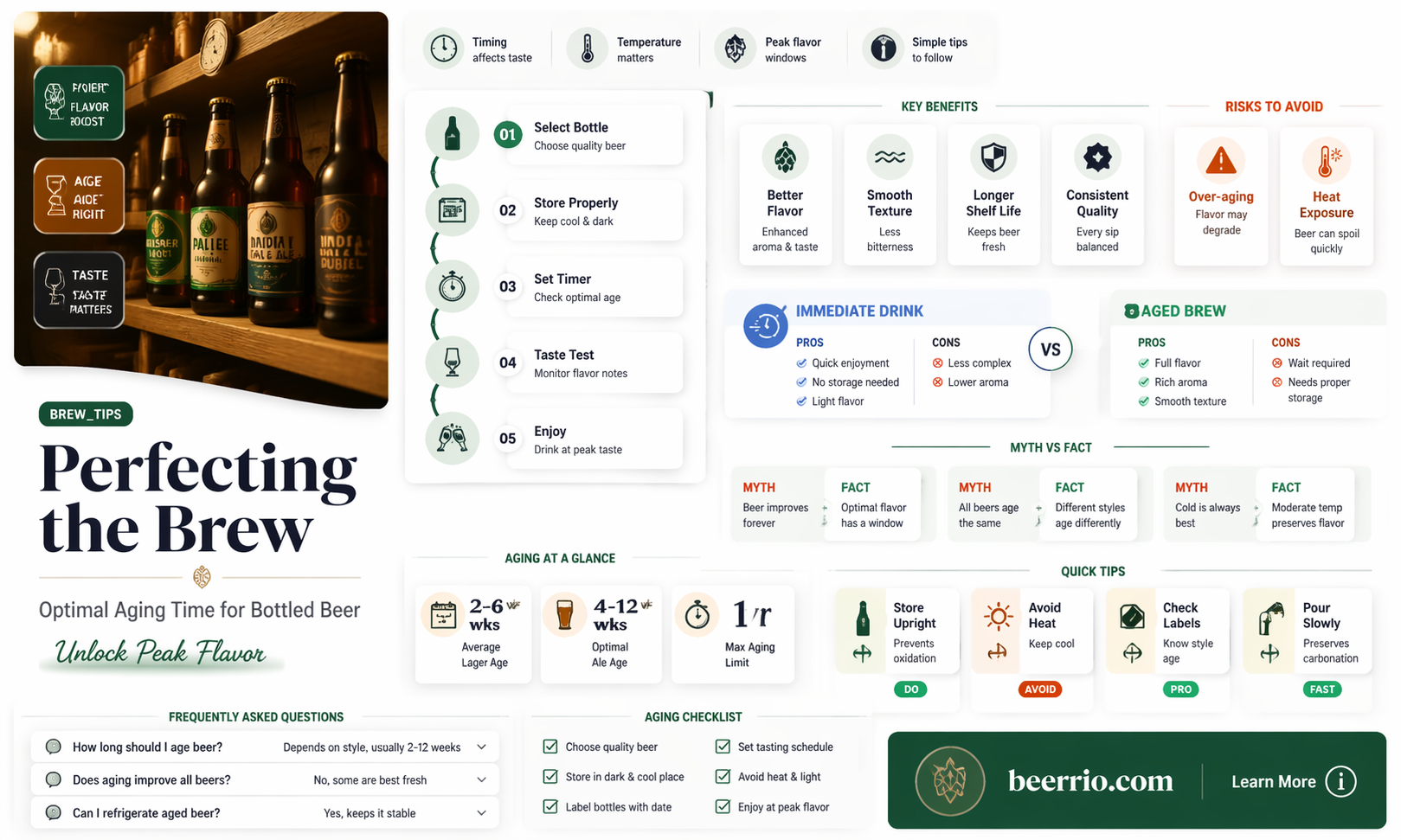
After bottling beer, it's crucial to allow it to condition and develop its flavors properly. The duration for leaving beer after bottling can vary depending on several factors, including the type of beer, the bottling method, and the desired flavor profile. Generally, most beers benefit from a conditioning period of at least two weeks, during which time the yeast and other sediment settle, and the flavors meld together. However, some beers, like stouts and sour beers, may require longer periods, sometimes up to several months, to achieve their optimal taste. It's essential to monitor the beer's progress during this time and make adjustments as necessary to ensure the best possible outcome.
Explore related products


What You'll Learn
- Primary Fermentation: The initial stage where yeast converts sugars into alcohol and CO2, typically lasting 1-2 weeks
- Secondary Fermentation: A subsequent phase for further fermentation and clarification, often taking 1-4 weeks
- Conditioning and Aging: The process of allowing the beer to mature and develop its flavors, which can range from a few days to several months
- Bottle Conditioning: The final fermentation stage that occurs in the bottle, usually lasting 1-4 weeks, to enhance carbonation and flavor
- Storage and Serving: Recommendations for the optimal storage conditions and serving temperatures to ensure the best taste and quality of the beer

Primary Fermentation: The initial stage where yeast converts sugars into alcohol and CO2, typically lasting 1-2 weeks
Primary fermentation is a critical phase in the beer brewing process where yeast plays a pivotal role in transforming the wort into beer. During this stage, yeast consumes the sugars present in the wort, producing alcohol and carbon dioxide as byproducts. This process typically lasts between 1 to 2 weeks, depending on various factors such as the type of yeast, the original gravity of the wort, and the fermentation temperature.
The duration of primary fermentation is crucial as it directly impacts the final flavor, aroma, and alcohol content of the beer. A longer fermentation period allows for a more complete conversion of sugars, which can result in a drier beer with a higher alcohol content. Conversely, a shorter fermentation period may lead to a sweeter beer with lower alcohol content. Brewers must carefully monitor the fermentation process to ensure that it proceeds optimally and to prevent any off-flavors or spoilage.
One of the key indicators that primary fermentation is complete is the cessation of visible fermentation activity, such as the production of bubbles. Additionally, brewers often use a hydrometer to measure the specific gravity of the beer before and after fermentation to determine if the sugars have been fully converted. Once primary fermentation is complete, the beer is typically transferred to a secondary fermenter or left in the primary fermenter for conditioning, where it continues to mature and develop its flavors.
In summary, primary fermentation is a vital stage in beer brewing that involves the conversion of sugars into alcohol and CO2 by yeast. The duration of this process, typically 1-2 weeks, is critical for achieving the desired flavor, aroma, and alcohol content in the final beer product. Brewers must carefully monitor and control the fermentation conditions to ensure a successful outcome.
Chill Time: The Ultimate Guide to Freezing Your Beer
You may want to see also
Explore related products


Secondary Fermentation: A subsequent phase for further fermentation and clarification, often taking 1-4 weeks
Secondary fermentation is a crucial phase in the beer brewing process that many homebrewers and even some commercial brewers overlook. This stage involves transferring the beer from the primary fermentation vessel to a secondary vessel, where it undergoes further fermentation and clarification. The primary goal of secondary fermentation is to separate the beer from the yeast sediment and other particles that can affect its flavor and appearance.
The duration of secondary fermentation can vary depending on several factors, including the type of beer being brewed, the temperature of the fermentation environment, and the desired level of clarity. Generally, secondary fermentation can take anywhere from one to four weeks. During this time, the beer continues to ferment, albeit at a slower rate than during primary fermentation. This slower fermentation process allows the yeast to consume any remaining sugars and to produce more complex flavors and aromas.
One of the key benefits of secondary fermentation is the improvement in beer clarity. As the yeast and other particles settle out of suspension, the beer becomes clearer and more visually appealing. This is particularly important for certain styles of beer, such as lagers and pilsners, where clarity is a defining characteristic.
To ensure a successful secondary fermentation, it is important to follow a few key steps. First, the beer should be transferred to the secondary vessel as gently as possible to avoid disturbing the yeast sediment. Second, the secondary vessel should be sealed with an airlock to prevent contamination from outside bacteria and wild yeast. Finally, the beer should be stored in a cool, dark place to promote slow and steady fermentation.
In conclusion, secondary fermentation is a valuable step in the beer brewing process that can significantly improve the flavor, aroma, and appearance of the final product. By understanding the factors that influence secondary fermentation and by following proper techniques, brewers can achieve a higher level of quality in their beer.
Chill or Not: The Optimal Time for Freezing Bottled Beer
You may want to see also
Explore related products


Conditioning and Aging: The process of allowing the beer to mature and develop its flavors, which can range from a few days to several months
The process of conditioning and aging beer is a critical step that can significantly impact the final flavor profile. After bottling, beer undergoes a maturation period where the flavors develop and meld together. This process can range from a few days to several months, depending on the type of beer and the desired outcome.
During conditioning, the beer is allowed to rest and settle, which helps to clarify the liquid and remove any residual yeast or sediment. This period also allows the carbonation to stabilize, resulting in a smoother and more consistent mouthfeel. Aging, on the other hand, is a longer process that allows the flavors to develop and mature. This can include the development of complex flavors such as oak, vanilla, or caramel, which are often associated with barrel-aged beers.
The length of the conditioning and aging process will vary depending on the type of beer. For example, a light lager may only require a few days of conditioning, while a robust stout may benefit from several months of aging. It's important to note that not all beers require aging, and some may even be best consumed fresh.
To determine the optimal conditioning and aging time for a particular beer, it's essential to consider factors such as the beer's style, the brewing process, and the desired flavor profile. Brewers often conduct taste tests at various stages of the conditioning and aging process to determine when the beer has reached its peak flavor.
In conclusion, the conditioning and aging process is a crucial step in beer production that can greatly influence the final product. By carefully controlling the time and conditions of this process, brewers can create beers with a wide range of flavors and characteristics.
Perfect Pour: Mastering the Art of Beer on PB2 Timing
You may want to see also
Explore related products


Bottle Conditioning: The final fermentation stage that occurs in the bottle, usually lasting 1-4 weeks, to enhance carbonation and flavor
Bottle conditioning is a crucial stage in the beer brewing process that can significantly enhance the final product's carbonation and flavor. This stage involves a secondary fermentation that occurs within the bottle, typically lasting between one to four weeks. During this time, yeast consumes residual sugars, producing carbon dioxide and alcohol as byproducts. The carbon dioxide becomes trapped in the bottle, creating the desired effervescence, while the additional alcohol contributes to the beer's overall flavor complexity.
The duration of bottle conditioning can vary depending on several factors, including the type of beer, the amount of residual sugar, and the desired level of carbonation. For example, a Belgian ale may require a longer conditioning period to achieve its characteristic high carbonation and complex flavor profile, while a pale ale may be ready after a shorter period. Brewers often use trial and error to determine the optimal conditioning time for their specific recipes.
One common mistake during bottle conditioning is not allowing enough time for the process to complete. This can result in under-carbonated beer or off-flavors due to incomplete fermentation. On the other hand, over-conditioning can also lead to problems, such as excessive carbonation or the development of undesirable flavors. To avoid these issues, brewers should carefully monitor the conditioning process and use tools such as a hydrometer to track the beer's progress.
Another important consideration during bottle conditioning is the storage environment. The ideal temperature for conditioning varies depending on the type of yeast used, but it generally ranges between 60-75°F (15-24°C). Storing the bottles in a cool, dark place can help maintain a consistent temperature and prevent the development of off-flavors. Additionally, brewers should ensure that the bottles are properly sealed to prevent contamination and oxidation.
In conclusion, bottle conditioning is a critical step in the beer brewing process that can significantly impact the final product's quality. By understanding the factors that influence conditioning time and creating an optimal storage environment, brewers can produce well-carbonated, flavorful beers that meet their desired specifications.
Explore related products


![8 Pack [1 L / 33 fl. oz.] Swing Top Glass Bottles w/ Airtight Stopper Lids – Flip Top Brewing Bottle for Fermentation, Kombucha, Mead, Vinegar, Beer, Kefir, Wine, Soda – With 8 Extra Seals & 2 Pourer](https://m.media-amazon.com/images/I/71Dxyt2F7pL._AC_UL320_.jpg)


![Flip Top Glass Bottle [1 Liter / 33 fl. oz.] [Pack of 6] – Swing Brewing with Stopper for Beverages, Oil, Vinegar, Kombucha, Beer, Water, Soda, Kefir Airtight Lid & Leak Proof Cap Clear](https://m.media-amazon.com/images/I/71SFclG27zL._AC_UL320_.jpg)
Storage and Serving: Recommendations for the optimal storage conditions and serving temperatures to ensure the best taste and quality of the beer
To ensure the best taste and quality of beer after bottling, it is crucial to store it under optimal conditions. Beer should be kept in a cool, dark place, ideally at a temperature between 45°F and 55°F (7°C and 13°C). This temperature range helps to slow down the aging process and preserve the beer's flavor profile. It is also important to store the beer in a location that is free from vibrations and extreme temperature fluctuations, as these can negatively impact the beer's quality.
When it comes to serving beer, the optimal temperature depends on the type of beer being served. For example, lagers and pilsners are best served cold, between 40°F and 45°F (4°C and 7°C), while ales and stouts are better enjoyed at slightly warmer temperatures, between 50°F and 55°F (10°C and 13°C). Serving beer at the correct temperature enhances its flavor and aroma, providing a more enjoyable drinking experience.
One common mistake that people make when storing beer is exposing it to light. Light, especially UV light, can cause a chemical reaction in the beer that leads to a skunky flavor. This is why it is important to store beer in dark bottles or in a location that is shielded from direct sunlight. Another mistake is storing beer for too long. While some beers can benefit from aging, most beers are best consumed within a few months of bottling. Over time, the beer's flavor can degrade, leading to a less enjoyable drinking experience.
In conclusion, proper storage and serving conditions are essential for maintaining the quality and taste of beer after bottling. By following these recommendations, beer enthusiasts can ensure that they are getting the best possible experience from their favorite brews. Remember to store beer in a cool, dark place, serve it at the appropriate temperature, and avoid exposing it to light or storing it for too long.
Frequently asked questions
Typically, you should wait at least 2 weeks after bottling before drinking your homebrewed beer. This allows the beer to carbonate properly and for the flavors to develop and mature.
Several factors can influence the time it takes for beer to be ready after bottling, including the type of beer, the bottling method, the temperature during storage, and the desired level of carbonation and flavor development.
While it's not recommended to rush the conditioning process, you can speed it up slightly by storing the beer at a warmer temperature (around 60-65°F) for the first week after bottling. However, be cautious not to exceed this temperature range, as it can lead to off-flavors and other issues.


![AYL Flip Top Glass Bottle [1 Liter / 33 fl. oz.] [Pack of 4] – Swing Brewing Bottle with Stopper for Beverages, Oil, Vinegar, Kombucha, Water, Soda, Kefir – Airtight Lid & Leak Proof Cap – Clear](https://m.media-amazon.com/images/I/71v0bv2X6eL._AC_UL320_.jpg)


![AYL Flip Top Glass Bottle [16 fl. oz./Pack of 6]– Swing Top Brewing Bottle with Stopper for Beverages, Oil, Vinegar, Kombucha, Beer, Water, Soda, Kefir – Airtight Lid & Leak Proof Cap – Clear](https://m.media-amazon.com/images/I/81aKZCcT2JL._AC_UL320_.jpg)