Oisin Foster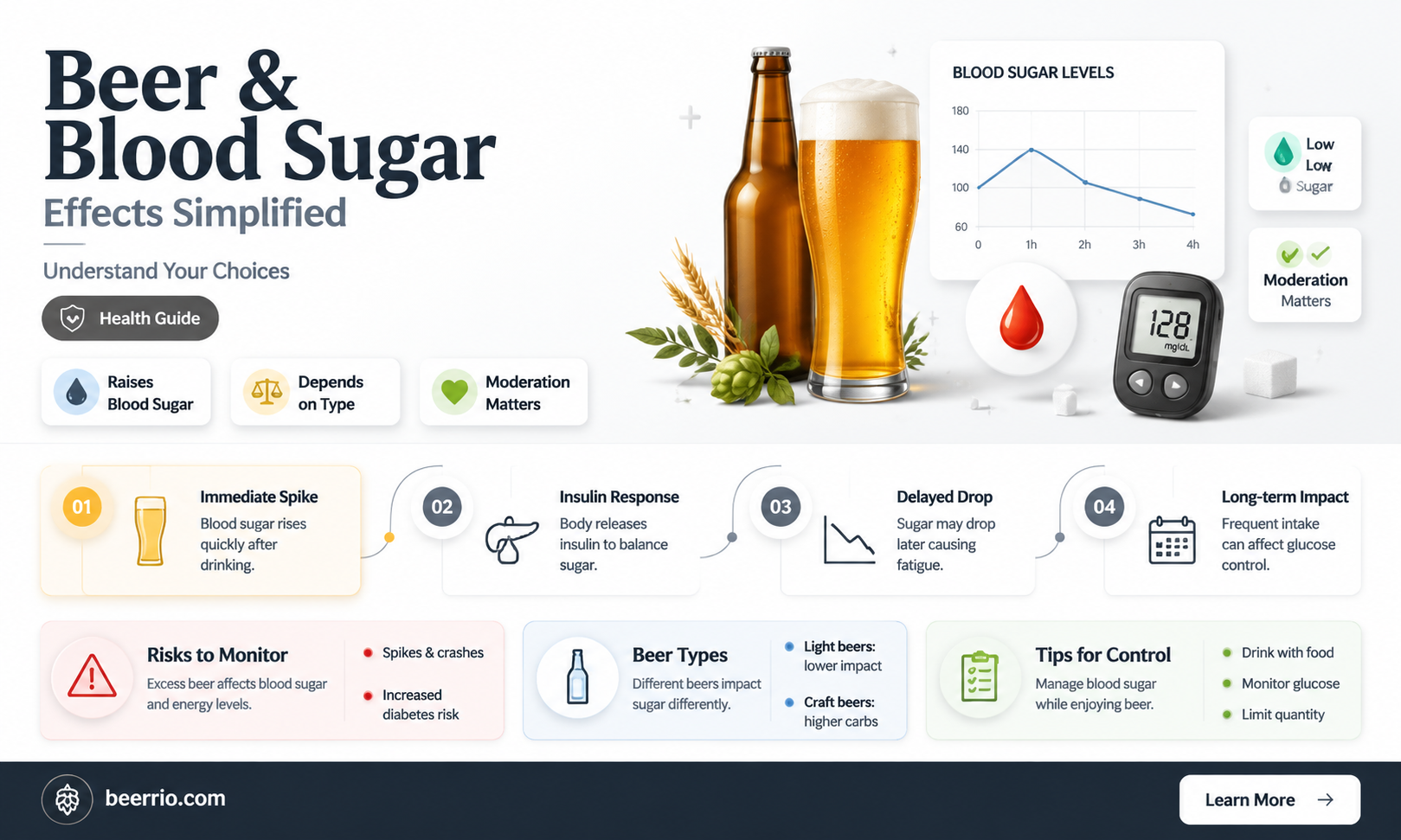
Beer, a popular alcoholic beverage, can have significant effects on blood sugar levels, particularly for individuals with diabetes or those at risk of developing the condition. The carbohydrates and sugars present in beer can cause a rapid increase in blood glucose, while the alcohol content may impair the liver's ability to regulate blood sugar. Additionally, beer's glycemic index, which measures how quickly a food or drink raises blood sugar levels, can vary depending on the type and brewing process. Understanding these factors is crucial for managing blood sugar levels and making informed choices about alcohol consumption.
| Characteristics | Values |
|---|---|
| Effect on Blood Sugar | Beer can cause blood sugar levels to rise due to its carbohydrate content. |
| Carbohydrate Content | A typical beer contains around 10-15 grams of carbohydrates per serving. |
| Glycemic Index | The glycemic index of beer is relatively high, meaning it can cause a rapid increase in blood sugar levels. |
| Alcohol Content | Alcohol can inhibit the liver's ability to release stored glucose, potentially leading to hypoglycemia (low blood sugar). |
| Serving Size | A standard serving of beer is typically 12 ounces (355 ml). |
| Calorie Content | A standard serving of beer contains approximately 150-200 calories. |
| Sugar Content | Some beers, especially flavored or sweetened varieties, can contain added sugars. |
| Impact on Insulin | Alcohol can impair insulin sensitivity, making it harder for the body to regulate blood sugar levels. |
| Short-Term Effects | Short-term effects of beer on blood sugar can include a spike in levels followed by a potential drop due to alcohol's effects. |
| Long-Term Effects | Long-term effects of regular beer consumption can include increased risk of type 2 diabetes and other metabolic disorders. |
| Individual Variability | The impact of beer on blood sugar can vary greatly depending on individual factors such as weight, metabolism, and overall health. |
| Recommendations | People with diabetes or those monitoring their blood sugar levels should consume beer in moderation and be aware of its potential effects. |
Explore related products


What You'll Learn
- Beer's Glycemic Index: Understanding how beer ranks in terms of its impact on blood sugar levels
- Alcohol and Insulin Sensitivity: Exploring how alcohol consumption can affect insulin sensitivity and glucose metabolism
- Carbohydrate Content in Beer: Analyzing the amount of carbohydrates in different types of beer and their effect on blood sugar
- Moderation and Blood Sugar Control: Discussing the importance of moderation in beer consumption for maintaining healthy blood sugar levels
- Individual Factors and Responses: Considering how individual factors such as weight, metabolism, and diabetes status can influence blood sugar reactions to beer

Beer's Glycemic Index: Understanding how beer ranks in terms of its impact on blood sugar levels
The glycemic index (GI) is a measure of how quickly foods raise blood sugar levels. Beer, being a popular alcoholic beverage, has a GI that can vary depending on its type and ingredients. Generally, beers with higher carbohydrate content tend to have a higher GI, which means they can cause a more rapid increase in blood sugar levels. For instance, lagers and ales typically have a higher GI compared to stouts and porters.
Understanding the GI of beer is crucial for individuals managing diabetes or those who are health-conscious. Consuming beer with a high GI can lead to blood sugar spikes, which may require additional insulin or other medications to control. On the other hand, beers with a lower GI can be a better choice as they cause a slower and more gradual increase in blood sugar levels, providing more stable energy.
It's also important to consider the serving size and alcohol content of beer. Even if a beer has a lower GI, consuming large quantities can still lead to significant blood sugar fluctuations. Additionally, the alcohol in beer can interfere with the body's ability to regulate blood sugar, potentially leading to hypoglycemia (low blood sugar) several hours after consumption.
When choosing a beer, it's helpful to look for options with lower carbohydrate content and higher fiber content, as fiber can help slow down the absorption of sugar into the bloodstream. Some craft breweries now offer low-carb or "keto-friendly" beers that cater to health-conscious consumers. However, it's always advisable to check the nutritional information and consult with a healthcare provider to determine the best choices for individual dietary needs.
In summary, the glycemic index of beer is an important factor to consider when evaluating its impact on blood sugar levels. By understanding the GI of different types of beer and being mindful of portion sizes and alcohol content, individuals can make more informed choices about their beverage consumption and better manage their blood sugar levels.
Sweet vs. Bitter: The Sugar Content Showdown Between Coke and Beer
You may want to see also
Explore related products

$5.94 $14.99


Alcohol and Insulin Sensitivity: Exploring how alcohol consumption can affect insulin sensitivity and glucose metabolism
Alcohol consumption has a complex relationship with insulin sensitivity and glucose metabolism. While moderate drinking may have some beneficial effects on cardiovascular health, excessive alcohol intake can lead to insulin resistance and impaired glucose control. This is particularly concerning for individuals with diabetes or those at risk of developing the condition.
One of the primary ways alcohol affects insulin sensitivity is by interfering with the liver's ability to regulate blood sugar levels. When alcohol is consumed, the liver prioritizes its metabolism over glucose regulation, leading to a decrease in insulin sensitivity. This can result in higher blood sugar levels and an increased risk of hypoglycemia, especially in individuals taking insulin or other glucose-lowering medications.
Additionally, alcohol can contribute to weight gain and obesity, which are known risk factors for insulin resistance and type 2 diabetes. The empty calories in alcoholic beverages can lead to increased calorie intake and weight gain, further exacerbating insulin sensitivity issues. Moreover, alcohol can impair the body's ability to respond to stress, which can also contribute to insulin resistance and glucose metabolism problems.
It is important to note that the effects of alcohol on insulin sensitivity can vary depending on factors such as the amount and frequency of consumption, age, gender, and overall health. Moderate drinking, defined as up to one drink per day for women and up to two drinks per day for men, may have less of an impact on insulin sensitivity compared to heavy drinking. However, for individuals with diabetes or those at high risk of developing the condition, it is generally recommended to limit alcohol consumption or avoid it altogether.
In conclusion, alcohol consumption can have significant effects on insulin sensitivity and glucose metabolism, particularly when consumed in excess. It is essential for individuals to be aware of these risks and to make informed decisions about their alcohol intake, especially if they have diabetes or are at risk of developing the condition. Consulting with a healthcare professional can provide personalized guidance on how to manage alcohol consumption while maintaining optimal blood sugar control.
Unveiling the Truth: Is Beer Really High in Sugar?
You may want to see also
Explore related products




Carbohydrate Content in Beer: Analyzing the amount of carbohydrates in different types of beer and their effect on blood sugar
Beer enthusiasts often overlook the carbohydrate content in their favorite brews, but for those monitoring their blood sugar levels, this can be a crucial factor. Carbohydrates in beer come primarily from the grains used in brewing, such as barley, wheat, and rice. The brewing process converts these grains into fermentable sugars, which are then consumed by yeast to produce alcohol and carbon dioxide. However, not all of these sugars are fully fermented, and some residual carbohydrates remain in the final product.
The amount of carbohydrates in beer can vary significantly depending on the type and brewing method. For instance, light lagers and pilsners typically contain fewer carbohydrates than darker ales and stouts. This is because lighter beers are often brewed with a higher proportion of adjuncts like corn and rice, which are more easily fermentable and leave behind fewer residual sugars. In contrast, darker beers are usually made with more malted barley, which contributes to their higher carbohydrate content.
For individuals with diabetes or those following a low-carb diet, it's essential to be aware of the carbohydrate content in different types of beer. A standard 12-ounce serving of beer can contain anywhere from 5 to 30 grams of carbohydrates, depending on the type. Light beers, such as Michelob Ultra or Bud Light, tend to have around 5-7 grams of carbohydrates per serving, while regular lagers and ales can have 10-15 grams. Darker beers, like stouts and porters, can have even higher carbohydrate content, ranging from 20-30 grams per serving.
To manage blood sugar levels while enjoying beer, it's crucial to consider portion size and the specific type of beer being consumed. Drinking a smaller serving or opting for a lower-carbohydrate beer can help minimize the impact on blood sugar. Additionally, pairing beer with a balanced meal that includes protein and fiber can help slow the absorption of carbohydrates and reduce the risk of blood sugar spikes.
In conclusion, while beer can be a part of a balanced diet, it's essential for those monitoring their blood sugar levels to be mindful of the carbohydrate content in different types of beer. By making informed choices and practicing moderation, beer enthusiasts can enjoy their favorite brews without compromising their health goals.
Priming Your Brew: The Sweet Spot for Sugar in Beer
You may want to see also
Explore related products


Moderation and Blood Sugar Control: Discussing the importance of moderation in beer consumption for maintaining healthy blood sugar levels
Beer consumption can have a significant impact on blood sugar levels, particularly for individuals with diabetes or those at risk of developing the condition. The key to mitigating these effects lies in moderation. Consuming beer in moderation means limiting intake to one drink per day for women and up to two drinks per day for men, according to the American Diabetes Association. Exceeding these limits can lead to a range of negative health outcomes, including elevated blood sugar levels, weight gain, and increased risk of complications such as heart disease and nerve damage.
Moderation is crucial because beer contains carbohydrates, which are broken down into glucose and absorbed into the bloodstream, raising blood sugar levels. Additionally, the alcohol in beer can impair the liver's ability to regulate blood sugar, leading to further fluctuations. By limiting beer consumption, individuals can better manage their blood sugar levels and reduce the risk of these adverse effects.
It's also important to consider the type of beer being consumed. Light beers and those with lower carbohydrate content may be a better choice for individuals looking to maintain healthy blood sugar levels. Furthermore, pairing beer with a balanced meal that includes protein, fiber, and healthy fats can help slow the absorption of carbohydrates and mitigate the impact on blood sugar.
In conclusion, moderation is key when it comes to beer consumption and blood sugar control. By being mindful of portion sizes, choosing the right types of beer, and pairing it with a balanced diet, individuals can enjoy beer while still maintaining healthy blood sugar levels.
The Sweet Truth: How Beer Transforms into Sugar in Your Body
You may want to see also
Explore related products



Individual Factors and Responses: Considering how individual factors such as weight, metabolism, and diabetes status can influence blood sugar reactions to beer
Individuals with diabetes must be particularly cautious when consuming beer, as it can have a significant impact on blood sugar levels. Beer contains carbohydrates, which are broken down into glucose during digestion, leading to an increase in blood sugar. However, the effect of beer on blood sugar can vary greatly depending on individual factors such as weight, metabolism, and diabetes status.
For people with type 1 diabetes, the body's inability to produce insulin means that glucose from beer can accumulate in the bloodstream, leading to hyperglycemia. Those with type 2 diabetes may experience a different effect, as their bodies are resistant to insulin, making it difficult to regulate blood sugar levels. In some cases, moderate beer consumption may actually lower blood sugar levels in people with type 2 diabetes, but this effect can be unpredictable and should not be relied upon as a means of managing the condition.
Metabolism also plays a crucial role in determining how beer affects blood sugar levels. People with a faster metabolism may be able to process the carbohydrates in beer more quickly, leading to a smaller increase in blood sugar. Conversely, those with a slower metabolism may experience a more significant rise in blood sugar levels.
Weight is another important factor to consider, as it can influence both metabolism and insulin sensitivity. Individuals who are overweight or obese may be more likely to experience an increase in blood sugar levels when consuming beer, due to their body's reduced ability to regulate glucose.
To manage the impact of beer on blood sugar levels, individuals should monitor their blood sugar closely before and after consuming alcohol. It is also important to consider the type and amount of beer being consumed, as different beers can have varying levels of carbohydrates and alcohol content. In general, light beers with lower carbohydrate content may be a better choice for people with diabetes.
Ultimately, the key to managing blood sugar levels when consuming beer is to be aware of individual factors and responses, and to take steps to mitigate any potential risks. This may include limiting alcohol consumption, monitoring blood sugar levels, and adjusting medication or insulin dosages as needed. By taking a proactive approach, individuals with diabetes can enjoy beer in moderation while maintaining healthy blood sugar levels.
Sipping Smart: Discovering the Lowest Sugar Beers for Health-Conscious Drinkers
You may want to see also
Frequently asked questions
Beer can cause blood sugar levels to rise due to its carbohydrate content. However, the effect can vary depending on the type of beer and the individual's metabolism.
It's generally safe for diabetics to drink beer in moderation, but they should monitor their blood sugar levels closely and consult with their healthcare provider.
Light beers or those with lower carbohydrate content may be better for blood sugar control. Additionally, some beers are brewed with alternative sweeteners that have a lesser impact on blood sugar.
The amount of beer that can be consumed without affecting blood sugar levels varies from person to person. It's recommended to start with a small amount and monitor blood sugar levels to determine individual tolerance.
Strategies to minimize the impact of beer on blood sugar include eating a balanced meal before drinking, choosing lower-carbohydrate beers, and monitoring blood sugar levels regularly.