Jason Wagner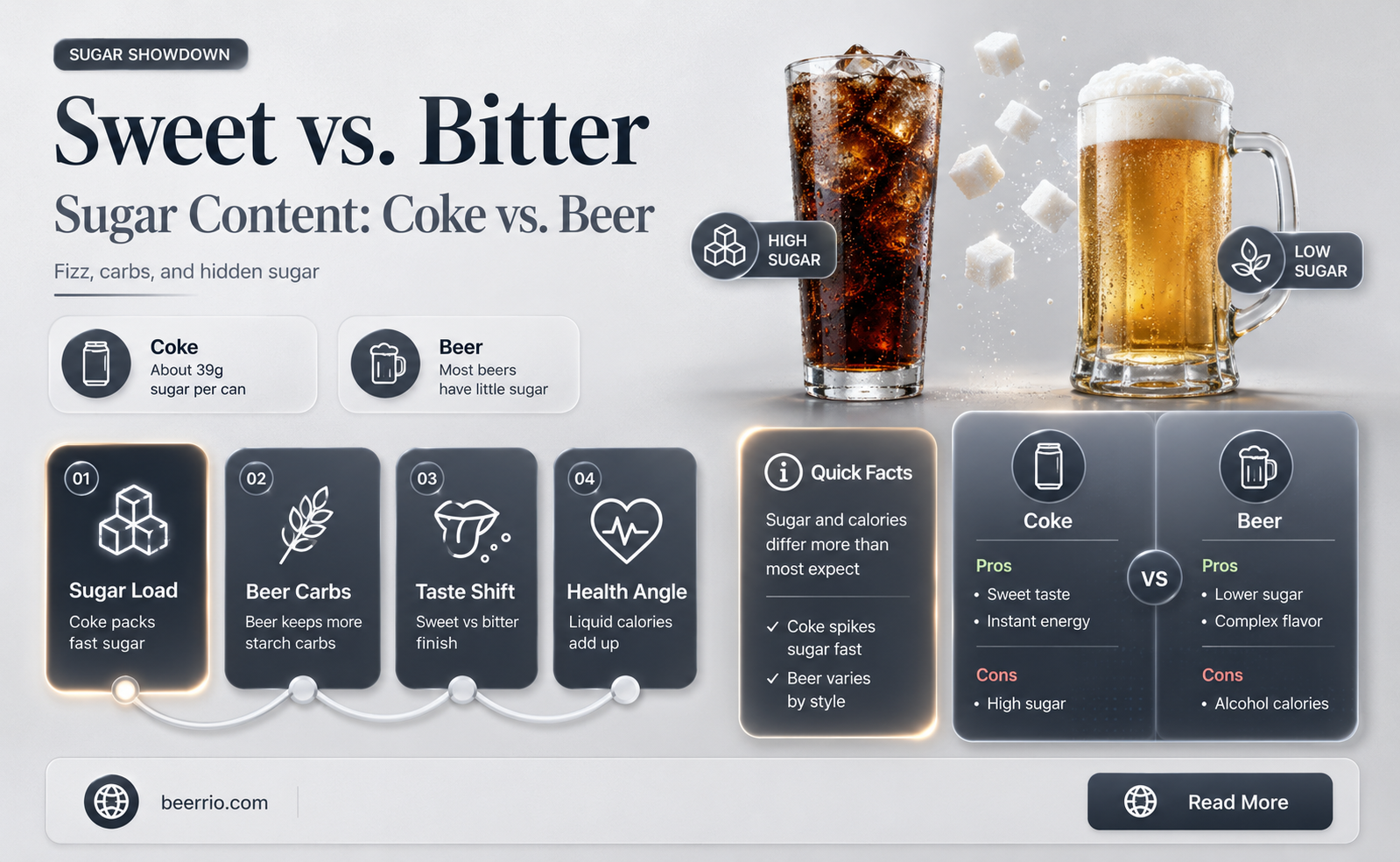
When comparing the sugar content of popular beverages like Coca-Cola and beer, it's important to consider both the type and amount of sugars present. Coca-Cola is a carbonated soft drink known for its high sugar content, primarily in the form of high fructose corn syrup in the United States and cane sugar in other countries. A standard 12-ounce can of Coca-Cola contains about 39 grams of sugar. On the other hand, beer is an alcoholic beverage made from fermented grains, and its sugar content varies widely depending on the type and brewing process. While some beers may contain residual sugars from the fermentation process, others, like light beers, are brewed to have minimal sugar content. Generally, a 12-ounce serving of beer contains anywhere from 0 to 20 grams of sugar, with many beers falling in the lower end of this range. Therefore, in most cases, Coca-Cola has significantly more sugar than beer.
| Characteristics | Values |
|---|---|
| Type of Beverage | Coke is a carbonated soft drink, while beer is an alcoholic beverage made from fermented grains. |
| Sugar Content (per 12 oz) | Coke typically contains around 39 grams of sugar, whereas beer generally has less than 1 gram of sugar. |
| Calories (per 12 oz) | Coke has approximately 140 calories, while beer has around 150 calories. |
| Caffeine Content (per 12 oz) | Coke contains about 38 mg of caffeine, whereas beer has negligible caffeine content. |
| Alcohol Content (per 12 oz) | Coke is non-alcoholic, while beer typically contains around 5% alcohol by volume. |
| Carbonation Level | Both Coke and beer are carbonated, but Coke tends to have a higher level of carbonation. |
| Flavor Profile | Coke has a sweet, cola flavor, while beer has a variety of flavors depending on the type, such as bitter, malty, or hoppy. |
| Ingredients | Coke is made from carbonated water, sugar, caramel color, phosphoric acid, natural flavors, and caffeine. Beer is made from water, malted barley, hops, and yeast. |
| Serving Size | Both Coke and beer are commonly served in 12 oz cans or bottles. |
| Popularity | Coke is one of the most popular soft drinks globally, while beer is a widely consumed alcoholic beverage. |
| Health Impact | Excessive consumption of Coke can lead to weight gain, diabetes, and other health issues due to its high sugar content. Beer, when consumed in moderation, may have some health benefits, but excessive consumption can lead to liver damage, addiction, and other health problems. |
| Cultural Significance | Coke is often associated with American culture and is a symbol of globalization. Beer has a rich cultural history in many countries and is often associated with social gatherings and celebrations. |
| Production Process | Coke is produced through a process of mixing ingredients, carbonation, and bottling. Beer is produced through brewing, fermentation, conditioning, and packaging. |
| Shelf Life | Coke typically has a shelf life of 3-6 months, while beer can last for several months to a few years depending on the type and storage conditions. |
| Price (per 12 oz) | The price of Coke and beer varies depending on the location and type, but generally, Coke is cheaper than beer. |
Explore related products


What You'll Learn
- Sugar Content Comparison: Analyzing the sugar levels in Coke and beer to determine which has more
- Calorie Count: Comparing the calorie content of Coke and beer, considering sugar's impact on calories
- Health Implications: Discussing the health effects of consuming sugary drinks like Coke versus alcoholic beverages like beer
- Ingredient Breakdown: Examining the ingredients in Coke and beer to identify sources of sugar
- Dietary Recommendations: Providing advice on sugar intake and the role of Coke and beer in a balanced diet

Sugar Content Comparison: Analyzing the sugar levels in Coke and beer to determine which has more
Analyzing the sugar content in Coke and beer reveals some surprising insights. While both beverages are known for their sweetness, the actual sugar levels can vary significantly depending on the specific type and brand. For instance, a standard 12-ounce can of Coca-Cola contains approximately 39 grams of sugar, which is roughly 10 teaspoons. In contrast, a typical 12-ounce beer contains about 10-15 grams of sugar, depending on the type of beer. This means that Coke generally has more sugar than beer, but there are some exceptions.
One factor to consider is the type of sugar used in each beverage. Coke primarily uses high fructose corn syrup (HFCS) as its sweetener, which is a highly processed sugar that has been linked to various health issues. Beer, on the other hand, often uses maltose, a natural sugar derived from barley, which is considered a healthier option. Additionally, some beers may use other sweeteners like honey or agave nectar, which can affect the overall sugar content.
Another important consideration is the serving size. While a standard can of Coke is 12 ounces, many beers come in larger sizes, such as 16 or 24 ounces. This means that even though Coke may have more sugar per ounce, a larger beer could potentially contain more sugar overall. Furthermore, some people may consume multiple cans of Coke in one sitting, which could significantly increase their sugar intake.
In conclusion, while Coke generally has more sugar than beer, there are several factors to consider when comparing the sugar content of these two beverages. The type of sugar, serving size, and consumption habits all play a role in determining which beverage is the sweeter option. By understanding these factors, consumers can make more informed choices about their sugar intake and overall health.
The Sweet Truth: Uncovering the Sugar Content in Beer
You may want to see also
Explore related products



Calorie Count: Comparing the calorie content of Coke and beer, considering sugar's impact on calories
Analyzing the calorie content of Coke and beer reveals some interesting insights. A standard 12-ounce can of Coke contains approximately 140 calories, all of which come from sugar. In contrast, a 12-ounce serving of beer typically contains around 150 calories, with the majority coming from carbohydrates and alcohol, and a smaller portion from sugar. However, it's important to note that the sugar content in beer can vary significantly depending on the type and brewing process.
When comparing the two beverages, it's clear that Coke has a higher sugar content per serving, which directly contributes to its calorie count. Beer, on the other hand, has a more complex nutritional profile, with calories coming from multiple sources. This means that while beer may have more calories overall, the impact of sugar on its calorie content is less pronounced than in Coke.
It's also worth considering the potential health implications of consuming these beverages. The high sugar content in Coke can lead to a rapid spike in blood sugar levels, followed by a crash, which can leave you feeling tired and sluggish. Beer, while lower in sugar, contains alcohol, which can have a range of negative health effects when consumed in excess.
In conclusion, while Coke has more sugar per serving, beer typically has more calories overall. However, the source of those calories is what really matters. Coke's calories come almost entirely from sugar, while beer's calories come from a combination of carbohydrates, alcohol, and sugar. This distinction is important when considering the potential health impacts of these beverages.
Sweetening the Brew: A Guide to Carbonating Beer with Sugar
You may want to see also
Explore related products


Health Implications: Discussing the health effects of consuming sugary drinks like Coke versus alcoholic beverages like beer
Consuming sugary drinks like Coke and alcoholic beverages like beer can have significant health implications. While both contain sugar, the effects on the body can vary greatly. Sugary drinks are known to contribute to weight gain, increased risk of type 2 diabetes, and tooth decay. The high fructose content in these drinks can lead to insulin resistance, which is a precursor to diabetes. Additionally, the empty calories in sugary drinks can contribute to obesity, which is linked to a host of other health problems including heart disease and certain types of cancer.
On the other hand, alcoholic beverages like beer also contain sugar, but the primary concern with alcohol is its impact on the liver and overall metabolism. Moderate alcohol consumption has been linked to certain health benefits, such as reduced risk of heart disease and increased good cholesterol levels. However, excessive alcohol consumption can lead to liver damage, addiction, and increased risk of certain cancers. It's important to note that the sugar content in beer is generally lower than that in sugary drinks, but the alcohol content can have its own set of health implications.
When comparing the two, it's clear that sugary drinks and alcoholic beverages have different health effects. Sugary drinks are more likely to contribute to weight gain and diabetes, while alcoholic beverages can have both positive and negative effects on health depending on consumption levels. It's important for individuals to be aware of these implications and make informed choices about their beverage consumption.
In terms of sugar content, a 12-ounce can of Coke contains about 39 grams of sugar, while a 12-ounce bottle of beer contains about 10-15 grams of sugar depending on the type. This means that sugary drinks like Coke have significantly more sugar than alcoholic beverages like beer. However, it's important to consider the overall nutritional content and potential health effects of each type of beverage rather than just focusing on sugar content.
In conclusion, while both sugary drinks and alcoholic beverages contain sugar, they have different health implications. Sugary drinks are more likely to contribute to weight gain and diabetes, while alcoholic beverages can have both positive and negative effects on health depending on consumption levels. It's important for individuals to be aware of these implications and make informed choices about their beverage consumption.
Priming Your Brew: The Sweet Spot for Sugar in Beer
You may want to see also
Ingredient Breakdown: Examining the ingredients in Coke and beer to identify sources of sugar
To determine which beverage contains more sugar, we need to examine the ingredients in both Coke and beer. Let's start with Coke. A typical 12-ounce can of Coke contains about 39 grams of sugar, which is derived from high fructose corn syrup (HFCS). HFCS is a sweetener made from corn starch that has been converted into fructose and glucose. It's commonly used in soft drinks because it's cheaper and sweeter than regular sugar.
Now, let's look at beer. Beer is made from grains, such as barley or wheat, which are fermented with yeast to produce alcohol. During the fermentation process, the yeast consumes the sugars in the grains, so the final product contains very little sugar. However, some beers, especially flavored or sweetened beers, may have added sugars. For example, a 12-ounce bottle of flavored beer can contain anywhere from 10 to 30 grams of sugar, depending on the brand and type.
Comparing the sugar content of Coke and beer, it's clear that Coke contains significantly more sugar than beer. However, it's important to note that the sugar content in beer can vary widely depending on the type and brand, so it's always a good idea to check the label or ask the brewer for more information.
In conclusion, if you're trying to reduce your sugar intake, beer may be a better choice than Coke, but it's still important to be mindful of the sugar content in flavored or sweetened beers.
Zero Sugar Brews: Unveiling the Best Beer Options for Health-Conscious Drinkers
You may want to see also
Dietary Recommendations: Providing advice on sugar intake and the role of Coke and beer in a balanced diet
Analyzing the sugar content in popular beverages like Coke and beer reveals significant differences. A standard 12-ounce can of Coke contains approximately 39 grams of sugar, primarily in the form of high fructose corn syrup. In contrast, a typical 12-ounce beer contains around 10-15 grams of sugar, depending on the type and brand. This disparity highlights the importance of monitoring sugar intake when consuming these beverages.
From a dietary perspective, it's crucial to consider the role of these drinks in a balanced diet. The American Heart Association recommends limiting added sugars to 25-36 grams per day for women and men, respectively. Given that a single can of Coke exceeds these recommendations, it's advisable to consume such sugary drinks in moderation. Beer, while lower in sugar, should also be consumed responsibly due to its alcohol content and potential impact on overall health.
When making dietary choices, it's essential to consider the broader nutritional profile of these beverages. Coke is high in calories and offers little nutritional value, potentially contributing to weight gain and other health issues if consumed excessively. Beer, on the other hand, contains some B vitamins and antioxidants but should be balanced against its calorie and alcohol content.
In conclusion, while both Coke and beer contain sugar, Coke has a significantly higher sugar content. To maintain a balanced diet, it's recommended to limit the intake of sugary drinks like Coke and to consume beer in moderation, considering its alcohol content and overall nutritional value.
Unveiling the Sweetness: Sugar Content in Your Favorite Beers
You may want to see also
Frequently asked questions
Generally, coke has more sugar than beer. A typical 12-ounce can of coke contains about 39 grams of sugar, while a 12-ounce beer usually has less than 1 gram of sugar.
Diet coke contains artificial sweeteners instead of sugar, so it has virtually no sugar content. Regular coke, on the other hand, has a significant amount of sugar, as mentioned earlier.
Yes, some beers, particularly those with added flavors or sweeteners, can have a higher sugar content than coke. However, these are exceptions, and most beers have significantly less sugar than coke.
Consuming high amounts of sugar in drinks like coke can lead to various health issues, including weight gain, increased risk of type 2 diabetes, tooth decay, and heart disease. It's essential to moderate sugar intake and opt for healthier beverage choices when possible.
To reduce sugar intake from drinks, consider switching to diet or zero-sugar versions of your favorite beverages, drinking water or unsweetened tea instead of sugary drinks, and limiting your consumption of sweetened alcoholic beverages. Reading labels and being aware of added sugars can also help you make healthier choices.