Harmony Chandler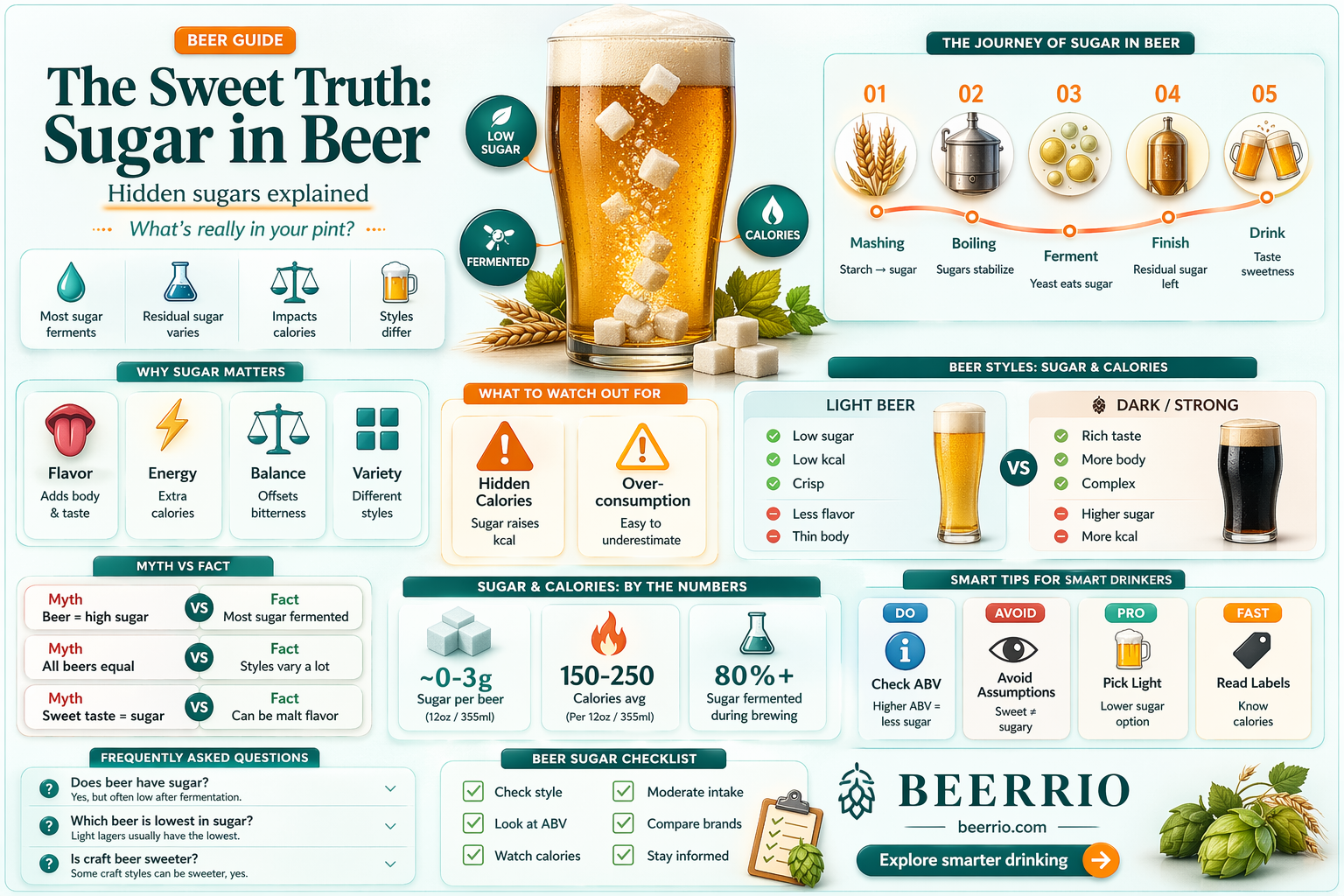
The question of whether there is sugar in beer is a common one among consumers and brewers alike. Beer is typically made from four main ingredients: water, malted barley, hops, and yeast. During the brewing process, the yeast ferments the sugars present in the malted barley, converting them into alcohol and carbon dioxide. While this process significantly reduces the sugar content, some residual sugars may remain in the final product, depending on the type of beer and the brewing method used. Additionally, some beers may have added sugars or sweeteners to enhance flavor or increase alcohol content. Therefore, while beer is not a significant source of sugar in the diet, it does contain some amount of sugar, albeit in varying degrees across different beer styles and brands.
Explore related products


What You'll Learn

Types of sugars in beer
Beer contains various types of sugars that contribute to its flavor, body, and alcohol content. The primary sugars found in beer are maltose, sucrose, fructose, and glucose. Maltose is the most abundant sugar in beer and is derived from the germination of barley. It provides the main source of fermentable sugar for yeast, which converts it into alcohol and carbon dioxide. Sucrose, or table sugar, is sometimes added to beer during the brewing process to increase the alcohol content or to create a sweeter flavor profile. Fructose and glucose are also present in beer, although in smaller amounts than maltose and sucrose. These sugars are produced during the fermentation process and contribute to the beer's residual sweetness and body.
The type and amount of sugar in beer can vary depending on the brewing process and the style of beer. For example, lagers and pilsners typically have a lower sugar content than ales and stouts. Additionally, some beers may have added sugars, such as honey or maple syrup, which can impart unique flavors and aromas. The sugar content in beer can also affect its nutritional value, with higher sugar beers generally having more calories and carbohydrates.
It's important to note that while beer does contain sugar, the majority of it is converted into alcohol during the fermentation process. This means that the sugar content in beer is typically lower than in other sweetened beverages. However, individuals with diabetes or those who are watching their sugar intake should still be mindful of the sugar content in beer and consume it in moderation.
In summary, beer contains various types of sugars, including maltose, sucrose, fructose, and glucose, which contribute to its flavor, body, and alcohol content. The type and amount of sugar in beer can vary depending on the brewing process and the style of beer. While beer does contain sugar, the majority of it is converted into alcohol during fermentation, making it a lower-sugar option compared to other sweetened beverages.
Sweetening the Brew: A Guide to Carbonating Beer with Sugar
You may want to see also
Explore related products


Brewing process and sugar
During the brewing process, sugar plays a crucial role in the production of beer. It is primarily used as a food source for yeast, which is responsible for fermenting the wort and producing alcohol. The sugar in the wort is converted into ethanol and carbon dioxide through the process of fermentation. The amount of sugar used in the brewing process can vary depending on the type of beer being produced, with some beers requiring more sugar than others to achieve the desired flavor and alcohol content.
The brewing process typically involves several steps, including mashing, boiling, fermenting, conditioning, and packaging. During the mashing process, grains such as barley are crushed and mixed with hot water to convert the starches into fermentable sugars. This sugary liquid, known as wort, is then boiled with hops to add bitterness and flavor. After boiling, the wort is cooled and transferred to a fermentation vessel, where yeast is added to begin the fermentation process.
The yeast consumes the sugar in the wort, producing alcohol and carbon dioxide as byproducts. The fermentation process can take several days to weeks, depending on the type of beer and the desired flavor profile. Once fermentation is complete, the beer is conditioned to allow the flavors to mature and develop. Finally, the beer is packaged and distributed for consumption.
It is important to note that while sugar is a key ingredient in the brewing process, it is not typically added to the beer as a sweetener. The sugar is primarily used as a food source for the yeast and is converted into alcohol during fermentation. However, some beers may have residual sugar content, which can contribute to the sweetness and body of the beer. This residual sugar is often a result of the yeast not fully consuming all of the sugar during fermentation.
In conclusion, sugar is an essential component of the brewing process, serving as a food source for yeast and contributing to the flavor and alcohol content of the beer. While sugar is not typically added to beer as a sweetener, some beers may have residual sugar content that can affect the taste and mouthfeel. Understanding the role of sugar in the brewing process can help beer enthusiasts appreciate the complexity and craftsmanship involved in creating their favorite brews.
Explore related products





Sugar content in different beers
Sugar content in beer can vary widely depending on the type and brewing process. Lighter beers, such as lagers and pilsners, typically have lower sugar content compared to darker beers like stouts and porters. This is because darker beers often use more malt, which contains fermentable sugars. Some beers, like Belgian ales and certain craft beers, may have higher sugar content due to the addition of candi sugar or other sweeteners during the brewing process.
One way to determine the sugar content of a beer is to look at its ingredients list or nutritional information, if available. However, not all beers provide this information, and the sugar content can still vary within a specific type of beer. Another method is to use a refractometer to measure the specific gravity of the beer before and after fermentation, which can give an indication of the sugar content.
It's important to note that the sugar content in beer can affect its taste, mouthfeel, and overall quality. Beers with higher sugar content may taste sweeter and have a fuller body, while beers with lower sugar content may be drier and more crisp. Additionally, the sugar content can impact the beer's alcohol content, as yeast ferments the sugars to produce alcohol.
For those who are health-conscious or have dietary restrictions, it's essential to be aware of the sugar content in beer. While moderate beer consumption is generally considered safe for most adults, excessive intake of sugary beers can contribute to weight gain, increased blood sugar levels, and other health issues. Therefore, it's crucial to enjoy beer in moderation and choose options with lower sugar content if necessary.
In conclusion, the sugar content in beer can vary significantly depending on the type and brewing process. By understanding the factors that influence sugar content and using methods to measure it, consumers can make informed choices about their beer consumption and enjoy their favorite brews responsibly.
Explore related products




Health implications of sugar in beer
Sugar in beer can have several health implications, particularly for those who consume it regularly. One of the primary concerns is the impact on blood sugar levels. Beers that contain higher amounts of sugar can cause a rapid spike in blood glucose, which may be problematic for individuals with diabetes or those at risk of developing the condition. Additionally, the empty calories provided by sugar in beer can contribute to weight gain and obesity, which are known risk factors for a variety of health issues including heart disease, stroke, and certain types of cancer.
Another health implication of sugar in beer is its effect on dental health. The sugars present in beer can contribute to tooth decay and cavities, as they provide a food source for the bacteria that cause these conditions. Regular consumption of sugary beers can also lead to an increased risk of developing type 2 diabetes, as the body becomes more resistant to insulin over time.
Furthermore, the presence of sugar in beer can also impact the liver. Excessive sugar intake can lead to the accumulation of fat in the liver, which can progress to more serious conditions such as fatty liver disease and cirrhosis. It is important to note that while some beers may contain small amounts of sugar, others can have significantly higher levels, particularly those that are flavored or sweetened.
In conclusion, the health implications of sugar in beer are multifaceted and can have significant consequences for those who consume it regularly. It is important for individuals to be aware of the sugar content in their beer and to consume it in moderation as part of a balanced diet. Those with specific health concerns, such as diabetes or liver disease, should consult with their healthcare provider regarding their alcohol consumption.
Explore related products


Sugar-free beer alternatives
For individuals looking to reduce their sugar intake, sugar-free beer alternatives can be an appealing option. These alternatives typically fall into two categories: low-carb beers and non-alcoholic beers. Low-carb beers are brewed using processes that minimize the carbohydrate content, which often includes sugars. Brands like Michelob Ultra and Bud Light offer low-carb options that contain significantly less sugar than regular beers. On the other hand, non-alcoholic beers, such as those from brands like Heineken and Budweiser, remove the alcohol content while also reducing the sugar levels.
When choosing a sugar-free beer alternative, it's important to read the labels carefully. Some low-carb beers may still contain small amounts of sugar, and non-alcoholic beers can sometimes have added sugars to enhance flavor. Additionally, individuals with diabetes or those following a ketogenic diet should consult with a healthcare professional to ensure that these alternatives align with their dietary needs.
Another consideration is taste. Sugar-free beer alternatives can vary widely in flavor profile. Some may have a slightly different taste due to the brewing process, while others may be nearly indistinguishable from their sugary counterparts. It's advisable to try different brands and types to find the one that best suits your palate.
In terms of availability, sugar-free beer alternatives are becoming increasingly common. Most major grocery stores and liquor stores carry a selection of low-carb and non-alcoholic beers. Online retailers also offer a wide range of options, often with the convenience of home delivery.
Lastly, it's worth noting that while sugar-free beer alternatives can be a healthier choice for some, they are not necessarily suitable for everyone. Pregnant women, for example, should avoid non-alcoholic beers due to potential risks. Additionally, individuals who are not accustomed to drinking beer should be cautious when trying new alternatives, as they may still contain some alcohol or other ingredients that could cause adverse reactions.
Frequently asked questions
Yes, there is sugar in beer. During the brewing process, sugars are naturally present in the malted grains used to make beer. These sugars are fermented by yeast, which converts them into alcohol and carbon dioxide. However, some residual sugar may remain in the final product, depending on the type of beer and the brewing process.
The amount of sugar in beer can vary widely depending on the type of beer and the brewing process. On average, a 12-ounce serving of beer contains about 10-15 grams of sugar. However, some beers, such as stouts and porters, may contain more sugar, while others, such as lagers and pilsners, may contain less.
Yes, the sugar content in beer can affect its taste. Beers with higher sugar content tend to have a sweeter, more malty flavor, while beers with lower sugar content tend to have a drier, more bitter flavor. The balance between sweetness and bitterness is an important aspect of beer flavor, and brewers carefully control the sugar content to achieve the desired taste profile.
Yes, there is a significant difference in sugar content between different types of beer. For example, stouts and porters tend to have higher sugar content, while lagers and pilsners tend to have lower sugar content. Additionally, some beers, such as Belgian ales and fruit beers, may have added sugars to enhance their flavor and sweetness.