Arabella Franco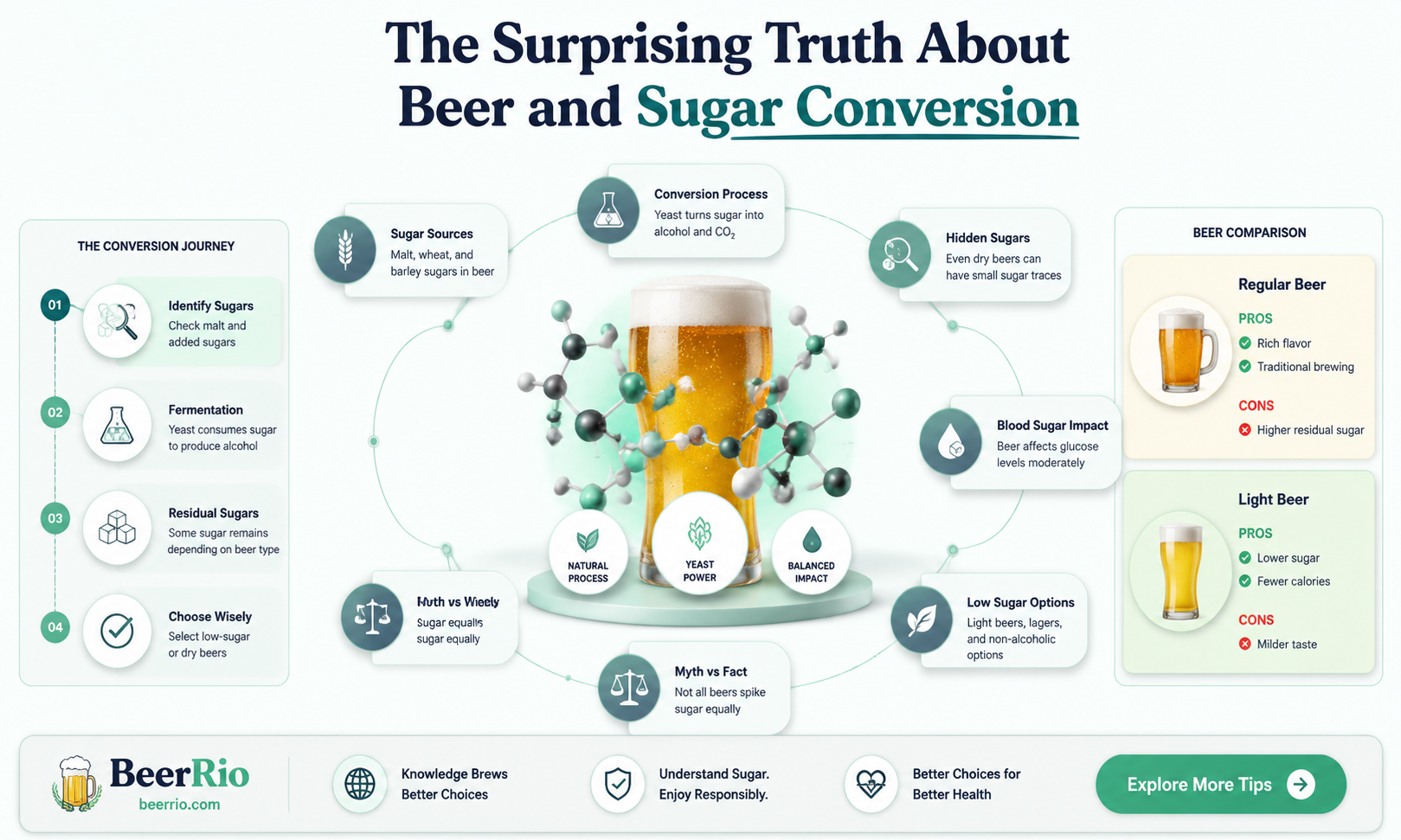
The question of whether beer turns into sugar is a common one, especially among those monitoring their carbohydrate intake or managing conditions like diabetes. Beer is an alcoholic beverage made from the fermentation of grains, primarily barley, and flavored with hops. During the brewing process, the starches in the grains are converted into fermentable sugars, which are then transformed into alcohol and carbon dioxide by yeast. While beer does contain some residual sugars, the majority of the sugar is fermented into alcohol. Therefore, it's more accurate to say that beer is made from sugar rather than turns into sugar. The final product typically has a small amount of residual sugar, but this varies greatly depending on the type and brewing method of the beer.
Explore related products


What You'll Learn
- The Brewing Process: How beer is made from grains, which are broken down into sugars during brewing
- Fermentation: The role of yeast in converting sugars into alcohol and carbon dioxide
- Sugar Content in Beer: Varying levels of residual sugar in different beer styles
- Glycemic Index: The impact of beer consumption on blood sugar levels compared to other foods
- Health Considerations: Potential effects of beer's sugar content on health, including calorie intake and diabetes risk

The Brewing Process: How beer is made from grains, which are broken down into sugars during brewing
The brewing process is a fascinating journey that transforms simple grains into the beloved beverage known as beer. At its core, brewing is the art and science of converting the starches in grains into fermentable sugars, which are then used by yeast to produce alcohol and carbonation. This intricate process involves several key steps, each playing a crucial role in the final flavor and quality of the beer.
The first step in the brewing process is malting, where grains such as barley, wheat, or rye are soaked in water and allowed to germinate. This germination process activates enzymes within the grains that begin to break down the starches into simpler sugars. The malted grains are then dried and roasted to varying degrees, which not only stops the germination process but also imparts different flavors and colors to the final beer.
Next comes the mashing process, where the malted grains are ground into a coarse flour and mixed with hot water in a large vessel called a mash tun. This mixture, known as the mash, is stirred and held at a specific temperature to allow the enzymes to continue breaking down the starches into sugars. The resulting liquid, called wort, is then separated from the solid grains through a process known as lautering.
The wort is then boiled in a large kettle, where hops are added to impart bitterness, flavor, and aroma to the beer. During this boiling process, the wort is also sterilized to prevent any unwanted bacteria or wild yeast from contaminating the final product. After boiling, the wort is cooled and transferred to a fermentation vessel, where yeast is added to begin the fermentation process.
Fermentation is a critical stage in the brewing process, as it is during this time that the yeast consumes the sugars in the wort and produces alcohol and carbonation. The type of yeast used, as well as the temperature and conditions of fermentation, can greatly influence the final flavor and character of the beer. Once fermentation is complete, the beer is conditioned, filtered, and packaged for distribution.
In conclusion, the brewing process is a complex and carefully orchestrated series of steps that transforms grains into beer. From malting and mashing to boiling and fermentation, each stage plays a vital role in creating the diverse range of flavors and styles that beer enthusiasts enjoy around the world.
Priming Your Brew: The Sweet Spot for Sugar in Beer
You may want to see also
Explore related products


Fermentation: The role of yeast in converting sugars into alcohol and carbon dioxide
Yeast plays a crucial role in the fermentation process, which is essential for the production of beer. During fermentation, yeast consumes sugars present in the wort (the liquid extracted from the mashing process during beer brewing) and converts them into alcohol and carbon dioxide. This metabolic process is anaerobic, meaning it occurs without the presence of oxygen. The yeast cells break down the sugar molecules, producing ethanol (alcohol) and carbon dioxide as byproducts. This transformation is what gives beer its alcoholic content and characteristic bubbles.
The fermentation process typically occurs in large vats or fermentation tanks, where the wort is inoculated with yeast and allowed to ferment for several days to weeks, depending on the type of beer being produced. The temperature and conditions of the fermentation environment are carefully controlled to ensure optimal yeast activity and flavor development. Different strains of yeast can produce varying flavors and aromas in the beer, which is why brewers often select specific yeast strains for different beer styles.
One common misconception is that beer turns into sugar during fermentation. In reality, the opposite occurs: sugar is converted into alcohol and carbon dioxide. The sweetness of the beer is determined by the amount of residual sugar left after fermentation, which can be influenced by factors such as the type of yeast used, the fermentation temperature, and the duration of fermentation. Some beers, like stouts and porters, may have a higher residual sugar content, giving them a sweeter taste, while others, like IPAs and lagers, may have a lower residual sugar content, resulting in a drier, more bitter flavor.
In summary, yeast is the key player in the fermentation process of beer production, converting sugars into alcohol and carbon dioxide. This process not only determines the alcoholic strength of the beer but also contributes to its flavor, aroma, and mouthfeel. Understanding the role of yeast in fermentation helps to clarify the misconception that beer turns into sugar, when in fact, sugar is transformed into other compounds that define the characteristics of beer.
Sweetening the Brew: A Guide to Carbonating Beer with Sugar
You may want to see also
Explore related products


![Orchard Hill [Pack of 12] Budweiser Full Flavored Zero Alcohol Brew, 0.00 ALC, NA Non-Alcoholic Beer, 50 Cal, Zero Sugar, Cans, 12 Fl Oz (Pack of 12)](https://m.media-amazon.com/images/I/81HEjZZVTMS._AC_UL320_.jpg)
Sugar Content in Beer: Varying levels of residual sugar in different beer styles
The sugar content in beer can vary significantly depending on the style and brewing process. Lighter beers, such as lagers and pilsners, typically have lower residual sugar levels, often less than 1 gram per liter. These beers are fermented more completely, resulting in a drier taste profile. In contrast, darker beers like stouts and porters can have higher sugar content, sometimes exceeding 10 grams per liter, giving them a sweeter, more robust flavor.
Some beer styles, such as Belgian ales and certain types of wheat beers, are intentionally brewed with higher sugar levels to achieve a specific taste. These beers often undergo a secondary fermentation in the bottle, which can further increase the residual sugar content. The sugar in these beers contributes to their complex flavor profiles and can also affect the alcohol content, as yeast ferments the sugar into alcohol.
The brewing process itself plays a crucial role in determining the sugar content of beer. Factors such as the type of malt used, the mashing temperature, and the fermentation time can all influence the final sugar levels. Brewers may also add sugars or other fermentable additives during the brewing process to achieve desired flavor characteristics or increase the alcohol by volume (ABV).
It's important to note that while beer does contain sugar, it is not typically a significant source of dietary sugar for most people. The sugar content is generally much lower than in other beverages like soda or fruit juice. However, individuals with diabetes or those monitoring their sugar intake should still be aware of the sugar content in different beer styles and consume accordingly.
In summary, the sugar content in beer varies widely across different styles and brewing methods. From dry, crisp lagers to sweet, complex Belgian ales, understanding the sugar levels in beer can help consumers make informed choices about their beverage selections.
Sweet vs. Bitter: The Sugar Content Showdown Between Coke and Beer
You may want to see also
Explore related products



Glycemic Index: The impact of beer consumption on blood sugar levels compared to other foods
The glycemic index (GI) is a measure of how quickly foods raise blood sugar levels. Foods with a high GI cause a rapid spike in blood glucose, while those with a low GI lead to a more gradual increase. Beer, surprisingly, has a relatively low GI compared to many other carbohydrate-rich foods. This is primarily because the carbohydrates in beer are mostly in the form of maltose and dextrins, which are digested and absorbed more slowly than simple sugars like glucose or fructose.
A typical 12-ounce serving of beer contains about 12-15 grams of carbohydrates, which is roughly equivalent to a slice of bread or a small apple. However, the GI of beer is generally lower than that of bread or apples, usually falling in the range of 50-70. This means that while beer does contribute to blood sugar levels, it does so at a slower rate than many other common foods.
It's important to note that the GI of beer can vary depending on the type and brewing process. For example, light beers and lagers tend to have a lower GI than darker ales and stouts, which often contain more complex carbohydrates and sugars. Additionally, beers with higher alcohol content may have a slightly higher GI due to the presence of more easily digestible sugars.
When considering the impact of beer on blood sugar levels, it's also crucial to factor in portion size and individual tolerance. While a single serving of beer may not significantly affect blood glucose levels for most people, consuming multiple servings in a short period can lead to a more pronounced increase. Furthermore, individuals with diabetes or insulin resistance may be more sensitive to the effects of beer on blood sugar.
In comparison to other foods, beer's GI is relatively moderate. For instance, foods like white bread, potatoes, and sugary cereals have much higher GIs, often exceeding 70. On the other hand, foods like whole grains, legumes, and most vegetables have lower GIs, typically below 50. This places beer in a middle ground, suggesting that while it does contribute to blood sugar levels, it may not be as significant a factor as other dietary choices.
In conclusion, while beer does contain carbohydrates that can raise blood sugar levels, its relatively low GI means that it may not have as dramatic an impact as other high-carbohydrate foods. However, moderation and individual tolerance are key factors to consider when assessing the effects of beer on blood glucose levels.
The Sweet Truth: How Beer Transforms into Sugar in Your Body
You may want to see also
Explore related products



Health Considerations: Potential effects of beer's sugar content on health, including calorie intake and diabetes risk
The sugar content in beer can have significant health implications, particularly concerning calorie intake and diabetes risk. Beer contains various types of sugars, including maltose, glucose, and fructose, which contribute to its caloric content. On average, a 12-ounce serving of beer can contain anywhere from 10 to 20 grams of sugar, depending on the type and brewing process. This sugar content can lead to an increase in calorie intake, which may contribute to weight gain if consumed in excess.
Moreover, the sugar in beer can affect blood sugar levels, posing a risk for individuals with diabetes or those at risk of developing the condition. When consumed, the sugars in beer are quickly absorbed into the bloodstream, causing a rapid spike in blood sugar levels. This can be particularly problematic for people with type 2 diabetes, as their bodies may struggle to regulate blood sugar levels effectively. Additionally, regular consumption of sugary beverages, including beer, has been linked to an increased risk of developing type 2 diabetes.
It is essential for individuals to be aware of the sugar content in beer and to consume it in moderation as part of a balanced diet. For those with diabetes, it may be necessary to monitor blood sugar levels closely and to limit the intake of sugary beverages, including beer. Furthermore, choosing lower-sugar beer options or opting for alternative beverages, such as water or unsweetened tea, can help reduce the overall sugar intake and mitigate the associated health risks.
In conclusion, the sugar content in beer can have notable effects on health, particularly in terms of calorie intake and diabetes risk. By understanding these potential implications and making informed choices about beverage consumption, individuals can better manage their overall health and well-being.
The Sweet Truth: Uncovering the Sugar Content in Beer
You may want to see also
Frequently asked questions
Yes, beer contains carbohydrates that are converted into sugars in the body. The liver metabolizes these sugars, releasing glucose into the bloodstream.
The sugar content in beer can cause a rapid increase in blood sugar levels, especially for individuals with diabetes or insulin resistance. It's important to monitor consumption and consider the glycemic impact.
Beer primarily contains maltose, a disaccharide composed of two glucose molecules. During fermentation, yeast converts maltose into alcohol and carbon dioxide, but some residual sugars may remain.
Yes, excessive consumption of beer can contribute to weight gain. The combination of alcohol and sugars increases calorie intake, and regular heavy drinking can lead to an accumulation of body fat.
Some studies suggest that moderate beer consumption may have potential health benefits, such as improved heart health and reduced risk of certain diseases. However, it's crucial to define "moderate" and consider individual health factors.


![[Pack of 24] Bud Full Flavored Zero Alcohol Brew, 0.00 ALC, NA Non-Alcoholic Beer, 50 Cal, Zero Sugar, Cans, 12 Fl Oz (Pack of 24)](https://m.media-amazon.com/images/I/51RUqU+bqVL._AC_UL320_.jpg)


![[Pack of 6] Stella Artois Liberté 0.0% Premium NA/Alcohol FREE Larger Beer](https://m.media-amazon.com/images/I/81WHSmB+CcL._AC_UL320_.jpg)