Oisin Foster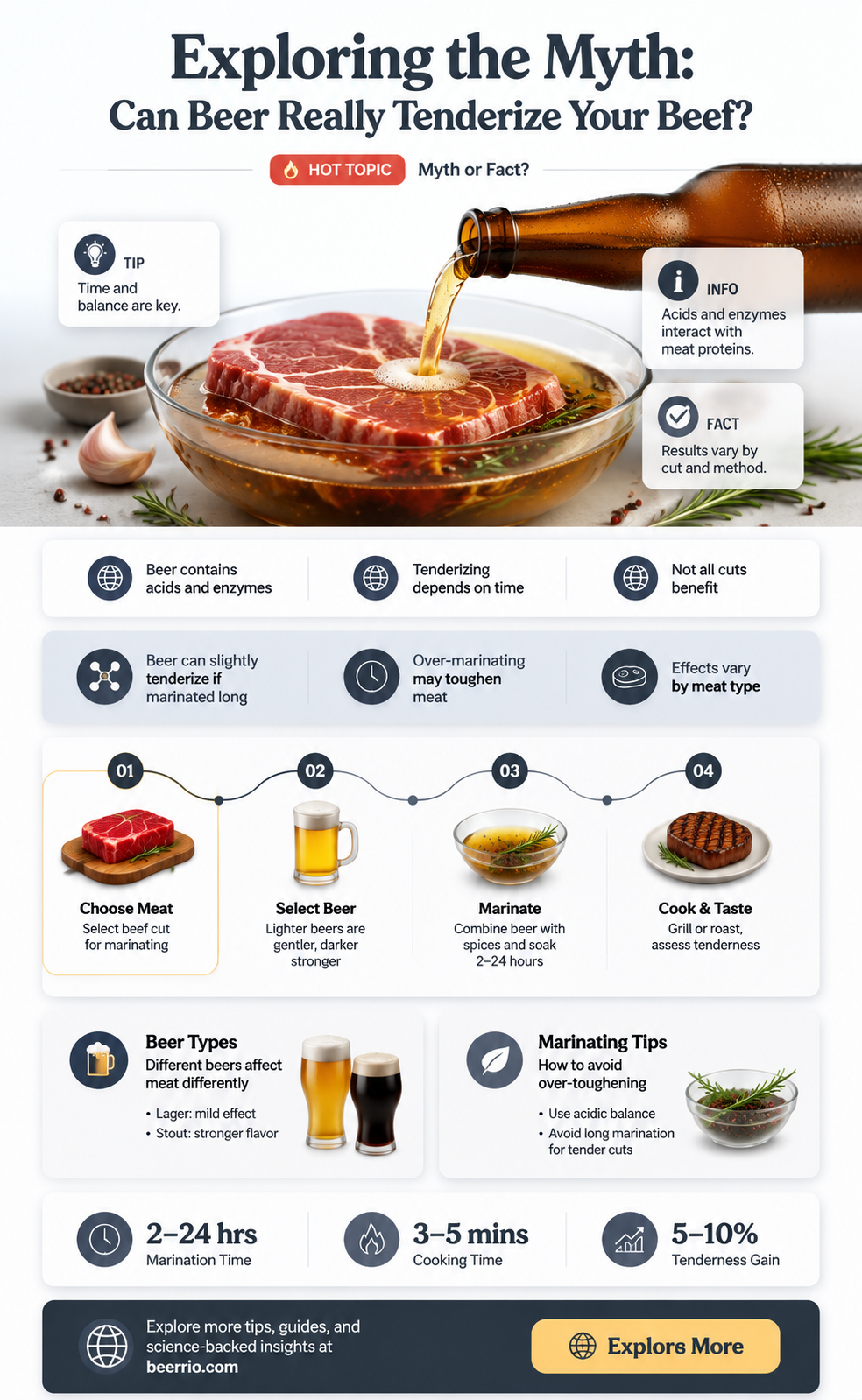
The question of whether beer can tenderize beef is a common one among cooking enthusiasts. Beer, with its acidic and enzymatic properties, is often used in marinades to help break down the proteins in meat, potentially making it more tender. The alcohol content in beer can also contribute to this process by denaturing proteins. However, the effectiveness of beer as a tenderizer can depend on several factors, including the type of beer used, the duration of marination, and the cut of beef. While some swear by beer marinades for achieving a tender and flavorful steak, others argue that the alcohol may not significantly enhance tenderness compared to other marinating methods.
Explore related products


What You'll Learn
- The Science Behind Beer Tenderization: Exploring how beer's ingredients, such as enzymes and acids, break down beef fibers
- Types of Beer for Tenderizing: Discussing which beer styles are most effective for tenderizing beef due to their flavor profiles and chemical compositions
- Marinating Techniques: Providing methods for properly marinating beef in beer to maximize tenderness and flavor infusion
- Cooking Methods Post-Marination: Offering guidance on the best cooking techniques to use after marinating beef in beer, such as grilling or slow-cooking
- Flavor Pairing Suggestions: Recommending side dishes and sauces that complement the rich flavors of beer-tenderized beef

The Science Behind Beer Tenderization: Exploring how beer's ingredients, such as enzymes and acids, break down beef fibers
The process of beer tenderization hinges on the biochemical interactions between beer's ingredients and beef's structural proteins. Enzymes present in beer, such as proteases, play a crucial role in breaking down the peptide bonds that hold beef fibers together. These enzymes are more active in certain types of beer, particularly those with higher levels of malted barley, which provides the necessary substrate for enzymatic activity.
Acids in beer, primarily derived from the fermentation process, also contribute to tenderization by denaturing proteins and disrupting the electrostatic interactions that maintain the rigidity of beef fibers. The combination of enzymatic action and acidity creates a synergistic effect that can significantly reduce the toughness of beef.
The effectiveness of beer tenderization depends on several factors, including the type of beer, the cut of beef, and the duration of marination. Darker beers, such as stouts and porters, tend to be more effective due to their higher enzyme content and lower pH levels. Leaner cuts of beef, which have less intramuscular fat, benefit more from beer tenderization as the fat content can otherwise inhibit the penetration of beer's tenderizing agents.
To achieve optimal tenderization, beef should be marinated in beer for an extended period, typically ranging from 24 to 48 hours. This allows sufficient time for the enzymes and acids to penetrate the meat and initiate the breakdown of protein structures. However, it is essential to monitor the marination time closely, as over-tenderization can lead to a loss of texture and flavor in the beef.
In conclusion, the science behind beer tenderization involves a complex interplay of enzymatic activity and acidity, which work together to break down beef fibers and improve the meat's tenderness. By understanding these biochemical processes and optimizing the marination conditions, beer can be a highly effective tenderizing agent for beef.
Exploring the Intriguing World of Beer Statistics and Trends
You may want to see also
Explore related products


Types of Beer for Tenderizing: Discussing which beer styles are most effective for tenderizing beef due to their flavor profiles and chemical compositions
The effectiveness of beer in tenderizing beef is largely dependent on the specific style of beer used. Darker beers, such as stouts and porters, are often preferred for their rich, complex flavors that can complement the savory taste of beef. These beers typically have higher levels of malt, which can help break down the proteins in the meat, resulting in a more tender texture. Additionally, the bitterness from the hops in these beers can help balance the fattiness of the beef, enhancing the overall flavor profile.
On the other hand, lighter beers like lagers and pilsners may not be as effective in tenderizing beef. These beers have a crisper, cleaner taste with less malt and fewer hops, which means they lack the robust flavors and chemical compounds that can help soften the meat. However, they can still be used in certain recipes where a lighter, more refreshing taste is desired.
When selecting a beer for tenderizing beef, it's important to consider the specific cut of meat being used. Tougher cuts, such as brisket or chuck roast, will benefit more from the tenderizing effects of beer than leaner cuts like filet mignon. The alcohol content of the beer can also play a role, as higher alcohol beers may be more effective at breaking down the proteins in the meat.
In terms of the tenderizing process itself, the beer should be used as a marinade, with the beef being soaked in it for several hours or even overnight. This allows the flavors of the beer to penetrate the meat and the chemical compounds to work their magic. After marinating, the beef can be cooked using a variety of methods, such as grilling, roasting, or slow-cooking, to achieve the desired level of tenderness and flavor.
Overall, the key to successfully tenderizing beef with beer lies in choosing the right style of beer and using it properly in the marinating process. By selecting a beer with the appropriate flavor profile and chemical composition, and by allowing the beef to soak in it for an adequate amount of time, it's possible to achieve a deliciously tender and flavorful result.
Will Beer Stop Ketosis? Understanding Alcohol's Impact on Keto Diets
You may want to see also
Explore related products


Marinating Techniques: Providing methods for properly marinating beef in beer to maximize tenderness and flavor infusion
To maximize the tenderness and flavor infusion of beef through beer marination, it's essential to follow specific techniques. First, choose a beer that complements the cut of beef; for instance, a robust porter or stout pairs well with a hearty steak, while a lighter lager suits leaner cuts. The beer's acidity and enzymes play a crucial role in breaking down the beef's connective tissues, leading to a more tender texture.
When preparing the marinade, combine the beer with other flavor-enhancing ingredients such as garlic, ginger, and herbs like rosemary or thyme. These aromatics not only add depth to the flavor profile but also aid in the tenderization process. For optimal results, marinate the beef for at least 2 hours, allowing the flavors to penetrate deeply. However, be cautious not to over-marinate, as this can lead to a mushy texture.
Before cooking, remove the beef from the marinade and pat it dry to ensure a proper sear. This step is crucial for developing a flavorful crust. When grilling or pan-searing, cook the beef to the desired doneness, keeping in mind that the marination process may slightly alter the cooking time.
One common mistake to avoid is using a marinade that's too acidic, as this can break down the beef's structure excessively. Balancing the acidity with other ingredients is key to achieving the perfect tenderness without compromising the meat's integrity. Additionally, always use a non-reactive container for marinating to prevent any unwanted chemical reactions that could affect the beef's quality.
In summary, proper marinating techniques involve selecting the right beer, combining it with complementary ingredients, marinating for the appropriate duration, and cooking with precision. By following these steps, you can enhance the tenderness and flavor of your beef, making for a delicious and satisfying meal.
Will Beer Stores Close in PA? Analyzing the Latest Developments
You may want to see also
Explore related products


Cooking Methods Post-Marination: Offering guidance on the best cooking techniques to use after marinating beef in beer, such as grilling or slow-cooking
After marinating beef in beer, the cooking method you choose can significantly impact the tenderness and flavor of the meat. Grilling is a popular option that can enhance the savory notes imparted by the beer. To grill marinated beef, preheat your grill to medium-high heat and remove the beef from the marinade, allowing any excess to drip off. This helps prevent flare-ups and ensures even cooking. Place the beef on the grill and cook for 4-5 minutes per side for medium-rare, or until it reaches your desired level of doneness. The high heat of grilling can create a delicious crust on the outside while keeping the inside juicy and tender.
Slow-cooking is another excellent method for cooking beer-marinated beef, especially for tougher cuts. This technique allows the meat to cook slowly in its own juices, resulting in a tender and flavorful dish. To slow-cook marinated beef, remove it from the marinade and pat it dry. Then, place it in a slow cooker with a small amount of liquid, such as beef broth or the reserved marinade. Cook on low for 6-8 hours or on high for 3-4 hours, or until the beef is tender and easily shreds with a fork. Slow-cooking is ideal for busy days, as it requires minimal attention and results in a delicious, fall-apart meal.
When cooking beer-marinated beef, it's essential to avoid overcooking, as this can lead to a tough and dry texture. Use a meat thermometer to ensure the beef reaches the proper internal temperature for your desired level of doneness. For medium-rare, aim for an internal temperature of 130-135°F (54-57°C). Additionally, allowing the beef to rest for a few minutes after cooking helps the juices redistribute, resulting in a more tender and flavorful eating experience.
In summary, both grilling and slow-cooking are excellent methods for cooking beer-marinated beef, each offering unique benefits. Grilling provides a quick and high-heat option that enhances the savory flavors, while slow-cooking allows for a tender and juicy result with minimal effort. By choosing the right cooking method and paying attention to details such as temperature and resting time, you can create a delicious and satisfying meal that showcases the tenderizing effects of beer on beef.
The Aging Process of Beer Post-Carbonation: A Comprehensive Guide
You may want to see also
Explore related products


Flavor Pairing Suggestions: Recommending side dishes and sauces that complement the rich flavors of beer-tenderized beef
The rich, malty flavors of beer-tenderized beef call for side dishes and sauces that can balance and enhance its taste. A well-chosen pairing can elevate the entire meal, making each bite more enjoyable. For a harmonious match, consider the beer's flavor profile used in the tenderization process. If it's a light lager, you might want to pair it with something refreshing and crisp. On the other hand, a robust stout or porter would pair beautifully with heartier, more intense flavors.
One excellent side dish option is roasted root vegetables. The natural sweetness of carrots, parsnips, and turnips complements the beef's savory notes, while their earthy undertones resonate with the beer's maltiness. Toss the vegetables in olive oil, season with salt, pepper, and a hint of rosemary, and roast them in the oven until tender and caramelized. This simple yet flavorful side will not overpower the beef but rather provide a satisfying contrast.
For a sauce, a classic chimichurri is an excellent choice. The bright, herby flavors of parsley, oregano, and garlic cut through the richness of the beef, while the red wine vinegar adds a tangy acidity that balances the dish. If you prefer something creamier, a horseradish sauce can be a delightful alternative. The pungent heat of horseradish pairs well with the beef's robust flavors, and the creaminess of the sauce provides a luxurious mouthfeel.
When pairing beer-tenderized beef with sides and sauces, it's essential to consider the overall balance of flavors. You want each component to complement the others without overpowering them. Experiment with different combinations to find the perfect pairing for your taste preferences. Remember, the key is to enhance the natural flavors of the beef and beer, not to mask them. With a little creativity and consideration, you can create a meal that's truly greater than the sum of its parts.
Will Beer's Impact on Sussex Cricket: A Rising Star's Journey
You may want to see also
Frequently asked questions
Yes, beer can tenderize beef. The carbonation and acidity in beer help break down the proteins in the meat, making it more tender.
Darker beers like stouts and porters are best for tenderizing beef because they have a higher malt content, which adds flavor and helps in the tenderization process.
Beef should be marinated in beer for at least 2 hours, but for best results, it can be marinated overnight. The longer the meat sits in the beer, the more tender it will become.