Oisin Foster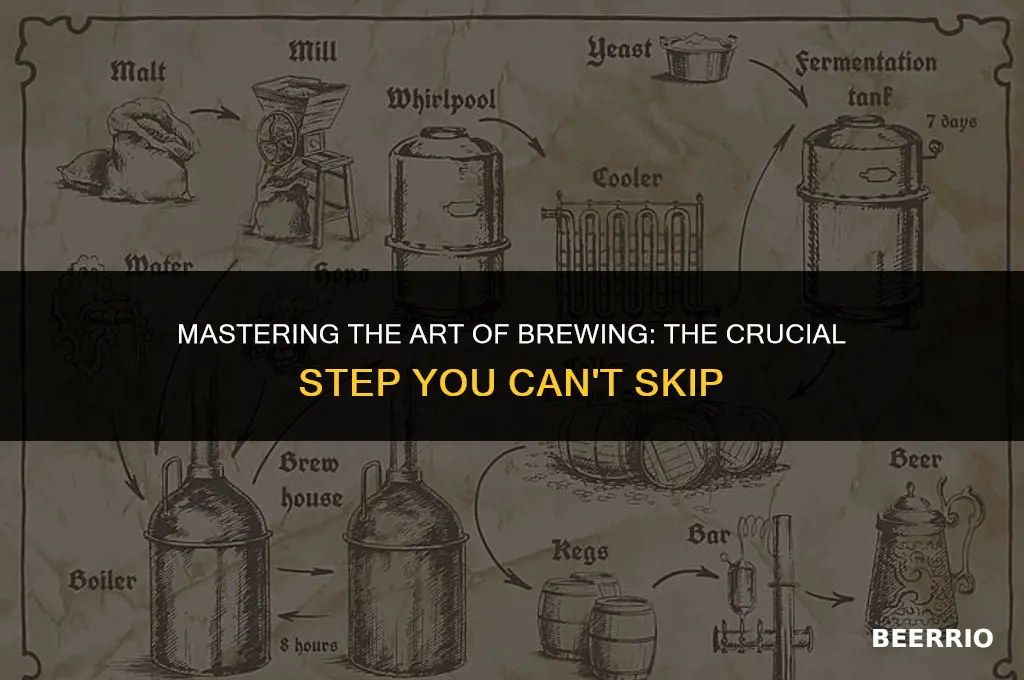
Brewing beer is a complex process that involves several crucial steps, each contributing to the final flavor, aroma, and quality of the beer. Among these steps, fermentation is arguably the most important. During fermentation, yeast converts the sugars present in the wort into alcohol and carbon dioxide, creating the beer's distinctive taste and character. This step requires precise temperature control, the right amount of yeast, and a clean environment to ensure that the yeast can work efficiently without contamination. Proper fermentation not only determines the beer's alcohol content but also influences its mouthfeel, body, and overall balance, making it a critical phase in the brewing process.
Explore related products


What You'll Learn
- Mashing: Converting starches to sugars, crucial for fermentation, affects final flavor and alcohol content
- Boiling: Sterilizing wort, adding hops for bitterness, aroma, and flavor, clarifying the liquid
- Fermentation: Yeast converts sugars to alcohol and CO2, determines beer style, flavor, and strength
- Conditioning: Aging and carbonating the beer, improving clarity, flavor, and mouthfeel, final maturation
- Sanitation: Maintaining cleanliness throughout the process, preventing contamination, ensuring beer quality and safety

Mashing: Converting starches to sugars, crucial for fermentation, affects final flavor and alcohol content
Mashing is a critical step in the beer brewing process where starches are converted into fermentable sugars. This biochemical transformation is essential for yeast to produce alcohol and carbon dioxide during fermentation. The efficiency and conditions of the mashing process significantly impact the final flavor profile and alcohol content of the beer.
The mashing process typically involves mixing milled grain with hot water in a mash tun. The temperature and duration of this mixture are carefully controlled to optimize the activity of enzymes that break down starches into simpler sugars. For instance, alpha-amylase enzymes work best at temperatures between 150°F and 155°F (65°C to 68°C), while beta-amylase enzymes are most active at slightly lower temperatures. The ratio of water to grain, known as the mash ratio, also plays a crucial role in determining the sugar concentration and the body of the final beer.
One of the key considerations during mashing is the balance between fermentable and unfermentable sugars. Fermentable sugars, such as glucose and fructose, are converted into alcohol and carbon dioxide by yeast, while unfermentable sugars, like dextrins, contribute to the beer's body and sweetness. Brewers must carefully manage the mashing process to achieve the desired balance, which can be influenced by factors such as the type of grain used, the pH of the mash, and the presence of certain minerals.
Another important aspect of mashing is the prevention of contamination. Since the mash is a nutrient-rich environment, it is susceptible to bacterial and fungal infections. Brewers must ensure that all equipment is properly sanitized and that the mash is kept at a temperature that inhibits the growth of undesirable microorganisms. Additionally, the use of certain additives, such as iodine or potassium metabisulfite, can help to reduce the risk of contamination.
In conclusion, mashing is a complex and critical step in the beer brewing process that requires careful attention to detail. By optimizing the conditions of the mash, brewers can significantly influence the final flavor and alcohol content of their beer. Understanding the biochemical processes involved and the practical considerations of mashing is essential for producing high-quality beer.
Exploring the Rich Flavors of Slow-Brewed Beer: A Journey Through Time and Taste
You may want to see also
Explore related products


Boiling: Sterilizing wort, adding hops for bitterness, aroma, and flavor, clarifying the liquid
The boiling stage in beer brewing is a critical step that serves multiple purposes. Primarily, it sterilizes the wort, ensuring that no unwanted bacteria or wild yeast can spoil the final product. This is achieved by heating the wort to a temperature of at least 212°F (100°C), which kills off most microorganisms. The duration of the boil can vary, but it typically lasts between 60 to 90 minutes.
During the boil, hops are added at different times to contribute bitterness, aroma, and flavor to the beer. The timing of hop additions is crucial, as it affects the final taste profile. Hops added early in the boil contribute more bitterness, while those added later provide more aroma and flavor. Brewers often use a combination of hop varieties and addition times to achieve the desired balance in their beer.
Another important aspect of the boiling stage is the clarification of the liquid. As the wort boils, proteins and other solids can coagulate and settle to the bottom of the kettle. This process, known as the "hot break," helps to create a clearer beer. Brewers may also use fining agents or whirlpooling techniques to further clarify the wort before it is cooled and transferred to the fermenter.
In summary, the boiling stage is a multifaceted step in beer brewing that is essential for producing a high-quality final product. By sterilizing the wort, adding hops for bitterness and flavor, and clarifying the liquid, brewers can ensure that their beer has the desired taste, aroma, and appearance.
Exploring Tree House Brewing's Finest: A Beer Enthusiast's Guide
You may want to see also
Explore related products


Fermentation: Yeast converts sugars to alcohol and CO2, determines beer style, flavor, and strength
Fermentation is the critical step in brewing beer where yeast converts sugars into alcohol and carbon dioxide. This process not only determines the beer's style and flavor but also its strength. The choice of yeast strain, fermentation temperature, and duration all play pivotal roles in shaping the final product. For instance, ale yeasts typically ferment at warmer temperatures, producing fruity and estery flavors, while lager yeasts ferment at cooler temperatures, resulting in a cleaner and crisper taste.
The fermentation process begins after the wort has been boiled and cooled to a temperature suitable for yeast activity. Yeast is then pitched into the wort, and fermentation starts as the yeast consumes the sugars. The primary fermentation phase is crucial, as it is during this time that the majority of the alcohol is produced. Fermentation can take anywhere from a few days to several weeks, depending on the beer style and yeast strain used.
One of the key factors in fermentation is temperature control. Maintaining a consistent temperature within the optimal range for the yeast strain used is essential for producing a high-quality beer. Fluctuations in temperature can lead to off-flavors and an unbalanced final product. Brewers often use fermentation chambers or water baths to regulate temperature during this critical phase.
Another important aspect of fermentation is monitoring the progress. Brewers use various methods to track fermentation, such as measuring the specific gravity of the wort before and after fermentation. This helps determine the alcohol content and ensures that fermentation is proceeding as expected. Additionally, observing the yeast activity, such as the formation of a krausen (foam) on top of the wort, can provide valuable insights into the fermentation process.
In conclusion, fermentation is the most important step in brewing beer, as it directly influences the beer's style, flavor, and strength. By carefully controlling factors such as yeast strain, temperature, and duration, brewers can create a wide range of beer styles, from light and refreshing lagers to rich and complex ales. Understanding and mastering the fermentation process is essential for any brewer looking to produce high-quality beer.
Unlocking the Secrets of Secondary Fermentation in Craft Beer Brewing
You may want to see also
Explore related products





Conditioning: Aging and carbonating the beer, improving clarity, flavor, and mouthfeel, final maturation
The conditioning phase, encompassing aging, carbonation, and final maturation, is a critical step in brewing beer that significantly impacts its clarity, flavor, and mouthfeel. This stage allows the beer to develop its full potential, transforming it from a raw, unrefined product into a polished, enjoyable beverage.
During aging, the beer undergoes a series of chemical reactions that improve its flavor profile. These reactions include the breakdown of complex sugars, the development of esters and phenols, and the reduction of bitterness. The aging process also allows the yeast to settle and the beer to clarify, resulting in a smoother, more visually appealing product.
Carbonation is another essential aspect of conditioning. It involves the addition of carbon dioxide to the beer, which creates the characteristic bubbles and fizz. Proper carbonation not only enhances the beer's mouthfeel but also helps to preserve it by creating a barrier against oxidation and microbial contamination.
The final maturation phase is where the beer reaches its peak flavor and aroma. This stage involves a delicate balance of temperature, time, and oxygen exposure. Brewers must carefully monitor these factors to ensure that the beer develops the desired characteristics without becoming over-oxidized or stale.
In conclusion, the conditioning phase is a crucial step in brewing beer that requires careful attention to detail and a deep understanding of the underlying chemical processes. By mastering this stage, brewers can create beers that are not only visually appealing but also rich in flavor and aroma, providing a truly enjoyable drinking experience.
Unlocking the Perfect Brew: A Guide to Choosing the Best Water for Beer
You may want to see also
Explore related products


Sanitation: Maintaining cleanliness throughout the process, preventing contamination, ensuring beer quality and safety
Maintaining cleanliness throughout the brewing process is crucial for ensuring the quality and safety of the final beer product. Sanitation is not just about keeping the brewery clean; it's about preventing contamination that could lead to off-flavors, spoilage, or even health risks for consumers. Every step in the brewing process, from mashing to bottling, requires strict adherence to sanitary practices.
One of the most critical aspects of sanitation in brewing is the sterilization of equipment. This includes everything from the brewing kettle and fermenters to the hoses and valves used in the process. Equipment should be cleaned thoroughly with appropriate sanitizing agents, such as bleach or iodine, to kill any bacteria, yeast, or mold that could contaminate the beer. It's also important to ensure that all equipment is properly stored and covered when not in use to prevent airborne contamination.
Personal hygiene is another key factor in maintaining sanitation in the brewery. Brewers should always wash their hands thoroughly before and after handling any ingredients or equipment. They should also wear clean clothing and, if necessary, hairnets or gloves to prevent any foreign contaminants from entering the brewing environment.
In addition to these general practices, there are specific sanitation steps that should be taken at different stages of the brewing process. For example, during mashing, it's important to ensure that the water used is clean and free of any contaminants. During fermentation, the yeast should be properly sanitized to prevent any off-flavors or spoilage. And during bottling, the bottles and caps should be thoroughly cleaned and sanitized to prevent any contamination of the finished product.
By following these strict sanitation guidelines, brewers can ensure that their beer is not only of the highest quality but also safe for consumption. Sanitation is truly one of the most important steps in the brewing process, and it should never be overlooked or taken lightly.
Unveiling the Most Common Mistakes in Homebrewing: A Beginner's Guide
You may want to see also
Frequently asked questions
The most important step in brewing beer is arguably the mashing process. This is where the grains are converted into fermentable sugars, which will ultimately determine the flavor, body, and alcohol content of the beer. Proper mashing ensures that the enzymes in the grain are active at the right temperature and for the right amount of time to extract the desired sugars.
The mashing process significantly affects the final product by determining the sugar profile of the wort. Different temperatures and times during mashing can lead to different types of sugars being produced, which in turn affects the fermentation process and the final taste of the beer. For example, a higher mash temperature can lead to more complex sugars, resulting in a fuller-bodied beer with more residual sweetness.
Common mistakes to avoid during the mashing process include:
- Incorrect temperature: Mashing at too high or too low a temperature can lead to incomplete sugar conversion or the production of unwanted sugars.
- Inadequate mixing: Failing to mix the mash thoroughly can result in uneven temperature distribution and poor sugar extraction.
- Over-sparging: Sparging is the process of rinsing the grains to extract the remaining sugars. Over-sparging can lead to a loss of body and flavor in the beer.
- Poor pH control: The pH of the mash can affect enzyme activity. Maintaining the proper pH is crucial for efficient sugar conversion.