Lucy Palmer
The machine responsible for brewing beer is known as a brewhouse. This complex system is the heart of any brewery, where the magic of transforming raw ingredients into delicious beer takes place. A typical brewhouse consists of several key components, including a mash tun, a kettle, a fermenter, and a conditioning tank. The process begins in the mash tun, where malted grains are mixed with hot water to convert their starches into fermentable sugars. The resulting liquid, called wort, is then transferred to the kettle, where it's boiled and hops are added for flavor and aroma. After cooling, the wort is moved to the fermenter, where yeast is introduced to begin the fermentation process, converting the sugars into alcohol and carbon dioxide. Finally, the beer is transferred to the conditioning tank, where it matures and develops its full flavor profile before being packaged and distributed.
Explore related products


What You'll Learn
- Brew Kettle: A large pot where wort is boiled and hops are added
- Fermentation Tank: A vessel where yeast ferments the wort into beer
- Mash Tun: A container used to mix and heat the mash before lautering
- Lautering Tun: A vessel where the mash is separated into wort and spent grains
- Bottling Line: A machine that fills bottles with beer and seals them

Brew Kettle: A large pot where wort is boiled and hops are added
A brew kettle is a crucial piece of equipment in the beer brewing process. It is a large pot, typically made of stainless steel, where the wort—a sugary liquid extracted from the mashing process—is boiled. This boiling process is essential for several reasons: it sterilizes the wort, it helps to develop the flavors and aromas of the beer, and it allows for the addition of hops, which contribute bitterness, flavor, and aroma to the final product.
The size of the brew kettle can vary depending on the scale of the brewing operation. For homebrewers, a kettle with a capacity of 5 to 10 gallons is common, while commercial breweries may use kettles that can hold hundreds of gallons. The material of the kettle is also important; stainless steel is preferred because it is durable, easy to clean, and resistant to corrosion.
During the boiling process, the wort is heated to a temperature of around 212°F (100°C). This high temperature causes the water in the wort to evaporate, concentrating the sugars and other solids. The boiling process also causes chemical reactions to occur, which can affect the color, flavor, and aroma of the beer.
Hops are typically added to the brew kettle in several stages. The first addition, known as the bittering hops, is added early in the boil to contribute bitterness to the beer. Later additions, known as flavor and aroma hops, are added towards the end of the boil to contribute flavor and aroma. The timing and amount of hops added can greatly influence the final taste of the beer.
After the boiling process is complete, the wort is cooled and transferred to a fermentation vessel, where yeast is added to convert the sugars into alcohol and carbon dioxide. This process, known as fermentation, is the final step in the beer brewing process.
In summary, the brew kettle is a vital piece of equipment in the beer brewing process. It is used to boil the wort, sterilize it, develop flavors and aromas, and add hops. The size and material of the kettle can vary depending on the scale of the brewing operation, and the boiling process involves heating the wort to a high temperature and adding hops at different stages to achieve the desired flavor profile.
Unlocking the Perfect Brew: A Guide to Choosing the Best Water for Beer
You may want to see also
Explore related products


Fermentation Tank: A vessel where yeast ferments the wort into beer
A fermentation tank is a specialized vessel used in the brewing process where yeast ferments the wort into beer. This critical piece of equipment plays a pivotal role in transforming the sugary liquid wort into the alcoholic beverage we know as beer. The fermentation process involves the yeast consuming the sugars in the wort and producing alcohol and carbon dioxide as byproducts.
Fermentation tanks come in various sizes and materials, including stainless steel, glass, and plastic. Stainless steel tanks are the most common in commercial breweries due to their durability, ease of cleaning, and resistance to corrosion. These tanks are typically equipped with features such as temperature control systems, pressure gauges, and sampling ports to monitor the fermentation process closely.
The design of a fermentation tank is crucial for maintaining the optimal conditions required for yeast activity. This includes controlling the temperature, which can range from 15°C to 25°C depending on the type of beer being brewed, and ensuring proper aeration and mixing to promote yeast growth and fermentation efficiency. Advanced fermentation tanks may also incorporate automation systems to regulate these conditions precisely.
In addition to their primary function of fermentation, these tanks often serve as storage vessels for the beer after fermentation is complete. This allows the beer to mature and develop its flavors before being packaged and distributed. Some breweries also use separate conditioning tanks for this purpose, which can help streamline the production process and improve the quality of the final product.
Overall, the fermentation tank is an essential component of any brewery, playing a central role in the transformation of raw ingredients into the finished beer product. Its design, material, and functionality are critical factors that can significantly impact the quality and consistency of the beer being produced.
Unlocking the Perfect Brew: Optimal Temperature for Beer Brewing
You may want to see also
Explore related products
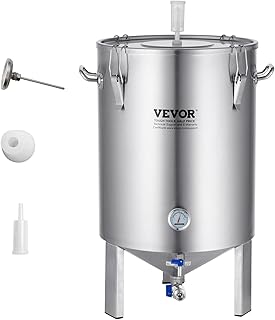


Mash Tun: A container used to mix and heat the mash before lautering
A mash tun is a specialized vessel used in the brewing process, specifically designed for mixing and heating the mash—a thick, porridge-like mixture of crushed malt and water. This crucial step in beer production involves converting the starches in the malt into fermentable sugars, a process known as mashing. The mash tun plays a pivotal role in ensuring that this conversion occurs efficiently and effectively.
One of the key features of a mash tun is its ability to maintain a consistent temperature throughout the mashing process. This is essential because the enzymes responsible for breaking down the starches into sugars are highly temperature-sensitive. A typical mashing temperature range is between 62°C and 72°C (144°F and 162°F), and the mash tun is designed to keep the mash within this range for the duration of the process, which usually takes about an hour.
Mash tuns are often equipped with built-in heating elements or steam jackets to provide the necessary heat. They also typically have a stirring mechanism to ensure that the mash is thoroughly mixed, preventing the formation of dough balls and ensuring that all the malt is evenly distributed and exposed to the heat.
In addition to its heating and mixing capabilities, the mash tun is also designed to allow for the easy transfer of the mash to the next stage of the brewing process, known as lautering. This involves separating the liquid wort from the solid grain material. The mash tun often has a built-in filter bed or is connected to a separate lautering vessel to facilitate this process.
Overall, the mash tun is a critical component of the brewing system, playing a central role in the conversion of malt into fermentable sugars. Its design and functionality are tailored to the specific requirements of the mashing process, ensuring that brewers can produce high-quality wort that will ultimately lead to delicious beer.
The Art of Brewing: Understanding the Boiling Process in Beer Making
You may want to see also
Explore related products


Lautering Tun: A vessel where the mash is separated into wort and spent grains
The lautering tun is a critical component in the beer brewing process, serving as the vessel where the separation of wort from spent grains occurs. This step is essential for achieving the desired clarity and flavor profile in the final beer product. The lautering tun operates by allowing the liquid wort to drain from the solid grain material after the mashing process has been completed. The design of the lautering tun is such that it facilitates this separation efficiently, ensuring that the wort is collected cleanly without any unwanted grain particles.
One of the key features of a lautering tun is its false bottom, which is a perforated plate or screen that allows the wort to pass through while retaining the spent grains. This false bottom is typically made of stainless steel or another durable material that can withstand the high temperatures and pressures involved in the brewing process. The lautering tun itself is often constructed from stainless steel, copper, or other materials that are resistant to corrosion and can maintain the necessary sanitary conditions required for brewing.
The process of lautering involves several steps. First, the mash is transferred from the mash tun to the lautering tun. Once in the lautering tun, the mash is allowed to settle for a short period, during which time the wort begins to separate from the grains. The brewer then opens the valve at the bottom of the lautering tun, allowing the wort to flow out into a collection vessel. As the wort is collected, the spent grains are retained in the lautering tun. The brewer may also use a technique called sparging, where hot water is added to the lautering tun to extract additional sugars from the spent grains.
The lautering tun plays a crucial role in determining the quality of the beer. If the separation process is not done correctly, it can result in a beer that is cloudy or has off-flavors. Therefore, brewers must carefully monitor the lautering process to ensure that it is proceeding as desired. This includes checking the temperature and pH of the wort, as well as observing the clarity of the liquid as it is collected.
In summary, the lautering tun is an essential piece of equipment in the beer brewing process. It is responsible for separating the wort from the spent grains, a step that is critical for achieving the desired clarity and flavor in the final beer product. The design and operation of the lautering tun must be carefully managed to ensure that the separation process is efficient and effective.
Exploring New Glarus Brewing's Finest: A Beer Enthusiast's Guide
You may want to see also
Explore related products


Bottling Line: A machine that fills bottles with beer and seals them
A bottling line is a sophisticated piece of machinery designed specifically for the beer industry. Its primary function is to fill bottles with beer and seal them efficiently, ensuring that the beverage remains fresh and carbonated until it reaches the consumer. This process is crucial in maintaining the quality and taste of the beer, as well as preventing contamination and spoilage.
The bottling line typically consists of several components, each performing a specific task in the bottling process. These components may include a bottle washer, filler, capper, and conveyor system. The bottle washer cleans and sanitizes the bottles before they are filled, ensuring that no residual contaminants affect the beer. The filler precisely measures and dispenses the correct amount of beer into each bottle, while the capper seals the bottles with caps or corks to preserve the carbonation and freshness.
One of the key features of a bottling line is its ability to handle high volumes of beer production. This is particularly important for large breweries that need to package and distribute their products quickly and efficiently. Bottling lines can be automated or semi-automated, allowing for increased productivity and reduced labor costs. They can also be customized to accommodate different bottle sizes, shapes, and materials, as well as various types of beer and brewing processes.
In addition to their efficiency and versatility, bottling lines play a critical role in ensuring the safety and quality of beer products. By automating the bottling process, these machines minimize the risk of human error and contamination, which can lead to product recalls and damage to the brewery's reputation. Furthermore, bottling lines can be equipped with advanced sensors and monitoring systems that detect any anomalies or defects in the bottling process, allowing for immediate corrective action.
Overall, a bottling line is an essential piece of equipment in the beer industry, enabling breweries to produce, package, and distribute their products with precision, efficiency, and quality. By investing in a reliable and high-performance bottling line, breweries can enhance their production capabilities, improve product consistency, and ultimately, increase customer satisfaction.
Exploring the Rich World of Nitro Cold Brew Beer
You may want to see also
Frequently asked questions
The machine used to brew beer is called a brewhouse or brewing kettle.
A typical brewhouse consists of a mash tun, a lauter tun, a boil kettle, and a whirlpool. These components are used for different stages of the brewing process, from mashing the grains to boiling the wort and separating the solids.
The brewing process in a brewhouse involves several steps. First, the grains are mashed in the mash tun to convert the starches into sugars. Then, the liquid wort is separated from the solids in the lauter tun. Next, the wort is boiled in the boil kettle, where hops and other ingredients are added. Finally, the wort is cooled and transferred to a fermenter, where yeast is added to begin the fermentation process.
A brewhouse is the machine used for the initial stages of brewing, including mashing, lautering, and boiling. A fermenter, on the other hand, is a separate vessel where the wort is fermented by yeast to produce alcohol and carbonation.
There are several types of brewhouses used in the beer industry, including traditional copper brewhouses, stainless steel brewhouses, and automated brewhouses. Each type has its own advantages and disadvantages, and the choice of brewhouse depends on factors such as the size of the brewery, the type of beer being produced, and the desired level of automation.


![8 Pack [1 L / 33 fl. oz.] Swing Top Glass Bottles w/ Airtight Stopper Lids – Flip Top Brewing Bottle for Fermentation, Kombucha, Mead, Vinegar, Beer, Kefir, Wine, Soda – With 8 Extra Seals & 2 Pourer](https://m.media-amazon.com/images/I/71Dxyt2F7pL._AC_UL320_.jpg)