Arabella Franco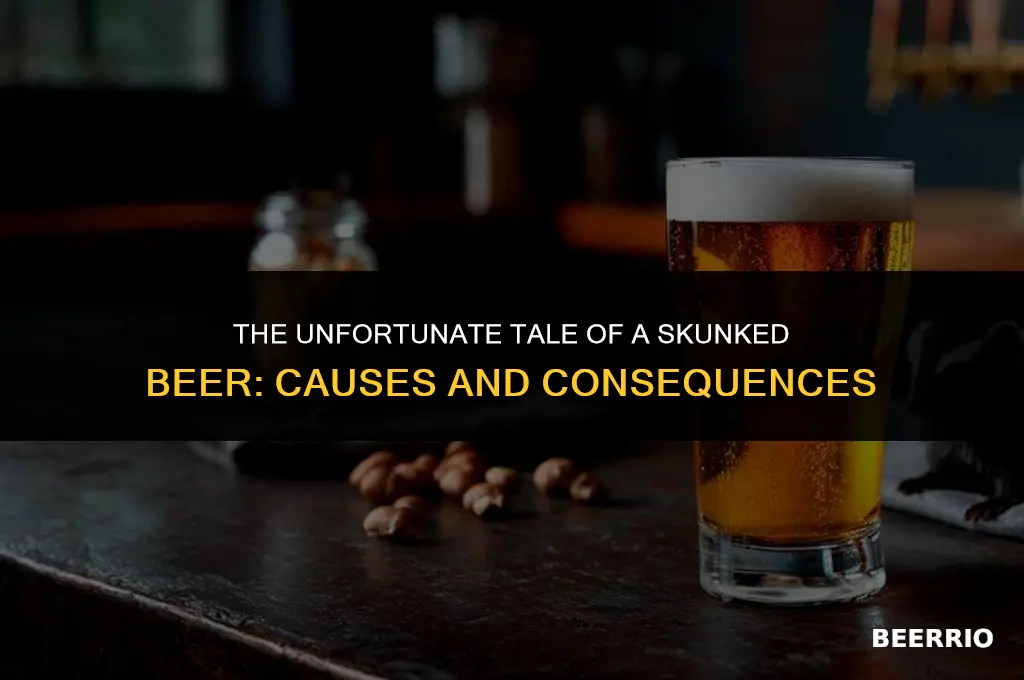
When a beer gets skunked, it means that it has been exposed to light, particularly ultraviolet (UV) light, which causes a chemical reaction in the beer. This reaction involves the hops and the malt in the beer, leading to the production of a compound called 3-methyl-2-butene-1-thiol, which is responsible for the characteristic skunky odor and flavor. The skunking process can occur when beer is left in a transparent bottle or keg near a light source, such as sunlight or fluorescent lighting, for an extended period. To prevent skunking, breweries often use brown or amber-colored bottles, which help to filter out UV light, and they recommend storing beer in a cool, dark place. If a beer does get skunked, it is generally considered to be spoiled and is not recommended for consumption, as the flavor and aroma will be significantly altered and unpleasant.
Explore related products


What You'll Learn
- Chemical Reaction: Exposure to light causes a reaction between hops and malt, producing unpleasant compounds
- Flavor and Aroma Changes: Skunked beer develops a strong, off-putting odor and bitter taste, ruining its quality
- Visual Indicators: The beer may appear cloudy or have a greenish tint due to the breakdown of chlorophyll
- Prevention Methods: Proper storage in dark, cool places and using light-resistant containers can prevent skunking
- Salvaging Skunked Beer: Some methods, like adding lemon juice or re-fermenting, can help mask the skunky flavor

Chemical Reaction: Exposure to light causes a reaction between hops and malt, producing unpleasant compounds
When beer is exposed to light, a chemical reaction occurs between the hops and malt, leading to the production of unpleasant compounds. This reaction is a result of the interaction between the alpha acids in hops and the proteins in malt, which, when catalyzed by light, form compounds known as skunk compounds. These compounds have a strong, unpleasant odor and taste, which can significantly degrade the quality of the beer.
The process begins when light, particularly ultraviolet (UV) light, strikes the beer. The UV light causes the alpha acids in the hops to isomerize, forming a reactive intermediate. This intermediate then reacts with the proteins in the malt, forming the skunk compounds. The most common skunk compound is 3-methyl-2-butene-1-thiol, which has a distinctive skunky odor.
The reaction is more likely to occur in beers that have a higher hop content, as there are more alpha acids available to react with the malt proteins. Additionally, beers that are stored in clear or lightly colored bottles are more susceptible to skunking, as these bottles allow more light to penetrate and initiate the reaction.
To prevent skunking, brewers often use brown or amber-colored bottles, which block out much of the UV light. Additionally, some brewers add antioxidants to their beer, which can help to inhibit the reaction between the hops and malt. Proper storage conditions, such as keeping the beer in a cool, dark place, can also help to prevent skunking.
In conclusion, the chemical reaction between hops and malt that occurs when beer is exposed to light can lead to the production of unpleasant skunk compounds. By understanding this reaction and taking steps to prevent it, brewers can ensure that their beer remains fresh and flavorful.
Comparing Alcohol Metabolism: Liquor vs. Beer Breakdown
You may want to see also
Explore related products



Flavor and Aroma Changes: Skunked beer develops a strong, off-putting odor and bitter taste, ruining its quality
Skunked beer undergoes a noticeable transformation in both flavor and aroma, significantly impacting its overall quality. The primary culprit behind this change is the exposure to light, particularly ultraviolet (UV) rays, which triggers a chemical reaction in the beer. This reaction involves the interaction between UV light and certain compounds in the beer, such as riboflavin and hops, leading to the formation of a substance called 3-methyl-2-butene-1-thiol. This compound is responsible for the characteristic skunky odor and bitter taste that define a skunked beer.
The aroma of skunked beer is often described as pungent and unpleasant, resembling the smell of a skunk or burnt rubber. This strong odor can be overwhelming and may dominate the beer's other aromatic qualities, making it difficult to detect any subtle or nuanced scents that were present in the original brew. In terms of taste, skunked beer typically exhibits a pronounced bitterness that can be harsh and astringent. This bitterness may overshadow the beer's intended flavor profile, which could include notes of malt, hops, or fruit, depending on the style of beer.
The extent of the flavor and aroma changes in skunked beer can vary depending on several factors, including the intensity and duration of light exposure, the type of beer, and the storage conditions. For example, beers with higher levels of riboflavin or hops may be more susceptible to skunking, as these compounds are more reactive to UV light. Additionally, the color of the beer bottle can play a role, with darker bottles providing better protection against light exposure compared to lighter or clear bottles.
To prevent beer from skunking, it is essential to store it in a cool, dark place away from direct sunlight. Using bottles with UV-resistant coatings or opting for cans, which are less permeable to light, can also help minimize the risk of skunking. Furthermore, breweries can take steps to reduce the likelihood of skunking during the production process by controlling light exposure and using ingredients that are less reactive to UV light.
In conclusion, the flavor and aroma changes that occur when beer gets skunked are a result of a chemical reaction triggered by light exposure. These changes can significantly degrade the quality of the beer, making it unpalatable and unpleasant to drink. By understanding the causes and taking preventive measures, beer enthusiasts can help ensure that their brews remain fresh and flavorful.
The Uninvited Guest: Air's Impact on Beer Brewing Explained
You may want to see also
Explore related products


$6.95


Visual Indicators: The beer may appear cloudy or have a greenish tint due to the breakdown of chlorophyll
One of the first visual cues that a beer has been skunked is a noticeable change in its appearance. The beer may develop a cloudy or hazy look, which is often accompanied by a greenish tint. This discoloration is due to the breakdown of chlorophyll, a green pigment found in plants, which can be introduced into the beer during the brewing process or through contamination. When exposed to light, particularly ultraviolet (UV) light, chlorophyll can degrade, releasing compounds that impart an unpleasant green hue to the beer.
In addition to the greenish tint, skunked beer may also exhibit other visual indicators. For instance, the beer's head, or foam, may appear more unstable or dissipate more quickly than usual. This can be a sign that the beer's chemical composition has been altered, affecting its ability to retain carbonation and maintain a consistent texture. Furthermore, skunked beer may show signs of sedimentation, with particles or debris settling at the bottom of the glass. This can be a result of the breakdown of various compounds in the beer, leading to the formation of solids that were previously dissolved.
To avoid these visual indicators and the off-flavors associated with skunked beer, it is essential to store beer properly. Keeping beer in a cool, dark place can help minimize its exposure to light and slow down the degradation process. Using light-resistant packaging, such as brown glass bottles or cans, can also provide an additional layer of protection against UV light. Moreover, breweries can take steps to reduce the risk of chlorophyll contamination by carefully selecting and processing their ingredients, as well as implementing proper sanitation and quality control measures during the brewing process.
In conclusion, the visual indicators of skunked beer, such as cloudiness and a greenish tint, are important warning signs that the beer's quality has been compromised. By understanding the causes of these changes and taking steps to prevent them, beer enthusiasts can ensure that they enjoy their favorite brews at their best.
The Unseen Consequences: When Your Beer Gets Infected
You may want to see also
Explore related products


Prevention Methods: Proper storage in dark, cool places and using light-resistant containers can prevent skunking
Proper storage is crucial in preventing beer from getting skunked. Skunking occurs when beer is exposed to light, particularly ultraviolet (UV) light, which causes a chemical reaction that results in an unpleasant odor and flavor. To prevent this, it is essential to store beer in dark, cool places. This can be achieved by keeping beer in a pantry, cupboard, or refrigerator that is away from direct sunlight. It is also important to avoid storing beer near windows or other sources of natural light.
In addition to storing beer in dark places, it is also important to use light-resistant containers. Brown glass bottles are the most effective at blocking out UV light, followed by green glass bottles. Clear glass bottles offer the least protection and should be avoided. If using cans, it is important to choose those that are made with light-resistant materials. Some breweries also use special coatings on their cans to further protect the beer from light exposure.
When storing beer, it is also important to keep it at the right temperature. Beer should be stored at a temperature between 45°F and 55°F (7°C and 13°C). Storing beer at temperatures that are too high can cause it to spoil more quickly, while storing it at temperatures that are too low can cause the yeast to become dormant, which can also affect the flavor.
Another important factor in preventing beer from getting skunked is to minimize its exposure to air. Oxygen can cause beer to oxidize, which can lead to off-flavors and aromas. To prevent this, it is important to seal beer containers tightly and to avoid opening them unnecessarily. When pouring beer, it is also important to do so gently to minimize the amount of oxygen that is introduced into the beer.
By following these prevention methods, beer enthusiasts can help to ensure that their beer remains fresh and flavorful for as long as possible. Proper storage in dark, cool places and using light-resistant containers are simple yet effective ways to prevent skunking and to enjoy beer at its best.
Exploring the Intoxicating Ingredients: What Gets You Drunk in Beer?
You may want to see also
Explore related products


Salvaging Skunked Beer: Some methods, like adding lemon juice or re-fermenting, can help mask the skunky flavor
When a beer gets skunked, it's not the end of the road. There are several methods you can employ to salvage the flavor and make it more palatable. One popular approach is to add lemon juice to the beer. The acidity of the lemon can help to cut through the skunky flavor, making it less noticeable. However, it's important to note that this method may not work for all types of skunked beer, and it could also alter the intended flavor profile of the brew.
Another method to consider is re-fermenting the beer. This process involves adding fresh yeast to the skunked beer and allowing it to ferment again. The new yeast can help to overpower the skunky flavor and produce a cleaner, more desirable taste. However, re-fermentation can be a complex process, and it's important to have a good understanding of brewing techniques before attempting this method.
In addition to these methods, there are a few other tricks you can try to salvage skunked beer. For example, you can try chilling the beer to a very low temperature, which can help to reduce the skunky flavor. You can also try aerating the beer, which can help to release some of the skunky compounds. However, it's important to note that these methods may not be as effective as adding lemon juice or re-fermenting, and they may also alter the intended flavor profile of the brew.
When attempting to salvage skunked beer, it's important to keep in mind that the effectiveness of each method will depend on the severity of the skunking and the type of beer. In some cases, it may be best to simply discard the skunked beer and start again. However, if you're willing to experiment and try different methods, you may be able to salvage the flavor and enjoy your brew after all.
Skunked in Beer Pong: The Surprising Consequences Revealed
You may want to see also
Frequently asked questions
When a beer gets "skunked," it means that it has been exposed to light, particularly ultraviolet (UV) light, which causes a chemical reaction in the beer. This reaction produces a compound called 3-methyl-2-butene-1-thiol, which gives the beer an unpleasant smell and taste, often described as resembling a skunk.
You can tell if a beer has been skunked by its smell and taste. A skunked beer will have a strong, unpleasant odor that is often described as smelling like a skunk or burnt rubber. The taste will also be affected, with a bitter or sour flavor that is not typical of the beer's intended taste profile.
Yes, you can prevent a beer from getting skunked by protecting it from light exposure. This means storing the beer in a dark place, such as a cupboard or refrigerator, and avoiding exposure to direct sunlight or fluorescent lighting. Some beer bottles and cans are also designed to block out UV light, which can help prevent skunking.