Lucy Palmer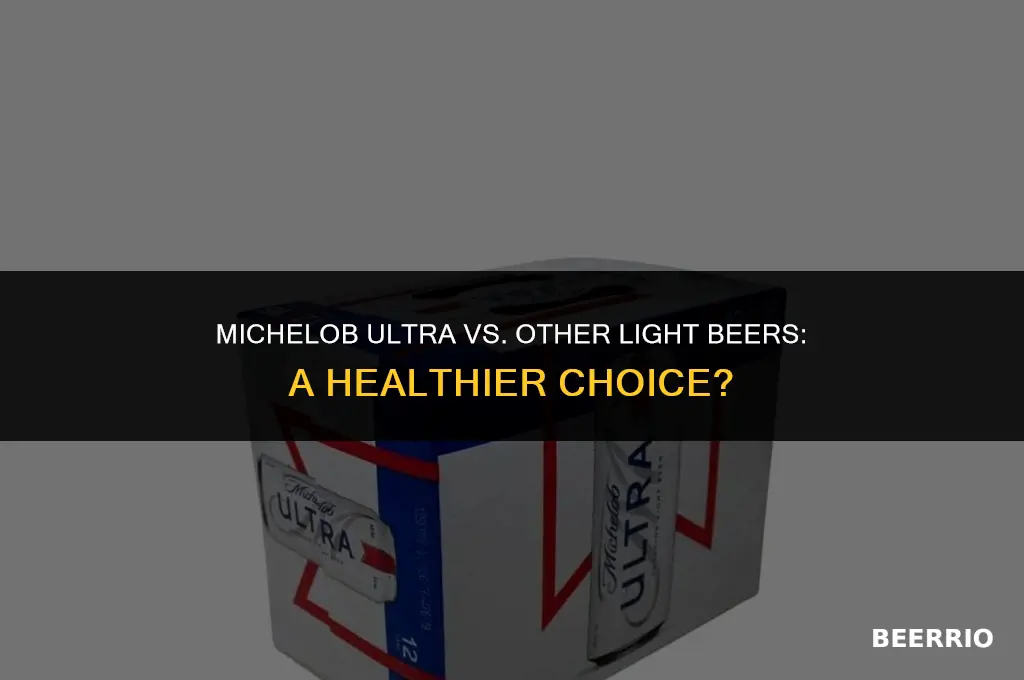
Michelob Ultra is a popular light beer that is often marketed as a healthier alternative to regular beers due to its lower calorie and carbohydrate content. However, when comparing it to other light beers, the health benefits may not be as significant as some might think. While Michelob Ultra does contain fewer calories than many other beers, it also has a lower alcohol content, which may lead some people to consume more of it to achieve the same level of intoxication. Additionally, other light beers may offer similar nutritional profiles, making the choice between them more about personal preference than health benefits. It's important to remember that moderation is key when it comes to alcohol consumption, regardless of the type of beer you choose.
Explore related products




What You'll Learn
- Calorie Comparison: Michelob Ultra vs. other light beers in terms of calorie content
- Nutritional Analysis: Examining the nutritional benefits and drawbacks of Michelob Ultra compared to other light beers
- Ingredient Breakdown: A look at the ingredients used in Michelob Ultra and how they differ from other light beers
- Health Impact: Discussing the potential health effects of consuming Michelob Ultra in comparison to other light beers
- Consumer Perception: How consumers perceive Michelob Ultra's health benefits relative to other light beers

Calorie Comparison: Michelob Ultra vs. other light beers in terms of calorie content
Michelob Ultra is often marketed as a healthier beer option, but how does it stack up against other light beers in terms of calorie content? A closer examination reveals that Michelob Ultra contains approximately 95 calories per 12-ounce serving, which is indeed lower than many of its competitors. For instance, Bud Light has around 110 calories per serving, while Coors Light clocks in at about 102 calories. This difference may seem marginal, but for those watching their calorie intake, it can add up over time.
However, it's essential to consider that calorie content is just one factor in determining the overall healthiness of a beer. Other aspects, such as alcohol by volume (ABV), carbohydrates, and additives, also play a role. Michelob Ultra has an ABV of 4.2%, which is slightly higher than some other light beers like Bud Light (4.0% ABV) but lower than Coors Light (4.5% ABV). Additionally, Michelob Ultra contains 2.6 grams of carbohydrates per serving, compared to 6.6 grams in Bud Light and 5.5 grams in Coors Light.
When evaluating the health benefits of Michelob Ultra versus other light beers, it's crucial to look beyond just calories. While Michelob Ultra may be a better choice for those strictly monitoring their calorie intake, other light beers might be preferable for individuals who prioritize lower alcohol content or fewer carbohydrates. Ultimately, the "better for you" beer depends on individual health goals and preferences.
In conclusion, Michelob Ultra does offer a lower calorie option compared to some other light beers, but it's not necessarily the healthiest choice across all criteria. Consumers should consider their specific dietary needs and restrictions when selecting a beer that aligns with their health objectives.
Exploring the Myth: Is Light Beer Really Just Water?
You may want to see also
Explore related products


Nutritional Analysis: Examining the nutritional benefits and drawbacks of Michelob Ultra compared to other light beers
Michelob Ultra is often marketed as a healthier beer option, but a closer look at its nutritional content reveals some interesting insights. Compared to other light beers, Michelob Ultra does have a lower calorie count, with approximately 95 calories per 12-ounce serving. This can be beneficial for those watching their caloric intake. However, it's important to note that the calorie content of beer is not the only factor to consider when evaluating its nutritional impact.
One area where Michelob Ultra falls short is in its carbohydrate content. While it does contain fewer carbs than some other light beers, it still has around 2.6 grams of carbohydrates per serving. For individuals following a low-carb diet, this could be a significant drawback. Additionally, Michelob Ultra contains a small amount of protein, about 0.7 grams per serving, which is not substantial enough to be considered a significant nutritional benefit.
In terms of vitamins and minerals, Michelob Ultra does contain some B vitamins, including niacin, riboflavin, and folate. It also has small amounts of magnesium and potassium. However, these nutrient levels are not high enough to make a significant impact on overall health. It's also worth noting that Michelob Ultra, like many other beers, contains no significant amount of fiber.
When comparing Michelob Ultra to other light beers, it's clear that while it may have some nutritional advantages, such as lower calories, it also has drawbacks, like higher carbohydrate content. Ultimately, the nutritional benefits and drawbacks of Michelob Ultra will depend on an individual's specific dietary needs and preferences. For those looking to reduce their calorie intake while still enjoying a beer, Michelob Ultra could be a good option. However, for individuals following a low-carb diet or looking for a beer with significant nutritional benefits, other light beers may be a better choice.
Exploring the Flavor Profile: Is Magic Hat a Light Beer?
You may want to see also
Explore related products


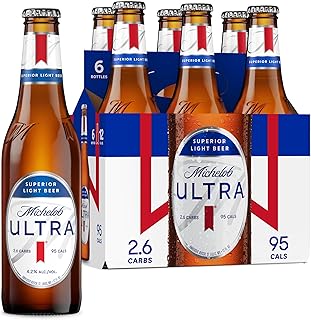
Ingredient Breakdown: A look at the ingredients used in Michelob Ultra and how they differ from other light beers
Michelob Ultra, a popular light beer, boasts a unique ingredient profile that sets it apart from its competitors. One of the key differences lies in its use of a proprietary blend of grains, including barley, rice, and corn. This combination is designed to provide a crisp, clean taste while keeping the calorie count low. In contrast, many other light beers rely more heavily on adjuncts like corn syrup or sugar, which can contribute to a sweeter flavor profile and potentially higher calorie content.
Another distinguishing factor is Michelob Ultra's brewing process, which involves a longer fermentation period. This extended fermentation allows for a more complete breakdown of sugars, resulting in a drier, more refreshing taste. Additionally, the beer is filtered using a unique process that removes impurities and excess carbohydrates, further reducing the calorie count.
When compared to other light beers, Michelob Ultra's ingredient list is relatively simple and straightforward. The beer contains no artificial flavors, colors, or preservatives, which can be a significant selling point for health-conscious consumers. Furthermore, the use of natural ingredients like hops and yeast contributes to the beer's overall flavor complexity and aroma.
In terms of nutritional content, Michelob Ultra is one of the lowest-calorie beers on the market, with just 95 calories per 12-ounce serving. This is significantly lower than many other light beers, which can range from 100 to 150 calories per serving. Additionally, Michelob Ultra contains only 2.6 grams of carbohydrates per serving, making it a popular choice for those following a low-carb diet.
Overall, the ingredient breakdown of Michelob Ultra reveals a beer that is carefully crafted to provide a great taste while keeping the calorie and carbohydrate content low. This makes it an attractive option for health-conscious consumers who still want to enjoy the occasional beer.
Exploring the Calorie Myth: Is Light Beer Really Less Fattening?
You may want to see also
Explore related products




Health Impact: Discussing the potential health effects of consuming Michelob Ultra in comparison to other light beers
Michelob Ultra, a popular light beer, is often chosen by health-conscious consumers looking to reduce their calorie and carbohydrate intake without sacrificing the enjoyment of beer. Compared to other light beers, Michelob Ultra boasts a lower calorie count, with approximately 95 calories per 12-ounce serving, making it an attractive option for those monitoring their diet. Additionally, it contains fewer carbohydrates, which can be beneficial for individuals following low-carb diets or managing conditions like diabetes.
However, it's essential to consider that while Michelob Ultra may be lower in calories and carbohydrates, it still contains alcohol, which can have various health effects depending on consumption levels. Moderate alcohol consumption is generally defined as up to one drink per day for women and up to two drinks per day for men. Exceeding these limits can lead to increased risks of liver disease, certain cancers, and other health issues. Therefore, while Michelob Ultra might be a better choice in terms of calorie and carbohydrate content, it's crucial to consume it responsibly as part of a balanced diet and lifestyle.
Moreover, the brewing process of Michelob Ultra involves the use of artificial sweeteners to enhance flavor without adding calories, which might be a concern for some consumers. Artificial sweeteners have been a topic of debate regarding their potential health effects, including possible links to metabolic disorders and disruptions in gut microbiota. Although the FDA has deemed these sweeteners safe for consumption, some individuals may prefer to avoid them due to personal health concerns or dietary preferences.
In comparison to other light beers, Michelob Ultra's nutritional profile stands out, but it's not the only factor to consider when evaluating its health impact. Other light beers may offer different flavor profiles, ingredients, and brewing methods that could appeal to various consumer preferences and dietary needs. For instance, some light beers might use natural sweeteners or alternative grains, which could be more appealing to those looking to minimize artificial additives in their diet.
Ultimately, the health impact of consuming Michelob Ultra versus other light beers depends on individual health goals, dietary preferences, and consumption habits. While Michelob Ultra may be a suitable choice for those prioritizing lower calorie and carbohydrate intake, it's essential to consider the broader context of one's diet and lifestyle when making beverage choices. Consulting with a healthcare professional or registered dietitian can provide personalized guidance on how to incorporate Michelob Ultra or other light beers into a balanced and healthy diet.
Exploring the Myths: Is Light Beer Really a Safer Choice?
You may want to see also
Explore related products



Consumer Perception: How consumers perceive Michelob Ultra's health benefits relative to other light beers
Consumers often perceive Michelob Ultra as a healthier alternative to other light beers due to its lower calorie and carbohydrate content. This perception is largely driven by the brand's marketing efforts, which emphasize its fitness-friendly attributes. However, it's essential to delve deeper into the nutritional facts and consumer behavior to understand the validity of this perception.
A comparative analysis of Michelob Ultra with other light beers reveals that while it does contain fewer calories and carbohydrates, the differences are not as significant as some consumers might believe. For instance, a 12-ounce serving of Michelob Ultra contains approximately 95 calories and 2.6 grams of carbohydrates, whereas a similar serving of Bud Light contains around 110 calories and 6.6 grams of carbohydrates. Although Michelob Ultra is indeed lower in these aspects, the disparity is relatively small.
Consumer perception is also influenced by the brand's association with fitness and health-conscious lifestyles. Michelob Ultra's advertising campaigns often feature active individuals engaging in sports and outdoor activities, which reinforces the idea that this beer is a suitable choice for those who are health-conscious. This strategic branding helps to create a positive image in the minds of consumers, making them more likely to choose Michelob Ultra over other light beers.
Moreover, the taste and quality of Michelob Ultra play a crucial role in shaping consumer perception. Many consumers find that Michelob Ultra offers a crisp, refreshing taste that is comparable to other light beers, despite its lower calorie content. This perception of quality helps to solidify Michelob Ultra's position as a preferred choice among health-conscious beer drinkers.
In conclusion, while Michelob Ultra does offer some health benefits relative to other light beers, such as lower calorie and carbohydrate content, consumer perception is also heavily influenced by marketing, branding, and taste. It's important for consumers to consider these factors when making their choices and to remember that moderation is key when it comes to enjoying any alcoholic beverage.
Exploring Light Beer Consumption for Dialysis Patients: A Comprehensive Guide
You may want to see also
Frequently asked questions
Michelob Ultra is marketed as a healthier option due to its lower calorie and carbohydrate content compared to many other light beers. It contains 95 calories and 2.6 grams of carbohydrates per 12-ounce serving, which is significantly lower than the average light beer.
Michelob Ultra is a light beer, meaning it has fewer calories and carbohydrates than regular Michelob beer. It is brewed with a unique blend of grains and hops to achieve its distinct taste while maintaining a lower calorie count.
Compared to other popular light beers, Michelob Ultra generally has fewer calories and carbohydrates. For example, a 12-ounce serving of Bud Light contains 110 calories and 6.6 grams of carbohydrates, while Coors Light has 102 calories and 5.5 grams of carbohydrates.
Michelob Ultra is not gluten-free. It is made from barley malt, which contains gluten. However, there are gluten-free beer options available from other brands for those with gluten sensitivities or celiac disease.
Michelob Ultra has an alcohol by volume (ABV) of 4.2%, which is slightly lower than the ABV of regular Michelob beer, which is typically around 5.5%. This lower alcohol content contributes to its overall lower calorie count.