Oisin Foster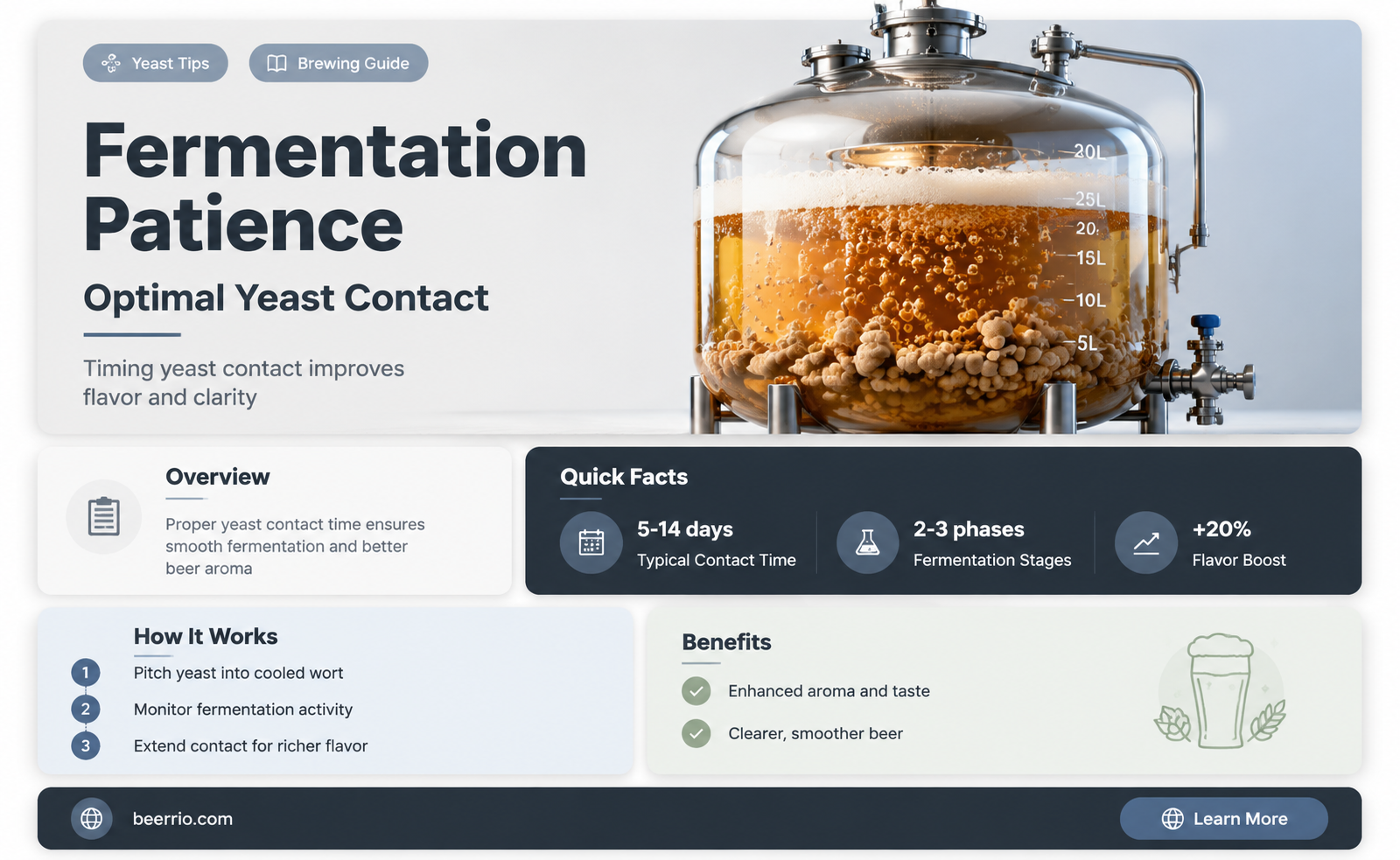
When brewing beer, the fermentation process is a critical phase where yeast converts sugars into alcohol and carbon dioxide. The duration of this process can significantly impact the final taste, aroma, and quality of the beer. Typically, beer is left on yeast for a period ranging from a few days to several weeks, depending on various factors such as the type of yeast, the original gravity of the wort, the desired flavor profile, and the brewing style. For instance, lagers often require a longer fermentation time at lower temperatures to achieve a clean, crisp taste, while ales might ferment more quickly at higher temperatures to develop more complex flavors. Monitoring the fermentation process closely and making adjustments as needed can help ensure that the beer reaches its optimal characteristics.
Explore related products


What You'll Learn
- Primary Fermentation: Typically lasts 1-2 weeks, depending on yeast strain and beer style
- Secondary Fermentation: Can take 2-4 weeks, used for clearer beer and complex flavors
- Yeast Strains: Different strains have varying fermentation times, impacting beer taste and aroma
- Temperature Control: Fermentation temperature affects yeast activity and beer quality; optimal ranges vary by style
- Fermentation Monitoring: Regularly checking gravity and observing yeast activity helps determine when fermentation is complete

Primary Fermentation: Typically lasts 1-2 weeks, depending on yeast strain and beer style
Primary fermentation is a critical phase in the beer-making process, typically lasting between one to two weeks. This duration can vary significantly depending on the yeast strain used and the style of beer being produced. For instance, some yeast strains are more vigorous and can complete fermentation within a week, while others may take longer to achieve the desired level of attenuation.
During primary fermentation, yeast consumes the sugars present in the wort, producing alcohol and carbon dioxide as byproducts. The rate at which this occurs is influenced by factors such as temperature, yeast health, and the complexity of the wort. Brewers must monitor this phase closely to ensure that fermentation is proceeding as expected and to make any necessary adjustments.
One of the key considerations during primary fermentation is temperature control. Yeast strains have optimal temperature ranges for fermentation, and deviating from these can lead to off-flavors or incomplete fermentation. For example, lagers typically require lower temperatures than ales. Brewers must maintain a consistent temperature throughout this phase to ensure the best possible results.
Another important factor is the yeast pitching rate. Pitching too little yeast can lead to under-attenuation and potential spoilage, while pitching too much can result in over-attenuation and a dry, unbalanced beer. Brewers must calculate the appropriate pitching rate based on the volume and gravity of the wort, as well as the desired final alcohol content.
Finally, it's essential to monitor the progress of fermentation through regular checks of the specific gravity. This helps brewers determine when fermentation is complete and when it's time to move on to the next phase, such as secondary fermentation or conditioning. By keeping a close eye on these factors, brewers can ensure a successful primary fermentation and set the stage for a high-quality final product.
Perfecting the Brew: Optimal Fermentation Time for Beer
You may want to see also
Explore related products


Secondary Fermentation: Can take 2-4 weeks, used for clearer beer and complex flavors
Secondary fermentation is a crucial step in the beer-making process that can significantly enhance the final product's clarity and flavor complexity. This stage involves transferring the beer from the primary fermentation vessel to a secondary container, allowing it to continue fermenting and conditioning. The duration of secondary fermentation typically ranges from 2 to 4 weeks, depending on various factors such as the beer style, yeast type, and desired flavor profile.
During secondary fermentation, the yeast continues to consume residual sugars and produce alcohol and carbon dioxide. This process helps to clarify the beer by allowing the yeast and other sediment to settle at the bottom of the secondary container, resulting in a cleaner, more visually appealing final product. Additionally, secondary fermentation can contribute to the development of complex flavors and aromas, as the yeast interacts with the beer's components and produces various byproducts.
One of the key benefits of secondary fermentation is the ability to separate the beer from the yeast sediment, which can help to prevent off-flavors and improve the overall taste. This is particularly important for beer styles that require a high level of clarity, such as lagers and wheat beers. Furthermore, secondary fermentation can be used to introduce additional flavors and aromas by adding ingredients such as fruit, spices, or wood chips to the secondary container.
To ensure a successful secondary fermentation, it is essential to maintain proper sanitation and temperature control. The secondary container should be thoroughly cleaned and sanitized to prevent contamination, and the beer should be transferred using a siphon or other method that minimizes the disturbance of the yeast sediment. The temperature of the secondary fermentation vessel should be kept consistent with the yeast's optimal fermentation range, which can vary depending on the yeast type and beer style.
In conclusion, secondary fermentation is a valuable technique in the beer-making process that can lead to improved clarity and flavor complexity. By carefully controlling the duration, temperature, and sanitation of this stage, brewers can achieve a higher-quality final product that meets their specific taste and appearance goals.
Perfect Pour: Mastering the Art of Beer on PB2 Timing
You may want to see also
Explore related products


Yeast Strains: Different strains have varying fermentation times, impacting beer taste and aroma
Different yeast strains possess unique characteristics that significantly influence the fermentation process and, consequently, the taste and aroma of beer. For instance, ale yeasts typically ferment faster and produce a cleaner, more neutral flavor profile compared to lager yeasts, which require longer fermentation times and often yield a more complex, malty taste. Some specialty yeast strains, like Brettanomyces, can impart funky, sour, or fruity notes to beer, making them popular choices for crafting unique and experimental brews.
When selecting a yeast strain for beer production, brewers must consider the desired flavor profile, fermentation time, and environmental conditions. Yeast strains have varying optimal temperature ranges for fermentation, and some may be more tolerant of high or low temperatures than others. Additionally, certain yeast strains may require specific nutrients or additives to thrive, which can impact the overall cost and complexity of the brewing process.
The fermentation time for different yeast strains can vary widely, ranging from a few days to several weeks or even months. Ale yeasts typically complete fermentation within 7-10 days, while lager yeasts may require 2-4 weeks or more. Specialty yeast strains, like Brettanomyces, can take even longer to ferment, sometimes requiring months to develop their characteristic flavors.
To ensure a successful fermentation, brewers must carefully monitor the process and adjust conditions as needed. This may involve controlling temperature, pH, and oxygen levels, as well as adding nutrients or other additives to support yeast growth and activity. By understanding the unique characteristics of different yeast strains and carefully managing the fermentation process, brewers can create a wide range of beer styles with distinct flavors and aromas.
In conclusion, the choice of yeast strain is a critical factor in determining the taste, aroma, and fermentation time of beer. By selecting the appropriate yeast strain and carefully managing the fermentation process, brewers can create a diverse array of beer styles that cater to different preferences and palates.
Infusing Flavor: The Perfect Timing for Beer-Soaked Fruit
You may want to see also
Explore related products


Temperature Control: Fermentation temperature affects yeast activity and beer quality; optimal ranges vary by style
Fermentation temperature is a critical factor in beer brewing that significantly impacts yeast activity and the final quality of the beer. Yeast, being a living organism, has an optimal temperature range in which it thrives and ferments sugars into alcohol and carbon dioxide efficiently. This range typically falls between 60°F to 78°F (15°C to 25°C) for most ale yeasts, but can vary depending on the specific strain and beer style.
For instance, lagers and pilsners, which are fermented with lager yeasts, require a cooler temperature range of around 45°F to 55°F (7°C to 13°C) to achieve the desired clean and crisp flavor profile. On the other hand, some specialty beers like Belgian ales and saisons may require higher temperatures of up to 85°F (29°C) to develop their characteristic complex flavors and aromas.
Maintaining the correct fermentation temperature is crucial for several reasons. Firstly, it ensures that the yeast ferments the sugars at an optimal rate, which in turn affects the beer's alcohol content and carbonation levels. Secondly, temperature control helps to prevent the production of unwanted byproducts such as fusel alcohols and esters, which can impart off-flavors to the beer. Lastly, proper temperature management can also influence the beer's body, mouthfeel, and overall balance.
To achieve precise temperature control during fermentation, brewers often use specialized equipment such as fermentation chambers or temperature-controlled water baths. These devices allow the brewer to set and maintain a specific temperature throughout the fermentation process, ensuring consistent results. Additionally, some brewers may choose to use yeast starters or pre-fermentation temperature adjustments to acclimate the yeast to the desired temperature before pitching it into the wort.
In conclusion, temperature control is a vital aspect of beer brewing that should not be overlooked. By understanding the optimal temperature ranges for different yeast strains and beer styles, and implementing effective temperature management techniques, brewers can significantly improve the quality and consistency of their final product.
Infusing Fruit Puree with Beer: Timing Tips for Perfect Fermentation
You may want to see also
Explore related products



Fermentation Monitoring: Regularly checking gravity and observing yeast activity helps determine when fermentation is complete
Regular monitoring of fermentation is crucial for determining when the process is complete. This involves checking the gravity of the beer and observing yeast activity. Gravity, measured in specific gravity (SG), indicates the density of the beer relative to water. As fermentation progresses, sugars are converted into alcohol and carbon dioxide, causing the gravity to decrease. By tracking these changes, brewers can gauge the progress of fermentation.
Observing yeast activity is another key indicator. Yeast cells are responsible for the fermentation process, and their behavior can provide valuable insights. Active yeast will typically produce visible bubbles as they release carbon dioxide. The frequency and intensity of these bubbles can help determine the stage of fermentation. Additionally, the appearance of the yeast can change over time, with healthy yeast appearing as small, round, and creamy white particles.
To effectively monitor fermentation, brewers should establish a routine for checking gravity and yeast activity. This might involve taking gravity readings every 24 hours and noting any changes. It’s also important to observe the yeast under a microscope or through a clear container to assess its health and activity level. By combining these observations, brewers can make informed decisions about when fermentation is complete and when it’s time to move on to the next stage of beer production.
One common mistake is to rely solely on gravity readings or yeast activity without considering the bigger picture. Fermentation is a complex process influenced by various factors, including temperature, yeast strain, and the initial sugar content of the wort. Therefore, it’s essential to consider these factors when interpreting monitoring data. For example, a higher temperature can accelerate fermentation, while a lower temperature can slow it down. Understanding these nuances can help brewers make more accurate assessments of fermentation progress.
In conclusion, fermentation monitoring is a critical aspect of beer production that requires careful attention to detail. By regularly checking gravity and observing yeast activity, brewers can ensure that fermentation is completed successfully, resulting in a high-quality final product. However, it’s important to consider the broader context and various factors that can influence fermentation when making decisions based on monitoring data.
Perfecting the Brew: Optimal Secondary Fermentation Time for Beer
You may want to see also
Frequently asked questions
Typically, beer should be left on yeast for about 1 to 2 weeks during the primary fermentation stage. This allows the yeast to consume the sugars and produce alcohol and carbon dioxide.
Factors such as the type of yeast used, the original gravity of the wort, the temperature of fermentation, and the desired final alcohol content can all influence how long the beer needs to be left on yeast.
Yes, beer can be left on yeast for too long. If left for an extended period, the yeast may start to die off, leading to off-flavors and potentially incomplete fermentation. It's important to monitor the fermentation process and transfer the beer to a secondary fermenter or bottle it when the appropriate time has elapsed.
You can determine when it's time to transfer the beer off the yeast by monitoring the specific gravity of the beer. Once the specific gravity has stabilized and reached the desired level, it's typically time to transfer the beer to a secondary fermenter or bottle it.
Primary fermentation is the initial stage where the yeast consumes the majority of the sugars in the wort, producing alcohol and carbon dioxide. This stage typically lasts 1 to 2 weeks. Secondary fermentation, on the other hand, is a longer, slower process that allows the yeast to consume any remaining sugars and clarify the beer. This stage can last several weeks to months, depending on the type of beer and the desired flavor profile.