Harmony Chandler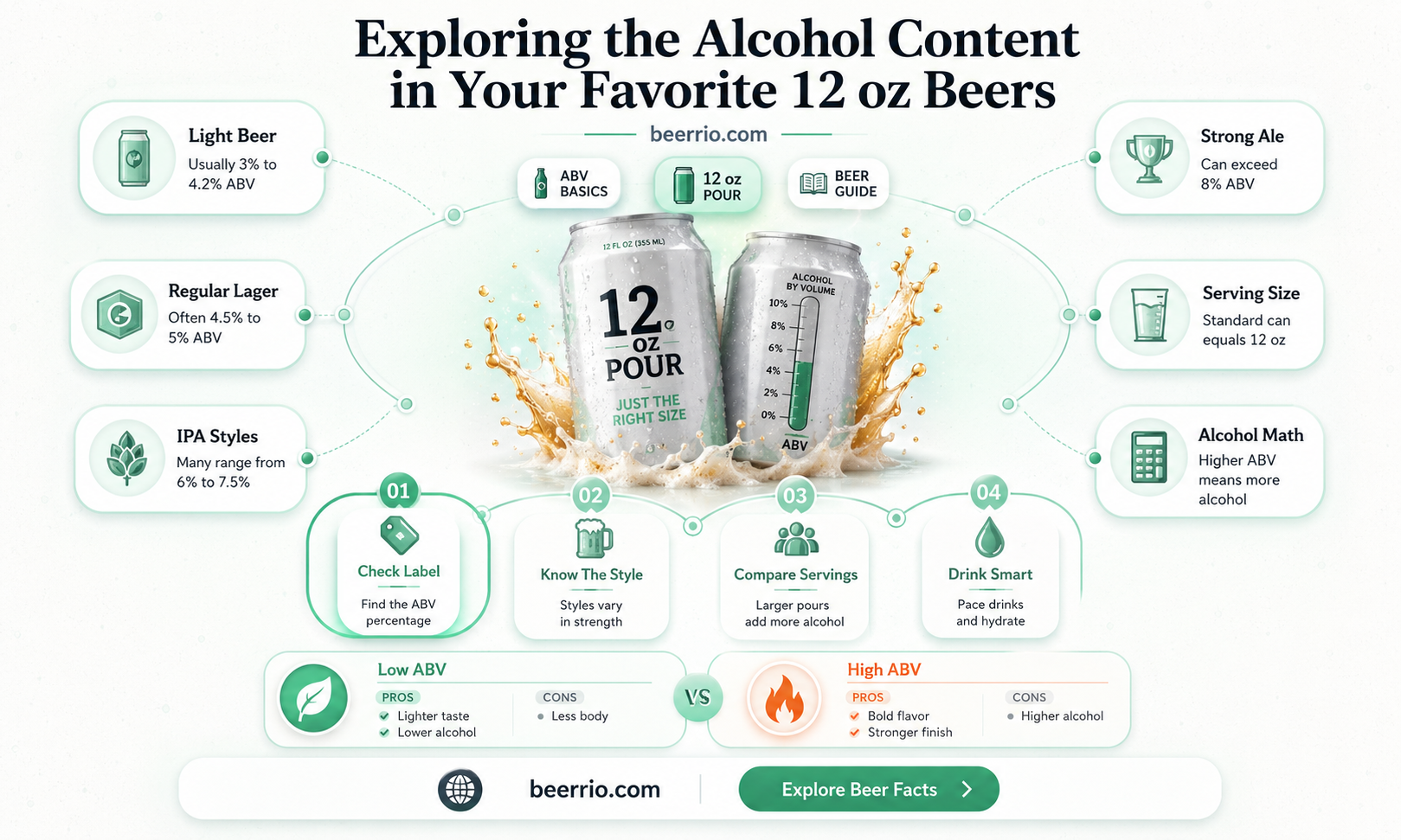
The alcohol content in a standard 12-ounce beer typically ranges from 4% to 6% by volume. This variation depends on the specific type and brand of beer. For instance, light beers usually have a lower alcohol percentage, around 4%, while stronger ales and stouts can reach up to 6% or even higher. It's important to note that the actual percentage can vary, so it's always a good idea to check the label for precise information. Understanding the alcohol content in beer is crucial for responsible consumption and making informed choices about how much to drink.
| Characteristics | Values |
|---|---|
| Typical Alcohol Content | 4-6% ABV (Alcohol By Volume) |
| Standard Drink Equivalence | 1 standard drink |
| Calories | Approximately 150 calories |
| Carbohydrates | Around 13 grams |
| Protein | Less than 1 gram |
| Fat | Negligible |
| Sodium | About 10-15 mg |
| Ingredients | Water, malted barley, hops, yeast |
| Brewing Process | Fermentation of malted barley with hops and yeast |
| Serving Size | 12 fluid ounces |
| Container Types | Bottle, can, draft |
| Popular Brands | Budweiser, Heineken, Stella Artois |
| Alcohol Metabolism | Metabolized by the liver at a rate of about 1 standard drink per hour |
| Effects on Body | Impacts coordination, judgment, and reaction time |
| Legal Drinking Age | Varies by country, commonly 18-21 years |
| Responsible Consumption | Recommended to consume in moderation, following health guidelines |
Explore related products


![[Pack of 6] Stella Artois Liberté 0.0% Premium NA/Alcohol FREE Larger Beer](https://m.media-amazon.com/images/I/81WHSmB+CcL._AC_UL320_.jpg)
What You'll Learn
- Average Alcohol Content: Most 12 oz beers contain 4-6% alcohol by volume (ABV)
- Light Beers: Typically have lower ABV, ranging from 2.5% to 4%
- Craft Beers: Often have higher ABV, varying from 5% to 10% or more
- Factors Influencing ABV: Ingredients, brewing process, and yeast type affect alcohol percentage
- Legal Limits: Many countries regulate the minimum and maximum alcohol content in beer

Average Alcohol Content: Most 12 oz beers contain 4-6% alcohol by volume (ABV)
The average alcohol content in a 12 oz beer typically ranges from 4% to 6% alcohol by volume (ABV). This measurement is crucial for understanding the potency of different beer types and making informed choices about consumption. ABV is a standard measure of how much alcohol is present in a given volume of an alcoholic beverage. It's calculated by dividing the volume of pure alcohol by the total volume of the liquid and then multiplying by 100.
For instance, if a 12 oz beer has an ABV of 5%, it means that 0.6 oz (or approximately 17.7 ml) of the beer is pure alcohol. This information is essential for individuals who are monitoring their alcohol intake, whether for health reasons, legal compliance, or personal preference.
It's important to note that the actual alcohol content can vary significantly based on the type of beer. Light beers often have a lower ABV, sometimes as low as 3.5%, while craft beers and ales can have much higher ABVs, sometimes exceeding 10%. Therefore, it's always a good idea to check the label or ask the bartender about the specific alcohol content of the beer you're consuming.
Understanding the alcohol content of beer is also vital for cooking and baking, as alcohol can affect the flavor and texture of dishes. When a recipe calls for beer, knowing the ABV can help you choose the right type of beer to achieve the desired result.
In summary, the average alcohol content in a 12 oz beer is between 4% and 6% ABV, but this can vary widely depending on the type of beer. Being aware of the alcohol content is important for responsible consumption, cooking, and making informed choices about the beverages you enjoy.
Sipping Smart: The Lowest-Calorie Non-Alcoholic Beers Revealed
You may want to see also
Explore related products


Light Beers: Typically have lower ABV, ranging from 2.5% to 4%
Light beers are a popular choice for those looking to enjoy a refreshing beverage without the higher alcohol content found in regular beers. These beers typically have an alcohol by volume (ABV) ranging from 2.5% to 4%, which is significantly lower than the average ABV of 5% found in most standard beers. This lower ABV makes light beers a more sessionable option, allowing individuals to consume multiple servings without reaching the same level of intoxication as they would with regular beers.
One of the main appeals of light beers is their reduced calorie content. Due to the lower ABV, light beers generally contain fewer calories than their regular counterparts. This makes them an attractive option for health-conscious consumers who still want to enjoy the taste of beer without the added caloric intake. Additionally, the lighter flavor profile of these beers often makes them more approachable for those who may not be fans of stronger, more robust beer flavors.
When it comes to the brewing process, light beers are typically made using a combination of techniques to reduce the alcohol content. Brewers may use a lower gravity wort, which results in a beer with less fermentable sugars and, consequently, a lower ABV. They may also employ a shorter fermentation time or use specific yeast strains that produce less alcohol. These brewing methods allow for the creation of beers that are both light in color and low in alcohol content.
It's important to note that while light beers may have a lower ABV, they can still contribute to intoxication if consumed in large quantities. Responsible drinking practices should always be followed, regardless of the type of beer being consumed. Additionally, the lower ABV of light beers does not necessarily mean they are less flavorful or enjoyable. Many light beers offer a crisp, refreshing taste that can be just as satisfying as their higher-alcohol counterparts.
In conclusion, light beers provide a lower-alcohol alternative for beer enthusiasts looking to enjoy a refreshing beverage without the higher ABV found in regular beers. With their reduced calorie content and approachable flavor profiles, light beers have become a popular choice for a wide range of consumers. However, it's essential to remember that responsible drinking practices should always be followed, regardless of the type of beer being consumed.
Exploring Non-Alcoholic Alternatives: What NA Beer Tastes Like Bud Light?
You may want to see also
Explore related products


Craft Beers: Often have higher ABV, varying from 5% to 10% or more
Craft beers are known for their rich flavors and diverse styles, which often come with a higher alcohol by volume (ABV) content compared to mass-produced beers. The ABV in craft beers can vary significantly, typically ranging from 5% to 10% or even higher, depending on the specific type and brewing process. This higher alcohol content is a result of the unique ingredients and techniques used by craft brewers to create distinctive and robust flavors.
One of the reasons craft beers have a higher ABV is the use of specialty malts and hops. These ingredients not only contribute to the complex taste profiles but also increase the fermentable sugars in the wort, leading to a higher alcohol yield. Additionally, craft brewers often experiment with different yeast strains and fermentation methods, which can further influence the final ABV.
Another factor contributing to the higher ABV in craft beers is the brewing process itself. Craft brewers may use techniques such as dry hopping, where hops are added after fermentation, or barrel aging, where the beer is aged in barrels that previously held other alcoholic beverages. These methods can enhance the beer's flavor and increase its alcohol content.
It's important for consumers to be aware of the higher ABV in craft beers, as it can affect their alcohol consumption and tolerance. A 12-ounce serving of a craft beer with an ABV of 7% contains approximately 0.84 ounces of pure alcohol, which is significantly more than a mass-produced beer with an ABV of 4.5%, containing about 0.54 ounces of alcohol per serving.
When enjoying craft beers, it's essential to drink responsibly and be mindful of the higher alcohol content. This may involve limiting the number of servings consumed, eating before or while drinking, and ensuring adequate hydration. By doing so, beer enthusiasts can appreciate the unique qualities of craft beers while maintaining a safe and enjoyable drinking experience.
Exploring Zero-Alcohol Non-Alcoholic Beers: A Comprehensive Guide
You may want to see also
Explore related products

![[Pack of 24] Bud Full Flavored Zero Alcohol Brew, 0.00 ALC, NA Non-Alcoholic Beer, 50 Cal, Zero Sugar, Cans, 12 Fl Oz (Pack of 24)](https://m.media-amazon.com/images/I/51RUqU+bqVL._AC_UL320_.jpg)


![Orchard Hill [Pack of 12] Budweiser Full Flavored Zero Alcohol Brew, 0.00 ALC, NA Non-Alcoholic Beer, 50 Cal, Zero Sugar, Cans, 12 Fl Oz (Pack of 12)](https://m.media-amazon.com/images/I/81HEjZZVTMS._AC_UL320_.jpg)

Factors Influencing ABV: Ingredients, brewing process, and yeast type affect alcohol percentage
The alcohol by volume (ABV) in beer is a critical factor that determines its strength and flavor profile. Among the key elements influencing ABV are the ingredients used, the brewing process employed, and the type of yeast selected. Each of these components plays a distinct role in shaping the final alcohol content of the beer.
Ingredients are the foundational building blocks of beer, and their selection and proportion significantly impact ABV. The primary ingredients in beer are water, malted barley, hops, and yeast. Malted barley is the primary source of fermentable sugars, which yeast converts into alcohol. The type and amount of malt used can greatly affect the beer's ABV. For instance, beers with a higher proportion of malted barley typically have a higher ABV. Additionally, the use of adjuncts such as corn or rice can dilute the flavor and lower the ABV.
The brewing process itself is another crucial factor in determining ABV. The steps involved in brewing, from mashing to fermentation, each contribute to the final alcohol content. The temperature at which the wort is fermented, for example, can influence the yeast's activity and efficiency in converting sugars to alcohol. Higher fermentation temperatures generally result in a faster fermentation process and a higher ABV, while lower temperatures can lead to a slower fermentation and a lower ABV.
Yeast type is perhaps the most significant variable in the brewing process when it comes to ABV. Different strains of yeast have varying levels of alcohol tolerance and fermentation capabilities. Some yeast strains are known for producing beers with high ABVs, while others are better suited for lower-alcohol beers. The choice of yeast can also impact the flavor profile of the beer, as different strains produce different byproducts during fermentation.
In conclusion, the ABV of a 12 oz beer is influenced by a complex interplay of ingredients, brewing processes, and yeast types. Brewers carefully consider these factors when crafting their beers to achieve the desired alcohol content and flavor profile. Understanding these elements can help beer enthusiasts appreciate the nuances and variations in their favorite brews.
Exploring Mexico's Strongest Brews: A Guide to High-Alcohol Beers
You may want to see also
Explore related products




Legal Limits: Many countries regulate the minimum and maximum alcohol content in beer
The legal limits on alcohol content in beer vary significantly from country to country, reflecting diverse cultural attitudes and regulatory approaches to alcohol consumption. In the United States, for example, the minimum alcohol content for beer is typically around 0.5% ABV (alcohol by volume), while the maximum can vary by state but is often capped at around 14% ABV. These limits are enforced to ensure consumer safety and to maintain a certain standard for what can be legally sold as beer.
In contrast, some European countries have more stringent regulations. Germany, known for its strict beer purity laws, mandates that beer must contain at least 4.7% ABV to be labeled as such. Meanwhile, in the United Kingdom, the minimum alcohol content for beer is 1% ABV, and the maximum is 14% ABV. These regulations not only affect the brewing process but also influence the types of beer that are available to consumers in each country.
The legal limits on alcohol content also impact the labeling and marketing of beer. Brewers must clearly state the alcohol content on their labels to comply with regulations, which helps consumers make informed choices about their alcohol intake. Additionally, these limits can affect the taxation and pricing of beer, as higher alcohol content often results in higher taxes in many countries.
Understanding these legal limits is crucial for both consumers and brewers. Consumers need to be aware of the alcohol content in their beer to make responsible drinking choices, while brewers must adhere to these regulations to ensure their products are legal and safe for consumption. The variation in legal limits also highlights the importance of checking local laws when traveling or importing beer from other countries.
In summary, the legal limits on alcohol content in beer are a complex and multifaceted issue that involves cultural, regulatory, and practical considerations. These limits not only dictate the strength of beer but also influence its production, labeling, taxation, and consumption. By understanding these regulations, consumers and brewers can navigate the diverse landscape of beer laws around the world.
Exploring Non-Alcoholic Beer Options Aboard the Norwegian Gem
You may want to see also
Frequently asked questions
The typical alcohol content of a 12 oz beer ranges from 4% to 6% ABV (Alcohol By Volume). However, this can vary depending on the type and brand of beer.
A 12 oz beer with 5% ABV typically contains around 150-160 calories. The exact calorie count can vary slightly based on the specific ingredients and brewing process.
It is generally not recommended to drive after consuming any amount of alcohol, as it can impair your ability to operate a vehicle safely. The legal blood alcohol concentration (BAC) limit for driving in many places is 0.08%, and even one beer could potentially put you over this limit, depending on factors like your weight, metabolism, and how quickly you consume the drink.