Oisin Foster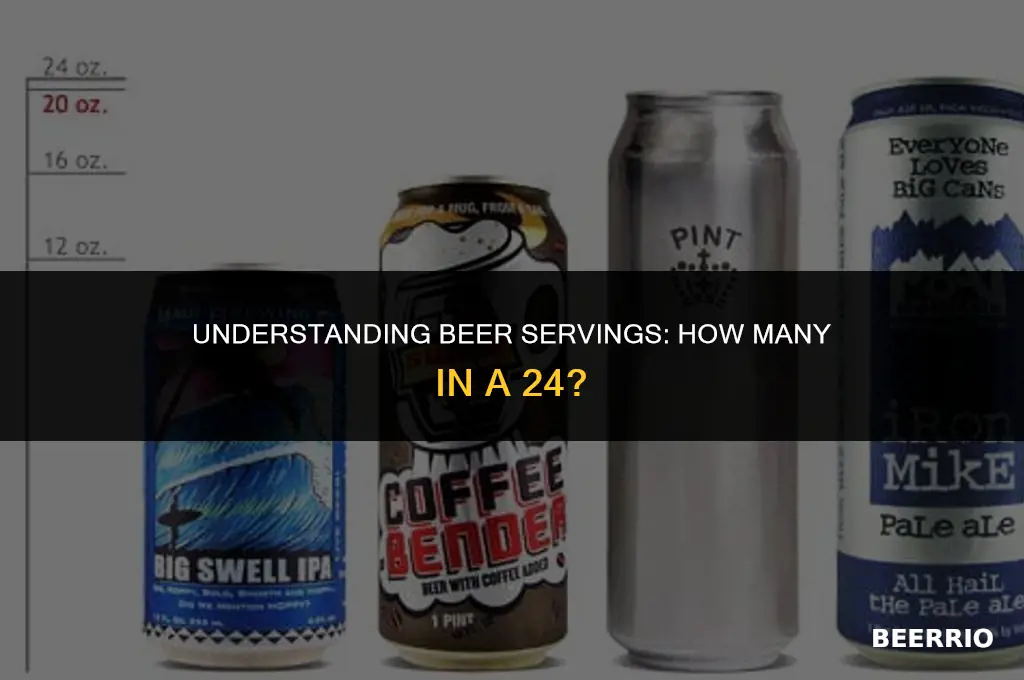
A common question among beer enthusiasts and those planning social gatherings is, How many servings of beer is a 24? This inquiry typically refers to a 24-pack of beer bottles or cans, which is a standard packaging size for many breweries. To answer this question, it's essential to consider the volume of each container and the recommended serving size for beer. A standard beer serving is generally considered to be 12 fluid ounces (355 milliliters). In a 24-pack, each bottle or can usually contains 12 fluid ounces of beer. Therefore, a 24-pack of beer would contain a total of 288 fluid ounces (24 bottles x 12 fluid ounces per bottle). Dividing this total volume by the standard serving size gives us the number of servings in a 24-pack.
Explore related products




What You'll Learn
- Understanding serving sizes: Defining what constitutes a standard serving of beer
- Calculating servings: How to determine the number of servings in a 24-pack
- Types of beer: Exploring how serving sizes may vary by beer type
- Responsible consumption: Guidelines for moderate and responsible beer consumption
- Legal considerations: Age restrictions and laws surrounding beer purchases and consumption

Understanding serving sizes: Defining what constitutes a standard serving of beer
A standard serving of beer is typically defined as 12 fluid ounces (fl oz) or 355 milliliters (mL). This measurement is used to help consumers understand how much alcohol they are consuming and to make informed decisions about their drinking habits. However, it's important to note that serving sizes can vary depending on the type of beer and the country or region in which it is being served.
For example, in the United States, a standard serving of beer is 12 fl oz, while in Canada, it is 11.5 fl oz. In some European countries, a standard serving may be as small as 8.5 fl oz. Additionally, different types of beer, such as light beers or craft beers, may have different serving sizes due to variations in alcohol content and calorie count.
Understanding serving sizes is crucial for responsible drinking, as it allows individuals to track their alcohol intake and stay within recommended limits. The Centers for Disease Control and Prevention (CDC) recommend that adults consume no more than one drink per day for women and two drinks per day for men. By knowing what constitutes a standard serving, individuals can make more informed choices about their drinking habits and reduce the risk of alcohol-related health problems.
In the context of a 24-pack of beer, it's important to consider the total number of servings contained within the pack. A 24-pack of 12 fl oz beers would contain 24 servings, while a 24-pack of 11.5 fl oz beers would contain approximately 22.8 servings. This information can be useful for planning social gatherings or for individuals who are tracking their alcohol consumption.
It's also worth noting that serving sizes can impact the nutritional content of beer. For example, a 12 fl oz serving of beer typically contains around 150 calories, while a 16 fl oz serving may contain closer to 200 calories. This information can be important for individuals who are watching their calorie intake or who are trying to maintain a healthy weight.
In conclusion, understanding serving sizes is an essential aspect of responsible drinking and can help individuals make informed decisions about their alcohol consumption. By knowing what constitutes a standard serving of beer and how serving sizes can vary, individuals can better track their alcohol intake and stay within recommended limits.
From Brews to Brains: Decoding the Half Barrel Beer Mystery
You may want to see also
Explore related products



Calculating servings: How to determine the number of servings in a 24-pack
To determine the number of servings in a 24-pack, you need to consider the volume of each container and the recommended serving size. Typically, a 24-pack consists of 24 bottles or cans, each with a standard volume of 12 fluid ounces (355 milliliters). The recommended serving size for beer is usually one 12-ounce bottle or can. Therefore, a 24-pack would contain 24 servings.
However, it's important to note that the actual number of servings may vary depending on the specific product and the individual's drinking preferences. Some beers may come in larger or smaller volumes, and some people may choose to consume more or less than the recommended serving size. In these cases, it's necessary to adjust the calculation accordingly.
For example, if a 24-pack contains bottles with a volume of 16 fluid ounces each, the total volume would be 384 fluid ounces. Dividing this by the recommended serving size of 12 fluid ounces would result in 32 servings. Conversely, if the bottles are smaller, say 8 fluid ounces each, the total volume would be 192 fluid ounces, resulting in 16 servings.
It's also worth considering that some people may prefer to drink beer in larger quantities, such as 16-ounce pints or 24-ounce tallboys. In these cases, the number of servings in a 24-pack would be reduced accordingly. For instance, if a person drinks 16-ounce pints, a 24-pack would contain 15 servings (24 bottles x 12 ounces / 16 ounces per serving).
In summary, while a standard 24-pack of 12-ounce beer bottles or cans typically contains 24 servings, the actual number of servings may vary depending on the volume of the containers and the individual's drinking preferences. It's important to adjust the calculation accordingly to ensure accurate serving sizes.
Exploring the Brews: A Guide to Oktoberfest's Beer Selection
You may want to see also
Explore related products



Types of beer: Exploring how serving sizes may vary by beer type
The serving size of beer can vary significantly depending on the type of beer being consumed. For instance, a light lager typically has a serving size of around 12 ounces, while a stout or porter might be served in a smaller quantity, often around 8-10 ounces. This variation is due to differences in alcohol content, flavor intensity, and the brewing process. Lighter beers tend to have lower alcohol by volume (ABV) and are often consumed in larger quantities, whereas darker, more robust beers have higher ABVs and are typically enjoyed in smaller servings.
When considering a 24-pack of beer, it's essential to understand that the number of servings can differ based on the beer type. A 24-pack of light lager, for example, might contain approximately 24 servings if each bottle or can is 12 ounces. However, if the 24-pack consists of stouts or porters, each serving might be smaller, resulting in more servings per pack. This distinction is crucial for consumers to be aware of, especially when planning for social gatherings or personal consumption.
Moreover, the serving size can also be influenced by cultural and regional factors. In some countries, a standard serving of beer is defined by law, while in others, it may vary by establishment or personal preference. For example, in the United States, a standard serving is often considered to be 12 ounces, but in Europe, serving sizes can range from 250ml to 500ml or more.
Understanding these variations can help consumers make informed decisions about their beer consumption. It's not only about the number of servings in a pack but also about the quality and intensity of the beer. By being mindful of serving sizes, individuals can enjoy their favorite beers responsibly and in moderation.
In conclusion, the serving size of beer is a multifaceted topic that depends on the type of beer, cultural norms, and personal preferences. A 24-pack of beer can provide a different number of servings based on these factors, and it's essential for consumers to be aware of these distinctions to make informed choices about their beer consumption.
Exploring the Diverse Beer Selection at Ms. Soleyes: A Comprehensive Guide
You may want to see also
Explore related products


Responsible consumption: Guidelines for moderate and responsible beer consumption
Moderate beer consumption is often defined by health organizations as up to one drink per day for women and up to two drinks per day for men. However, it's crucial to understand that these are general guidelines and individual limits may vary based on factors such as age, health status, and personal tolerance. Responsible consumption involves being aware of these limits and ensuring that beer is enjoyed in a way that does not harm oneself or others.
One key aspect of responsible beer consumption is understanding the alcohol content of different types of beer. A standard serving of beer is typically considered to be 12 fluid ounces, which contains about 5% alcohol by volume. However, craft beers and other specialty beers can have significantly higher alcohol content, sometimes reaching 10% or more. It's important to be aware of the alcohol content of the beer you are consuming and to adjust your intake accordingly.
Another important consideration is the context in which beer is consumed. Drinking beer in a social setting with friends or family can be a responsible way to enjoy alcohol, as long as everyone is of legal drinking age and is consuming in moderation. However, drinking alone or in situations where alcohol consumption is not socially acceptable can lead to problematic behavior and potential health risks.
Responsible beer consumption also involves being aware of the potential risks associated with alcohol use. These risks include impaired judgment, which can lead to accidents or injuries, as well as long-term health effects such as liver damage, heart disease, and certain types of cancer. It's important to weigh these risks against the potential benefits of moderate beer consumption, such as relaxation and social enjoyment.
Finally, responsible beer consumption involves knowing when to stop. If you find that you are regularly exceeding the recommended limits for moderate drinking, or if you are experiencing negative consequences as a result of your alcohol use, it may be time to reevaluate your drinking habits. Seeking help from a healthcare professional or a support group can be a responsible step towards addressing potential issues with alcohol use.
Understanding Beer Servings: A Guide to Ounce Measurements
You may want to see also
Explore related products



Legal considerations: Age restrictions and laws surrounding beer purchases and consumption
In the United States, the legal drinking age is 21, and this applies to the purchase and consumption of beer. This age restriction is enforced to prevent underage drinking and the potential health risks associated with it. Some states have additional laws, such as requiring a parent or guardian to be present when a minor is consuming alcohol in a private setting.
When it comes to purchasing beer, most states require that the buyer present a valid government-issued ID to prove their age. In some cases, stores may also use electronic age verification systems to scan the ID and ensure that the buyer is of legal drinking age. It is important to note that attempting to purchase alcohol underage is illegal and can result in fines or other penalties.
In addition to age restrictions, there are also laws surrounding the consumption of beer in public places. Open container laws vary by state, but in general, it is illegal to consume alcohol in public areas such as parks, sidewalks, and streets. Some states have designated areas where alcohol consumption is allowed, such as outdoor dining areas or certain public events.
It is also important to consider the legal implications of drinking and driving. The blood alcohol concentration (BAC) limit for driving is 0.08% in most states, and exceeding this limit can result in a DUI charge. Even if a person's BAC is below the legal limit, they can still be charged with driving under the influence if their ability to operate a vehicle is impaired by alcohol.
In conclusion, it is crucial to be aware of the legal considerations surrounding beer purchases and consumption. By understanding and following these laws, individuals can enjoy beer responsibly and avoid potential legal consequences.
Unlocking Cicerone Certification: Exam Attempts and Opportunities
You may want to see also
Frequently asked questions
A standard 24-pack of beer contains 24 individual servings.
The typical volume of beer in a 24-pack is 12 fluid ounces (355 milliliters) per bottle or can, totaling 288 fluid ounces (8.5 liters) for the entire pack.
The calorie content varies by brand and type of beer. On average, a 12-ounce serving of beer contains about 150 calories, so a 24-pack would contain approximately 3,600 calories in total.
The alcohol content also varies by brand and type. A typical beer has an alcohol by volume (ABV) of around 4-5%. For a 24-pack of 12-ounce servings, this would equate to about 11.5 to 14.4 ounces of pure alcohol.
The legality of purchasing a 24-pack of beer varies by state and country. In many places, there are no restrictions on the quantity of beer one can purchase at once, but some states may have limits or require a special license for larger quantities.