Arabella Franco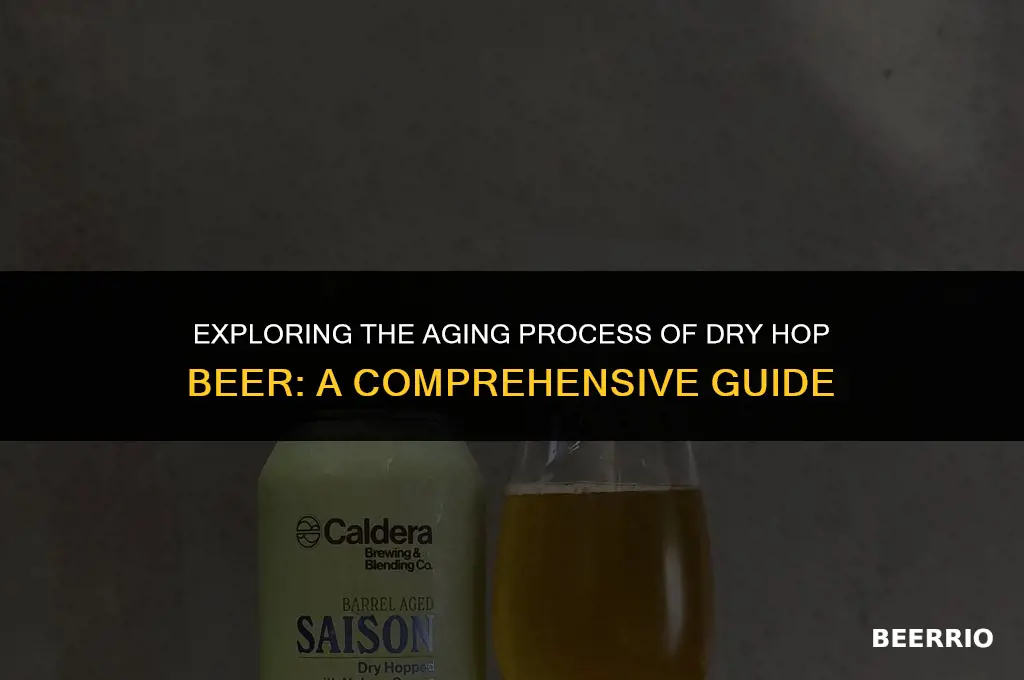
Dry hopped beers, known for their vibrant and intense hop flavors, have become increasingly popular among craft beer enthusiasts. However, the aging process of these beers is a topic of much debate. While some believe that dry hopped beers can age gracefully, developing complex flavors over time, others argue that the delicate hop aromas and flavors may degrade, leading to a less desirable drinking experience. Understanding the aging process of dry hopped beers requires an exploration of the interplay between the beer's ingredients, brewing techniques, and storage conditions.
Explore related products


What You'll Learn
- Dry Hopping Process: Adding hops to beer during fermentation for enhanced aroma and flavor
- Aging Mechanism: How dry hopping influences the aging process of beer, affecting its taste
- Hop Varieties: Different types of hops used in dry hopping and their impact on beer aging
- Flavor Development: The evolution of flavors in dry hopped beer over time, including bitterness and aroma
- Storage Conditions: Optimal conditions for storing dry hopped beer to ensure proper aging and preservation

Dry Hopping Process: Adding hops to beer during fermentation for enhanced aroma and flavor
Dry hopping is a technique used in beer brewing where hops are added to the fermenter after the initial boil and before the final stages of fermentation. This process is distinct from traditional hopping methods, where hops are primarily added during the boiling stage to impart bitterness. The primary purpose of dry hopping is to enhance the beer's aroma and flavor profile without contributing additional bitterness.
The process of dry hopping involves several key steps. First, the brewer must select the appropriate hops for the desired flavor and aroma profile. Common hops used for dry hopping include Cascade, Citra, and Amarillo, each known for their unique characteristics. Once the hops are selected, they are typically added to the fermenter in the form of whole cones or pellets. The amount of hops used can vary depending on the desired intensity of the flavor and aroma, but it generally ranges from 1 to 4 ounces per 5 gallons of beer.
Timing is crucial in the dry hopping process. Hops should be added when the beer's gravity has reached a specific point, usually around 1.010 to 1.015 SG, which indicates that the yeast has consumed most of the fermentable sugars. Adding hops too early can result in the yeast producing unwanted flavors, while adding them too late can reduce their impact on the beer's aroma and flavor.
After the hops are added, the beer is allowed to ferment for an additional period, typically 1 to 2 weeks. During this time, the yeast works to integrate the hop flavors and aromas into the beer. Once fermentation is complete, the beer is transferred to a secondary fermenter or keg for conditioning and maturation.
One of the key benefits of dry hopping is that it can help to improve the stability of the beer's flavor and aroma over time. This is because the hops act as a natural preservative, inhibiting the growth of bacteria and other microorganisms that can spoil the beer. However, it is important to note that dry hopped beers may still age and develop off-flavors if not stored properly. To maintain the quality of dry hopped beer, it should be stored in a cool, dark place and consumed within a reasonable timeframe, typically 3 to 6 months after bottling.
Exploring the Flavor Connection: Vinegar and Beer Hops
You may want to see also
Explore related products




Aging Mechanism: How dry hopping influences the aging process of beer, affecting its taste
Dry hopping, a process where hops are added to beer after fermentation, significantly influences the aging mechanism of the beverage. This technique, widely used in craft brewing, imparts a fresh, aromatic quality to the beer that evolves over time. As the beer ages, the compounds extracted from the hops during dry hopping undergo chemical changes, affecting the taste profile. Initially, the beer may exhibit a bright, citrusy, or floral character, which gradually mellows and becomes more complex with age.
The aging process of dry hopped beer is marked by the interaction between the hop compounds and other beer constituents, such as malt and yeast. Over time, oxidation and other chemical reactions lead to the formation of new flavor compounds. These reactions can result in the development of more subdued, earthy, or spicy notes, depending on the hop variety and beer style. Brewers often use dry hopping to create beers that are intended to age gracefully, with the hop character providing a counterbalance to the malt sweetness and yeast-derived flavors.
One of the key factors in the aging mechanism of dry hopped beer is the type of hops used. Different hop varieties contain varying levels of volatile oils, acids, and other compounds that contribute to the beer's aroma and flavor. For example, hops with high levels of myrcene oil may impart a more pronounced hop aroma and flavor, which can evolve into more complex notes as the beer ages. Brewers must carefully select the hop varieties and quantities to achieve the desired aging characteristics.
The storage conditions also play a crucial role in the aging process of dry hopped beer. Proper storage, typically in a cool, dark place, helps to slow down the oxidation and other chemical reactions that can negatively impact the beer's flavor. Exposure to light, heat, and oxygen can accelerate these reactions, leading to a loss of the desired hop character and the development of off-flavors. Brewers and beer enthusiasts must be mindful of these factors to ensure that the beer ages in a way that enhances its taste profile.
In conclusion, dry hopping is a powerful tool in the brewer's arsenal for creating complex, age-worthy beers. By carefully selecting hop varieties and managing storage conditions, brewers can craft beers that evolve in character over time, offering a dynamic and enjoyable drinking experience. Understanding the aging mechanism of dry hopped beer allows brewers and enthusiasts to appreciate the subtle nuances that develop as the beer matures.
Exploring the Essential Role of Hops in Beer Flavoring
You may want to see also
Explore related products


Hop Varieties: Different types of hops used in dry hopping and their impact on beer aging
The choice of hop varieties plays a crucial role in the dry hopping process and significantly impacts how beer ages. Different hops contribute unique flavors, aromas, and bitterness levels, which evolve over time. For instance, Citra hops are known for their vibrant citrus notes, which may mellow and integrate more seamlessly into the beer's profile as it ages. On the other hand, Simcoe hops offer a complex blend of pine, earth, and berry flavors that can develop deeper, more pronounced characteristics with extended aging.
When selecting hops for dry hopping, brewers must consider the specific qualities they wish to impart to their beer. Some hops, like Mosaic, are prized for their intense fruit and floral aromas, which can enhance the beer's complexity and perceived freshness even after months of aging. Others, such as Amarillo, provide a more subtle, spicy, and floral profile that may become more apparent and appreciated as the beer matures.
The bitterness contributed by different hop varieties also affects how beer ages. Hops with higher alpha acid content, like Magnum or Warrior, will impart a more pronounced bitterness that can balance the sweetness of the malt and stand up to the test of time. In contrast, hops with lower alpha acids, such as Willamette or Cascade, offer a softer bitterness that may become less noticeable as the beer ages, potentially leading to a sweeter, more malt-forward profile.
In addition to flavor and bitterness, the choice of hop varieties can influence the beer's aroma and mouthfeel. Some hops, like Galaxy, are known for their intense, tropical fruit aromas that can persist and even intensify during the aging process. Others, such as Saaz, provide a more delicate, spicy, and herbal profile that may become more nuanced and complex over time.
Ultimately, the selection of hop varieties for dry hopping is a critical decision that can significantly impact the final product's character and aging potential. By carefully choosing the right hops, brewers can create beers that not only taste great fresh but also develop interesting and desirable flavors and aromas as they age.
Exploring the Botanical Mystery: Are Beer Hops a Vegetable?
You may want to see also
Explore related products

$25.99


Flavor Development: The evolution of flavors in dry hopped beer over time, including bitterness and aroma
Dry hopped beers undergo a fascinating transformation in flavor profile over time. Initially, the dry hopping process imparts a vibrant, fresh aroma characterized by citrus, floral, or fruity notes, depending on the hop variety used. This aromatic intensity is at its peak immediately after dry hopping and begins to diminish as the beer ages.
As the beer matures, the bitterness derived from the dry hops starts to become more pronounced. This is due to the isomerization of alpha acids in the hops, which creates compounds that contribute to the beer's bitterness. The rate at which this bitterness develops can vary depending on factors such as the type of hops, the beer's pH, and the temperature at which it is stored.
Simultaneously, the beer's malt flavors begin to evolve, becoming more complex and rounded. This can lead to a harmonious balance between the bitterness of the hops and the sweetness of the malt, creating a more nuanced and sophisticated taste experience. However, if the beer is aged for too long, the hop flavors and aromas may fade significantly, resulting in a less desirable flavor profile.
The evolution of flavors in dry hopped beer is a delicate process that requires careful monitoring and control. Brewers must consider the specific characteristics of the hops they are using, as well as the desired final flavor profile, when determining the optimal aging time for their beer. By understanding the interplay between bitterness, aroma, and malt flavors, brewers can create dry hopped beers that are both complex and enjoyable.
Exploring the Risks: Could Dry Hopping Contaminate Your Beer?
You may want to see also
Explore related products



Storage Conditions: Optimal conditions for storing dry hopped beer to ensure proper aging and preservation
To ensure the proper aging and preservation of dry hopped beer, it is crucial to store it under optimal conditions. The ideal storage environment for dry hopped beer is cool, dark, and oxygen-free. A temperature range of 50-55°F (10-13°C) is recommended, as higher temperatures can accelerate the aging process and lead to the degradation of the beer's flavor and aroma. It is also important to protect the beer from light, as UV rays can cause the hops to lose their potency and the beer to develop off-flavors.
In addition to temperature and light, oxygen is another critical factor to consider when storing dry hopped beer. Oxygen can cause the beer to oxidize, leading to the development of stale, cardboard-like flavors. To minimize oxygen exposure, it is recommended to store the beer in airtight containers, such as growlers or kegs, and to purge the containers with nitrogen or carbon dioxide before sealing.
The storage conditions for dry hopped beer are similar to those for other types of beer, with a few key differences. Dry hopped beers are more sensitive to oxygen and light, so it is especially important to store them in a cool, dark, and oxygen-free environment. Additionally, dry hopped beers may benefit from a slightly longer aging period, as this can allow the flavors and aromas to fully develop.
When storing dry hopped beer, it is also important to consider the type of hops used. Different hops have different storage requirements, and some may be more sensitive to temperature, light, and oxygen than others. For example, Citra hops are known to be particularly sensitive to oxygen, so it is important to take extra precautions when storing beers that use this hop variety.
In conclusion, proper storage conditions are essential for ensuring the quality and longevity of dry hopped beer. By storing the beer in a cool, dark, and oxygen-free environment, and by considering the specific needs of the hops used, it is possible to preserve the beer's flavor and aroma for an extended period.
Discovering Your Beer Allergy: Are Hops the Culprit?
You may want to see also
Frequently asked questions
Dry hop beers can age well, but it depends on the specific beer and storage conditions. Generally, beers with higher alcohol content and those that are bottle conditioned tend to age better. Proper storage in a cool, dark place can help preserve the beer's flavor and aroma over time.
The aging potential of dry hop beer varies, but many can be enjoyed for several months to a few years. Some high-quality, bottle-conditioned dry hop beers can even improve with age, developing more complex flavors and aromas.
Several factors can influence how dry hop beer ages, including the beer's alcohol content, bitterness level, yeast strain, and storage conditions. Higher alcohol and bitterness can act as natural preservatives, while certain yeast strains can contribute to the development of desirable flavors over time. Proper storage in a cool, dark place is crucial to prevent spoilage and maintain the beer's quality.