Jason Wagner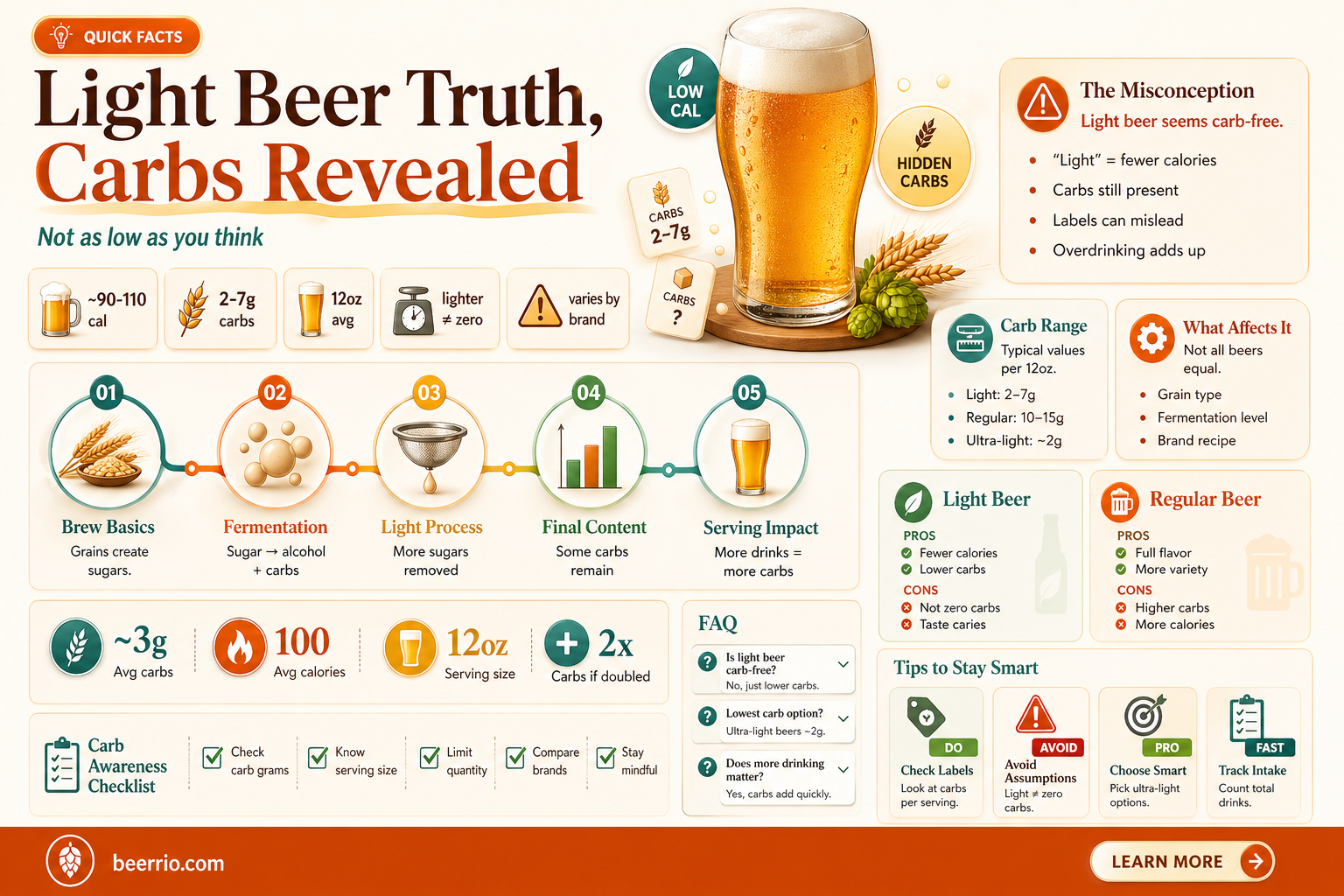
Light beer is often perceived as a lower-calorie alternative to regular beer, but its carbohydrate content can be a point of confusion for many consumers. While it's true that light beers generally contain fewer calories and less alcohol than their full-bodied counterparts, the carb content can vary significantly between brands and types. Typically, a 12-ounce serving of light beer contains around 6 to 12 grams of carbohydrates, which is lower than the 10 to 15 grams found in regular beers. However, some ultra-light beers can have as few as 2 to 4 grams of carbs per serving, making them a more suitable option for those following a low-carb diet. It's important to note that the brewing process for light beers often involves the use of adjuncts like corn or rice, which can contribute to the carb content. Additionally, some light beers may contain artificial sweeteners or other additives to enhance flavor without adding calories. For individuals monitoring their carb intake, it's essential to check the nutrition label or consult the brewery's website for specific information about the beer's carbohydrate content.
Explore related products



What You'll Learn
- Nutritional Content: Light beers typically have fewer carbs than regular beers, but exact amounts vary by brand
- Comparison to Regular Beer: Light beer generally contains about half the carbohydrates found in standard beer varieties
- Carb Counting: For those tracking carb intake, light beer can be a lower-carb alternative to regular beer
- Dietary Considerations: Individuals with dietary restrictions or preferences may opt for light beer to reduce carbohydrate consumption
- Health Implications: While light beer is lower in carbs, it's still important to consume alcohol in moderation for overall health

Nutritional Content: Light beers typically have fewer carbs than regular beers, but exact amounts vary by brand
Light beers are often marketed as a lower-carb alternative to regular beers, making them a popular choice for those monitoring their carbohydrate intake. However, the exact nutritional content can vary significantly between brands and types. While it's true that light beers generally contain fewer carbs than their regular counterparts, the difference may not be as substantial as some consumers assume. For instance, a typical light beer might contain anywhere from 4 to 12 grams of carbohydrates per 12-ounce serving, compared to 10 to 15 grams in regular beers. This variation highlights the importance of checking the nutrition label or consulting the brewery's website for specific information about the beer you're consuming.
It's also worth noting that the term "light" can be somewhat misleading when it comes to nutritional content. While light beers may have fewer carbs, they often have similar calorie counts to regular beers due to the presence of other ingredients like alcohol and malt. Additionally, some light beers may use artificial sweeteners or other additives to reduce the carb content, which could be a concern for those with certain dietary restrictions or preferences.
For individuals following a low-carb diet, such as those with diabetes or those adhering to a ketogenic diet, it's crucial to consider the overall nutritional profile of the beer, not just the carb content. Factors like alcohol by volume (ABV), calorie count, and the presence of other ingredients can all impact how the beer fits into a balanced diet. It's always a good idea to consult with a healthcare professional or a registered dietitian for personalized advice on how to incorporate light beers or any other alcoholic beverages into your diet.
In conclusion, while light beers can be a lower-carb option compared to regular beers, it's essential to be aware of the varying nutritional content across different brands and types. By doing your research and considering the broader nutritional implications, you can make informed choices about how to enjoy light beers as part of a balanced and healthy diet.
Exploring the Health Benefits and Myths of Light Beer Consumption
You may want to see also
Explore related products



Comparison to Regular Beer: Light beer generally contains about half the carbohydrates found in standard beer varieties
Light beer is often marketed as a lower-carbohydrate alternative to regular beer, making it a popular choice for those looking to reduce their carb intake without giving up the enjoyment of a cold brew. But how does it compare to regular beer in terms of carbohydrate content?
On average, a 12-ounce serving of regular beer contains about 13 grams of carbohydrates. In contrast, light beer typically has around 6-7 grams of carbohydrates per 12-ounce serving. This significant reduction in carbs is achieved through various brewing processes, such as using fewer grains or adding enzymes that break down some of the carbohydrates.
It's important to note that while light beer may be lower in carbs, it's not necessarily lower in calories. The calorie content of light beer can be similar to that of regular beer, as the brewing process may involve adding other ingredients to compensate for the reduced grain content. Additionally, some light beers may have a higher alcohol content than their regular counterparts, which can also contribute to the overall calorie count.
For individuals following a low-carb diet, such as those with diabetes or those looking to lose weight, light beer can be a viable option in moderation. However, it's crucial to consider the overall nutritional profile of the beer, including its calorie and alcohol content, when making dietary choices.
In conclusion, while light beer generally contains about half the carbohydrates found in standard beer varieties, it's essential to be mindful of its other nutritional aspects. As with any dietary decision, moderation and balance are key when incorporating light beer into a low-carb lifestyle.
Exploring Healthier Choices: Light Beer vs. Soda Showdown
You may want to see also
Explore related products


![Orchard Hill [Pack of 12] Budweiser Full Flavored Zero Alcohol Brew, 0.00 ALC, NA Non-Alcoholic Beer, 50 Cal, Zero Sugar, Cans, 12 Fl Oz (Pack of 12)](https://m.media-amazon.com/images/I/81HEjZZVTMS._AC_UL320_.jpg)

Carb Counting: For those tracking carb intake, light beer can be a lower-carb alternative to regular beer
For individuals meticulously monitoring their carbohydrate consumption, light beer presents itself as a viable option when compared to its regular counterpart. This assertion is grounded in the fact that light beers typically contain fewer grams of carbohydrates per serving. For example, a standard 12-ounce serving of regular beer might contain anywhere from 10 to 15 grams of carbohydrates, whereas a light beer of the same volume could have as little as 5 to 8 grams. This reduction in carbohydrate content can be particularly beneficial for those adhering to low-carb diets, such as the ketogenic diet or Atkins diet, where carb intake is strictly limited.
However, it is crucial to note that while light beer may be lower in carbohydrates, it is not necessarily devoid of them. Some light beers can still contain a significant amount of carbs, and it is essential for individuals tracking their intake to be aware of the specific nutritional content of the beer they are consuming. Reading labels and consulting nutritional databases can provide accurate information on the carbohydrate content of different light beer brands.
Moreover, the process of carb counting for light beer should also take into account the individual's overall dietary needs and goals. For someone with diabetes, for instance, even small amounts of carbohydrates can impact blood sugar levels, and it is important to consider the glycemic index of the beer in addition to its carb content. Similarly, individuals with specific dietary restrictions or preferences, such as those following a gluten-free diet, should ensure that the light beer they choose aligns with these requirements.
In practical terms, incorporating light beer into a low-carb lifestyle requires careful planning and moderation. It is advisable to consume light beer in limited quantities and to balance it with other low-carb food choices throughout the day. Additionally, pairing light beer with high-protein or high-fiber foods can help mitigate any potential spikes in blood sugar levels and promote a feeling of fullness, thereby supporting overall dietary adherence.
Ultimately, while light beer can be a lower-carb alternative to regular beer, it is essential for those tracking their carb intake to approach its consumption with mindfulness and to integrate it thoughtfully into their broader dietary regimen. By doing so, they can enjoy the occasional light beer without compromising their carb-counting goals.
Explore related products






Dietary Considerations: Individuals with dietary restrictions or preferences may opt for light beer to reduce carbohydrate consumption
For individuals with dietary restrictions or preferences, light beer can be a viable option to reduce carbohydrate consumption. This is particularly relevant for those following low-carb diets, such as the ketogenic diet or Atkins diet, where minimizing carb intake is crucial. Light beers typically contain fewer carbohydrates than their regular counterparts, making them a more suitable choice for these individuals.
However, it's important to note that not all light beers are created equal. Some may still contain a significant amount of carbohydrates, so it's essential to check the nutrition labels and choose options with the lowest carb content. Additionally, individuals with specific dietary needs, such as those with celiac disease or gluten intolerance, should opt for gluten-free light beers to avoid any adverse reactions.
Another consideration is the alcohol content of light beers. While they may be lower in calories and carbohydrates, they often have a similar alcohol by volume (ABV) percentage as regular beers. This means that individuals should consume them in moderation and be mindful of their overall alcohol intake.
In summary, light beer can be a suitable option for those looking to reduce their carbohydrate consumption, but it's crucial to choose the right options and consume them responsibly. By being mindful of the nutritional content and alcohol levels, individuals can enjoy light beer as part of a balanced and healthy diet.
Explore related products


Health Implications: While light beer is lower in carbs, it's still important to consume alcohol in moderation for overall health
While light beer may be a lower-carb alternative to regular beer, it's crucial to remember that alcohol consumption should always be approached with moderation in mind. The health implications of drinking light beer extend beyond just its carbohydrate content. Alcohol, regardless of its type, can have significant effects on various aspects of health when consumed excessively.
One of the primary concerns with alcohol consumption is its impact on liver health. Even light beers, with their lower alcohol content, can contribute to liver damage if consumed in large quantities or over an extended period. This risk increases substantially for individuals who already have liver conditions or are at risk of developing them.
Another important consideration is the calorie content of light beer. While it may be lower in carbs, light beer can still contribute to weight gain if consumed in excess. This is particularly relevant for individuals who are watching their weight or managing conditions such as diabetes, where calorie intake is a critical factor.
Furthermore, alcohol can interfere with medications and exacerbate certain health conditions. For example, individuals taking medications for diabetes, heart disease, or mental health conditions should be cautious about consuming alcohol, as it can interact with their medications or worsen their symptoms.
It's also essential to consider the broader social and behavioral implications of alcohol consumption. Drinking light beer may lead to increased social drinking, which can result in binge drinking or other risky behaviors. Additionally, alcohol can impair judgment and coordination, increasing the risk of accidents or injuries.
In conclusion, while light beer may be a lower-carb option, it's vital to consume it in moderation as part of a balanced and healthy lifestyle. Being mindful of portion sizes, staying hydrated, and avoiding alcohol consumption when it may interact with medications or health conditions are all important strategies for minimizing the potential health risks associated with light beer consumption.
Frequently asked questions
Light beer typically has fewer carbohydrates than regular beer, but it still contains some carbs. The exact amount can vary depending on the brand and type of light beer.
On average, a 12-ounce serving of light beer contains about 6 to 10 grams of carbohydrates. However, this can range from as low as 2 grams to as high as 15 grams for some brands.
The carb content in light beer can be influenced by several factors, including the type of grains used in brewing, the brewing process, and any additional ingredients or flavorings. Beers that use alternative grains like corn or rice tend to have lower carb counts compared to those made primarily with barley.