Oisin Foster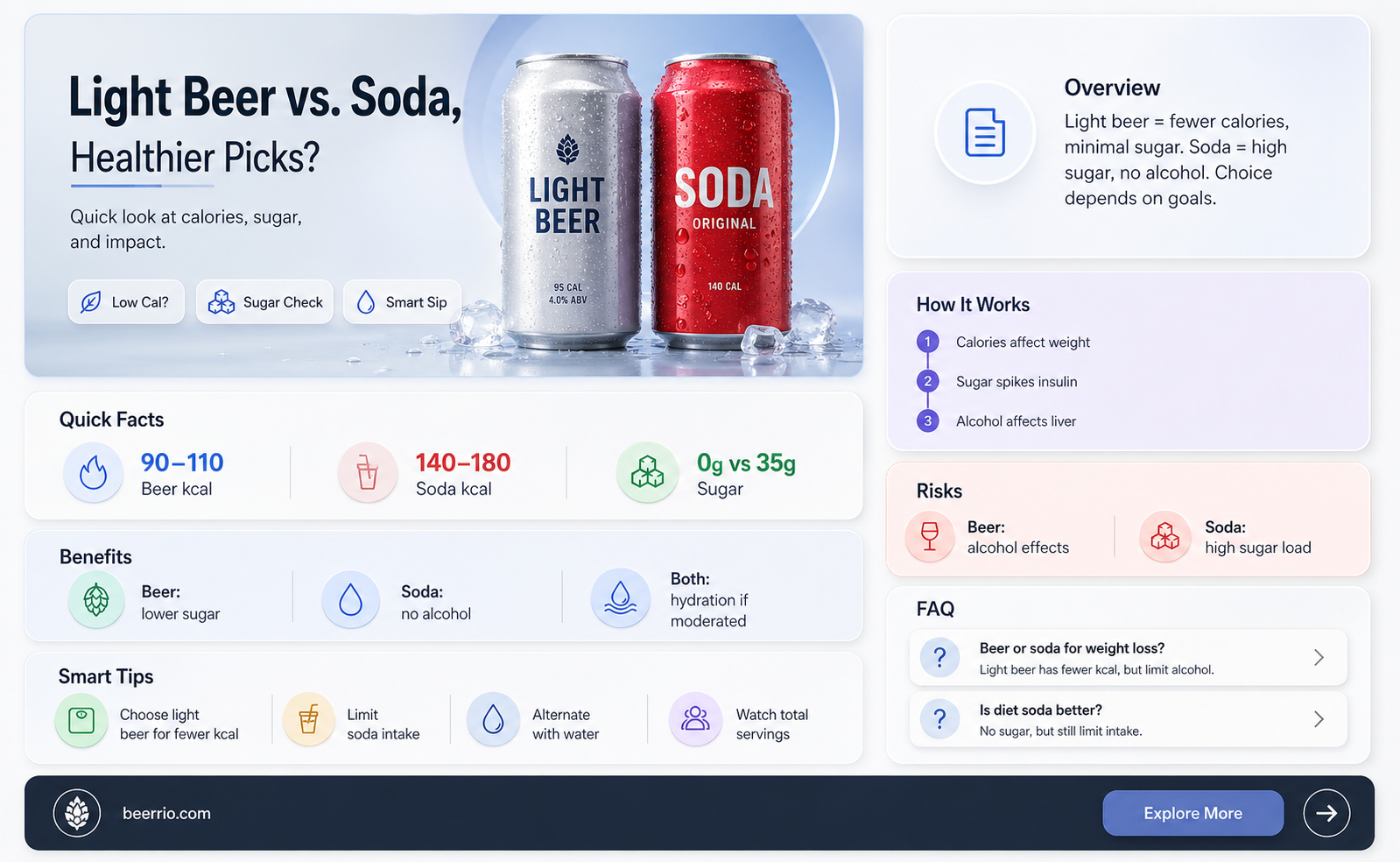
When comparing the health impacts of light beer versus soda, it's essential to consider several factors. Light beer typically contains fewer calories than regular beer due to its lower alcohol content and reduced carbohydrate levels. On the other hand, soda is often high in sugar and calories, contributing to weight gain and other health issues when consumed excessively. However, light beer still contains some alcohol, which can have negative effects on health if not consumed in moderation. Additionally, both light beer and soda may contain additives and preservatives that could impact overall health. Therefore, while light beer may be a slightly healthier alternative to soda in terms of calorie content, it's crucial to consume both beverages responsibly and in moderation as part of a balanced diet.
Explore related products


What You'll Learn
- Caloric Comparison: Light beer vs. soda calorie content and implications for weight management
- Sugar Content: Analysis of sugar levels in light beer and soda, impact on blood sugar
- Nutrient Profile: Essential nutrients in light beer and soda, including vitamins and minerals
- Hydration Effects: How light beer and soda affect hydration levels, considering alcohol and caffeine
- Health Risks: Potential health risks associated with regular consumption of light beer and soda

Caloric Comparison: Light beer vs. soda calorie content and implications for weight management
A 12-ounce serving of light beer typically contains around 100-150 calories, depending on the brand and type. In comparison, a 12-ounce serving of soda can range from 100 to over 200 calories, with many popular brands falling in the higher end of that spectrum. This caloric difference can have significant implications for weight management. Consuming fewer calories overall is a key factor in weight loss and maintenance, and choosing light beer over soda can contribute to a reduced calorie intake.
However, it's important to consider the nutritional content of both beverages beyond just calories. Light beer is not a significant source of essential nutrients, and while it may contain some B vitamins and minerals like potassium and magnesium, these amounts are generally not substantial enough to impact overall health. Soda, on the other hand, is often high in sugar and can contribute to increased risk of type 2 diabetes, heart disease, and other health issues.
When it comes to weight management, the choice between light beer and soda should be made in the context of an individual's overall diet and lifestyle. For someone who is trying to lose weight or maintain a healthy weight, light beer may be a better choice due to its lower calorie content. However, it's crucial to remember that moderation is key, and excessive consumption of any alcoholic beverage can lead to weight gain and other health problems.
In conclusion, while light beer may be a lower-calorie option compared to soda, it's essential to consider the broader nutritional implications and individual health goals when making beverage choices. For those focused on weight management, light beer can be a part of a balanced diet when consumed in moderation, but it should not be seen as a health food or a replacement for more nutritious beverages like water, milk, or 100% fruit juice.
Explore related products




Sugar Content: Analysis of sugar levels in light beer and soda, impact on blood sugar
Analyzing the sugar content in light beer and soda reveals significant differences that impact blood sugar levels. Light beer typically contains minimal sugar, often less than 1 gram per serving, due to its brewing process which emphasizes lower carbohydrate content. In contrast, soda is known for its high sugar content, with many popular brands containing upwards of 30 grams of sugar per 12-ounce can. This disparity in sugar levels has direct implications for blood sugar management. Consuming soda can lead to rapid spikes in blood sugar due to its high glycemic index, potentially contributing to insulin resistance and increasing the risk of type 2 diabetes. On the other hand, the low sugar content in light beer means it has a negligible effect on blood sugar levels when consumed in moderation.
The impact of sugar on blood sugar levels is a critical factor to consider when comparing the health effects of light beer and soda. Chronic consumption of high-sugar beverages like soda has been linked to various health issues, including obesity, metabolic syndrome, and cardiovascular disease. In contrast, moderate consumption of light beer, which is low in sugar, has not been associated with these same risks. However, it is essential to note that while light beer may be a better choice in terms of sugar content, it still contains alcohol, which can have other health implications if not consumed responsibly.
When evaluating the healthiness of light beer versus soda, it is also important to consider other nutritional factors. Soda is often devoid of essential nutrients, providing only empty calories. Light beer, while not a significant source of vitamins or minerals, does contain some B vitamins and antioxidants derived from the brewing process. Additionally, the carbonation in both beverages can contribute to bloating and discomfort, but this effect is generally more pronounced with soda due to its higher sugar content and artificial sweeteners.
In conclusion, the analysis of sugar content in light beer and soda highlights a clear distinction in their impact on blood sugar levels. Light beer, with its minimal sugar content, poses a lower risk for blood sugar spikes and associated health issues compared to soda, which is high in sugar and can contribute to various metabolic and cardiovascular problems. However, it is crucial to consider the broader nutritional profile and potential health implications of both beverages when making informed dietary choices.
Explore related products


Nutrient Profile: Essential nutrients in light beer and soda, including vitamins and minerals
Light beer and soda both contain a variety of essential nutrients, but in different quantities and forms. While neither beverage is a significant source of vitamins A, C, or E, they do provide some B vitamins, particularly niacin (B3) and folate (B9). Light beer, for instance, contains small amounts of these B vitamins due to the brewing process, which involves yeast fermentation. Soda, on the other hand, may contain added B vitamins, especially in diet or fortified varieties.
In terms of minerals, both light beer and soda can contribute to your daily intake of certain elements. Light beer is a notable source of silicon, which is important for bone health, and also contains trace amounts of potassium, magnesium, and phosphorus. Soda, particularly cola, can provide small amounts of potassium and calcium, but is generally lower in these minerals compared to light beer. However, it's important to note that the mineral content can vary widely depending on the specific type and brand of soda.
One key difference between light beer and soda is their calorie content. Light beer typically contains around 100-150 calories per 12-ounce serving, while soda can range from 100 to over 200 calories per 12-ounce serving, depending on whether it's regular or diet. This calorie difference can be significant for those watching their weight or managing their overall caloric intake.
Another consideration is the presence of antioxidants. Light beer contains a variety of antioxidants, including flavonoids and polyphenols, which are derived from the hops and barley used in the brewing process. These antioxidants can help protect against cellular damage and may contribute to some of the potential health benefits associated with moderate beer consumption. Soda, on the other hand, generally does not contain significant amounts of antioxidants, unless it's a fruit-flavored variety that includes real fruit juice.
When comparing the nutrient profiles of light beer and soda, it's clear that while both beverages can contribute to your daily intake of certain essential nutrients, they do so in different ways and to varying degrees. Light beer may offer some advantages in terms of mineral content and antioxidants, while soda can be a source of added B vitamins in some cases. Ultimately, the choice between the two will depend on individual preferences, dietary needs, and overall consumption patterns.
Explore related products


Hydration Effects: How light beer and soda affect hydration levels, considering alcohol and caffeine
The impact of light beer and soda on hydration levels is a critical aspect to consider when comparing their health effects. Both beverages contain substances that can influence the body's fluid balance. Alcohol, present in light beer, is a diuretic, which means it increases urine production and can lead to dehydration if consumed in excess. On the other hand, soda contains caffeine, which also has diuretic properties, albeit to a lesser extent than alcohol.
When evaluating the hydration effects, it's essential to consider the typical serving sizes of these beverages. A standard serving of light beer is usually around 12 ounces, while a can of soda is often 12 ounces as well. However, the alcohol content in light beer varies, typically ranging from 4% to 6% ABV, whereas the caffeine content in soda can range from 25 to 60 milligrams per 12-ounce serving.
Research suggests that moderate alcohol consumption, defined as up to one drink per day for women and up to two drinks per day for men, may not significantly impact hydration levels. However, exceeding these limits can lead to dehydration. In contrast, the diuretic effects of caffeine are generally more pronounced, and even moderate caffeine intake can increase urine output and potentially contribute to dehydration.
It's also important to note that individual factors, such as age, gender, and overall health, can influence how these beverages affect hydration levels. For example, older adults may be more susceptible to dehydration due to decreased thirst sensation and kidney function. Additionally, people with certain medical conditions, such as diabetes or heart disease, may need to limit their intake of both alcohol and caffeine to maintain proper hydration.
In conclusion, while both light beer and soda can impact hydration levels due to their diuretic properties, the effects are generally more pronounced with alcohol consumption. Moderate intake of either beverage may not significantly affect hydration, but it's crucial to consider individual factors and overall consumption patterns when evaluating their health impacts.
Explore related products



Health Risks: Potential health risks associated with regular consumption of light beer and soda
Regular consumption of light beer and soda poses several health risks, primarily due to their high sugar content and potential additives. Light beer, despite having fewer calories than regular beer, still contains carbohydrates and sugars that can contribute to weight gain and insulin resistance over time. Additionally, the brewing process may involve the use of adjuncts like corn and rice, which can increase the glycemic index of the beer, leading to rapid spikes in blood sugar levels.
Soda, on the other hand, is notorious for its high sugar content, which can lead to a myriad of health issues including obesity, type 2 diabetes, and tooth decay. Many sodas also contain phosphoric acid, which can interfere with calcium absorption and contribute to osteoporosis. Furthermore, the caramel coloring used in some sodas has been linked to an increased risk of cancer due to the presence of advanced glycation end-products (AGEs).
Both light beer and soda can also contribute to dehydration due to their diuretic effects. Alcohol in light beer can inhibit the release of antidiuretic hormones, leading to increased urine production and potential dehydration. Similarly, the caffeine and sugar in soda can have a diuretic effect, causing the body to lose fluids and electrolytes.
In terms of liver health, regular consumption of light beer can lead to fatty liver disease, especially when combined with a high-fat diet. The liver is responsible for metabolizing alcohol, and excessive consumption can cause damage to liver cells and lead to inflammation. While soda does not contain alcohol, its high sugar content can also contribute to fatty liver disease by causing insulin resistance and increasing the risk of metabolic syndrome.
To mitigate these health risks, it is recommended to consume light beer and soda in moderation, if at all. Healthier alternatives include water, unsweetened tea, and low-sugar beverages. Additionally, maintaining a balanced diet and engaging in regular physical activity can help offset the potential negative effects of consuming these beverages.
Frequently asked questions
Comparing the health impacts of light beer and soda involves looking at various factors such as calorie content, sugar levels, and potential nutrients. Light beer typically contains fewer calories and less sugar than soda, which can make it a slightly healthier option in moderation. However, both beverages should be consumed responsibly as part of a balanced diet.
Light beer generally has fewer calories and less sugar compared to soda. A 12-ounce serving of light beer might contain around 100-150 calories and minimal sugar, whereas a similar serving of soda can have 150-200 calories and significantly more sugar. Additionally, light beer may contain small amounts of certain nutrients like B vitamins and minerals, but these should not be relied upon as a primary source of nutrition.
The alcohol content in light beer is typically low, around 4-5% ABV, but it still needs to be considered when comparing its health impacts to soda. Alcohol, even in small amounts, can have various effects on health, including potential risks to liver function and increased calorie intake. While moderate consumption of alcohol might have some health benefits, such as improved heart health, it is essential to balance these potential benefits against the risks.
Yes, there are situations where soda might be a better choice than light beer. For individuals who are underage, pregnant, operating machinery, or taking certain medications, avoiding alcohol altogether is crucial. Additionally, those who are watching their calorie intake or managing conditions like diabetes might prefer the lower sugar content of some sodas. It's also important to consider personal preferences and cultural factors when choosing between these beverages.
Healthier alternatives to both light beer and soda include water, herbal teas, and low-sugar fruit juices. Water is the best choice for hydration and has no calories or sugar. Herbal teas can offer various health benefits and flavors without added sugar. Low-sugar fruit juices, made from real fruit with no added sugars, can provide essential vitamins and minerals while being lower in calories than both light beer and soda.