Harmony Chandler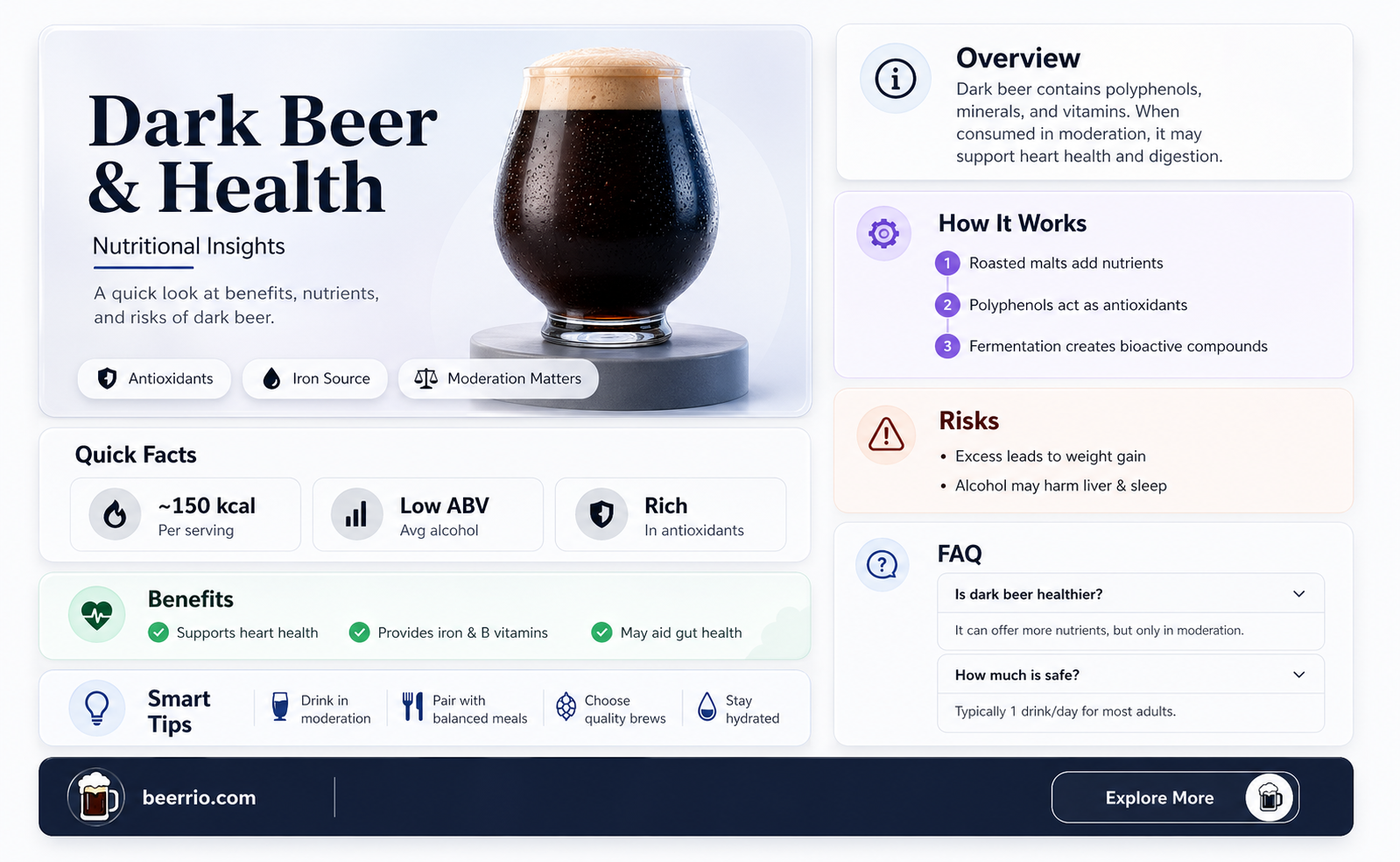
Dark beer, often characterized by its rich, roasted flavors and deep hues, has been a subject of interest for its potential health benefits. While it's important to note that excessive alcohol consumption can have detrimental effects on health, moderate intake of dark beer may offer some advantages. Research suggests that dark beers, such as stouts and porters, contain higher levels of antioxidants compared to lighter beers. These antioxidants, derived from the roasting process of the barley, may help in reducing inflammation and protecting against certain diseases. Additionally, some studies indicate that dark beer might have a lower glycemic index, which could be beneficial for blood sugar control. However, it's crucial to balance these potential benefits with the overall impact of alcohol on health and to consume dark beer in moderation as part of a balanced diet.
Explore related products


What You'll Learn
- Nutrient Content: Dark beers often contain more vitamins, minerals, and antioxidants than lighter beers
- Calorie Comparison: Despite their rich flavor, dark beers can have similar or fewer calories than lighter varieties
- Heart Health: Some studies suggest moderate consumption of dark beer may benefit heart health due to its antioxidant properties
- Digestive Benefits: The roasted malts in dark beer may aid digestion and provide a soothing effect on the stomach
- Potential Downsides: While dark beer has health benefits, it's still an alcoholic beverage and should be consumed in moderation

Nutrient Content: Dark beers often contain more vitamins, minerals, and antioxidants than lighter beers
Dark beers, such as stouts and porters, are brewed using roasted malts, which contribute to their rich flavor and deep color. These malts undergo a process called roasting, which increases the concentration of certain nutrients. For instance, dark beers often contain higher levels of B vitamins, particularly niacin (B3) and riboflavin (B2), which are essential for energy metabolism and maintaining healthy skin and nerves. Additionally, the roasting process enhances the presence of minerals like magnesium and potassium, which play crucial roles in muscle function and cardiovascular health.
One of the most significant nutritional benefits of dark beers is their antioxidant content. Antioxidants are compounds that help protect cells from damage caused by free radicals, which are unstable molecules that can contribute to chronic diseases and aging. Dark beers are rich in a type of antioxidant called polyphenols, which are derived from the roasted malts. These polyphenols have been shown to have anti-inflammatory properties and may help reduce the risk of heart disease.
Compared to lighter beers, which are typically brewed with paler malts and have a lower nutrient density, dark beers offer a more substantial nutritional profile. However, it's essential to note that the calorie and alcohol content of dark beers can also be higher, so moderation is key when considering their health benefits.
In summary, the nutrient content of dark beers, including their higher levels of B vitamins, minerals, and antioxidants, can contribute to a healthier diet when consumed in moderation. These nutrients play vital roles in various bodily functions and may offer protective effects against certain diseases.
Exploring the Nutritional Benefits of Beer Bread: A Healthy Twist?
You may want to see also
Explore related products


Calorie Comparison: Despite their rich flavor, dark beers can have similar or fewer calories than lighter varieties
Dark beers, often perceived as heavier and more caloric due to their rich flavors and deep colors, can surprisingly have similar or even fewer calories than their lighter counterparts. This misconception likely stems from the association of darker colors with higher alcohol content and richer ingredients, which are often linked to increased caloric intake. However, the brewing process for dark beers can be more efficient in terms of calorie production, and the use of certain ingredients can result in a lower overall calorie count.
One of the key factors in the calorie content of beer is the type and amount of malt used. Dark beers typically use roasted malts, which, despite their intense flavor, can contribute fewer fermentable sugars compared to the lighter malts used in pale beers. Additionally, the roasting process can reduce the overall sugar content, leading to a lower calorie final product. For instance, a typical stout or porter might use a combination of roasted barley, chocolate malt, and coffee malt, all of which impart deep flavors without significantly increasing the calorie count.
Another important consideration is the alcohol by volume (ABV) percentage of the beer. While it's true that some dark beers have higher ABVs, which would contribute to a higher calorie content, many dark beers have ABVs that are comparable to or even lower than those of lighter beers. For example, a dark lager might have an ABV of 4-5%, which is similar to that of a pale lager. Since alcohol contributes a significant portion of the calories in beer (approximately 7 calories per gram), a lower ABV can result in a lower calorie count, even if the beer is darker in color.
Furthermore, the brewing techniques used for dark beers can also play a role in their calorie content. Certain brewing methods, such as cold crashing or fining, can help to reduce the residual sugars in the beer, leading to a drier finish and fewer calories. Additionally, the use of adjuncts like corn or rice in the brewing process can help to dilute the wort and reduce the overall calorie content without significantly affecting the flavor profile.
In conclusion, while it's important to note that calorie content can vary widely among different types of dark beers, it's clear that the assumption that darker beers are automatically more caloric is not always accurate. By considering factors such as malt type, ABV, and brewing techniques, it's possible to find dark beers that offer rich, complex flavors without a corresponding increase in calories. This makes dark beers a viable option for those who are health-conscious but still want to enjoy the depth and character that these beers have to offer.
Ranch Water vs. Beer: Unveiling the Healthier Choice
You may want to see also
Explore related products


Heart Health: Some studies suggest moderate consumption of dark beer may benefit heart health due to its antioxidant properties
Several studies have indicated that moderate consumption of dark beer may have positive effects on heart health. This potential benefit is largely attributed to the presence of antioxidants in dark beer, which can help reduce inflammation and improve cardiovascular function. Antioxidants, such as flavonoids and polyphenols, are compounds that neutralize free radicals in the body, thereby protecting cells from damage. Dark beer, particularly stouts and porters, contains higher levels of these antioxidants compared to lighter beers.
One study published in the journal "Circulation" found that moderate beer consumption, defined as up to one drink per day for women and up to two drinks per day for men, was associated with a reduced risk of heart disease. The researchers noted that the antioxidants in beer may help improve the function of the endothelium, the inner lining of blood vessels, which is crucial for maintaining healthy blood flow and preventing cardiovascular events.
Another study conducted by the University of Scranton in Pennsylvania compared the antioxidant content of various types of beer. The results showed that dark beers had significantly higher levels of antioxidants than light beers. The researchers suggested that the roasting process used to make dark beers may enhance the formation of these beneficial compounds.
However, it is important to note that these potential heart health benefits are only associated with moderate consumption of dark beer. Excessive alcohol intake can have detrimental effects on cardiovascular health, including increased blood pressure, heart rate, and the risk of heart disease. Therefore, it is crucial to consume alcohol responsibly and within recommended guidelines.
In conclusion, while moderate consumption of dark beer may offer some heart health benefits due to its antioxidant properties, it is essential to balance these potential advantages with the risks associated with excessive alcohol consumption. As with any dietary choice, moderation and overall lifestyle habits are key factors in maintaining optimal heart health.
Explore related products


Digestive Benefits: The roasted malts in dark beer may aid digestion and provide a soothing effect on the stomach
The digestive benefits of dark beer are largely attributed to the presence of roasted malts. These malts contain a variety of enzymes and compounds that can aid in the digestive process. For instance, the enzyme amylase, which is abundant in roasted malts, helps break down starches into simpler sugars, making them easier to digest. Additionally, the antioxidants present in dark beer can help reduce inflammation in the digestive tract, providing a soothing effect on the stomach.
One of the key compounds in roasted malts is called acrylamide, which has been shown to have prebiotic effects. Prebiotics are substances that promote the growth of beneficial bacteria in the gut, which can improve overall digestive health. Furthermore, the fiber content in dark beer, although not as high as in some other foods, can still contribute to a healthy digestive system by adding bulk to stools and promoting regular bowel movements.
It's important to note that while dark beer may offer some digestive benefits, moderation is key. Excessive alcohol consumption can lead to a range of digestive issues, including gastritis, ulcers, and liver damage. Therefore, it's recommended to enjoy dark beer in moderation as part of a balanced diet.
In conclusion, the roasted malts in dark beer contain several compounds that can aid digestion and provide a soothing effect on the stomach. These benefits include the presence of digestive enzymes, antioxidants, prebiotics, and fiber. However, it's crucial to consume dark beer responsibly to avoid potential negative effects on digestive health.
Explore related products



Potential Downsides: While dark beer has health benefits, it's still an alcoholic beverage and should be consumed in moderation
Despite the health benefits associated with dark beer, it is crucial to remember that it is still an alcoholic beverage and should be consumed responsibly. One potential downside is the risk of overconsumption, which can lead to a range of negative health effects, including liver damage, weight gain, and increased risk of certain cancers. It is essential to adhere to recommended alcohol intake guidelines, which vary depending on factors such as age, gender, and overall health.
Another consideration is the calorie content of dark beer. While it may offer more nutrients than lighter beers, it also tends to be higher in calories. For individuals watching their weight or managing conditions such as diabetes, this could be a significant factor to take into account. Additionally, dark beer's rich flavor profile may make it more appealing to drink in larger quantities, further increasing the risk of excessive calorie intake.
It is also important to note that the potential health benefits of dark beer are not a license to indulge in binge drinking or other harmful behaviors. Moderation is key, and individuals should be mindful of their overall lifestyle and health goals when deciding whether to incorporate dark beer into their diet. Furthermore, those with certain medical conditions or who are taking medications should consult with their healthcare provider before consuming alcohol, as it may interact with their treatment plan.
In conclusion, while dark beer can offer some health benefits when consumed in moderation, it is essential to be aware of the potential downsides and to drink responsibly. By balancing the enjoyment of dark beer with a mindful approach to consumption, individuals can reap the benefits while minimizing the risks.
Frequently asked questions
The health benefits of dark beer compared to light beer are often debated. Dark beers, such as stouts and porters, contain more antioxidants and may have a higher nutritional value due to the use of darker malts. However, they also tend to be higher in calories and alcohol content. Light beers, on the other hand, are typically lower in calories and alcohol but may have fewer beneficial nutrients. Moderation is key, and the healthiest choice depends on individual dietary needs and preferences.
Dark beer contains a variety of antioxidants, including flavonoids and polyphenols, which can help protect the body against oxidative stress and inflammation. Some studies suggest that moderate consumption of dark beer may improve heart health by reducing the risk of cardiovascular diseases. Additionally, the darker malts used in brewing dark beers may contribute to a higher fiber content, which can aid in digestion. However, it's important to note that these benefits are associated with moderate consumption, and excessive drinking can negate any potential health advantages.
Yes, there are some drawbacks to consider when drinking dark beer. Dark beers tend to be higher in calories and alcohol content compared to lighter beers, which can contribute to weight gain and other health issues if consumed in excess. Additionally, the higher alcohol content can lead to increased risks of alcohol-related problems, such as liver damage, impaired judgment, and addiction. It's crucial to drink responsibly and be aware of the potential negative effects of consuming dark beer.
The brewing process plays a significant role in determining the nutritional content of dark beer. The use of darker malts, such as roasted barley and chocolate malt, contributes to the higher antioxidant content and may increase the fiber content of the beer. However, these malts also impart a richer flavor and higher calorie count. The brewing method, including the temperature and duration of fermentation, can also impact the final nutritional profile of the beer. For example, longer fermentation times may result in a lower sugar content but could also lead to a higher alcohol content. Overall, the brewing process is a complex interplay of factors that influence the health benefits and drawbacks of dark beer.


![[Pack of 12] CLAUSTHALER ISO 0.0% Non Alcholic Beer, Crafted & Canned in Germany, Vegan](https://m.media-amazon.com/images/I/91P6VjmzjYL._AC_UL320_.jpg)