Beatrix Montes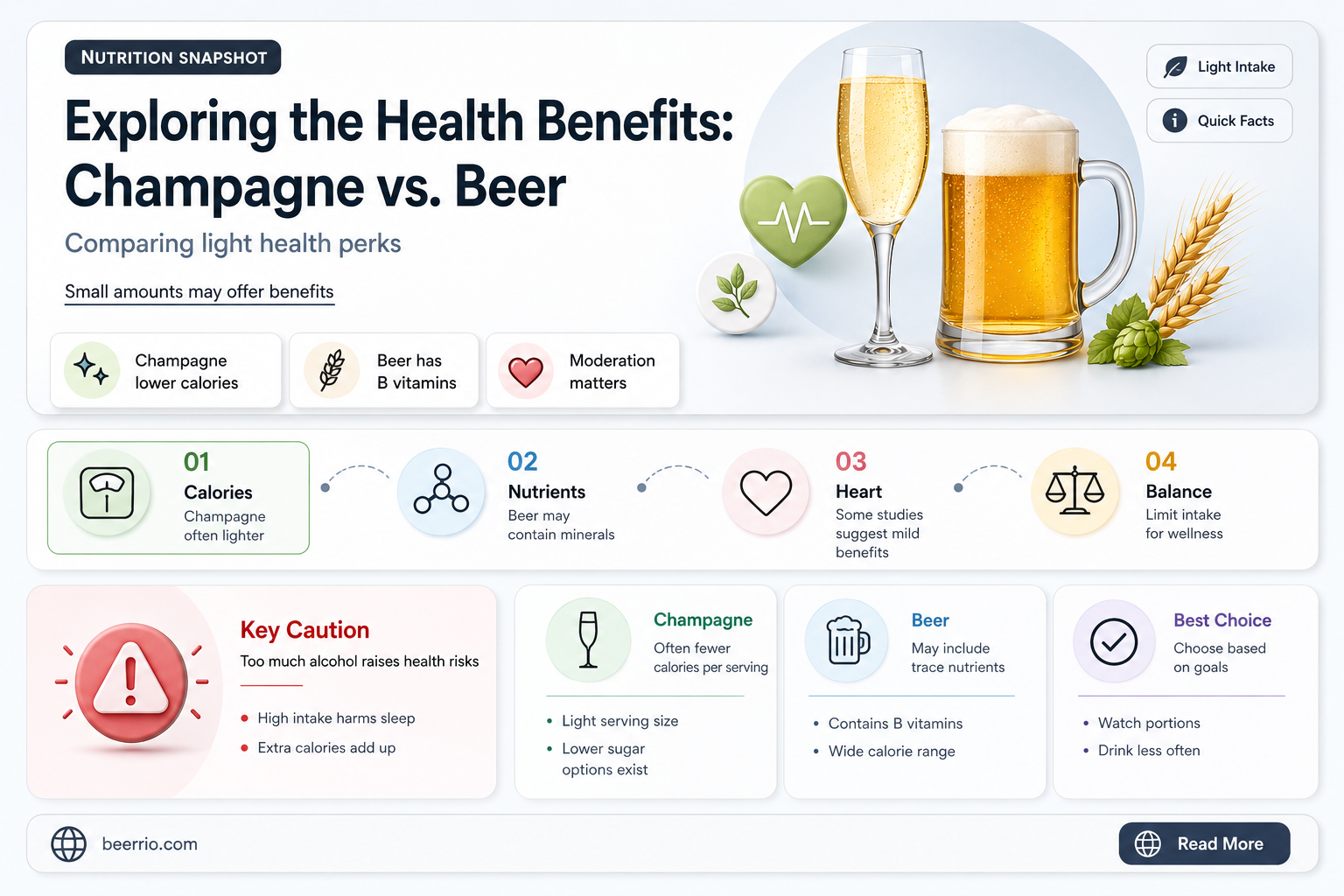
Champagne and beer are two popular alcoholic beverages often enjoyed during celebrations and social gatherings. While both contain alcohol, they differ significantly in their ingredients, production methods, and nutritional content. Champagne, a sparkling wine, is made primarily from grapes and undergoes a secondary fermentation process that gives it its characteristic bubbles. Beer, on the other hand, is brewed from grains such as barley, wheat, or rice, and flavored with hops. When comparing their health impacts, it's essential to consider factors such as calorie content, sugar levels, and potential antioxidants. Some studies suggest that moderate consumption of champagne may offer certain health benefits due to its antioxidant properties, while beer is often associated with higher calorie and carbohydrate content. However, the overall healthiness of either beverage depends on individual consumption habits and overall lifestyle choices.
| Characteristics | Values |
|---|---|
| Calories per serving | Champagne: ~90-120 calories, Beer: ~100-150 calories |
| Carbohydrates per serving | Champagne: ~2-3 grams, Beer: ~10-15 grams |
| Protein per serving | Champagne: ~0.5-1 gram, Beer: ~0.5-1 gram |
| Fat per serving | Champagne: ~0.1-0.2 grams, Beer: ~0.1-0.2 grams |
| Sodium per serving | Champagne: ~10-20 milligrams, Beer: ~5-10 milligrams |
| Sugar content | Champagne: ~0.5-1 gram, Beer: ~0.5-1 gram |
| Alcohol by volume (ABV) | Champagne: ~11-12%, Beer: ~4-6% |
| Antioxidants | Champagne: Contains antioxidants from grapes, Beer: Contains antioxidants from hops and barley |
| Potential health benefits | Champagne: May improve heart health due to antioxidants, Beer: May have anti-inflammatory properties |
| Potential health risks | Champagne: High alcohol content may lead to liver damage, Beer: High calorie and carbohydrate content may contribute to weight gain |
| Serving size | Champagne: Typically 4-6 ounces, Beer: Typically 12 ounces |
| Frequency of consumption | Champagne: Often consumed on special occasions, Beer: More commonly consumed regularly |
| Social perception | Champagne: Associated with luxury and celebrations, Beer: Associated with casual gatherings and relaxation |
| Cost | Champagne: Generally more expensive than beer |
| Availability | Champagne: Widely available in stores and restaurants, Beer: Widely available in stores, restaurants, and bars |
| Cultural significance | Champagne: Strong cultural ties to celebrations and luxury, Beer: Strong cultural ties to social gatherings and sports events |
Explore related products


What You'll Learn
- Caloric Content Comparison: Champagne generally has more calories than beer due to its sugar content
- Alcohol by Volume (ABV): Champagne typically has a higher ABV than most beers, affecting its health impact
- Nutrient Presence: Both contain minimal nutrients, but champagne may have slightly more due to its grape origin
- Health Benefits: Moderate consumption of champagne may offer some heart benefits, while beer has been linked to reduced risk of certain diseases
- Hangover Severity: The higher sugar content in champagne can lead to worse hangovers compared to beer

Caloric Content Comparison: Champagne generally has more calories than beer due to its sugar content
Champagne and beer, two popular alcoholic beverages, often find themselves at the center of discussions regarding health and nutrition. While both drinks have their own set of health implications, one key factor that frequently surfaces in these comparisons is caloric content. Champagne, renowned for its celebratory status and luxurious appeal, typically contains more calories than beer, primarily due to its higher sugar content.
To delve deeper into this comparison, it's essential to understand the caloric composition of each beverage. Champagne, a sparkling wine, undergoes a secondary fermentation process in the bottle, which results in the production of carbon dioxide and alcohol. This process often involves the addition of sugar, known as the "dosage," which can vary depending on the type of champagne being produced. The added sugar contributes to the final caloric content of the champagne, making it generally higher in calories compared to beer.
On the other hand, beer is brewed from grains, primarily barley, and fermented using yeast. The brewing process involves the conversion of starches in the grains into fermentable sugars, which are then transformed into alcohol and carbon dioxide by the yeast. While beer does contain some residual sugars, its caloric content is typically lower than that of champagne due to the absence of added sugars in most beer varieties.
When comparing the caloric content of champagne and beer, it's crucial to consider the serving sizes and alcohol by volume (ABV) percentages of each beverage. A standard serving of champagne (approximately 4 ounces) may contain anywhere from 90 to 120 calories, depending on the type and sweetness level. In contrast, a standard serving of beer (approximately 12 ounces) may contain around 100 to 150 calories, with lighter beers generally having fewer calories than darker, more robust varieties.
In conclusion, while champagne and beer both have their own unique health considerations, the caloric content comparison reveals that champagne generally has more calories than beer due to its sugar content. This information can be valuable for individuals who are mindful of their caloric intake and are looking to make informed choices about their beverage consumption. However, it's important to note that moderation and overall lifestyle habits play a significant role in determining the health impact of any alcoholic beverage.
Exploring the Health Benefits: Mead vs. Beer Comparison
You may want to see also
Explore related products


Alcohol by Volume (ABV): Champagne typically has a higher ABV than most beers, affecting its health impact
Champagne and beer are both popular alcoholic beverages, but they differ significantly in their alcohol by volume (ABV) content. Champagne typically has a higher ABV than most beers, which can have a notable impact on its health effects. Understanding the ABV of these drinks is crucial for making informed decisions about consumption and its potential health implications.
The ABV in champagne generally ranges from 11% to 13%, although some varieties can be higher. This higher alcohol content means that consuming champagne can lead to a quicker onset of intoxication compared to beer, which usually has an ABV ranging from 4% to 6%. The rapid absorption of alcohol from champagne can result in a higher peak blood alcohol concentration, increasing the risk of short-term health effects such as impaired judgment, coordination issues, and potential accidents.
Moreover, the higher ABV in champagne can contribute to a greater calorie intake per serving. Alcohol contains approximately 7 calories per gram, and with champagne's higher alcohol content, it can be a more calorie-dense choice compared to beer. This can be a consideration for individuals who are mindful of their caloric intake or those who are managing their weight.
In terms of long-term health effects, moderate consumption of both champagne and beer can have potential benefits, such as reduced risk of heart disease. However, excessive consumption of high-ABV beverages like champagne can lead to increased risks of liver damage, addiction, and other alcohol-related health issues. It is essential to consume alcohol in moderation, following guidelines set by health organizations, which typically recommend no more than one drink per day for women and up to two drinks per day for men.
In conclusion, while champagne can be enjoyed as part of a balanced lifestyle, its higher ABV compared to beer means that it should be consumed with caution. Being aware of the alcohol content and its potential health impacts can help individuals make responsible choices about their beverage consumption.
Ranch Water vs. Beer: Unveiling the Healthier Choice
You may want to see also
Explore related products


Nutrient Presence: Both contain minimal nutrients, but champagne may have slightly more due to its grape origin
Champagne and beer, both popular alcoholic beverages, are often compared in terms of their health benefits. While neither is considered a health drink, the nutrient content of each can influence their relative healthiness. Champagne, made from grapes, contains slightly more nutrients than beer, which is typically brewed from grains such as barley or wheat.
The primary nutrients found in champagne include vitamins C and K, potassium, and magnesium. These nutrients are present in small amounts but contribute to the overall nutritional profile of the beverage. Beer, on the other hand, contains minimal nutrients, with the exception of some B vitamins, which are added during the brewing process. However, the amount of these vitamins is generally not significant enough to impact one's daily nutritional intake.
It's important to note that the nutrient content of both beverages is overshadowed by their alcohol content. Alcohol is a toxin that the body must metabolize, and excessive consumption can lead to a range of health problems, including liver damage, increased risk of certain cancers, and cardiovascular issues. Therefore, while champagne may have slightly more nutrients than beer, this does not necessarily make it a healthier choice.
In terms of calorie content, beer typically has more calories than champagne due to its higher carbohydrate content. A standard serving of beer (12 ounces) can contain anywhere from 100 to 200 calories, while a standard serving of champagne (4 ounces) usually contains around 80-100 calories. However, the calorie content can vary depending on the specific type and brand of each beverage.
Ultimately, when it comes to choosing between champagne and beer, the decision should not be based solely on nutrient content. Factors such as personal taste, alcohol tolerance, and overall lifestyle should also be considered. It's always important to consume alcohol in moderation and to prioritize a balanced diet and regular exercise for optimal health.
Exploring the Health Benefits: Hard Cider vs. Beer Comparison
You may want to see also
Explore related products



Health Benefits: Moderate consumption of champagne may offer some heart benefits, while beer has been linked to reduced risk of certain diseases
Moderate consumption of champagne may offer some heart benefits, while beer has been linked to reduced risk of certain diseases. Champagne, often associated with celebrations and luxury, contains antioxidants like polyphenols, which have been shown to improve heart health by reducing inflammation and improving blood vessel function. A study published in the British Medical Journal found that moderate champagne consumption could lower the risk of heart disease and stroke.
On the other hand, beer, a popular beverage worldwide, has been linked to a reduced risk of certain diseases, including type 2 diabetes and some forms of cancer. Beer contains compounds called phytoestrogens, which may help protect against these diseases. Additionally, moderate beer consumption has been associated with a lower risk of kidney stones and improved bone density.
It's important to note that these health benefits are associated with moderate consumption of both champagne and beer. Moderate consumption is generally defined as one drink per day for women and up to two drinks per day for men. Excessive consumption of any alcoholic beverage can lead to numerous health problems, including liver disease, addiction, and increased risk of accidents and injuries.
In conclusion, while both champagne and beer have been linked to certain health benefits, it's crucial to consume them in moderation to reap these potential advantages. It's also important to consider individual health factors and consult with a healthcare professional before making any significant changes to your diet or lifestyle.
Exploring Healthier Alternatives: Twisted Tea vs. Beer
You may want to see also
Explore related products


Hangover Severity: The higher sugar content in champagne can lead to worse hangovers compared to beer
The severity of a hangover can be significantly influenced by the type of alcoholic beverage consumed. Champagne, known for its higher sugar content compared to beer, can lead to more severe hangovers. This is primarily due to the fact that sugar can accelerate the absorption of alcohol into the bloodstream, leading to a quicker onset of intoxication and, subsequently, a more intense hangover.
When comparing the hangover effects of champagne and beer, it's essential to consider the sugar content. Champagne typically contains more residual sugar than beer, which can contribute to the intensity of the hangover symptoms. Beer, on the other hand, tends to have lower sugar content, which may result in a less severe hangover for some individuals.
It's also important to note that individual tolerance and metabolism play a significant role in how one experiences a hangover. Factors such as age, gender, overall health, and the amount of alcohol consumed can all impact the severity of hangover symptoms. Therefore, while the higher sugar content in champagne may generally lead to worse hangovers compared to beer, individual experiences can vary widely.
To mitigate the effects of a hangover, it's advisable to consume alcohol in moderation and to stay hydrated by drinking plenty of water. Additionally, eating a balanced meal before drinking can help slow the absorption of alcohol into the bloodstream, potentially reducing the severity of the hangover.
In conclusion, the higher sugar content in champagne can indeed lead to worse hangovers compared to beer. However, individual factors and responsible drinking habits can significantly influence the overall experience. By understanding these factors and taking appropriate precautions, one can enjoy alcoholic beverages more responsibly and with fewer negative consequences.
Soda vs. Beer: Unraveling the Healthier Choice Debate
You may want to see also
Frequently asked questions
Champagne and beer have different nutritional profiles, and the health impact of each depends on various factors such as consumption frequency and amount. Champagne is typically lower in calories and carbohydrates compared to beer but may contain more sugar. Beer, on the other hand, can have more calories and carbs but might offer some health benefits when consumed in moderation, such as improved heart health due to certain antioxidants. It's essential to consider overall dietary habits and health goals when comparing the two.
Champagne generally contains fewer calories and carbohydrates than beer. A standard glass of champagne (about 4 ounces) typically has around 90-100 calories and 2-3 grams of carbohydrates. In contrast, a standard beer (about 12 ounces) can have approximately 150-200 calories and 10-15 grams of carbohydrates. However, champagne may contain more sugar than beer, which can impact blood sugar levels and overall health if consumed excessively.
Both champagne and beer can be part of a healthy diet when consumed in moderation. The key is to balance alcohol intake with a nutritious diet and regular physical activity. Moderate alcohol consumption is generally defined as up to one drink per day for women and up to two drinks per day for men. It's important to note that individual health conditions and medications can affect how alcohol is metabolized, so it's always best to consult with a healthcare professional regarding personal alcohol consumption guidelines.
Yes, there are potential health benefits associated with moderate consumption of both champagne and beer. Champagne, like red wine, contains antioxidants called polyphenols, which may help reduce inflammation and improve heart health. Beer, particularly darker beers like stouts and porters, also contains antioxidants and may offer benefits such as improved heart health and reduced risk of certain diseases when consumed in moderation. However, it's crucial to weigh these potential benefits against the risks associated with alcohol consumption, such as liver damage, increased cancer risk, and addiction.
Champagne and beer are produced using different methods and ingredients. Champagne is a sparkling wine made from grapes, primarily Chardonnay, Pinot Noir, and Pinot Meunier. The production process involves a secondary fermentation in the bottle, which creates the characteristic bubbles and complex flavors. Beer, on the other hand, is made from grains such as barley, wheat, or rice, along with hops and yeast. The brewing process involves malting, mashing, boiling, fermenting, conditioning, and packaging. These distinct production methods result in the unique taste profiles and characteristics of champagne and beer.