Lucy Palmer
In the United Kingdom, beer is traditionally served in pints, and a keg is a common container used for storing and dispensing beer in pubs and bars. Understanding how many pints are in a keg is essential for both consumers and establishments to manage their beer supply effectively. A standard keg size in the UK typically holds 30 litres of beer, which is equivalent to approximately 52.8 pints. This conversion is based on the UK pint measurement, which is slightly larger than the US pint. Knowing this information can help patrons estimate how much beer they might consume during a visit to a pub and assist publicans in planning their inventory and pricing strategies.
Explore related products


What You'll Learn
- Standard Keg Sizes in the UK: Overview of typical keg volumes used for beer distribution in the UK market
- Pint Conversion Factors: Explanation of how to convert keg volumes to pints, including any relevant mathematical formulas
- Popular Beer Types and Keg Sizes: Discussion on common beer styles and their usual keg sizes, affecting pint yield
- Factors Influencing Keg Yield: Analysis of factors like foam, temperature, and pouring technique that can impact the number of pints per keg
- Regulatory and Industry Standards: Information on any UK-specific regulations or industry standards governing keg sizes and beer measurements

Standard Keg Sizes in the UK: Overview of typical keg volumes used for beer distribution in the UK market
In the UK, beer is typically distributed in kegs of varying sizes to accommodate different venues and consumption rates. The most common keg sizes range from 20 to 50 liters, with each size serving a specific purpose in the market. For instance, smaller kegs like the 20-liter variant are often used in pubs and bars with lower beer turnover, while larger kegs such as the 50-liter are preferred by establishments with higher demand.
One of the standard keg sizes in the UK is the 30-liter keg, which holds approximately 52.8 pints of beer. This size is popular among medium-sized pubs and restaurants as it provides a good balance between capacity and manageability. Another common size is the 40-liter keg, which contains around 70.4 pints and is suitable for larger venues or those with higher beer consumption rates.
The 50-liter keg, holding approximately 88 pints, is the largest standard size and is typically used by major pubs, bars, and restaurants with significant beer sales. These kegs are designed to be easily transportable and can be connected to a beer dispensing system for efficient service.
It's important to note that while these are the standard keg sizes, some breweries and distributors may offer non-standard sizes to cater to specific needs or promotional events. Additionally, the number of pints in a keg can vary slightly depending on the type of beer and its density, but the figures provided are generally accurate for most beers.
Understanding the different keg sizes available in the UK is crucial for venue owners and managers to ensure they are ordering the appropriate quantity of beer to meet their customers' demands without overstocking or running out. By selecting the right keg size, establishments can optimize their beer inventory and provide a better experience for their patrons.
Unlocking the Secrets of Beer Kegs: A Comprehensive Guide to Pints
You may want to see also
Explore related products


$79.99


Pint Conversion Factors: Explanation of how to convert keg volumes to pints, including any relevant mathematical formulas
To convert keg volumes to pints, it's essential to understand the standard measurements used in the brewing industry. In the UK, a pint is defined as 568 millilitres, while a keg can come in various sizes, commonly ranging from 20 to 50 litres. The conversion process involves simple multiplication, using the conversion factor of 1 litre equals 1.759 pints. For instance, a 20-litre keg would contain 20 x 1.759 = 35.18 pints, which can be rounded to approximately 35 pints for practical purposes.
When dealing with larger kegs, such as those used for commercial brewing, the calculations become more significant. A 50-litre keg, for example, would hold 50 x 1.759 = 87.95 pints. This precise measurement is crucial for inventory management, sales, and ensuring that customers receive the correct amount of beer. It's also worth noting that some breweries may use slightly different conversion factors based on their specific equipment and brewing processes, so it's always best to check with the manufacturer for the most accurate information.
In addition to the basic conversion formula, it's helpful to have a quick reference chart for common keg sizes and their corresponding pint volumes. This can save time and reduce the risk of errors when calculating large orders or managing stock. Below is a simple chart for some standard keg sizes:
| Keg Size (Litres) | Pints |
|-------------------|-------|
| 20 | 35 |
| 30 | 53 |
| 40 | 71 |
| 50 | 88 |
For those who prefer a more visual approach, there are also online tools and apps available that can perform these conversions quickly and easily. These tools often include additional features, such as the ability to convert between different units of measurement and to calculate the cost of beer based on volume and price per pint.
In conclusion, converting keg volumes to pints is a straightforward process that involves basic multiplication and an understanding of the standard measurements used in the brewing industry. By using the correct conversion factor and having access to reference materials, brewers and bar owners can ensure accurate measurements and efficient inventory management.
Unlocking the Mystery: How Many Pints Lurk in a 1/6 Keg of Beer?
You may want to see also
Explore related products
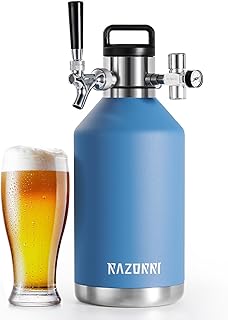


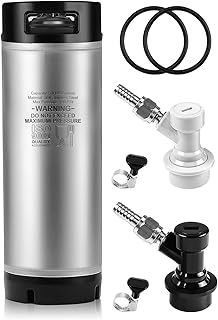

Popular Beer Types and Keg Sizes: Discussion on common beer styles and their usual keg sizes, affecting pint yield
In the United Kingdom, beer enthusiasts and publicans alike are familiar with the variety of beer styles available, each with its own unique characteristics and, often, specific serving sizes. One of the most common questions asked by those managing bars or planning events is how many pints a keg of beer will yield. This is particularly pertinent when considering the different keg sizes used for various beer types.
For instance, lagers and ales, which are among the most popular beer styles in the UK, typically come in standard keg sizes that can range from 30 to 50 liters. A 50-liter keg, when converted to pints, would yield approximately 88 pints of beer. However, this can vary depending on the specific gravity of the beer and the serving size, which in the UK is usually 568 milliliters per pint.
Another factor to consider is the type of beer and its brewing process. Beers with higher alcohol content, such as some IPAs (India Pale Ales) and stouts, may be served in smaller quantities due to their potency. These beers might come in smaller kegs, such as 20 or 30 liters, which would yield fewer pints compared to their lower-alcohol counterparts.
Moreover, the carbonation level of the beer can also affect the yield. Highly carbonated beers, like certain lagers, may lose more volume during the pouring process due to the release of carbon dioxide, resulting in slightly fewer pints per keg. Conversely, beers with lower carbonation, such as some ales, may retain more of their volume when poured.
Understanding these variables is crucial for bar owners and event planners who need to estimate the amount of beer required to serve their customers. By taking into account the beer style, keg size, and serving specifications, they can ensure that they have an adequate supply without overestimating or underestimating their needs.
Understanding Beer Measurements: How Many Ounces in a Quarter Keg?
You may want to see also
Explore related products


Factors Influencing Keg Yield: Analysis of factors like foam, temperature, and pouring technique that can impact the number of pints per keg
The yield of a beer keg, measured in pints, can be significantly influenced by several factors. One of the primary factors is the amount of foam generated during the pouring process. Foam, also known as head, is created when carbon dioxide is released from the beer as it is poured. This can reduce the volume of beer dispensed, thereby affecting the keg yield. To minimize foam, it is essential to ensure that the beer is poured smoothly and that the tap is functioning correctly to reduce agitation.
Temperature is another critical factor impacting keg yield. Beer expands as it warms, which means that a keg of beer at a higher temperature will yield fewer pints than the same keg at a lower temperature. This is because the volume of beer increases with temperature, leading to a smaller amount of beer being dispensed per pint. Therefore, maintaining the beer at the optimal serving temperature is crucial for maximizing yield.
Pouring technique also plays a vital role in determining the yield of a keg. A proper pouring technique involves tilting the glass at an angle and allowing the beer to flow down the side of the glass, which helps to reduce the amount of foam generated. Additionally, it is important to pour the beer in a single, smooth motion rather than in short, jerky movements, which can also contribute to foam formation.
Other factors that can influence keg yield include the type of beer, the carbonation level, and the condition of the keg and dispensing system. For example, beers with higher carbonation levels tend to produce more foam, which can reduce yield. Similarly, a keg that is not properly maintained or a dispensing system that is not functioning correctly can lead to excessive foam and reduced yield.
In conclusion, to maximize the yield of a beer keg, it is essential to control factors such as foam, temperature, and pouring technique. By ensuring that the beer is poured smoothly, maintained at the correct temperature, and that the dispensing system is in good working order, it is possible to achieve the best possible yield from each keg.
From Keg to Pint: Understanding Beer Volume Conversions
You may want to see also
Explore related products


Regulatory and Industry Standards: Information on any UK-specific regulations or industry standards governing keg sizes and beer measurements
In the United Kingdom, the sale and distribution of beer are subject to specific regulations and industry standards that ensure consistency and quality. One such standard is the measurement of beer in kegs, which is governed by the Weights and Measures Act 1985. This act sets out the legal requirements for the measurement of beer and other commodities, ensuring that consumers receive the correct quantity for their purchase.
The industry standard for keg sizes in the UK is primarily based on the SI unit of volume, the litre. However, traditional measurements such as pints and gallons are still widely used in the trade. A standard keg of beer in the UK typically contains 50 litres, which is equivalent to approximately 8.8 pints. This size is commonly used for cask ales and lagers, and it provides a convenient unit for distribution and sale in pubs and bars.
In addition to the Weights and Measures Act, the UK brewing industry is also subject to regulations from the HM Revenue and Customs (HMRC) regarding the taxation of beer. The HMRC sets out specific rules for the measurement and taxation of beer, including the requirement for brewers to register their products and pay duty on the volume of beer produced.
Industry bodies such as the Society of Independent Brewers Association (SIBA) and the Campaign for Real Ale (CAMRA) also play a role in setting standards for keg sizes and beer measurements. These organizations work to promote best practices within the industry and ensure that consumers have access to high-quality, accurately measured beer.
Overall, the regulatory and industry standards governing keg sizes and beer measurements in the UK are designed to ensure consistency, quality, and fairness in the sale and distribution of beer. By adhering to these standards, brewers and retailers can provide consumers with a reliable and enjoyable drinking experience.
Unlocking the Mystery: How Many Ounces Lurk in a 1/6 Keg of Beer?
You may want to see also
Frequently asked questions
A standard keg of beer in the UK contains approximately 88 pints.
A keg is typically 50 liters in size. Given that one pint is approximately 0.568 liters, a 50-liter keg would contain roughly 88 pints (50 liters / 0.568 liters per pint).
Yes, there are different sizes of beer kegs in the UK. Common sizes include:
- Mini keg: 5 liters, which is about 8.8 pints.
- Quarter barrel: 12.5 liters, which is about 22 pints.
- Half barrel: 25 liters, which is about 44 pints.
- Full barrel: 50 liters, which is about 88 pints.