Oisin Foster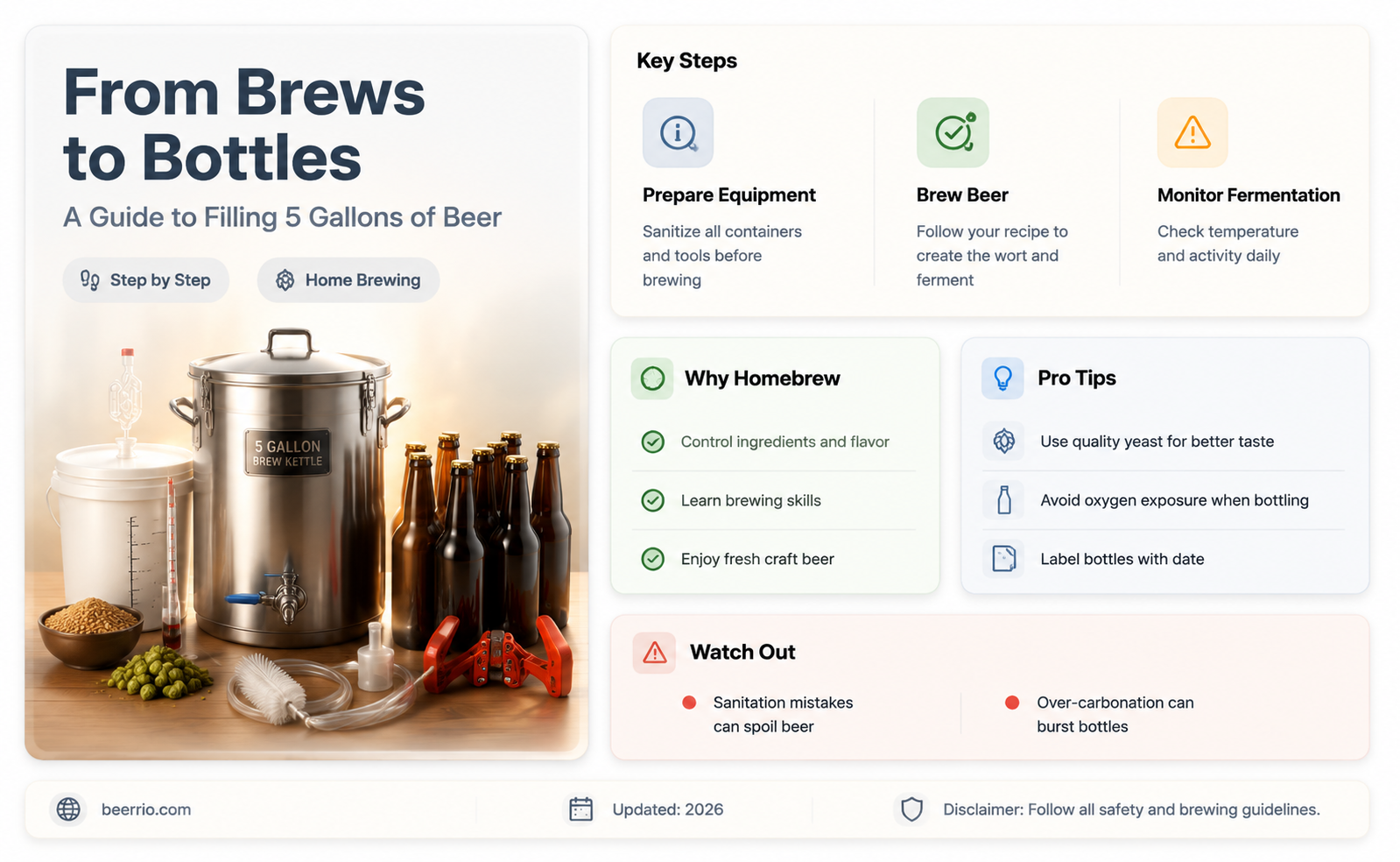
To determine how many bottles are needed for 5 gallons of beer, we first need to understand the conversion between gallons and bottles. Typically, a standard beer bottle holds 12 fluid ounces. Since there are 128 fluid ounces in a gallon, we can calculate the number of bottles required. For 5 gallons, we multiply 5 by 128, which equals 640 fluid ounces. Dividing 640 by 12 gives us approximately 53.33 bottles. Therefore, you would need about 54 bottles to hold 5 gallons of beer, assuming each bottle is filled to its standard capacity.
Explore related products


What You'll Learn
- Bottle Sizes: Overview of standard beer bottle volumes, including 12 oz, 16 oz, and 22 oz options
- Gallon to Bottle Conversion: Explanation of how to convert gallons to bottles, considering different bottle sizes
- Factors Affecting Bottle Count: Discussion on variables like beer foam, bottle shape, and carbonation levels that influence the number of bottles needed
- Efficiency in Bottling: Tips on maximizing the number of bottles filled from 5 gallons of beer, minimizing waste
- Cost Analysis: Breakdown of the cost implications of using different bottle sizes and materials for bottling 5 gallons of beer

Bottle Sizes: Overview of standard beer bottle volumes, including 12 oz, 16 oz, and 22 oz options
Understanding beer bottle sizes is crucial when determining how many bottles you'll need for 5 gallons of beer. The most common bottle sizes for craft beer are 12 oz, 16 oz, and 22 oz. Each size has its own advantages and is suited for different types of beer and drinking occasions.
The 12 oz bottle is the standard size for most commercial beers. It's convenient for single servings and is easily portable. However, craft beers often come in larger bottles to showcase their complex flavors and aromas. The 16 oz bottle, also known as a pint bottle, is becoming increasingly popular for craft beers. It offers a larger serving size that's ideal for sharing or for those who prefer a more substantial drink.
The 22 oz bottle, often referred to as a bomber, is typically used for specialty or limited-edition beers. It's a larger format that allows brewers to experiment with unique recipes and aging processes. Bombers are also great for sharing among friends or for those who want to enjoy a beer over an extended period.
When calculating how many bottles you'll need for 5 gallons of beer, it's important to consider the size of the bottles you'll be using. A gallon is equivalent to 128 oz, so 5 gallons would be 640 oz. If you're using 12 oz bottles, you would need approximately 53 bottles to hold 5 gallons of beer. For 16 oz bottles, you would need about 40 bottles, and for 22 oz bottles, you would need around 29 bottles.
Keep in mind that these calculations are based on the assumption that each bottle is filled to its maximum capacity. In reality, there may be some variation in the amount of beer each bottle contains, so it's always a good idea to have a few extra bottles on hand just in case. Additionally, if you're planning to bottle condition your beer, you'll need to leave some headspace in each bottle to allow for the natural carbonation process.
In conclusion, choosing the right bottle size for your beer is an important consideration that can impact both the drinking experience and the logistics of bottling and storing your beer. By understanding the different bottle sizes available and their uses, you can make an informed decision that will best suit your needs and preferences.
Effortless Label Removal: A Guide for Beer Bottle Enthusiasts
You may want to see also
Explore related products


Gallon to Bottle Conversion: Explanation of how to convert gallons to bottles, considering different bottle sizes
To convert gallons to bottles, you need to consider the size of the bottles you're using. A standard beer bottle holds about 12 fluid ounces, which is roughly 0.355 liters. Since there are 3.785 liters in a gallon, you can calculate the number of bottles needed by dividing the total volume in gallons by the volume of each bottle. For example, if you have 5 gallons of beer, you would divide 5 by 0.355 to get approximately 14.08 bottles. Since you can't have a fraction of a bottle, you would round up to the nearest whole number, which is 15 bottles.
However, it's important to note that not all bottles are the same size. Some craft beers come in larger bottles, such as 22 fluid ounces or even 750 milliliters. If you're using larger bottles, you'll need fewer of them to hold the same amount of beer. For instance, if you're using 22 fluid ounce bottles, which are about 0.65 liters, you would divide 5 gallons by 0.65 to get approximately 7.69 bottles. Rounding up, you would need 8 bottles.
On the other hand, if you're using smaller bottles, such as 8 fluid ounces or 237 milliliters, you'll need more of them. Dividing 5 gallons by 0.237 gives you approximately 21.1 bottles. Rounding up, you would need 22 bottles.
It's also worth considering the type of beer you're bottling. Some beers, like stouts and porters, are often served in smaller quantities due to their rich flavor and higher alcohol content. In these cases, you might want to use smaller bottles to ensure that each serving is the appropriate size.
Finally, when bottling beer, it's important to leave some headspace in each bottle to allow for carbonation and to prevent the beer from overflowing when opened. A good rule of thumb is to leave about 1-2 inches of headspace in each bottle. This will also help to preserve the beer's flavor and aroma by reducing the amount of oxygen that enters the bottle.
Uncapping the Mystery: What Materials Make Up Beer Bottle Caps?
You may want to see also
Explore related products
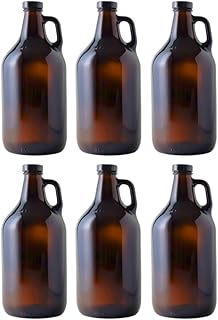


Factors Affecting Bottle Count: Discussion on variables like beer foam, bottle shape, and carbonation levels that influence the number of bottles needed
The number of bottles required to package 5 gallons of beer can vary significantly based on several factors. One of the primary variables is the amount of foam generated during the bottling process. Foam can take up space in the bottle, reducing the amount of liquid beer that can be filled. This is particularly relevant for beers with high protein content or those that are more prone to foaming. Brewers often need to adjust their bottling techniques or use anti-foaming agents to minimize this issue.
Another critical factor is the shape of the bottle. Different bottle shapes can affect the volume of beer that can be filled. For instance, a standard long-neck bottle may hold less beer than a wider, short-neck bottle due to the space taken up by the neck. Additionally, the thickness of the bottle glass can also impact the overall volume. Brewers must consider these dimensions when selecting bottles for their product.
Carbonation levels also play a significant role in determining the number of bottles needed. Highly carbonated beers require more headspace in the bottle to accommodate the CO2 gas. This means that less beer can be filled into each bottle, increasing the total number of bottles required. Conversely, beers with lower carbonation levels can be filled closer to the top, reducing the number of bottles needed.
To accurately estimate the number of bottles required for 5 gallons of beer, brewers must consider these factors and adjust their calculations accordingly. A standard approach might involve calculating the total volume of beer without foam and then adjusting for the expected foam volume. This adjusted volume can then be divided by the effective volume of each bottle, taking into account the bottle shape and carbonation levels.
In practice, brewers often use specialized equipment and software to streamline this process. Bottling machines can be calibrated to fill bottles to the optimal level, minimizing waste and ensuring consistency. Additionally, brewers may conduct trials to determine the best bottling techniques for their specific beer styles, further refining their estimates.
Ultimately, the key to efficient bottling is a thorough understanding of the factors that affect bottle count. By carefully considering variables like foam, bottle shape, and carbonation levels, brewers can optimize their bottling process, reduce waste, and ensure that their customers receive the best possible product.
The Mystery Behind Brown Beer Bottles: Unveiling the Secret
You may want to see also
Explore related products
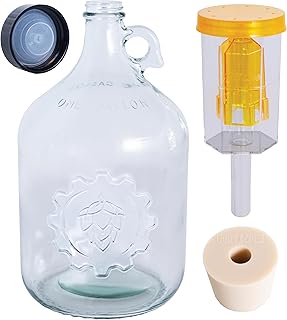


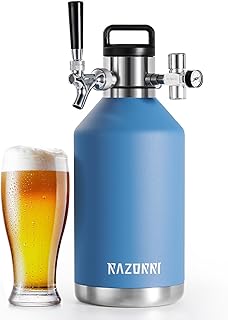


Efficiency in Bottling: Tips on maximizing the number of bottles filled from 5 gallons of beer, minimizing waste
To maximize the number of bottles filled from 5 gallons of beer and minimize waste, it's essential to understand the volume of a standard beer bottle. Typically, a beer bottle holds about 12 fluid ounces (fl oz). Given that there are 128 fl oz in a gallon, 5 gallons of beer would equate to 640 fl oz. Dividing 640 fl oz by 12 fl oz per bottle gives us approximately 53.33 bottles. Since we can't have a fraction of a bottle, the goal is to fill 53 bottles completely and minimize the leftover beer.
One effective strategy is to use a bottling calculator or app to determine the exact amount of beer to transfer into each bottle. This ensures that each bottle is filled to the same level, reducing the likelihood of overfilling some bottles and underfilling others. Additionally, using a siphon or a bottling wand can help control the flow of beer into the bottles, preventing splashing and foam buildup, which can lead to waste.
Another tip is to warm the bottles slightly before filling them. Warm bottles can help reduce the amount of foam generated during the bottling process, allowing for more efficient filling. However, it's crucial to avoid overheating the bottles, as this can affect the taste and quality of the beer.
When bottling, it's also important to work in a clean and organized environment to minimize the risk of contamination and spills. Using a bottling bucket or a carboy with a spigot can make the process more manageable and help contain any potential messes.
Finally, consider using reusable bottles or kegs for storing and dispensing beer. This not only reduces waste but also saves money in the long run. If using glass bottles, make sure they are properly sanitized and free of any residue that could affect the taste of the beer.
By following these tips and being mindful of the bottling process, you can maximize the number of bottles filled from 5 gallons of beer while minimizing waste, ensuring that you get the most out of your brew.
Sustainable Sips: The Truth About Recycling Glass Beer Bottles
You may want to see also
Explore related products


Cost Analysis: Breakdown of the cost implications of using different bottle sizes and materials for bottling 5 gallons of beer
To conduct a thorough cost analysis for bottling 5 gallons of beer, we need to consider several factors, including the size and material of the bottles. Let's break down the cost implications of different options.
First, let's look at the cost of bottles. Glass bottles are typically more expensive than plastic ones. For example, a 12-ounce glass bottle might cost around $0.30, while a similar plastic bottle could cost as little as $0.10. However, glass bottles can be reused, which can offset the higher initial cost. If we assume that a glass bottle can be reused 10 times, the effective cost per use would be $0.03, making it more cost-effective than plastic in the long run.
Next, we need to consider the size of the bottles. Smaller bottles require more labor to fill and cap, which can increase the overall cost. On the other hand, larger bottles may require less labor but could be more expensive to produce. For instance, a 22-ounce bottle might cost $0.50 to produce, while a 12-ounce bottle might cost $0.30. However, if we need to bottle 5 gallons of beer, using larger bottles could reduce the number of bottles required, potentially saving on costs.
Now, let's calculate the number of bottles needed for 5 gallons of beer. There are 128 ounces in a gallon, so 5 gallons is equivalent to 640 ounces. If we use 12-ounce bottles, we would need 53 bottles (640 ÷ 12 = 53.33, rounded up). If we use 22-ounce bottles, we would need 29 bottles (640 ÷ 22 = 29.09, rounded up).
Assuming we use glass bottles that can be reused 10 times, the cost per bottle would be $0.03. For 53 bottles, the total cost would be $1.59 (53 × $0.03). For 29 bottles, the total cost would be $0.87 (29 × $0.03).
In conclusion, using larger glass bottles that can be reused multiple times is the most cost-effective option for bottling 5 gallons of beer. This approach minimizes the number of bottles required and takes advantage of the lower effective cost per use of reusable glass bottles.
Frequently asked questions
To determine the number of bottles needed to hold 5 gallons of beer, we need to consider the volume of each bottle. A standard beer bottle holds approximately 12 fluid ounces. Since there are 128 fluid ounces in a gallon, 5 gallons would be equivalent to 640 fluid ounces. Dividing 640 by 12 gives us approximately 53.33 bottles. Therefore, you would need about 54 bottles to hold 5 gallons of beer.
If you want to use larger bottles that hold 22 fluid ounces each, the calculation changes. First, convert 5 gallons to fluid ounces, which is still 640 fluid ounces. Then, divide 640 by 22 to find the number of bottles needed. This gives us approximately 29.09 bottles. Since you can't have a fraction of a bottle, you would need 30 bottles to hold 5 gallons of beer.
The conversion from gallons to fluid ounces is based on the fact that there are 128 fluid ounces in one gallon. This is a standard conversion factor in the U.S. customary system of measurement. To convert gallons to fluid ounces, you simply multiply the number of gallons by 128. For example, to convert 5 gallons to fluid ounces, you would calculate 5 * 128 = 640 fluid ounces.