Oisin Foster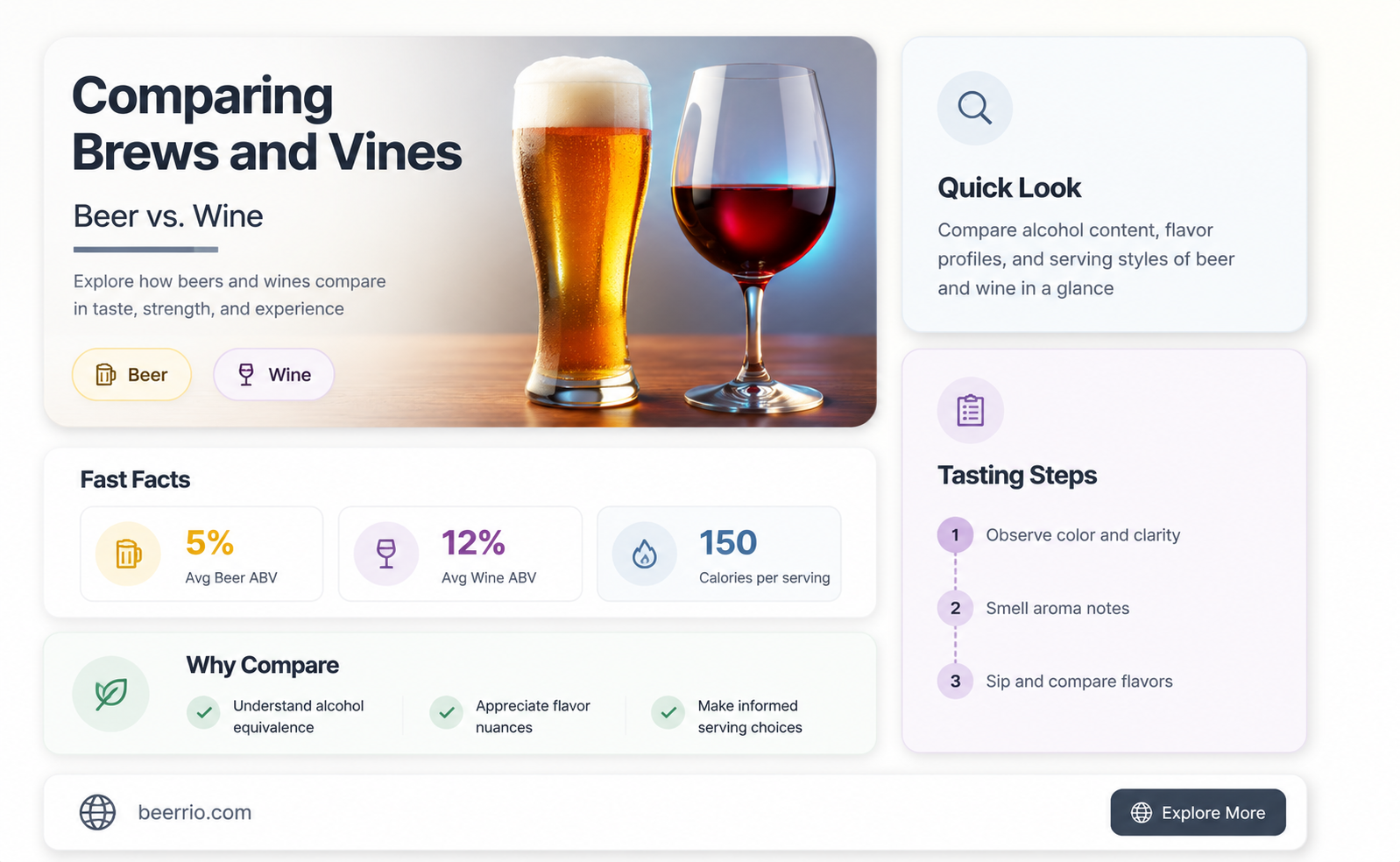
When comparing the alcohol content of beer and wine, it's important to consider the varying strengths and serving sizes of each beverage. On average, a standard bottle of wine contains about 12% alcohol by volume (ABV) and is typically 750 milliliters. In contrast, beers can range widely in ABV, from around 4% for light lagers to 10% or more for strong ales and stouts. A standard serving of beer is usually 330 to 500 milliliters. To determine how many beers are equivalent to a bottle of wine, one must calculate the total alcohol content in each and compare them. This involves multiplying the volume of each drink by its ABV and then dividing the wine's total alcohol by the beer's total alcohol per serving. The result will give an approximate number of beers that match the alcohol content of one bottle of wine.
Explore related products


What You'll Learn
- Alcohol Content Comparison: Beers typically have lower alcohol content than wine, affecting the equivalence
- Standard Drink Measurements: Understanding standard drink sizes for both beers and wine is crucial for accurate comparison
- Caloric Intake: Comparing the caloric content of beers and wine can provide a different perspective on equivalence
- Blood Alcohol Concentration: How different types of alcohol affect BAC levels and the implications for consumption
- Cultural and Social Factors: The social and cultural contexts in which beers and wine are consumed can influence perceptions of equivalence

Alcohol Content Comparison: Beers typically have lower alcohol content than wine, affecting the equivalence
The comparison of alcohol content between beer and wine is a crucial aspect when determining their equivalence. Typically, beers have a lower alcohol by volume (ABV) percentage compared to wines. This difference in ABV is significant because it directly impacts how many beers would be equivalent to a bottle of wine in terms of alcohol consumption.
For instance, a standard bottle of wine usually contains around 12-14% ABV, while most beers range from 4-6% ABV. This means that to achieve the same level of alcohol intake from beer as from a bottle of wine, one would need to consume a greater volume of beer. The exact number of beers required would depend on the specific ABV percentages of both the wine and the beer in question.
To illustrate this point, let's consider a scenario where a bottle of wine has 13% ABV and a beer has 5% ABV. To match the alcohol content of the wine, one would need to drink approximately 2.6 beers (since 13% divided by 5% equals 2.6). This example highlights the importance of understanding the alcohol content of different beverages when making comparisons.
Moreover, it's essential to note that the equivalence is not just about the number of drinks but also about the individual's tolerance and the effects of alcohol on their body. Factors such as body weight, metabolism, and drinking pace can significantly influence how alcohol is processed and its overall impact.
In conclusion, while beers generally have a lower alcohol content than wines, the equivalence in terms of alcohol intake can vary based on the specific ABV percentages of the beverages. It's crucial to be aware of these differences when making comparisons and to consider individual factors that can affect alcohol consumption and its effects.
Effortless Label Removal: A Guide for Beer Bottle Enthusiasts
You may want to see also
Explore related products


Standard Drink Measurements: Understanding standard drink sizes for both beers and wine is crucial for accurate comparison
Understanding standard drink measurements is essential for making accurate comparisons between different types of alcoholic beverages. A standard drink is a measure of alcohol consumption that is used to provide consistent guidelines for safe drinking. In the United States, a standard drink contains approximately 14 grams of pure alcohol. This measurement is used across various types of alcoholic beverages, including beer, wine, and spirits, to help individuals gauge their alcohol intake.
When comparing beer and wine, it's important to note that the alcohol content can vary significantly between different brands and types. For example, a typical 12-ounce bottle of beer may contain anywhere from 4% to 6% alcohol by volume (ABV), while a standard 750ml bottle of wine can range from 12% to 15% ABV. To make an accurate comparison, we need to consider both the volume and the alcohol content of each beverage.
One common misconception is that a bottle of wine is equivalent to six beers. However, this is not always the case. A standard 750ml bottle of wine with 12.5% ABV contains approximately 91 grams of alcohol, which is equivalent to about 6.5 standard drinks. In contrast, six 12-ounce bottles of beer with 5% ABV would contain approximately 72 grams of alcohol, or about 5 standard drinks. Therefore, a bottle of wine is actually closer to 6.5 beers than six beers.
It's also important to consider the serving sizes of beer and wine. A typical serving of beer is 12 ounces, while a standard serving of wine is 5 ounces. This means that a single serving of wine contains more alcohol than a single serving of beer. However, people often consume larger quantities of beer than wine, which can lead to higher overall alcohol consumption.
In conclusion, understanding standard drink measurements is crucial for making accurate comparisons between beer and wine. By considering both the volume and the alcohol content of each beverage, we can better gauge our alcohol intake and make informed decisions about our drinking habits. Remember, moderation is key, and it's always important to drink responsibly.
Uncapping the Mystery: What Materials Make Up Beer Bottle Caps?
You may want to see also
Explore related products


Caloric Intake: Comparing the caloric content of beers and wine can provide a different perspective on equivalence
Analyzing the caloric content of alcoholic beverages offers a unique perspective on equivalence beyond mere volume or alcohol percentage. A standard bottle of wine (750 ml) typically contains between 500 to 600 calories, depending on its sugar content and alcohol by volume (ABV). In contrast, beers vary widely in caloric content, with light beers containing as few as 100 calories per 12-ounce serving, while heavier, craft beers can exceed 300 calories per serving.
To compare the caloric intake, consider that a bottle of wine might be equivalent to approximately 4-6 servings of light beer or 2-3 servings of a higher-calorie craft beer. This comparison highlights the importance of considering not just the alcohol content but also the caloric density of different beverages when assessing their equivalence.
Moreover, the caloric content can significantly impact one's dietary choices and overall health. Consuming a bottle of wine in one sitting could account for a substantial portion of an individual's daily caloric needs, potentially leading to weight gain if not balanced with physical activity. Similarly, regularly consuming high-calorie beers could contribute to an increased caloric intake, posing health risks over time.
In conclusion, when evaluating the equivalence of beers and wine, it's essential to consider the caloric content as a critical factor. This perspective not only provides a more comprehensive understanding of the beverages' comparative impact but also emphasizes the importance of moderation and mindful consumption in maintaining a balanced diet and healthy lifestyle.
Exploring the Caloric Content of Coors Lite Beer
You may want to see also
Explore related products



Blood Alcohol Concentration: How different types of alcohol affect BAC levels and the implications for consumption
Blood Alcohol Concentration (BAC) is a critical measure used to determine the amount of alcohol present in an individual's bloodstream. It is typically expressed as a percentage, with legal limits for driving under the influence (DUI) varying by jurisdiction but commonly set around 0.08% in many places. Different types of alcohol can affect BAC levels in various ways due to differences in alcohol content, absorption rates, and metabolism.
For instance, beers generally have a lower alcohol content compared to wines and spirits. A standard beer typically contains about 4-5% alcohol by volume (ABV), while a bottle of wine might contain 12-14% ABV. This means that, to achieve the same BAC level, an individual would need to consume more beer than wine. However, the rate at which alcohol is absorbed into the bloodstream can also vary depending on factors such as food consumption, body weight, and metabolism.
When comparing beer and wine, it's important to consider not only the alcohol content but also the serving size. A standard serving of beer is usually 12 ounces, while a standard serving of wine is 5 ounces. Therefore, if one were to drink a 12-ounce beer and a 5-ounce glass of wine, the beer would contain more alcohol due to its larger volume, despite having a lower ABV.
The implications for consumption are significant. Understanding how different types of alcohol affect BAC levels can help individuals make informed decisions about their drinking habits. For example, someone who plans to drive might choose to drink beer instead of wine or spirits to stay within legal BAC limits more easily. However, it's crucial to remember that even small amounts of alcohol can impair judgment and reaction times, so moderation is key.
In conclusion, while beer may be less potent than wine in terms of alcohol content, the volume consumed and individual factors such as metabolism and body weight play a significant role in determining BAC levels. It's essential for consumers to be aware of these factors and to drink responsibly to avoid the risks associated with alcohol consumption.
Exploring the Caloric Content of Budweiser Beer
You may want to see also
Explore related products

![8 Pack [1 L / 33 fl. oz.] Swing Top Glass Bottles w/ Airtight Stopper Lids – Flip Top Brewing Bottle for Fermentation, Kombucha, Mead, Vinegar, Beer, Kefir, Wine, Soda – With 8 Extra Seals & 2 Pourer](https://m.media-amazon.com/images/I/71Dxyt2F7pL._AC_UL320_.jpg)



Cultural and Social Factors: The social and cultural contexts in which beers and wine are consumed can influence perceptions of equivalence
In many cultures, beer and wine are not just beverages but integral parts of social rituals and traditions. For instance, in Germany, beer is often associated with communal gatherings and festivals like Oktoberfest, where it is consumed in large quantities as a symbol of celebration and camaraderie. Conversely, in France, wine is deeply ingrained in the culinary culture, often seen as an accompaniment to meals and a reflection of sophistication and refinement. These cultural contexts can significantly influence how individuals perceive the equivalence between beer and wine.
Social factors also play a crucial role in shaping perceptions of equivalence. In some social circles, particularly among younger demographics, beer might be viewed as more accessible and affordable, leading to a perception that it is less potent or sophisticated than wine. This perception can be influenced by factors such as pricing, availability, and the social status associated with each beverage. For example, craft beers might be seen as more artisanal and exclusive, potentially elevating their perceived equivalence to wine in certain social groups.
Moreover, the rituals surrounding the consumption of beer and wine can affect how they are compared. Wine tasting, for instance, is often a deliberate and measured process, involving the assessment of aroma, flavor, and finish. This ritualistic approach can lead to a perception that wine is more complex and nuanced than beer, which is often consumed more casually. However, beer enthusiasts might argue that the variety of beer styles and flavors offers a similar level of complexity, challenging the notion that wine is inherently more sophisticated.
In conclusion, cultural and social factors can significantly influence perceptions of equivalence between beer and wine. By understanding these contexts, we can better appreciate the diverse ways in which these beverages are valued and consumed around the world.
From Brews to Bottles: A Guide to Filling 5 Gallons of Beer
You may want to see also
Frequently asked questions
Generally, a standard bottle of wine (750ml) with 12% alcohol by volume (ABV) is equivalent to approximately 5-6 beers, each with 5% ABV.
Yes, the equivalence can vary. For instance, a bottle of wine with a higher ABV, such as a fortified wine, would be equivalent to more beers than a bottle with a lower ABV.
Indeed, while the alcohol content can be similar, the health effects may differ due to other substances in wine and beer. Wine, particularly red wine, contains antioxidants like resveratrol, which may have heart benefits when consumed in moderation. Beer, on the other hand, tends to be higher in calories and carbohydrates.
Serving sizes play a crucial role. A standard serving of wine is typically 5 ounces (about 148ml), while a standard beer serving is 12 ounces (about 355ml). Therefore, the number of servings per bottle will influence the total alcohol intake and the equivalence between wine and beer.
The body metabolizes alcohol similarly regardless of whether it comes from wine or beer. However, the rate of absorption can be affected by factors such as the presence of food in the stomach and the type of alcohol consumed. Spirits are generally absorbed more quickly than wine or beer.