Beatrix Montes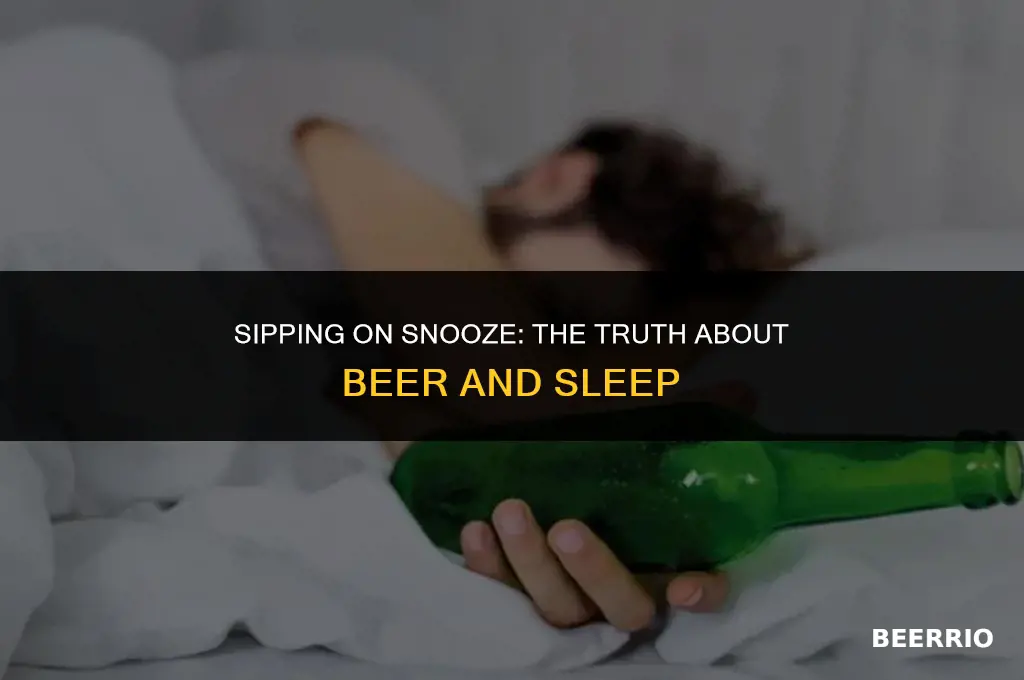
Beer, a popular alcoholic beverage, is often associated with relaxation and social gatherings. However, its effects on sleep are a subject of debate. While some individuals may find that consuming beer helps them unwind and fall asleep more easily, others may experience disrupted sleep patterns or difficulty falling asleep. The relationship between beer consumption and sleep quality is complex and influenced by various factors, including the amount and timing of consumption, individual tolerance, and overall health. This paragraph aims to explore the potential effects of beer on sleep and provide insights into the underlying mechanisms.
| Characteristics | Values |
|---|---|
| Effect on Sleep | Beer can induce drowsiness and may help some individuals fall asleep faster due to its sedative effects. |
| Alcohol Content | The alcohol by volume (ABV) in beer varies, typically ranging from 4% to 6%, which can influence its sleep-inducing properties. |
| Ingredients | Beer contains hops, barley, yeast, and water. Hops, in particular, have been noted for their potential sedative effects. |
| Consumption Method | Drinking beer in moderation, typically defined as one drink per day for women and up to two drinks per day for men, is generally considered safe. Excessive consumption can lead to disrupted sleep patterns. |
| Individual Tolerance | Tolerance to alcohol varies greatly among individuals. Some may find that even small amounts of beer help them sleep, while others may require more. |
| Sleep Quality | While beer may help initiate sleep, it can also lead to poorer sleep quality, including more frequent awakenings and less time spent in deep, restorative sleep stages. |
| Potential Side Effects | Overconsumption of beer can lead to side effects such as snoring, sleep apnea, and restless leg syndrome. |
| Dependency Risk | Regular use of alcohol, including beer, to aid sleep can lead to dependency and may worsen sleep problems over time. |
| Comparison to Other Sleep Aids | Unlike prescription sleep aids, beer is not regulated for its sleep-inducing properties and may not be as effective or safe for long-term use. |
| Cultural Perceptions | In some cultures, beer is commonly consumed as a means to relax and aid sleep, while in others, it is viewed primarily as a social beverage. |
| Legal and Health Considerations | The legal drinking age and health guidelines for alcohol consumption vary by country and should be considered when using beer as a sleep aid. |
| Alternatives for Sleep Improvement | Other methods to improve sleep include maintaining a regular sleep schedule, creating a restful sleep environment, and avoiding caffeine and nicotine before bedtime. |
Explore related products


What You'll Learn
- Alcohol Content: Higher alcohol beers can induce sleepiness more effectively due to their sedative properties
- Sedative Effects: Beer contains compounds like tryptophan and adenosine, which can promote relaxation and sleep
- Individual Tolerance: Personal alcohol tolerance levels significantly influence how quickly beer can make someone sleepy
- Sleep Quality: While beer may help you fall asleep faster, it can disrupt REM sleep, leading to less restful sleep
- Health Considerations: Regular use of beer as a sleep aid can lead to dependency and other health issues, caution is advised

Alcohol Content: Higher alcohol beers can induce sleepiness more effectively due to their sedative properties
The relationship between alcohol content and sleepiness is a significant factor to consider when discussing whether beer can induce sleep. Beers with higher alcohol by volume (ABV) percentages tend to have more pronounced sedative effects. This is because alcohol acts as a central nervous system depressant, slowing down brain activity and promoting relaxation. However, it's crucial to note that while higher alcohol beers may make you feel sleepy more quickly, they can also lead to disrupted sleep patterns and reduced sleep quality.
One of the reasons higher alcohol beers can induce sleepiness more effectively is due to their ability to increase the production of adenosine, a neurotransmitter that regulates sleep-wake cycles. As alcohol consumption rises, adenosine levels increase, making you feel more tired. Additionally, alcohol can reduce the amount of time spent in REM sleep, the stage of sleep associated with dreaming and memory consolidation, leading to less restful sleep.
It's also important to consider the individual's tolerance and metabolism when discussing the sleep-inducing effects of higher alcohol beers. People with lower tolerances may feel sleepy after consuming smaller amounts of alcohol, while those with higher tolerances may need to drink more to experience the same effects. Furthermore, factors such as age, weight, and overall health can influence how alcohol affects sleep.
While some people may use higher alcohol beers as a means to fall asleep more quickly, it's essential to be aware of the potential risks and side effects. Regularly using alcohol as a sleep aid can lead to dependency, disrupted sleep patterns, and other health issues. It's always advisable to consult with a healthcare professional before using alcohol or any other substance as a sleep aid.
In conclusion, the alcohol content in beer plays a significant role in its sleep-inducing properties. Higher alcohol beers can make you feel sleepy more quickly due to their sedative effects and influence on adenosine production. However, it's crucial to consider the potential risks and side effects associated with using alcohol as a sleep aid and to consult with a healthcare professional for personalized advice.
The Surprising Truth About Beer and Facial Weight Gain
You may want to see also
Explore related products



Sedative Effects: Beer contains compounds like tryptophan and adenosine, which can promote relaxation and sleep
Beer's sedative effects are primarily attributed to its tryptophan and adenosine content. Tryptophan is an amino acid that serves as a precursor to serotonin, a neurotransmitter involved in regulating sleep-wake cycles. Adenosine, on the other hand, is a nucleoside that plays a crucial role in the body's sleep drive. As adenosine levels increase in the brain, it signals the body that it's time to sleep.
The combination of these compounds in beer can lead to a feeling of relaxation and drowsiness. However, it's essential to note that the sedative effects of beer can vary depending on several factors, including the individual's tolerance, the amount consumed, and the type of beer. For instance, darker beers like stouts and porters tend to have higher levels of tryptophan compared to lighter beers like lagers and pilsners.
While beer may help some people fall asleep faster, it's not a recommended sleep aid. The sedative effects of beer can be short-lived, and consuming alcohol regularly can lead to disrupted sleep patterns and other health issues. Moreover, relying on beer as a sleep aid can mask underlying sleep disorders that require medical attention.
In conclusion, while beer does contain compounds that can promote relaxation and sleep, it's crucial to consume it responsibly and be aware of its potential effects on sleep quality and overall health. If you're struggling with sleep, it's always best to consult with a healthcare professional for personalized advice and treatment options.
Exploring Beirut's Beer Culture: A Guide to Local Brews and Bars
You may want to see also
Explore related products


Individual Tolerance: Personal alcohol tolerance levels significantly influence how quickly beer can make someone sleepy
Individual tolerance to alcohol is a critical factor in determining how quickly beer can induce sleepiness. This tolerance is influenced by a variety of factors, including genetics, age, gender, body weight, and overall health. People with a higher tolerance to alcohol may be able to consume more beer before feeling sleepy, while those with a lower tolerance may feel drowsy after just a few sips.
One of the key reasons why individual tolerance plays such a significant role is due to the way alcohol is metabolized by the body. The liver is responsible for breaking down alcohol into acetaldehyde, which is then further metabolized into acetate and eventually carbon dioxide and water. However, the rate at which this process occurs can vary greatly from person to person. Some individuals may have a more efficient metabolism, allowing them to process alcohol more quickly and thus feel its effects more rapidly.
Another factor that can influence individual tolerance is the presence of certain medications or medical conditions. For example, some medications can slow down the metabolism of alcohol, leading to increased drowsiness. Additionally, certain medical conditions, such as liver disease or sleep apnea, can also affect how quickly beer can make someone sleepy.
It's also important to note that individual tolerance can change over time. For example, regular alcohol consumption can lead to an increase in tolerance, while abstaining from alcohol can cause tolerance to decrease. This means that someone who drinks beer frequently may be able to tolerate more alcohol than someone who only drinks occasionally.
In conclusion, individual tolerance is a complex and multifaceted factor that can significantly influence how quickly beer can make someone sleepy. By understanding the various factors that contribute to tolerance, individuals can better gauge their own limits and make informed decisions about their alcohol consumption.
The Great Debate: Eggs in Beer Batter - A Culinary Myth Busted
You may want to see also
Explore related products




![[Pack of 24] Bud Full Flavored Zero Alcohol Brew, 0.00 ALC, NA Non-Alcoholic Beer, 50 Cal, Zero Sugar, Cans, 12 Fl Oz (Pack of 24)](https://m.media-amazon.com/images/I/51RUqU+bqVL._AC_UL320_.jpg)

Sleep Quality: While beer may help you fall asleep faster, it can disrupt REM sleep, leading to less restful sleep
While beer may help you fall asleep faster, it can disrupt REM sleep, leading to less restful sleep. This is because alcohol is a depressant that slows down brain activity, making it easier to drift off to sleep. However, as the body metabolizes alcohol, it can lead to a rebound effect where the brain becomes more active, disrupting the REM sleep cycle.
REM sleep is the stage of sleep where the body repairs and regenerates tissues, builds bone and muscle, and strengthens the immune system. Disruption of REM sleep can lead to a range of negative health effects, including fatigue, mood disturbances, and decreased cognitive function.
To improve sleep quality, it's important to limit alcohol consumption before bedtime. The National Sleep Foundation recommends avoiding alcohol within 2-3 hours of bedtime. Additionally, establishing a consistent sleep schedule, creating a relaxing bedtime routine, and maintaining a sleep-conducive environment can also help improve sleep quality.
It's also important to note that individual tolerance to alcohol can vary, and some people may be more susceptible to the negative effects of alcohol on sleep. If you're concerned about the impact of alcohol on your sleep, it's best to consult with a healthcare professional.
In summary, while beer may help you fall asleep faster, it can disrupt REM sleep, leading to less restful sleep. Limiting alcohol consumption before bedtime and establishing healthy sleep habits can help improve sleep quality.
Unraveling the Mystery: Why Do People Put Salt in Beer?
You may want to see also
Explore related products


Health Considerations: Regular use of beer as a sleep aid can lead to dependency and other health issues, caution is advised
Regularly using beer as a sleep aid can lead to dependency and a host of other health issues. While it may seem like a harmless way to unwind and fall asleep faster, the long-term effects can be detrimental to both physical and mental health. One of the primary concerns is the development of alcohol dependence. As the body becomes accustomed to the sedative effects of alcohol, it may require increasing amounts to achieve the same level of sleepiness, leading to a dangerous cycle of consumption.
In addition to dependency, there are several other health risks associated with using beer as a sleep aid. For example, alcohol can disrupt the body's natural sleep patterns, leading to poor quality sleep and daytime fatigue. It can also exacerbate existing sleep disorders, such as sleep apnea, and increase the risk of developing new ones. Furthermore, regular alcohol consumption has been linked to a range of health problems, including liver disease, cardiovascular issues, and certain types of cancer.
It is important to note that the risks associated with using beer as a sleep aid are not limited to physical health. Mental health can also be negatively impacted, with increased risk of depression, anxiety, and other mood disorders. Additionally, alcohol can impair cognitive function, leading to difficulties with memory, concentration, and decision-making.
Given these risks, it is advisable to seek alternative methods for improving sleep quality. Lifestyle changes, such as maintaining a regular sleep schedule, creating a relaxing bedtime routine, and avoiding caffeine and electronics before bed, can be effective in promoting better sleep. In some cases, medical intervention may be necessary to address underlying sleep disorders or to provide guidance on safe and effective sleep aids.
In conclusion, while beer may provide temporary relief for sleep difficulties, the potential long-term health consequences far outweigh any short-term benefits. It is crucial to approach sleep health with a holistic perspective, considering both physical and mental well-being, and to seek professional advice when needed. By prioritizing healthy sleep habits and addressing any underlying issues, individuals can improve their overall quality of life and reduce the risks associated with using alcohol as a sleep aid.
The Truth About Formaldehyde in Beer: A Brewing Controversy
You may want to see also
Frequently asked questions
While beer may initially make you feel sleepy due to its sedative effects, it can actually disrupt your sleep patterns, leading to poorer sleep quality.
Beer contains alcohol, which can induce drowsiness and help you fall asleep faster. However, as your body metabolizes the alcohol, it can cause you to wake up more frequently and experience less restful sleep.
Contrary to popular belief, consuming beer before bed can negatively impact your sleep. Although it may help you fall asleep quicker, the overall quality of your sleep is likely to be worse due to alcohol's disruptive effects.
Instead of beer, consider incorporating sleep-promoting activities into your bedtime routine, such as reading, meditation, or listening to calming music. Additionally, maintaining a consistent sleep schedule and creating a comfortable sleep environment can significantly improve sleep quality.
Even moderate beer consumption can impact sleep quality. While the effects may not be as pronounced as with heavy drinking, alcohol can still disrupt sleep patterns and reduce overall sleep quality, so it's best to limit consumption before bedtime.