Oisin Foster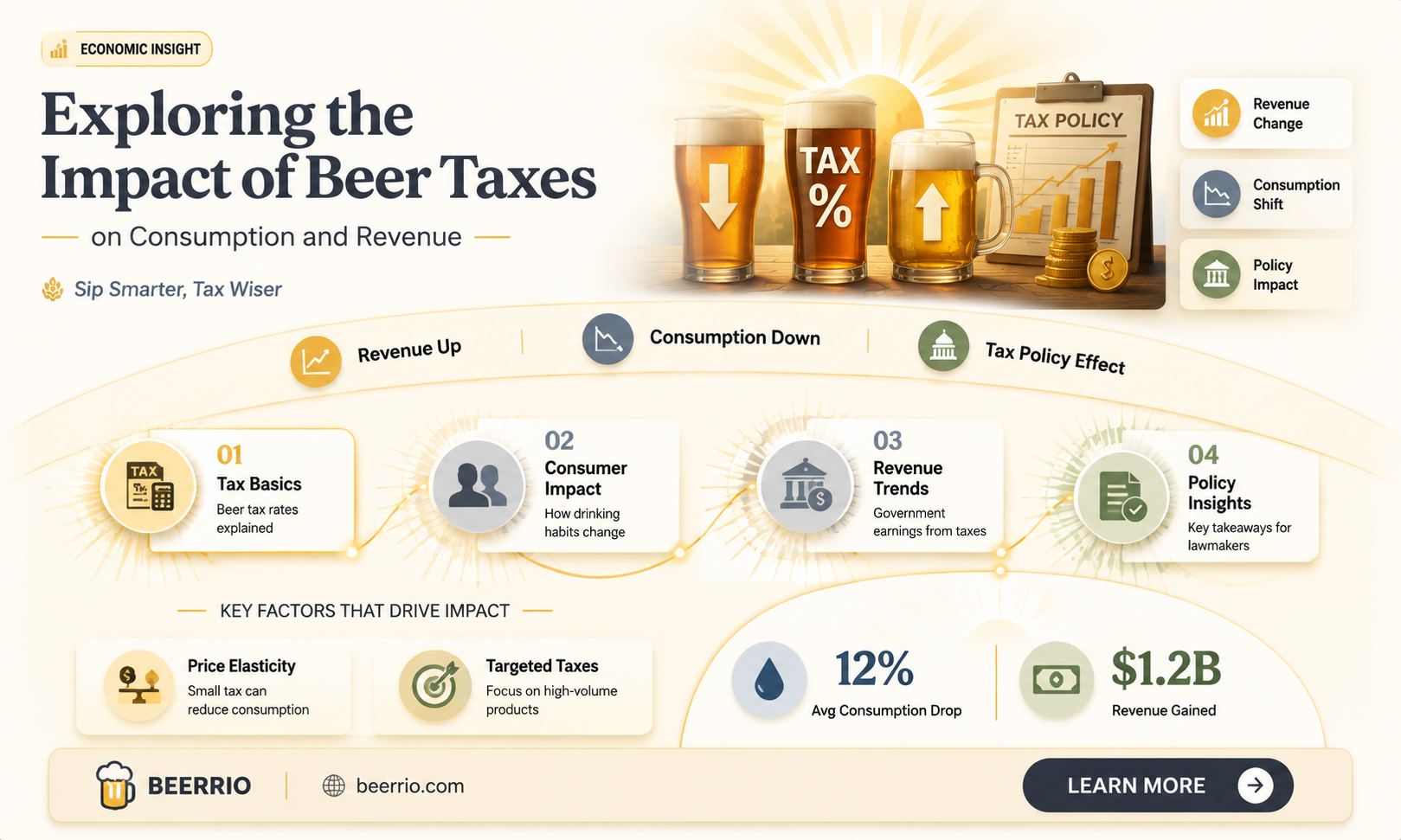
Beer taxes have been a subject of debate among policymakers, economists, and public health advocates. These taxes are levied on the sale of beer, with the primary goals of generating revenue for governments and discouraging excessive alcohol consumption. Proponents argue that beer taxes can effectively reduce drinking rates, particularly among young people and heavy drinkers, thereby mitigating the social and health costs associated with alcohol abuse. They also point out that the revenue generated can be used to fund public health initiatives and other social programs. However, critics contend that beer taxes can be regressive, disproportionately affecting low-income individuals, and may lead to increased smuggling and black market activity. Additionally, they argue that taxes may not be the most effective way to address alcohol-related issues, as education and awareness campaigns could be more impactful in promoting responsible drinking behaviors.
Explore related products


What You'll Learn
- Economic Impact: Examines how beer taxes affect the economy, including revenue generation and job creation
- Public Health: Discusses the influence of beer taxes on alcohol consumption and related health outcomes
- Tax Policy: Evaluates the effectiveness of beer taxes as a tool for government revenue and social policy
- Industry Response: Analyzes how the beer industry reacts to tax changes, including pricing strategies and marketing
- Consumer Behavior: Investigates how changes in beer taxes impact consumer purchasing decisions and drinking habits

Economic Impact: Examines how beer taxes affect the economy, including revenue generation and job creation
The economic impact of beer taxes is a multifaceted issue that extends beyond mere revenue generation. While it is true that beer taxes contribute significantly to government coffers, the effects ripple through various sectors of the economy, influencing employment, consumer behavior, and even public health.
One of the primary arguments in favor of beer taxes is their potential to generate substantial revenue. In many countries, beer is a major source of tax income, which can be allocated to fund public services, infrastructure projects, and social programs. For instance, in the United States, beer taxes amounted to approximately $12 billion in 2020, with the majority going to state and local governments. This revenue can be crucial for supporting essential services, such as education, healthcare, and law enforcement.
However, the economic impact of beer taxes is not limited to revenue generation. The taxation of beer can also influence employment rates, particularly in the brewing, distribution, and retail sectors. Higher taxes may lead to increased production costs, which could result in job losses or reduced hiring. Conversely, some argue that the revenue generated from beer taxes can create jobs in other sectors, such as public administration or infrastructure development.
Beer taxes can also affect consumer behavior, potentially leading to changes in demand and consumption patterns. Higher taxes may discourage excessive drinking, as the increased cost of beer could make it less appealing to consumers. This, in turn, could have positive effects on public health, reducing the incidence of alcohol-related illnesses and accidents. On the other hand, some consumers may be undeterred by higher taxes, continuing to purchase beer at the same rate, which could minimize the intended public health benefits.
In conclusion, the economic impact of beer taxes is complex and far-reaching, involving revenue generation, employment, consumer behavior, and public health. While beer taxes can provide a significant source of income for governments, their effects on the economy and society as a whole must be carefully considered to ensure that they achieve their intended goals without causing unintended consequences.
Chill or Spill: The Truth About Beer Sleeves' Effectiveness
You may want to see also
Explore related products




Public Health: Discusses the influence of beer taxes on alcohol consumption and related health outcomes
The impact of beer taxes on public health is a critical aspect of the broader discussion on alcohol control policies. Evidence suggests that increasing beer taxes can lead to a reduction in alcohol consumption, particularly among younger populations and heavy drinkers. This, in turn, can result in a decrease in alcohol-related health issues such as liver disease, injuries, and certain types of cancer. For instance, a study published in the American Journal of Preventive Medicine found that a 10% increase in beer taxes was associated with a 7% decrease in alcohol-related hospital admissions.
One of the key mechanisms through which beer taxes influence consumption is by making alcohol less affordable. This price increase can deter individuals from purchasing alcohol, especially those who are more price-sensitive such as teenagers and low-income adults. Additionally, higher taxes can encourage moderate drinkers to reduce their consumption, as the cost of each additional drink becomes more prohibitive.
Beer taxes can also have indirect effects on public health by reducing the overall availability of alcohol. When taxes are high, retailers may be less inclined to stock alcohol, and some may even choose to stop selling it altogether. This can create a ripple effect, making it more difficult for individuals to access alcohol and thereby reducing consumption.
However, it is important to note that the effectiveness of beer taxes can vary depending on the cultural and economic context. In some societies, alcohol consumption may be deeply ingrained, and even significant tax increases may not be enough to deter drinking. Furthermore, high taxes can lead to the emergence of black markets, where alcohol is sold illegally at lower prices, undermining the intended public health benefits.
In conclusion, while beer taxes can be an effective tool in reducing alcohol consumption and improving public health outcomes, their success depends on a variety of factors including the magnitude of the tax increase, the cultural norms surrounding alcohol use, and the enforcement of alcohol control policies. Policymakers must carefully consider these factors when designing and implementing beer tax policies to maximize their public health impact.
Sipping Success: The Pros and Cons of a Pre-Work Beer
You may want to see also
Explore related products


Tax Policy: Evaluates the effectiveness of beer taxes as a tool for government revenue and social policy
Beer taxes have long been a contentious issue, with proponents arguing that they generate significant government revenue and help curb excessive alcohol consumption. However, opponents claim that these taxes disproportionately affect low-income individuals and small businesses. To evaluate the effectiveness of beer taxes, it's essential to examine both their economic and social impacts.
From an economic standpoint, beer taxes can indeed generate substantial revenue for governments. In 2020, the United States collected approximately $12.2 billion in beer excise taxes. This revenue can be used to fund various public services and infrastructure projects. However, it's crucial to consider the potential negative economic consequences of high beer taxes. Increased taxation can lead to higher prices for consumers, which may reduce demand and negatively impact the beer industry, particularly small breweries.
Socially, beer taxes can have both positive and negative effects. On the positive side, higher taxes can discourage excessive alcohol consumption, particularly among young people and low-income individuals who are more price-sensitive. This can lead to reduced alcohol-related health problems and social issues. However, it's important to note that high taxes may also lead to increased smuggling and black market activity, which can have negative social consequences.
To maximize the effectiveness of beer taxes, governments should consider implementing a tiered taxation system that targets high-alcohol content beverages and luxury brands, while providing relief for small breweries and low-income consumers. Additionally, governments should invest a portion of the revenue generated from beer taxes into alcohol education and treatment programs to address the root causes of excessive consumption.
In conclusion, while beer taxes can be an effective tool for generating government revenue and promoting social policy goals, it's essential to carefully consider their economic and social impacts and implement them in a way that minimizes negative consequences.
Exploring the Myth: Do Beer Enemas Really Work?
You may want to see also
Industry Response: Analyzes how the beer industry reacts to tax changes, including pricing strategies and marketing
The beer industry's response to tax changes is a critical aspect of understanding the effectiveness of beer taxes. When faced with increased taxation, breweries and retailers often adopt various strategies to mitigate the impact on their profits and consumer demand. One common approach is to adjust pricing, either by absorbing the tax increase or passing it on to consumers. Breweries may also alter their production processes or ingredient sourcing to reduce costs. Additionally, marketing strategies can be adjusted to emphasize value or introduce new products that are less affected by the tax increase.
Pricing strategies are a key component of the industry's response. Breweries may choose to maintain their current prices, effectively absorbing the tax increase and potentially reducing their profit margins. This strategy can be seen as a way to maintain market share and consumer loyalty. On the other hand, breweries may decide to pass the tax increase on to consumers, which could lead to a decrease in demand if the price increase is perceived as too high. Retailers also play a role in pricing strategies, as they may choose to adjust their markups or offer promotions to offset the tax increase.
Marketing strategies can also be adjusted in response to tax changes. Breweries may focus on promoting their products as high-quality or unique, emphasizing the value proposition to justify any price increases. They may also introduce new products that are less affected by the tax increase, such as lower-alcohol beers or alternative beverages. Additionally, breweries may increase their marketing efforts in regions where the tax increase is less significant or where consumer demand is more resilient.
The effectiveness of these strategies can vary depending on a number of factors, including the size of the tax increase, the competitive landscape, and consumer preferences. In some cases, breweries may be able to successfully mitigate the impact of tax changes through a combination of pricing and marketing strategies. However, in other cases, the tax increase may lead to a significant decrease in demand, ultimately affecting the industry's overall revenue and profitability.
In conclusion, the beer industry's response to tax changes is a complex and multifaceted issue. Breweries and retailers must carefully consider their pricing and marketing strategies in order to effectively navigate the challenges posed by increased taxation. By understanding these strategies and their potential impacts, policymakers and industry stakeholders can better assess the effectiveness of beer taxes as a tool for achieving public health and revenue goals.
Exploring the Surprising Connection: Beer's Potential Laxative Effects
You may want to see also
Consumer Behavior: Investigates how changes in beer taxes impact consumer purchasing decisions and drinking habits
A concrete fact that introduces the idea of this heading is that "According to a recent study by the National Bureau of Economic Research, a 10% increase in beer taxes leads to a 4.5% decrease in beer consumption among adults." This statistic sets the stage for an analytical exploration of how changes in beer taxes impact consumer behavior.
One way to structure this section is to start with an example, followed by analysis, and then a takeaway. For instance, we could examine a case study of a state that recently increased its beer tax and analyze how this change affected local breweries, retailers, and consumers. We might find that while the tax increase led to a decrease in beer sales, it also generated additional revenue for the state, which could be used to fund public health initiatives or other social programs. The takeaway from this analysis could be that beer taxes can be an effective tool for reducing consumption and generating revenue, but they must be carefully implemented to avoid negative consequences for local businesses.
Another approach could be to use a comparative structure, examining how different countries or states have approached beer taxation and the resulting impacts on consumer behavior. For example, we might compare the effects of a high beer tax in a country like Norway, where beer is heavily taxed, to a low beer tax in a country like Germany, where beer is relatively inexpensive. This comparison could reveal insights into how cultural attitudes towards drinking, economic factors, and government policies interact to shape consumer behavior.
Regardless of the structure chosen, it's important to focus on concrete specifics and avoid generalizations. For instance, instead of simply stating that "beer taxes lead to decreased consumption," we could provide detailed data on how different demographic groups respond to tax changes, such as age, income level, and geographic location. We could also explore the unintended consequences of beer taxes, such as the potential for increased smuggling or black market activity.
By taking a focused, analytical approach and using concrete examples and data, we can create a compelling and informative section that adds value to the overall article and helps readers understand the complex relationship between beer taxes and consumer behavior.
Exploring the Benefits and Drawbacks of Beer Bar Memberships
You may want to see also
Frequently asked questions
Beer taxes are levied to generate revenue for governments, discourage excessive alcohol consumption, and cover the social costs associated with alcohol use, such as healthcare and law enforcement.
Beer taxes can lead to higher prices for consumers, which may reduce the quantity of beer purchased. This can result in decreased alcohol consumption, particularly among price-sensitive groups such as young adults and low-income individuals.
Studies have shown that beer taxes can be effective in reducing alcohol consumption and related problems, such as drunk driving and alcohol-related violence. However, the effectiveness depends on the tax rate and how the revenue is used to support prevention and treatment programs.