 Beatrix Montes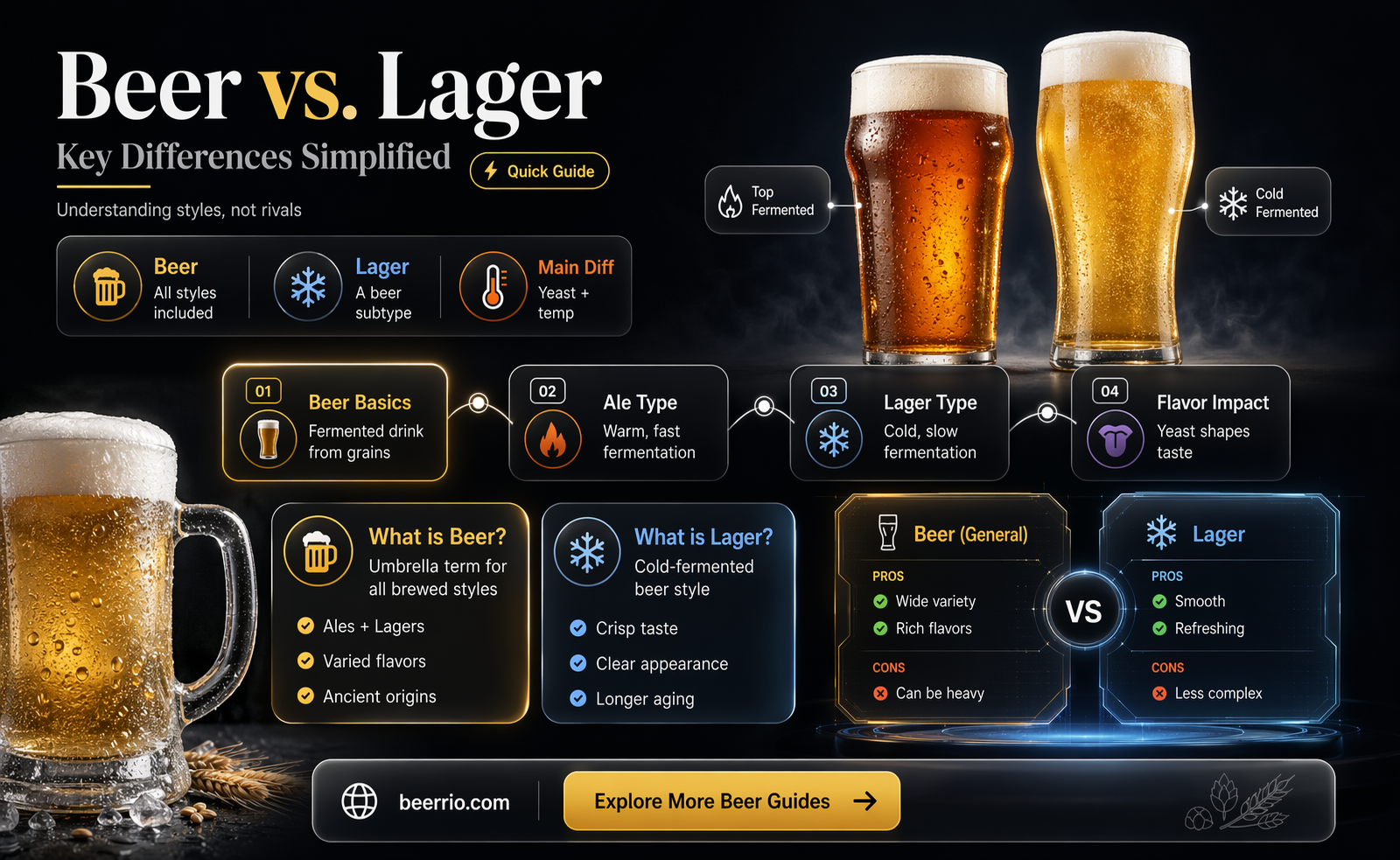
The main difference between beer and lager lies in their brewing processes and yeast types. Beer is a broad term that encompasses various types of alcoholic beverages made from fermented grains, typically barley. The fermentation process can vary, leading to different beer styles such as ales, stouts, and IPAs. Lager, on the other hand, is a specific type of beer that is fermented at lower temperatures using bottom-fermenting yeast. This results in a cleaner, crisper taste with less fruity esters compared to ales. Lagers are typically lighter in color and have a smoother finish, making them popular choices for casual drinking and hot weather.
Explore related products


What You'll Learn
- Brewing Process: Beers are brewed using a warm fermentation process, while lagers use a cold fermentation process
- Yeast Type: Beers typically use ale yeast, which ferments at warmer temperatures. Lagers use lager yeast, which ferments at cooler temperatures
- Flavor Profile: Beers often have a more robust, fruity, and bitter flavor profile. Lagers tend to be crisper, cleaner, and more refreshing
- Alcohol Content: Beers generally have a higher alcohol content than lagers, but this can vary depending on the specific type
- Popular Examples: Examples of beers include IPAs, stouts, and porters. Popular lagers include pilsners, pale lagers, and dark lagers

Brewing Process: Beers are brewed using a warm fermentation process, while lagers use a cold fermentation process
The brewing process is a critical factor in distinguishing between beer and lager. Beers are typically brewed using a warm fermentation process, which involves fermenting the wort at temperatures ranging from 60°F to 75°F (15°C to 24°C). This warmer fermentation allows for a faster process, usually taking around 7 to 10 days. The yeast used in this process, often referred to as ale yeast, thrives in these warmer conditions and contributes to the beer's flavor profile, which can range from fruity and estery to malty and rich.
In contrast, lagers are brewed using a cold fermentation process. The wort is fermented at much lower temperatures, typically between 45°F and 55°F (7°C to 13°C). This slower fermentation process can take several weeks to months, allowing the yeast, known as lager yeast, to work more gradually. The cold temperatures help to suppress the production of esters and other flavor compounds, resulting in a cleaner, crisper taste. Lagers are often characterized by their light, refreshing qualities and can range from pale and golden to amber and dark.
One of the key differences in the brewing process between beers and lagers is the type of yeast used. Ale yeast, used in beer brewing, is a top-fermenting yeast that works quickly and efficiently at warmer temperatures. Lager yeast, on the other hand, is a bottom-fermenting yeast that requires colder temperatures to perform optimally. This difference in yeast not only affects the fermentation process but also significantly influences the final taste and character of the beverage.
Another important aspect of the brewing process is the mashing technique. For beers, the mash is typically held at a higher temperature to convert the starches in the grain into fermentable sugars more quickly. This results in a wort that is ready for fermentation in a shorter period. For lagers, the mash is held at a lower temperature, which slows down the conversion process and produces a wort that is less sugary and more suitable for the longer, colder fermentation process.
In summary, the brewing process for beers and lagers involves distinct techniques and conditions that cater to the specific requirements of each type of yeast and the desired flavor profile. The warm fermentation process used for beers results in a faster brew with a richer, more complex flavor, while the cold fermentation process used for lagers produces a cleaner, crisper taste that is often more refreshing. Understanding these differences is essential for appreciating the unique characteristics of each type of beer.
Explore related products


Yeast Type: Beers typically use ale yeast, which ferments at warmer temperatures. Lagers use lager yeast, which ferments at cooler temperatures
The fundamental distinction between beer and lager lies in the type of yeast used during fermentation. Ale yeast, typically employed in beer production, thrives at warmer temperatures, usually between 60°F to 75°F (15°C to 24°C). This yeast type is responsible for the fruity, rich flavors often associated with ales. On the other hand, lager yeast ferments at cooler temperatures, generally ranging from 45°F to 55°F (7°C to 13°C). This cooler fermentation process results in a cleaner, crisper taste profile characteristic of lagers.
The choice of yeast not only affects the flavor but also the brewing process itself. Ale yeast tends to ferment more quickly than lager yeast, often completing the process within a week or two. In contrast, lager yeast can take several weeks to months to fully ferment, requiring a longer maturation period. This extended timeframe allows for the development of the smooth, refined taste that lagers are known for.
Moreover, the fermentation temperature impacts the final alcohol content and body of the beer. Ales, due to their warmer fermentation, tend to have a higher alcohol content and a fuller body compared to lagers. Lagers, with their cooler fermentation, typically have a lower alcohol content and a lighter, more refreshing body.
In summary, the yeast type plays a crucial role in defining the characteristics of beer and lager. Ale yeast, fermenting at warmer temperatures, produces the robust flavors of ales, while lager yeast, fermenting at cooler temperatures, yields the crisp, clean taste of lagers. This difference in yeast and fermentation temperature affects not only the flavor profile but also the brewing process, alcohol content, and body of the final product.
Explore related products


Flavor Profile: Beers often have a more robust, fruity, and bitter flavor profile. Lagers tend to be crisper, cleaner, and more refreshing
The flavor profile of beers and lagers is a key differentiator between the two types of beverages. Beers often have a more robust, fruity, and bitter flavor profile, which is a result of the brewing process and the use of different ingredients. The malted barley used in beers is often roasted to a darker color, which imparts a richer, more complex flavor. Additionally, beers typically have a higher hop content, which contributes to the fruity and bitter notes.
In contrast, lagers tend to be crisper, cleaner, and more refreshing. This is due to the fact that lagers are brewed at lower temperatures and for a longer period of time, which results in a smoother, more refined flavor. The malted barley used in lagers is often lighter in color, which gives them a lighter, more delicate taste. Furthermore, lagers typically have a lower hop content, which makes them less bitter and more approachable.
One of the main differences between beers and lagers is the yeast used in the brewing process. Beers are typically brewed with ale yeast, which ferments at higher temperatures and produces more complex flavors. Lagers, on the other hand, are brewed with lager yeast, which ferments at lower temperatures and produces a cleaner, more refined flavor.
Another factor that contributes to the flavor profile of beers and lagers is the brewing process itself. Beers are often brewed using a more traditional, artisanal approach, which can result in a more robust and complex flavor. Lagers, on the other hand, are often brewed using a more modern, industrial approach, which can result in a crisper, cleaner flavor.
In conclusion, the flavor profile of beers and lagers is a result of a combination of factors, including the ingredients used, the brewing process, and the yeast used. Beers tend to have a more robust, fruity, and bitter flavor profile, while lagers tend to be crisper, cleaner, and more refreshing.
Explore related products


Alcohol Content: Beers generally have a higher alcohol content than lagers, but this can vary depending on the specific type
Beers typically boast a higher alcohol by volume (ABV) percentage compared to lagers, which is a key differentiator between the two. This variance in alcohol content can be attributed to the distinct brewing processes and ingredients used in each type. Beers, particularly ales, undergo a fermentation process that often results in a richer, more complex flavor profile accompanied by a higher ABV. In contrast, lagers are brewed using a different yeast strain and fermentation technique that yields a cleaner, crisper taste with a lower alcohol concentration.
However, it's essential to note that the alcohol content can vary significantly within each category. For instance, some light beers may have an ABV as low as 3-4%, while certain craft beers can exceed 10%. Similarly, lagers can range from ultra-light options with an ABV below 3% to more robust varieties that approach 6-7%. This diversity in alcohol content allows consumers to choose a beer or lager that aligns with their personal taste preferences and desired level of intoxication.
When comparing beers and lagers, it's also important to consider the serving size and drinking occasion. Beers with higher alcohol content are often enjoyed in smaller quantities or shared among friends, while lagers with lower ABVs can be consumed in larger volumes during social gatherings or sporting events. Additionally, the food pairing potential of beers and lagers can be influenced by their alcohol content, with higher ABV beers often complementing richer, more flavorful dishes, and lower ABV lagers pairing well with lighter fare.
In conclusion, while beers generally have a higher alcohol content than lagers, the specific type and brewing method can result in a wide range of ABVs within each category. This variation allows consumers to select a beer or lager that suits their individual preferences, drinking occasion, and culinary pairings.
Explore related products


Popular Examples: Examples of beers include IPAs, stouts, and porters. Popular lagers include pilsners, pale lagers, and dark lagers
IPAs, stouts, and porters are some of the most popular types of beer. These styles are known for their rich flavors and aromas, which are a result of the brewing process and the ingredients used. IPAs, or India Pale Ales, are characterized by their hoppy flavor and higher alcohol content. Stouts are dark, full-bodied beers with notes of coffee and chocolate, while porters are similar but typically lighter in color and flavor. These beers are often enjoyed by craft beer enthusiasts and are widely available at bars and breweries.
On the other hand, lagers are a type of beer that is fermented at lower temperatures, resulting in a cleaner, crisper taste. Pilsners, pale lagers, and dark lagers are some of the most popular lager styles. Pilsners are light in color and have a refreshing, slightly bitter taste. Pale lagers are similar but may have a slightly darker color and a more balanced flavor. Dark lagers, as the name suggests, are darker in color and have a richer, more complex flavor profile. These lagers are often mass-produced and are widely available in stores and restaurants.
One of the main differences between beer and lager is the fermentation process. Beers are typically fermented at higher temperatures, which results in a more robust flavor profile. Lagers, on the other hand, are fermented at lower temperatures, which produces a cleaner, crisper taste. Additionally, beers often have a higher alcohol content than lagers, and they may be more bitter due to the use of hops. Lagers, on the other hand, are often lighter in color and flavor, and they may be more refreshing due to their lower alcohol content and cleaner taste.
When it comes to pairing beer and lager with food, there are many options to consider. IPAs and stouts are often paired with hearty, flavorful dishes like burgers, steaks, and spicy foods. Porters are also a good match for desserts like chocolate cake or ice cream. Pilsners and pale lagers are often paired with lighter dishes like salads, seafood, and chicken. Dark lagers can be a good match for richer dishes like stews, roasts, and grilled meats. Ultimately, the best pairing will depend on personal preference and the specific flavors of the beer or lager.
In conclusion, while both beer and lager are popular alcoholic beverages, they have distinct differences in terms of flavor, aroma, and brewing process. Beers like IPAs, stouts, and porters are known for their rich, complex flavors, while lagers like pilsners, pale lagers, and dark lagers are characterized by their cleaner, crisper taste. Understanding these differences can help consumers choose the right type of beer or lager for their taste preferences and food pairings.
Frequently asked questions
The main difference lies in the brewing process and fermentation temperature. Beers are typically fermented at warmer temperatures using top-fermenting yeast, while lagers are fermented at cooler temperatures using bottom-fermenting yeast.
Fermentation temperature significantly impacts the flavor profile. Beers fermented at warmer temperatures tend to have fruitier, more robust flavors, while lagers fermented at cooler temperatures are generally crisper, cleaner, and smoother with a more subtle malt character.
While both beer and lager use similar ingredients such as water, malted barley, hops, and yeast, the type and proportion of these ingredients can vary. Lagers often use a higher proportion of malted barley and may include adjuncts like corn or rice, whereas beers might use a wider variety of specialty malts and hops.
Generally, beers tend to have a more golden to amber color and may have a cloudier appearance due to the presence of yeast and other particles. Lagers, on the other hand, are typically lighter in color, ranging from pale yellow to golden, and have a clearer, more transparent appearance due to the colder fermentation and filtration process.
Common types of beer include IPAs (India Pale Ales), stouts, porters, and wheat beers. Popular lager styles include Pilsners, pale lagers, amber lagers, and dark lagers. Each style has its own unique characteristics and flavor profiles based on the brewing process, ingredients, and regional traditions.


