Arabella Franco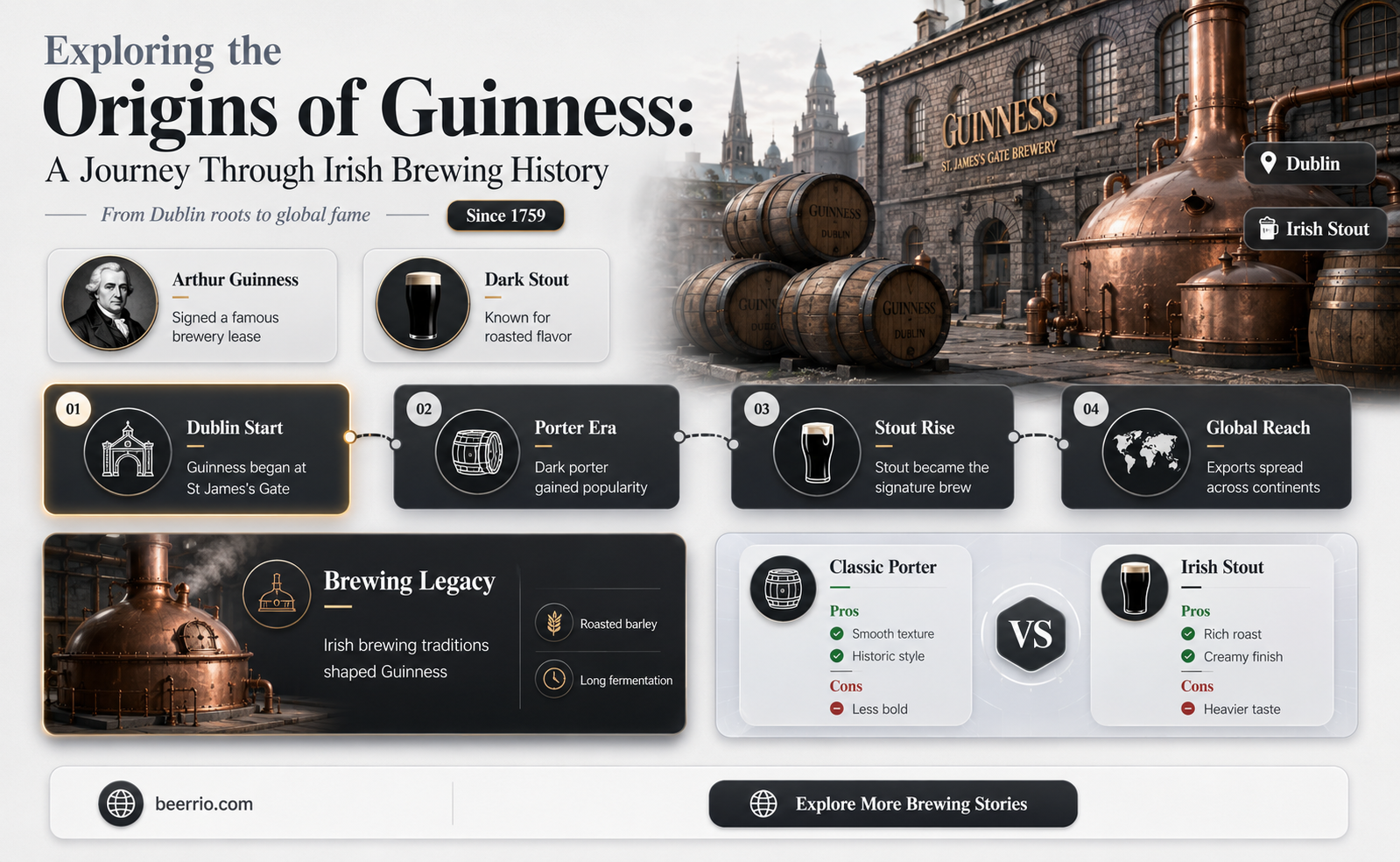
Guinness beer, renowned for its rich, dark color and creamy head, originates from Ireland. Specifically, it was first brewed in 1759 at the St. James's Gate Brewery in Dublin by Arthur Guinness. Over the centuries, Guinness has become an iconic symbol of Irish culture and is celebrated worldwide for its distinctive taste and quality. The beer's unique flavor profile is achieved through a combination of traditional brewing techniques and the use of roasted barley, which gives it its characteristic dark color and slightly bitter notes. Today, Guinness is enjoyed in over 150 countries and remains a beloved staple in pubs and homes alike.
Explore related products


What You'll Learn
- Origins of Guinness: Founded in Dublin, Ireland, in 1759 by Arthur Guinness
- Brewing Process: Known for its unique nitrogen infusion, giving it a creamy head
- Global Popularity: Widely consumed worldwide, especially on St. Patrick's Day
- Variants of Guinness: Includes Extra Stout, Nitro IPA, and non-alcoholic options
- Cultural Impact: Symbolizes Irish heritage and is a staple in Irish pubs globally

Origins of Guinness: Founded in Dublin, Ireland, in 1759 by Arthur Guinness
Arthur Guinness, a visionary entrepreneur, founded the Guinness brewery in Dublin, Ireland, in 1759. This marked the beginning of a storied legacy that would see Guinness become one of the most iconic and beloved beers around the world. The brewery was initially established at St. James's Gate, where it still stands today, a testament to the enduring spirit of the brand.
Guinness's early success can be attributed to Arthur's innovative approach to brewing. He introduced a unique roasting process that gave the beer its distinctive dark color and rich flavor. This, combined with the use of high-quality ingredients and meticulous attention to detail, quickly set Guinness apart from its competitors.
The Guinness brewery expanded rapidly in the 19th century, becoming one of the largest in the world. It weathered various challenges, including economic downturns and changes in consumer preferences, to remain a dominant force in the beer industry. Today, Guinness is enjoyed in over 150 countries and is synonymous with Irish culture and heritage.
One of the most fascinating aspects of Guinness's history is its impact on Dublin and Ireland as a whole. The brewery has played a significant role in the city's development, providing employment and contributing to the local economy. It has also become a major tourist attraction, with visitors flocking to the Guinness Storehouse to learn about the beer's history and sample its famous brews.
In conclusion, the origins of Guinness are deeply rooted in Dublin, Ireland, where Arthur Guinness founded the brewery over 250 years ago. The brand's commitment to quality and innovation has seen it grow into a global phenomenon, while its connection to Irish culture and heritage remains as strong as ever.
The Shelf Life of Guinness: Does This Iconic Beer Expire?
You may want to see also
Explore related products



Brewing Process: Known for its unique nitrogen infusion, giving it a creamy head
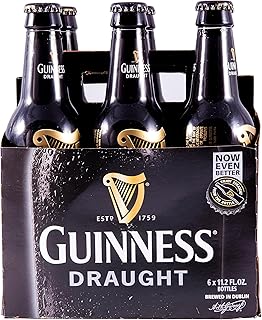
The brewing process of Guinness beer is a fascinating journey that culminates in its signature creamy head, a result of the unique nitrogen infusion technique. This method, which is a hallmark of the Guinness brand, involves the introduction of nitrogen gas into the beer during the pouring process. The nitrogen bubbles are smaller and more stable than carbon dioxide bubbles, creating a velvety smooth texture and a distinctive creamy head that is both visually appealing and rich in mouthfeel.
The process begins with the selection of high-quality ingredients, including malted barley, hops, yeast, and water. The malted barley is roasted to achieve the characteristic dark color and rich flavor profile of Guinness. The hops are then added to provide bitterness and balance to the sweetness of the malt. After fermentation, the beer undergoes a secondary conditioning process, where it is aged and matured to develop its complex flavors.
One of the key steps in the brewing process is the addition of nitrogen. This is done through a specialized tap system that injects nitrogen gas into the beer as it is poured. The nitrogen infusion not only creates the creamy head but also enhances the beer's overall flavor profile, giving it a smoother and more rounded taste. The precise control of nitrogen flow and pressure is crucial to achieving the perfect pour and maintaining the quality of the beer.
Guinness has perfected this brewing process over centuries, and it is this commitment to quality and tradition that has made the beer a global icon. The creamy head, a result of the nitrogen infusion, is not just a visual trademark but also a testament to the beer's rich heritage and the craftsmanship that goes into every pint.
Exploring the Perfect Pairings: What Goes Best with Guinness Beer?
You may want to see also
Explore related products



Global Popularity: Widely consumed worldwide, especially on St. Patrick's Day
Guinness beer has transcended its Irish origins to become a global phenomenon, with its popularity peaking during St. Patrick's Day celebrations worldwide. This annual event, held on March 17th, honors the patron saint of Ireland and has become synonymous with the consumption of Guinness, a stout beer that has captured the hearts of beer enthusiasts globally.
The beer's global appeal can be attributed to its rich, creamy texture and distinctive roasted flavor, which sets it apart from other beer varieties. Guinness is often associated with Irish culture and heritage, and its consumption during St. Patrick's Day has become a way for people around the world to connect with and celebrate Irish traditions. From Dublin to New York, Tokyo to Sydney, Guinness is a staple in pubs and bars, with many establishments hosting special events and promotions to mark the occasion.
In recent years, Guinness has also gained popularity in emerging markets such as China and India, where its unique taste and cultural significance have resonated with local consumers. The brand's global reach is a testament to its enduring appeal and the power of St. Patrick's Day as a cultural ambassador for Irish products and traditions.
Despite its global popularity, Guinness remains deeply rooted in its Irish heritage, with the majority of its production still taking place at the historic St. James's Gate Brewery in Dublin. This connection to its origins is a key part of Guinness's appeal, as consumers around the world appreciate the authenticity and tradition that the brand represents.
In conclusion, Guinness beer's global popularity, particularly during St. Patrick's Day, is a remarkable example of how a local product can become an international sensation while maintaining its cultural identity. Its unique taste, rich history, and association with Irish traditions have made it a beloved beverage worldwide, bringing people together to celebrate and enjoy a true Irish classic.
Exploring the Origins: Is Guinness Truly a German Beer?
You may want to see also
Explore related products



Variants of Guinness: Includes Extra Stout, Nitro IPA, and non-alcoholic options
Guinness, a beer with a rich history and global recognition, offers a variety of variants that cater to different tastes and preferences. One of the most well-known variants is Guinness Extra Stout, which is characterized by its robust flavor and higher alcohol content compared to the original stout. This variant is particularly popular in markets where a stronger beer is preferred.
Another notable variant is Guinness Nitro IPA, which combines the traditional stout brewing process with the addition of nitrogen gas. This results in a smoother, creamier texture and a slightly different flavor profile that appeals to both stout and IPA enthusiasts. The Nitro IPA is often served in specialized bars and pubs that have the equipment to dispense it with the signature nitrogen infusion.
For those who prefer non-alcoholic options, Guinness also offers a range of alcohol-free beers. These variants are brewed using the same traditional methods as the alcoholic versions but undergo a process to remove the alcohol, resulting in a beer that retains much of the flavor and character of the original. This option is ideal for individuals who want to enjoy the taste of Guinness without the effects of alcohol.
In addition to these main variants, Guinness has also experimented with limited-edition and seasonal releases, such as Guinness Red, a reddish-brown ale, and Guinness Nitro Pale Ale, a lighter, more refreshing option. These releases often showcase the brewery's creativity and willingness to explore new flavors and styles.
Overall, the variety of Guinness variants demonstrates the brand's commitment to innovation and its ability to adapt to changing consumer preferences. Whether you're a fan of the classic stout, a stronger extra stout, a smoother nitro IPA, or a non-alcoholic option, there's a Guinness variant that's likely to suit your taste.
Exploring the Rich Flavors: Coffee Notes in Guinness Beer
You may want to see also
Explore related products


Cultural Impact: Symbolizes Irish heritage and is a staple in Irish pubs globally
Guinness beer, with its rich, creamy head and distinctive dark color, has become an iconic symbol of Irish heritage. Its presence is ubiquitous in Irish pubs around the world, serving as a tangible connection to the Emerald Isle. The beer's cultural impact extends beyond its role as a popular beverage; it has become a representation of Irish identity and tradition.
The story of Guinness begins in Dublin, Ireland, where Arthur Guinness founded the St. James's Gate Brewery in 1759. Over the centuries, the brewery has grown into a global brand, but its roots remain firmly planted in Irish soil. The beer's unique taste and quality have made it a favorite among beer enthusiasts, but its cultural significance goes deeper than its flavor profile.
Guinness has played a significant role in shaping Irish culture and society. The brewery has been a major employer in Dublin for generations, providing jobs and economic stability to the local community. Additionally, Guinness has been a patron of the arts, supporting various cultural initiatives and events in Ireland and beyond.
In Irish pubs, Guinness is more than just a drink; it's a symbol of hospitality and community. The ritual of pouring a perfect pint of Guinness is an art form in itself, and sharing a round of Guinness with friends is a cherished social tradition. The beer's presence in pubs around the world serves as a reminder of the Irish diaspora and the enduring influence of Irish culture.
Furthermore, Guinness has become a symbol of Irish pride and nationalism. The beer's popularity has helped to promote Irish culture and heritage on a global scale, fostering a sense of connection between Ireland and its international community. Whether enjoyed in a traditional Irish pub or a modern bar, a pint of Guinness is a celebration of Irish identity and a testament to the country's rich cultural legacy.
Exploring the Caffeine Content in Guinness Beer: Facts and Myths
You may want to see also
Frequently asked questions
Guinness beer is from Ireland.
Guinness beer was first brewed in Dublin, Ireland, at the St. James's Gate Brewery.
The Guinness brewery was founded by Arthur Guinness in 1759.
Guinness is classified as a dry stout, which is a type of dark beer.
Guinness beer has become synonymous with Irish culture due to its long history of brewing in Ireland, its presence in Irish pubs, and its sponsorship of various Irish events and sports teams. It is often enjoyed during St. Patrick's Day celebrations and is considered a symbol of Irish heritage.