Arabella Franco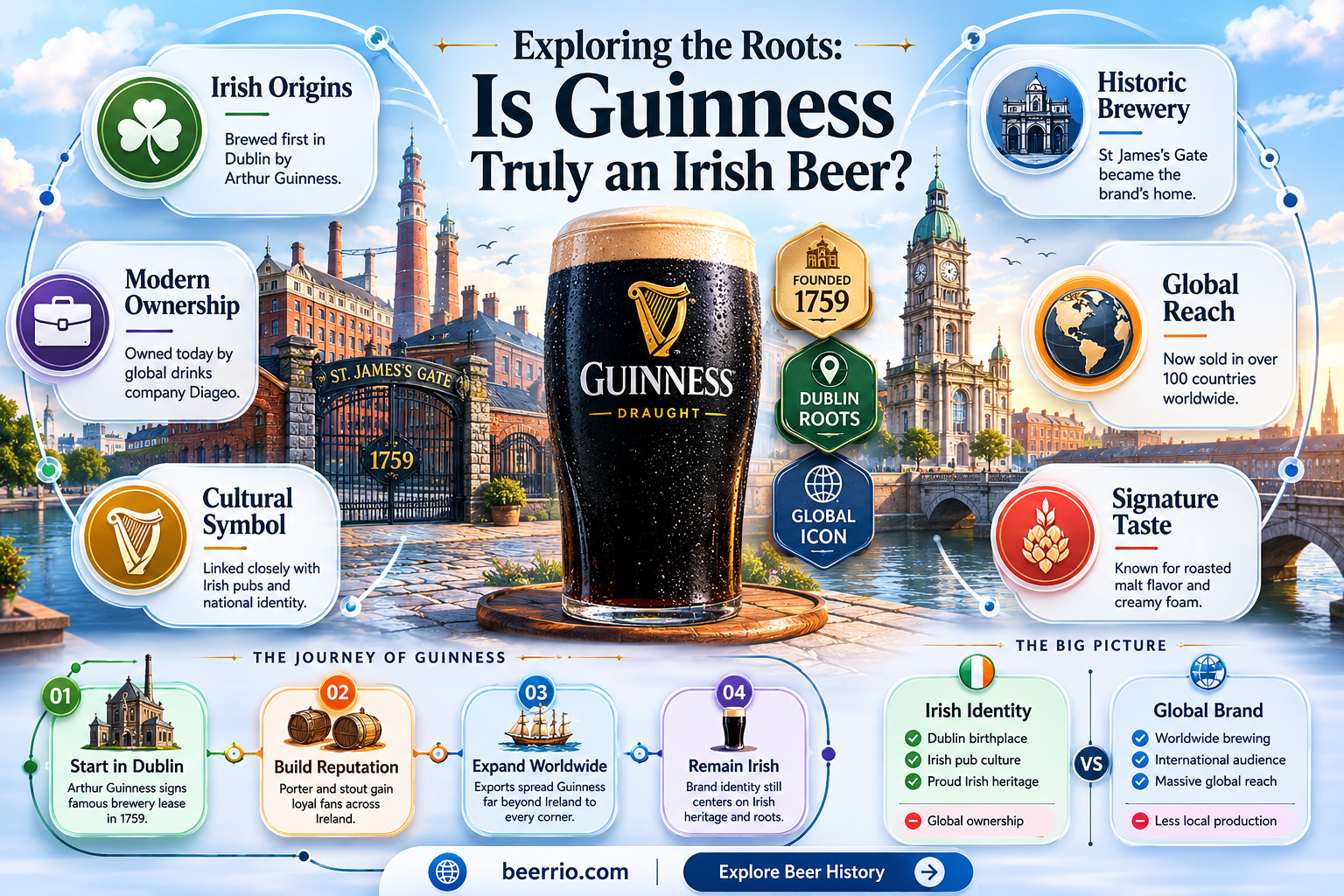
Guinness is indeed an Irish beer, with a rich history dating back to 1759 when Arthur Guinness founded the St. James's Gate Brewery in Dublin, Ireland. The beer has since become synonymous with Irish culture and is celebrated worldwide for its distinctive dark color and creamy head. Brewed using traditional methods and ingredients, including roasted barley, hops, yeast, and water, Guinness is known for its smooth, velvety texture and slightly bitter taste. Over the centuries, it has evolved into a global brand while maintaining its Irish roots and is often enjoyed in pubs and bars around the world, particularly on St. Patrick's Day.
Explore related products


What You'll Learn
- Origins: Guinness beer originated in Dublin, Ireland, at the St. James's Gate Brewery in 1759
- Ingredients: Made from roasted barley, hops, yeast, and water, giving it a distinctive dark color and rich flavor
- Brewing Process: Involves roasting barley to create the signature dark color and brewing it with hops and yeast
- Cultural Significance: Guinness is synonymous with Irish culture and is often associated with St. Patrick's Day celebrations worldwide
- Global Presence: While Irish in origin, Guinness is now brewed in many countries and enjoyed globally, maintaining its Irish heritage

Origins: Guinness beer originated in Dublin, Ireland, at the St. James's Gate Brewery in 1759
Arthur Guinness, a man with a vision, signed a 9,000-year lease on the St. James's Gate Brewery in Dublin, Ireland, in 1759. This marked the beginning of what would become one of the most iconic and beloved beers in the world: Guinness. The brewery, which had been in operation since the early 18th century, was in need of revitalization, and Guinness saw an opportunity to create something extraordinary.
Guinness's innovative approach to brewing, combined with his commitment to quality and consistency, quickly set his beer apart from others. He introduced new techniques, such as the use of roasted unmalted barley, which gave Guinness its distinctive dark color and rich flavor. The beer's popularity grew rapidly, and by the early 19th century, it had become a staple in pubs and homes across Ireland and beyond.
The St. James's Gate Brewery, which still stands today, has become a symbol of Irish heritage and a testament to the enduring legacy of Arthur Guinness. The brewery has undergone numerous expansions and renovations over the years, but it continues to produce Guinness using the same time-honored methods that have made it famous. Visitors to the brewery can learn about the history of Guinness and see firsthand how the beer is made, from the roasting of the barley to the pouring of the perfect pint.
Guinness has become synonymous with Irish culture, and its origins in Dublin are a source of pride for the Irish people. The beer has played a significant role in shaping Ireland's identity and has become an ambassador for Irish hospitality and craftsmanship around the world. Whether enjoyed in a traditional Irish pub or at a gathering with friends and family, Guinness remains a beloved and iconic symbol of Ireland's rich brewing heritage.
Exploring the Perfect Pairings: What Goes Best with Guinness Beer?
You may want to see also
Explore related products


$20.95


Ingredients: Made from roasted barley, hops, yeast, and water, giving it a distinctive dark color and rich flavor
The unique blend of roasted barley, hops, yeast, and water is what gives Guinness its iconic dark color and rich, complex flavor. The roasted barley, in particular, is a key ingredient that sets Guinness apart from other beers. It undergoes a special roasting process that enhances its natural sugars and creates the beer's signature dark hue. This process also contributes to the beer's smooth, creamy texture and slightly bitter taste.
Hops, another essential ingredient, add a layer of complexity to Guinness's flavor profile. They provide a subtle bitterness that balances the sweetness of the roasted barley and the richness of the yeast. The yeast used in Guinness is a proprietary strain that has been carefully cultivated over generations. It plays a crucial role in the fermentation process, converting the sugars in the barley into alcohol and carbon dioxide.
The water used in Guinness is sourced from the Wicklow Mountains in Ireland, known for its purity and mineral content. This water contributes to the beer's crisp, refreshing taste and helps to bring out the flavors of the other ingredients. The combination of these four ingredients, along with the precise brewing process, results in the distinctive taste and appearance that Guinness is famous for.
One of the most recognizable aspects of Guinness is its nitrogen-infused head, which gives the beer its signature creamy texture and appearance. This is achieved by using a special pouring technique that introduces nitrogen into the beer as it's poured into the glass. The nitrogen bubbles are smaller and more stable than carbon dioxide bubbles, creating a smoother, more velvety texture.
In conclusion, the ingredients and brewing process of Guinness are what make it a truly unique and iconic beer. The careful selection and combination of roasted barley, hops, yeast, and water, along with the precise brewing and pouring techniques, result in a beer that is rich in flavor, smooth in texture, and unmistakable in appearance.
Exploring the Caffeine Content in Guinness Beer: Facts and Myths
You may want to see also
Explore related products


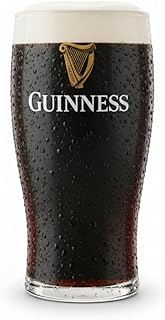

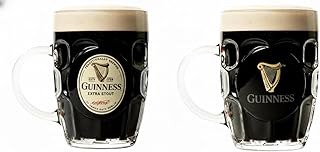

Brewing Process: Involves roasting barley to create the signature dark color and brewing it with hops and yeast
The brewing process of Guinness, an iconic Irish beer, is a meticulous craft that involves several key steps. It all begins with the roasting of barley, which is crucial in imparting the beer's distinctive dark color and rich flavor profile. The barley is roasted in a kiln at high temperatures, transforming its starches into sugars and developing complex flavors that range from chocolatey to coffee-like.
Following the roasting, the barley is milled and mixed with water in a large vat. This mixture is then boiled with hops, which contribute bitterness and aroma to the beer. The specific variety of hops used in Guinness is a closely guarded secret, but they are known to provide a subtle yet balanced bitterness that complements the beer's overall flavor.
After boiling, the mixture is cooled and transferred to fermentation tanks, where yeast is added. The yeast used in Guinness is a proprietary strain that has been cultivated and refined over generations. It is this yeast that ferments the sugars in the barley, producing alcohol and carbon dioxide in the process. The fermentation process is carefully monitored to ensure that the beer develops the desired flavor and alcohol content.
Once fermentation is complete, the beer is conditioned and filtered before being packaged and distributed. Throughout the entire brewing process, quality control is paramount, with numerous checks and balances in place to ensure that every pint of Guinness meets the exacting standards set by the brewery.
In summary, the brewing process of Guinness is a complex and carefully orchestrated series of steps that involve roasting barley, boiling with hops, fermenting with yeast, and meticulous quality control. Each stage plays a critical role in creating the beer's signature dark color, rich flavor, and smooth texture, making it a beloved beverage around the world.
Exploring the Origins: Is Guinness Truly a German Beer?
You may want to see also
Explore related products




Cultural Significance: Guinness is synonymous with Irish culture and is often associated with St. Patrick's Day celebrations worldwide
Guinness, a dark Irish stout, has transcended its origins to become an emblem of Irish culture and heritage. Its rich, creamy texture and distinctive taste have made it a beloved beverage around the world. However, its significance extends far beyond its flavor profile. Guinness is deeply intertwined with Irish history, symbolizing the country's resilience and spirit.
The beer's association with St. Patrick's Day celebrations is a testament to its cultural impact. Every year, millions of people across the globe raise a pint of Guinness in honor of Ireland's patron saint. This tradition has helped to spread Irish culture and foster a sense of community among people of Irish descent and those who simply appreciate the country's rich heritage.
Guinness has also played a role in shaping Ireland's economy and society. The Guinness brewery, founded in 1759 by Arthur Guinness, has been a major employer and economic driver in Dublin for centuries. The company's commitment to quality and innovation has helped to put Ireland on the map as a producer of world-class beverages.
Moreover, Guinness has become a symbol of Irish hospitality and conviviality. The act of sharing a pint with friends or family is a cherished tradition in Irish culture, and Guinness is often at the center of these social gatherings. Its presence in pubs and homes around the world serves as a reminder of the warmth and friendliness that Ireland is known for.
In conclusion, Guinness is more than just a beer; it is a cultural icon that represents the best of Irish heritage. Its association with St. Patrick's Day celebrations, its economic impact, and its role in fostering social connections all contribute to its enduring significance. Whether enjoyed in a Dublin pub or at a St. Patrick's Day parade in New York City, a pint of Guinness is a taste of Ireland's rich history and vibrant culture.
The Shelf Life of Guinness: Does This Iconic Beer Expire?
You may want to see also
Explore related products



Global Presence: While Irish in origin, Guinness is now brewed in many countries and enjoyed globally, maintaining its Irish heritage
Guinness, the iconic stout beer, has transcended its Irish origins to become a global phenomenon. While it was first brewed in Dublin, Ireland, by Arthur Guinness in 1759, the beer is now produced in numerous countries around the world. This expansion has allowed Guinness to maintain its Irish heritage while adapting to local tastes and brewing traditions.
One of the key factors in Guinness's global success is its ability to balance consistency with localization. The company ensures that its core product remains true to its original recipe, using the same ingredients and brewing methods wherever it is produced. However, Guinness also recognizes the importance of catering to local preferences. For example, in some markets, the beer is brewed with a slightly different flavor profile or alcohol content to suit regional tastes.
Guinness's global presence is also evident in its marketing and branding efforts. The company has successfully leveraged its Irish heritage to create a strong brand identity that resonates with consumers worldwide. Guinness's advertising campaigns often highlight the beer's Irish roots, featuring imagery of the Emerald Isle and emphasizing the brand's long history and tradition. This approach has helped Guinness to stand out in a crowded market and establish itself as a premium beer brand.
In addition to its brewing and marketing efforts, Guinness has also made significant investments in its global distribution network. The company has established partnerships with local distributors and retailers in key markets, ensuring that its products are widely available and easily accessible to consumers. This has helped Guinness to increase its market share and expand its reach into new territories.
Despite its global expansion, Guinness remains committed to its Irish heritage. The company continues to invest in its operations in Ireland, supporting local jobs and contributing to the country's economy. Guinness also plays an active role in promoting Irish culture and tourism, sponsoring events such as St. Patrick's Day celebrations and the Guinness Storehouse in Dublin, which has become a popular tourist attraction.
In conclusion, Guinness's global presence is a testament to its ability to balance tradition with innovation, consistency with localization, and heritage with expansion. By maintaining its Irish roots while adapting to global markets, Guinness has established itself as a beloved beer brand enjoyed by millions of people around the world.
Exploring the Rich Flavors: Coffee Notes in Guinness Beer
You may want to see also
Frequently asked questions
Yes, Guinness is an Irish beer. It was first brewed in Dublin, Ireland, in 1759 by Arthur Guinness at the St. James's Gate Brewery.
Guinness is a stout beer, specifically a dry stout. It is known for its dark color, creamy head, and distinctive roasted flavor.
Guinness is different from other beers in several ways. It has a unique brewing process that includes roasting unmalted barley, which gives it its dark color and roasted flavor. Additionally, Guinness is often served with a creamy nitrogen head, which is not typical for other types of beer.
The alcohol content of Guinness varies depending on the specific product, but the original Guinness stout typically has an alcohol by volume (ABV) of around 4.2%.