Oisin Foster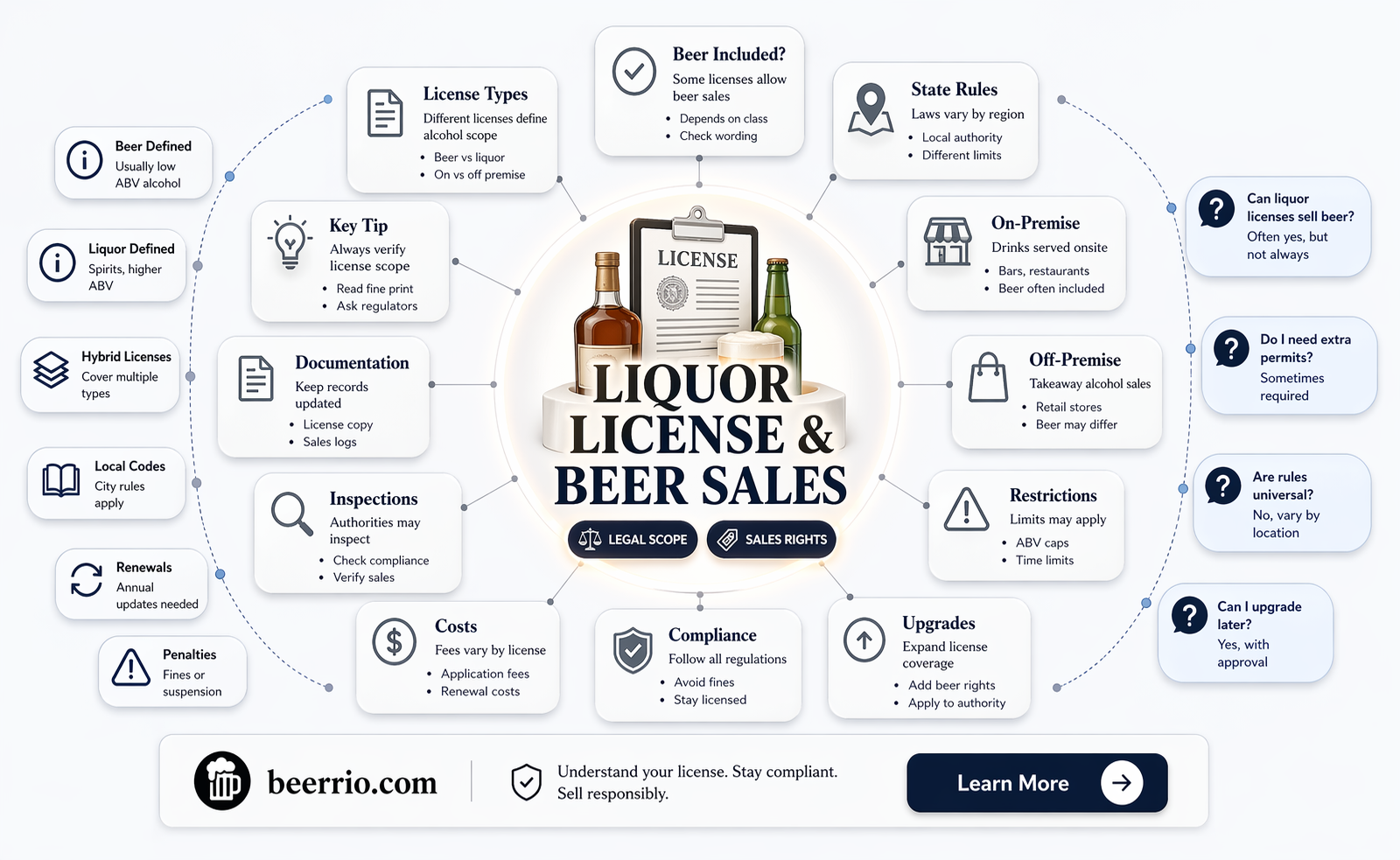
A liquor license is a legal permit that allows businesses to sell alcoholic beverages, including beer. However, the specific types of alcohol that can be sold under a liquor license vary depending on the jurisdiction and the terms of the license. In some areas, a liquor license may only permit the sale of certain types of alcoholic beverages, such as wine and spirits, while in others, it may allow for the sale of beer as well. It is important for business owners to carefully review the terms of their liquor license to ensure that they are in compliance with local laws and regulations regarding the sale of beer.
Explore related products



What You'll Learn
- Types of liquor licenses and their specific permissions regarding beer sales
- Legal requirements for obtaining a license to sell beer
- Restrictions on beer sales by location (e.g., residential areas)
- Age verification and responsible service practices for beer sales
- Tax implications and reporting requirements for beer sales under a liquor license

Types of liquor licenses and their specific permissions regarding beer sales
Liquor licenses are legal permits that authorize businesses to sell alcoholic beverages, including beer. However, not all liquor licenses grant the same permissions when it comes to beer sales. There are several types of liquor licenses, each with its own specific regulations and allowances.
One common type of liquor license is the on-premise consumption license. This license allows businesses, such as bars and restaurants, to sell beer for consumption on their premises. Customers can order beer at the bar or with their meal, but they are not permitted to purchase beer to take home. On-premise consumption licenses often have restrictions on the hours during which beer can be sold and may require the business to have a certain number of food items on the menu.
Another type of liquor license is the off-premise consumption license. This license permits businesses, such as liquor stores and convenience stores, to sell beer for customers to take home and consume elsewhere. Off-premise consumption licenses typically have fewer restrictions on the hours of operation and may allow for a wider variety of beer products to be sold. However, these licenses may require the business to have a separate area for the storage and display of alcoholic beverages.
In some jurisdictions, there are also specialized liquor licenses that cater to specific types of businesses or events. For example, a catering license may allow a business to sell beer at private events or parties, while a festival license may permit the sale of beer at public events such as concerts or fairs. These specialized licenses often have unique requirements and limitations that are tailored to the specific context in which the beer will be sold.
It is important for businesses to understand the specific permissions and restrictions associated with their liquor license in order to comply with local laws and regulations. Selling beer without the proper license or in violation of license conditions can result in fines, penalties, or even the revocation of the business's ability to sell alcoholic beverages. By obtaining the appropriate liquor license and adhering to its terms, businesses can legally and responsibly sell beer to their customers.
Sipping on Savings: Kroger's Thanksgiving Beer Selection Unveiled
You may want to see also
Explore related products



Legal requirements for obtaining a license to sell beer
To obtain a license to sell beer, businesses must navigate a complex web of legal requirements that vary significantly by jurisdiction. In the United States, for example, the process begins at the federal level with the Alcohol and Tobacco Tax and Trade Bureau (TTB), which issues permits for the production, importation, and distribution of alcohol. However, the actual sale of beer is regulated by state and local authorities, each with its own set of rules and restrictions.
One of the first steps in obtaining a beer license is to determine the specific type of license required. This can include licenses for on-premises consumption, such as a bar or restaurant, or off-premises sales, such as a liquor store or convenience store. The requirements for each type of license can differ substantially, with on-premises licenses often requiring additional permits for food service, entertainment, and other activities.
In addition to obtaining the necessary licenses, businesses must also comply with a range of regulations governing the sale and consumption of alcohol. These can include restrictions on hours of operation, limits on the amount of alcohol that can be sold to an individual, and requirements for employee training on responsible alcohol service. Failure to comply with these regulations can result in fines, penalties, or even the revocation of the business's license to sell alcohol.
The cost of obtaining a beer license can also be a significant barrier for businesses. License fees can vary widely depending on the jurisdiction and the type of license required, with some states charging tens of thousands of dollars for a single license. Additionally, businesses may need to invest in equipment, inventory, and marketing to ensure the successful launch of their beer sales operations.
Despite these challenges, obtaining a license to sell beer can be a lucrative opportunity for businesses. The demand for craft beer, in particular, has grown significantly in recent years, with many consumers seeking out unique and locally-produced brews. By navigating the complex legal requirements and investing in the necessary resources, businesses can tap into this growing market and establish themselves as successful players in the beer industry.
Bridgeton Liquor Stores: Do They Stock Yuengling Beer?
You may want to see also
Explore related products



Restrictions on beer sales by location (e.g., residential areas)
In many jurisdictions, the sale of beer is heavily regulated, particularly in residential areas. This is often due to concerns about noise, public intoxication, and the impact on local communities. As a result, liquor licenses may include specific restrictions on where and when beer can be sold. For example, some licenses may prohibit the sale of beer in residential areas altogether, while others may limit sales to certain hours of the day or require that beer be sold in conjunction with food.
One unique angle to consider when it comes to restrictions on beer sales by location is the impact on small businesses. For instance, a local convenience store or corner shop may rely heavily on beer sales to drive revenue. If their liquor license includes restrictions on where they can sell beer, this could significantly impact their bottom line. In some cases, businesses may need to get creative in order to comply with these restrictions, such as by offering delivery services or partnering with local restaurants to sell beer as part of a meal.
Another important consideration is the potential for these restrictions to disproportionately impact certain communities. For example, low-income neighborhoods may have fewer options when it comes to purchasing beer, as local stores may not be able to afford the necessary licenses or may be more likely to be targeted by enforcement efforts. This could lead to a situation where residents in these areas are forced to travel further to purchase beer, potentially increasing the risk of public intoxication and other negative outcomes.
From a tactical perspective, businesses looking to navigate these restrictions may need to carefully consider their location and the types of licenses they obtain. For instance, they may want to avoid opening in residential areas where restrictions are more likely to be stringent, or they may want to focus on obtaining licenses that allow for more flexible sales options. Additionally, businesses may need to be proactive in engaging with local regulators and community members to address concerns and demonstrate their commitment to responsible sales practices.
Ultimately, the key to successfully navigating restrictions on beer sales by location is to stay informed and adaptable. By understanding the specific regulations that apply to their business and being willing to adjust their strategies as needed, businesses can minimize the impact of these restrictions and continue to thrive in a competitive market.
Explore related products




Age verification and responsible service practices for beer sales
Age verification is a critical component of responsible beer sales. Retailers must ensure that customers are of legal drinking age before selling them beer. This typically involves checking government-issued identification such as driver's licenses, passports, or state IDs. The legal drinking age varies by country and, in some cases, by state or province. For example, in the United States, the legal drinking age is 21, while in Canada, it ranges from 18 to 19 depending on the province.
Responsible service practices go beyond age verification. They also include monitoring customer behavior for signs of intoxication, refusing service to visibly drunk individuals, and providing information about the risks of excessive alcohol consumption. Staff training is essential to ensure that employees are knowledgeable about these practices and can implement them effectively.
One effective strategy for responsible service is the use of standardized drink recipes. This helps ensure that customers are not over-served. Additionally, offering non-alcoholic beverage options and promoting responsible drinking messages can help create a safer environment for all patrons.
Technology can also play a role in responsible beer sales. Some establishments use digital ID verification systems to streamline the age verification process and reduce the risk of fake IDs. These systems can quickly scan IDs and compare them to a database of valid documents.
Ultimately, responsible beer sales are about more than just following the law. They involve creating a culture of safety and responsibility within the establishment. This includes fostering open communication among staff, regularly reviewing and updating policies and procedures, and engaging with the community to promote responsible drinking practices.
Explore related products


Tax implications and reporting requirements for beer sales under a liquor license
Holding a liquor license permits the sale of beer, but it also brings specific tax implications and reporting requirements. Businesses must understand these obligations to remain compliant with local and federal regulations.
Firstly, sales tax is a critical consideration. The rate of sales tax varies by state and locality, and businesses must collect and remit the appropriate amount. For example, in California, the sales tax rate is 7.25%, while in New York, it's 8.875%. Failure to collect and pay sales tax can result in penalties and fines.
Secondly, excise taxes apply to beer sales. These taxes are levied at the state and federal levels and are typically based on the volume of beer sold. For instance, the federal excise tax on beer is $18 per barrel, while state excise taxes range from $0.10 to $1.00 per gallon. Businesses must accurately calculate and pay these taxes to avoid legal repercussions.
Thirdly, reporting requirements are stringent. Businesses must maintain detailed records of beer sales, including the type and quantity of beer sold, the date of sale, and the amount of tax collected. These records must be submitted to the relevant tax authorities on a regular basis, usually monthly or quarterly. Inaccurate or incomplete reporting can lead to audits and potential penalties.
Fourthly, businesses must also consider the tax implications of promotions and discounts. Offering discounts or promotions can affect the amount of tax owed, and businesses must adjust their tax calculations accordingly. For example, if a business offers a buy-one-get-one-free promotion, they must still pay tax on the full price of both items.
Finally, it's essential to stay up-to-date with changing tax laws and regulations. Tax rates and reporting requirements can change frequently, and businesses must adapt to these changes to remain compliant. Consulting with a tax professional or attending industry seminars can help businesses stay informed about the latest tax implications and reporting requirements.
In conclusion, while a liquor license allows the sale of beer, it also brings significant tax implications and reporting requirements. Businesses must understand and comply with these obligations to avoid legal issues and ensure their continued operation.
Frequently asked questions
Yes, a liquor license typically permits the sale of beer along with other alcoholic beverages.
A liquor license generally covers the sale of beer, wine, and distilled spirits.
Yes, there are different types of liquor licenses, and they may have specific restrictions on the types and quantities of alcoholic beverages that can be sold.