Jason Wagner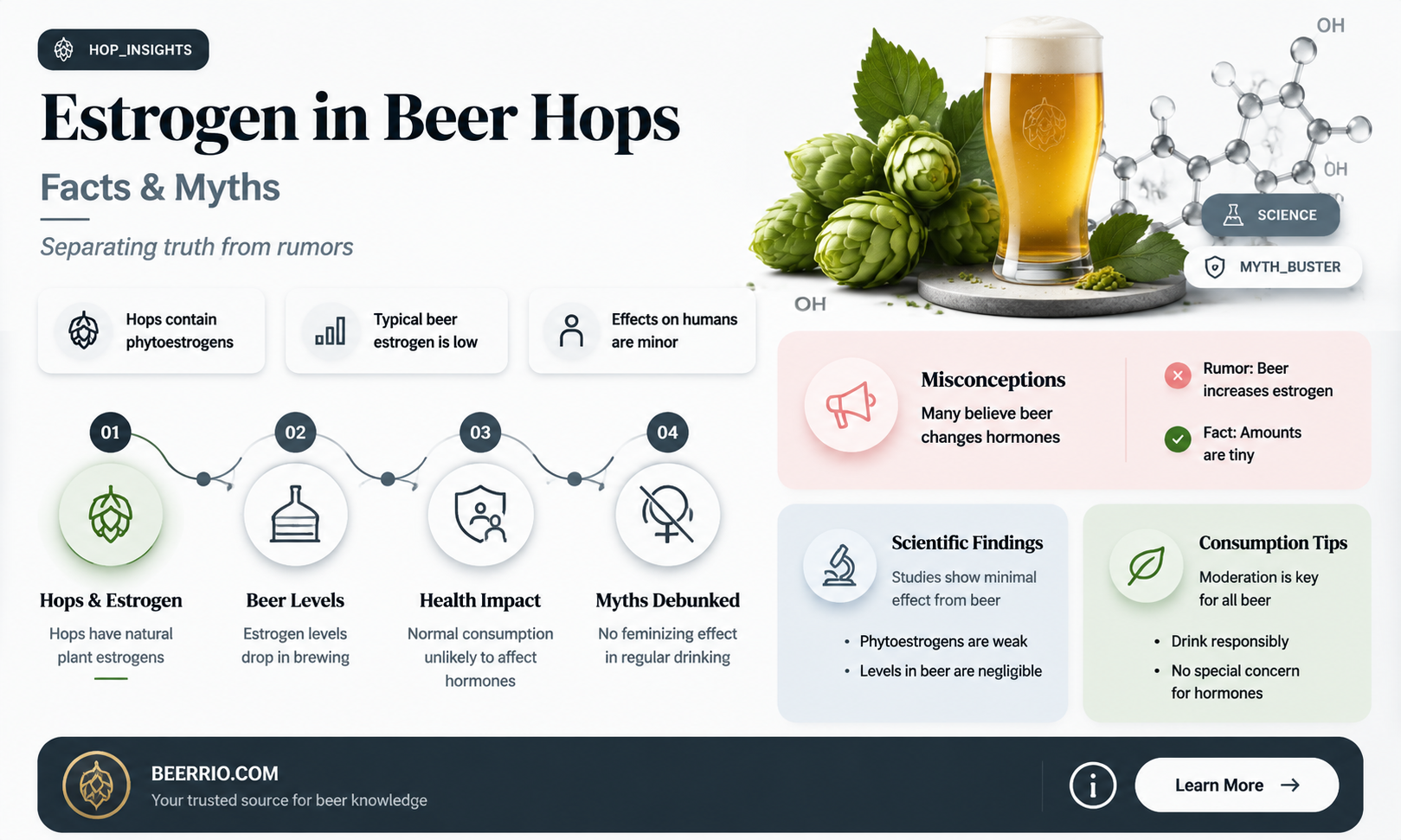
Beer hops, the flowers of the hop plant (Humulus lupulus), are a key ingredient in beer brewing, imparting bitterness, flavor, and aroma. They have been used for centuries in the brewing process and are known for their preservative properties. In recent years, there has been growing interest in the potential health effects of hops, including their estrogenic activity. Estrogen is a hormone that plays a crucial role in the development and regulation of the female reproductive system and secondary sexual characteristics. Some studies have suggested that hops may contain compounds that mimic the effects of estrogen in the body, leading to questions about their impact on human health. This has sparked debates among health professionals and beer enthusiasts alike, with some concerned about the potential risks and others touting the benefits of moderate beer consumption.
| Characteristics | Values |
|---|---|
| Scientific Name | Humulus lupulus |
| Common Name | Beer hops |
| Estrogen Content | Contains phytoestrogens, specifically 8-prenylnaringenin (8-PN) |
| Estrogen Activity | 8-PN has been found to have estrogenic activity in vitro |
| Potential Effects | May have implications for hormone-sensitive conditions, but more research is needed |
| Usage in Brewing | Used primarily for bitterness, flavor, and aroma in beer |
| Cultivation | Grown in various regions worldwide, including the Pacific Northwest of the United States, Europe, and Asia |
| Harvesting | Typically harvested in late summer or early fall |
| Processing | Can be processed into various forms, including whole hops, pellets, and extracts |
| Phytoestrogen Concentration | Varies depending on the hop variety and growing conditions |
| Research on Estrogenicity | Some studies suggest that hops may have estrogenic effects, but the evidence is not conclusive |
| Safety Considerations | Generally considered safe for consumption in beer, but individuals with hormone-sensitive conditions should consult a healthcare professional |
| Regulatory Status | Not specifically regulated for estrogen content, but subject to general food safety regulations |
| Traditional Uses | Historically used in herbal medicine for various purposes, including menstrual relief and sleep aid |
| Modern Applications | Being studied for potential health benefits, including antioxidant and anti-inflammatory properties |
Explore related products


What You'll Learn
- Chemical Composition: Analyzing the compounds in beer hops to identify any estrogen-like substances
- Health Effects: Researching potential impacts of hop consumption on hormone levels and related health issues
- Brewing Process: Investigating how the brewing process might affect the presence of estrogen in beer
- Comparative Analysis: Comparing estrogen levels in different types of hops and beers
- Scientific Studies: Reviewing existing scientific literature on the topic for conclusive evidence

Chemical Composition: Analyzing the compounds in beer hops to identify any estrogen-like substances
Analyzing the chemical composition of beer hops involves a detailed examination of the various compounds present. Hops are known to contain a variety of substances, including essential oils, acids, and flavonoids. Among these, certain compounds have been identified that possess estrogen-like properties. These substances, known as phytoestrogens, can mimic the effects of estrogen in the body.
One of the primary phytoestrogens found in hops is 8-prenylnaringenin. This compound has been shown to bind to estrogen receptors and exert estrogenic effects in laboratory studies. Another phytoestrogen present in hops is isoxanthohumol, which has also been found to have estrogen-like activity. These compounds are of interest to researchers and health professionals due to their potential impact on human health.
The process of analyzing the chemical composition of hops typically involves extracting the plant material with solvents, followed by purification and identification of the individual compounds. Techniques such as high-performance liquid chromatography (HPLC) and mass spectrometry are commonly used for this purpose. By identifying and quantifying the phytoestrogens present in hops, researchers can better understand their potential effects on human health and develop strategies for their safe consumption.
It is important to note that while hops do contain estrogen-like substances, the levels of these compounds are generally low. Additionally, the brewing process can affect the concentration of phytoestrogens in the final beer product. Therefore, while the presence of these compounds is a topic of ongoing research, it is not currently a major health concern for moderate beer consumers.
In conclusion, the chemical composition of beer hops includes a variety of compounds, some of which have estrogen-like properties. Analyzing these compounds can provide valuable insights into their potential effects on human health and inform strategies for their safe consumption.
Exploring the Essential Ingredient: Do All Beers Contain Hops?
You may want to see also
Explore related products


Health Effects: Researching potential impacts of hop consumption on hormone levels and related health issues
Recent studies have delved into the potential health effects of hop consumption, particularly focusing on its impact on hormone levels. Hops, a key ingredient in beer, contain compounds known as phytoestrogens, which are plant-derived substances that mimic the hormone estrogen. Research suggests that these phytoestrogens may have various effects on the human body, including influencing hormone levels and potentially contributing to health issues such as breast cancer, prostate problems, and reproductive disorders.
One study published in the Journal of Agricultural and Food Chemistry found that certain hop extracts exhibited estrogenic activity in vitro, indicating that they may have the potential to affect hormone levels in the body. Another study in the journal Steroids reported that hop consumption may lead to an increase in estrogen levels in men, which could have implications for reproductive health and hormone-related disorders.
However, it is important to note that the majority of these studies have been conducted in vitro or on animal models, and more research is needed to fully understand the effects of hop consumption on human health. Additionally, the brewing process may affect the levels of phytoestrogens in beer, making it difficult to determine the exact impact of hop consumption on hormone levels.
In conclusion, while the potential health effects of hop consumption on hormone levels are a topic of ongoing research, it is clear that hops contain compounds that may have estrogenic activity. Further studies are needed to fully understand the implications of this for human health and to determine whether hop consumption may contribute to hormone-related health issues.
Exploring the Flavorful World of Hops in Beer
You may want to see also
Explore related products



Brewing Process: Investigating how the brewing process might affect the presence of estrogen in beer
The brewing process is a critical factor in determining the presence of estrogen in beer. During brewing, various compounds from the hops, malt, and yeast interact and undergo chemical transformations that can influence the final estrogen content. For instance, certain enzymes produced by yeast can convert precursors into estrogenic compounds. Additionally, the temperature and pH levels during fermentation can affect the activity of these enzymes and the solubility of estrogenic compounds.
One key step in the brewing process is the boiling of the wort, where hops are added at different times. Early hop additions primarily contribute to bitterness, while later additions can enhance aroma and flavor. Research suggests that the timing of hop additions can also impact the estrogen content, as certain compounds may be more susceptible to degradation or transformation during boiling.
Another important consideration is the type of yeast used in fermentation. Different yeast strains have varying levels of enzyme activity, which can influence the conversion of precursors into estrogenic compounds. Brewers may choose specific yeast strains to achieve desired flavor profiles, but these choices can also inadvertently affect the estrogen content of the beer.
Furthermore, the use of certain brewing additives, such as clarifying agents or preservatives, can also impact the estrogen levels in beer. These additives may contain estrogenic compounds or interact with existing compounds to alter their concentration. Brewers must carefully consider the potential effects of these additives on the final product.
In conclusion, the brewing process plays a significant role in determining the presence of estrogen in beer. Factors such as hop addition timing, yeast strain selection, and the use of brewing additives can all influence the final estrogen content. Brewers who are concerned about estrogen levels in their products should carefully monitor and control these aspects of the brewing process to achieve the desired outcome.
Exploring the Flavor Profile: Do Sour Beers Contain Hops?
You may want to see also
Explore related products




Comparative Analysis: Comparing estrogen levels in different types of hops and beers
A comparative analysis of estrogen levels in different types of hops and beers reveals significant variations that can impact the final product's hormonal content. Studies have shown that certain hop varieties, such as Cascade and Centennial, contain higher levels of phytoestrogens compared to others like Saaz and Hallertau. These phytoestrogens, particularly 8-prenylnaringenin, can contribute to the overall estrogenic activity of beer.
The brewing process itself also plays a crucial role in determining the estrogen levels in the final beer. Factors such as the temperature and duration of the boil, the type of yeast used, and the fermentation time can all influence the amount of phytoestrogens that are extracted from the hops and converted into more potent estrogenic compounds. For instance, higher boiling temperatures and longer fermentation times tend to result in lower estrogen levels, as these conditions can degrade or convert phytoestrogens into less active forms.
When comparing different types of beers, it is evident that certain styles, such as India Pale Ales (IPAs) and Pale Ales, generally contain higher levels of estrogen due to their higher hop content. In contrast, beers like Lagers and Pilsners, which use fewer hops, tend to have lower estrogen levels. However, it is important to note that even within the same beer style, there can be significant variations in estrogen content depending on the specific hop varieties and brewing techniques used.
To further complicate matters, the estrogenic activity of beer can also be influenced by the presence of other compounds, such as flavonoids and terpenes, which can interact with phytoestrogens to enhance or inhibit their effects. Additionally, the overall bitterness of the beer, which is primarily determined by the alpha acid content of the hops, can also impact the perception of estrogenic effects, as higher bitterness levels may mask the taste and aroma of estrogenic compounds.
In conclusion, a comprehensive understanding of the factors that influence estrogen levels in beer requires a detailed analysis of the hop varieties, brewing processes, and beer styles. By considering these variables, brewers can better control the estrogenic content of their products and consumers can make more informed choices about the beers they consume.
Exploring the Risks: Could Dry Hopping Contaminate Your Beer?
You may want to see also
Explore related products




Scientific Studies: Reviewing existing scientific literature on the topic for conclusive evidence
A thorough review of scientific literature is essential to determine whether beer hops contain estrogen. Estrogen is a hormone that plays a crucial role in the female reproductive system and is also present in some plants. Beer hops, which are the flowers of the hop plant (Humulus lupulus), are commonly used in beer brewing for their bittering, flavoring, and stabilizing properties.
Several studies have investigated the presence of estrogenic compounds in beer hops. One study published in the Journal of Agricultural and Food Chemistry found that beer hops contain a variety of phytoestrogens, including 8-prenylnaringenin, which is a potent estrogenic compound. Another study published in the journal Food and Chemical Toxicology found that beer hops extract exhibited estrogenic activity in vitro.
However, it is important to note that the estrogenic activity of beer hops may vary depending on the variety of hops, the brewing process, and the amount of hops used. Some studies have found that the estrogenic activity of beer is relatively low, and it is unlikely to have a significant impact on human health.
In conclusion, while scientific studies have provided some evidence that beer hops contain estrogenic compounds, more research is needed to fully understand the implications of these findings for human health. It is also important to consider the potential benefits of beer hops, such as their antioxidant and anti-inflammatory properties, when evaluating their overall impact on health.
Exploring the Botanical Mystery: Are Beer Hops a Vegetable?
You may want to see also
Frequently asked questions
Yes, beer hops do contain estrogen. Hops are the flowers of the hop plant, Humulus lupulus, and they are a key ingredient in beer, primarily responsible for its bitterness and aroma. Research has shown that hops contain various compounds, including phytoestrogens, which are plant-derived substances that can mimic the effects of estrogen in the body.
Phytoestrogens are naturally occurring compounds found in various plants, including hops, soy, flaxseeds, and certain vegetables. They have a chemical structure similar to that of estrogen, which allows them to bind to estrogen receptors in the body. This can lead to both estrogenic and anti-estrogenic effects, depending on the specific phytoestrogen and the individual's hormonal balance. In the case of hops, the phytoestrogens present are believed to have a weak estrogenic activity.
While the phytoestrogens in hops can interact with estrogen receptors, the impact on hormone levels and health is generally considered to be minimal when consumed in moderation. The estrogenic compounds in hops are present in relatively low concentrations, and the body's natural estrogen levels are typically much higher. However, excessive consumption of phytoestrogen-rich foods and beverages could potentially lead to hormonal imbalances, especially in individuals with pre-existing conditions or sensitivities.
Some studies suggest that the phytoestrogens in hops may have potential health benefits, such as reducing the risk of certain diseases like osteoporosis and cardiovascular disease. These compounds may also have antioxidant and anti-inflammatory properties. However, more research is needed to fully understand the effects of hop-derived phytoestrogens on human health and to determine any specific benefits or risks associated with their consumption.